The Architecture of Atmosphere: Lighting Design for Arenas and Stadiums
The Unspoken Language of Light
The house lights fall. A collective breath is held by 50,000 people. Then, a single, searing beam cuts through the darkness, followed by an explosion of color that washes over the stage and spills into the crowd. This is the moment a concert truly begins. It’s a moment defined not by sound, but by light. In the world of stadium and arena tours, lighting design is the unspoken language of the spectacle—an architectural tool that builds atmosphere, directs emotion, and transforms a vast, anonymous space into a site of communal experience.
Designing for this scale is a unique challenge. An arena is an enormous blank canvas, a cavern of steel and concrete. Left untouched, its sheer size can create a sense of distance between the artist and the audience. The task of the modern lighting designer is to close that distance, to build a world within that space, and to ensure that the fan in the last row feels as connected as the one at the barrier. This requires a mastery of not just technology, but of human psychology and storytelling.
Principle 1: The Duality of the Audience
A generation ago, lighting designers had one audience to please: the people in the room. Today, they have two. The first is the live crowd, who crave a visceral, immersive experience. The second is the global broadcast audience, watching on screens of all sizes, from stadium jumbotrons to smartphones. These two audiences have different needs, and a successful design must serve both without compromise.
Lighting for the camera demands precision—controlled color temperatures, flattering key lights, and an understanding of how sensors interpret contrast and brightness. It’s a technical craft, evident in everything from a global sporting event like the Davis Cup to a high-stakes broadcast like ITV’s Beat The Chasers. Yet, this precision cannot come at the expense of the raw, emotional energy of the live show. The design must create breathtaking vistas and powerful, sweeping looks that feel epic in person, not just framed on a screen. This duality forces a more holistic approach, where every lighting element, from a single spotlight to a full-stage video wall, serves both the fan in the stands and the viewer at home.
Principle 2: The Audience as Canvas
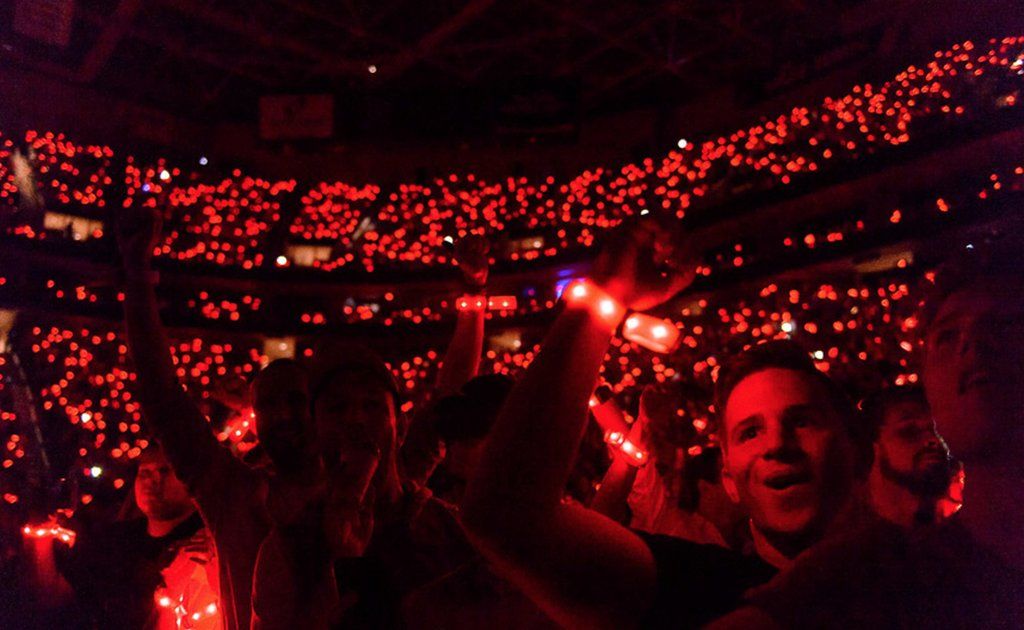
Perhaps the most significant shift in modern tour lighting is the re-imagining of the crowd itself. For decades, the audience sat in darkness, passive observers of the spectacle. Today, they are the spectacle. This transformation has been powered by the rise of Wearable LED Technology, a concept Xylobands pioneered with the first Coldplay Xylo Band on their 2012 world tour.
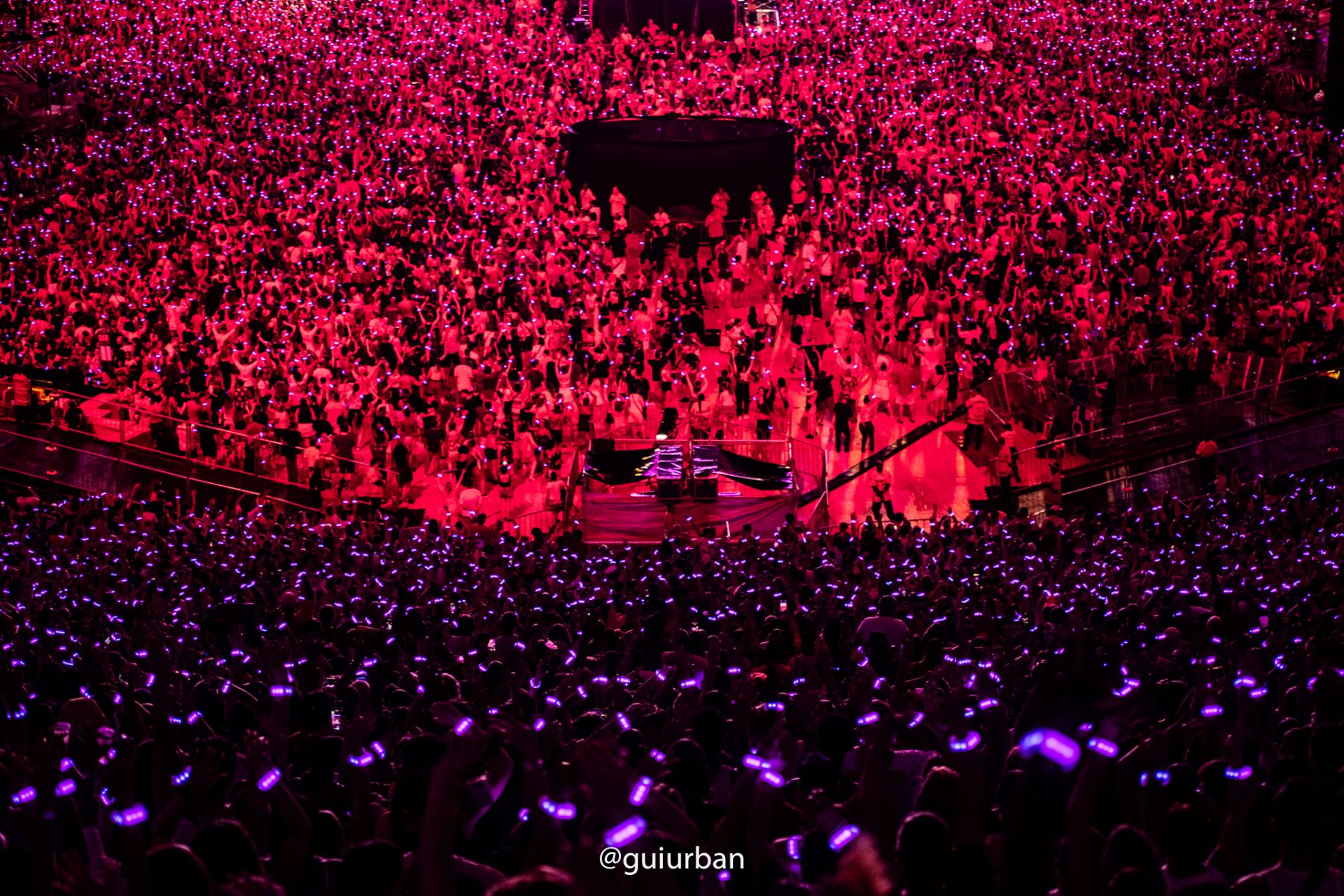
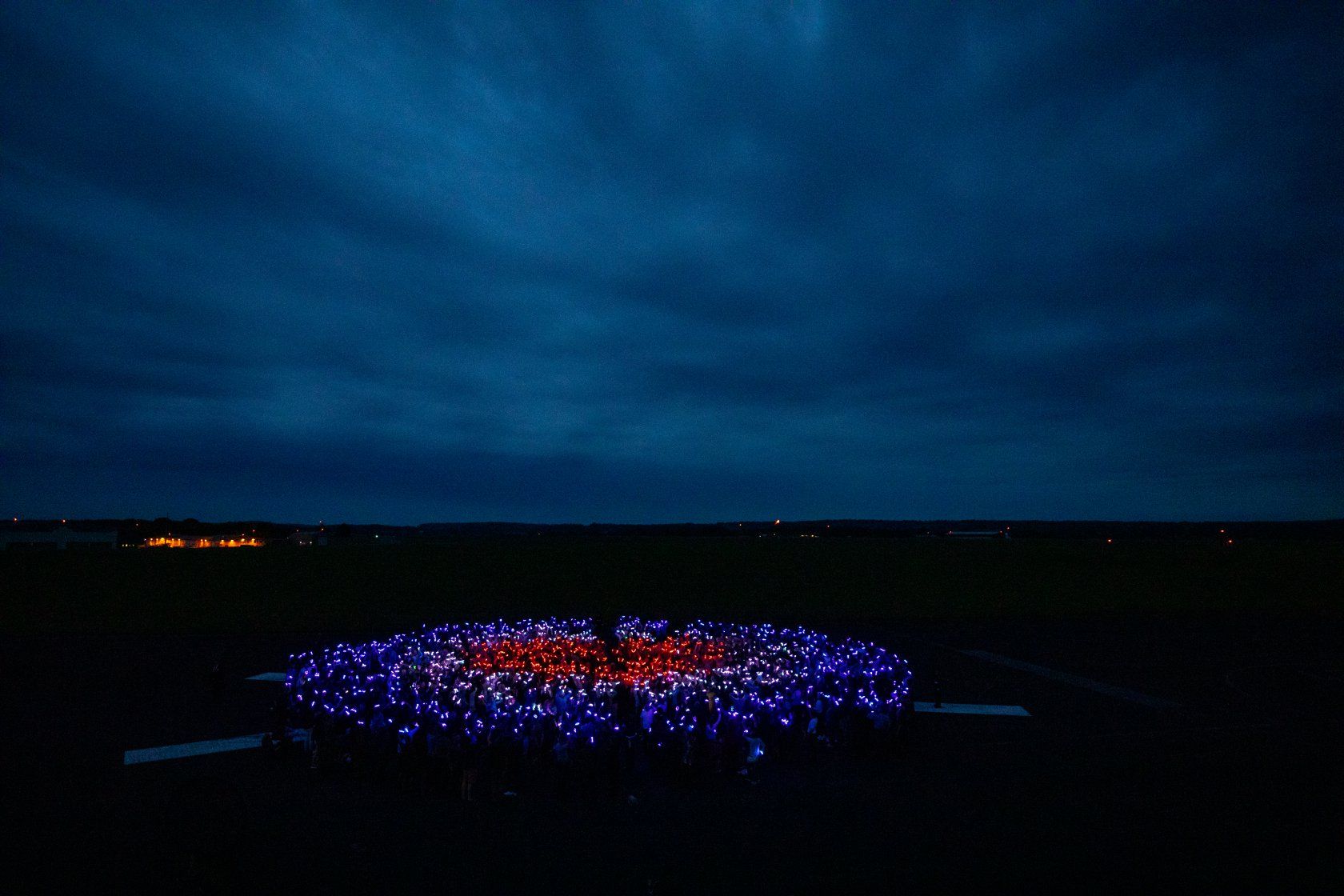
By turning every audience member into a pixel in a vast, moving display, designers are now able to paint with light on a scale never before imagined. This creates unparalleled LED Crowd Experiences. Suddenly, a wave of color can ripple from the front of the floor to the back of the rafters. The entire stadium can pulse in unison with the beat, creating a powerful visual representation of shared energy. These immersive events are no longer confined to the stage; they extend to every corner of the venue.
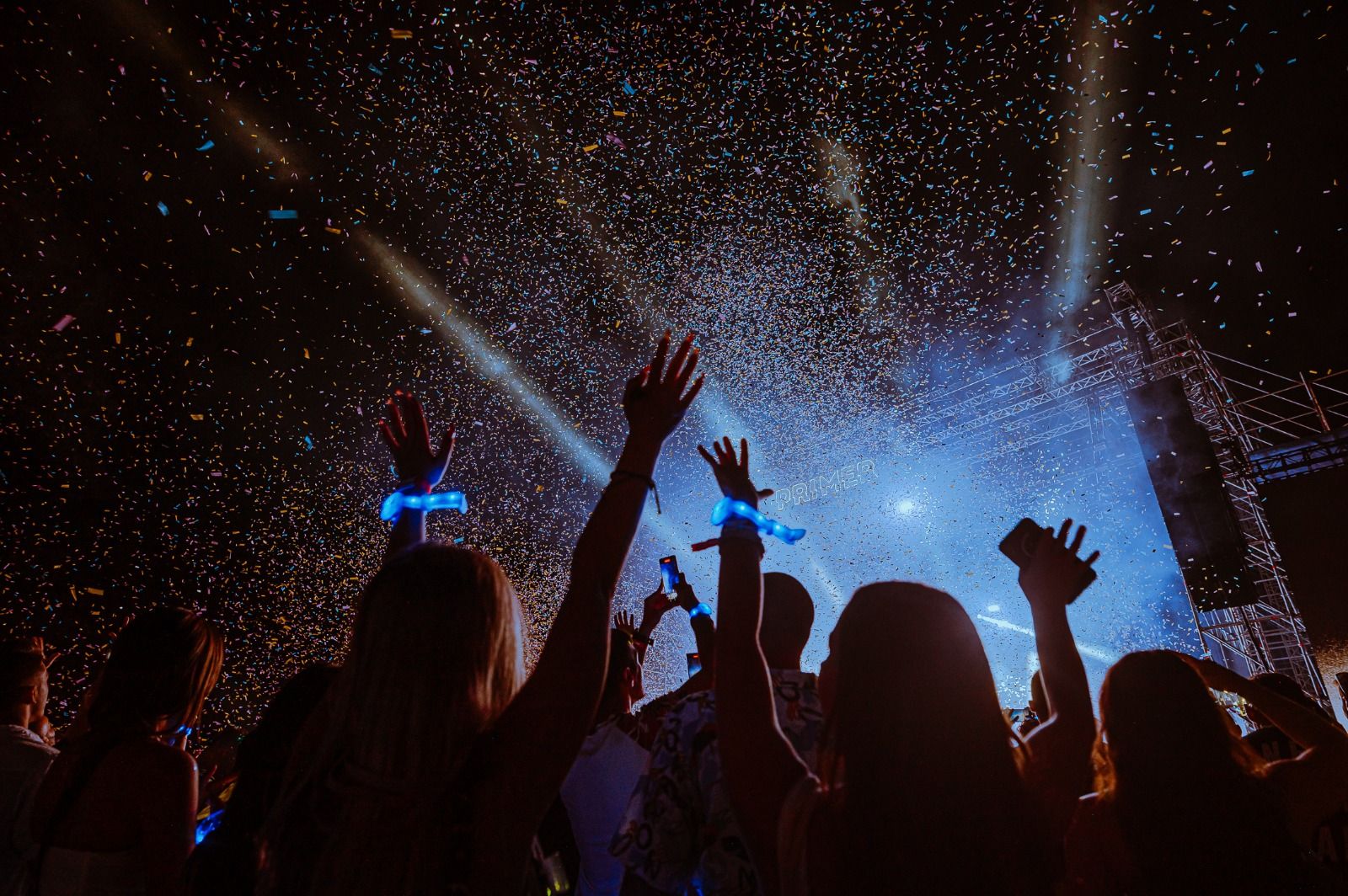
The technology, often in the form of Radio Controlled LED Wristbands like our Xylo Bands, gives designers a new, dynamic layer to their compositions. It allows them to unify the space, making 50,000 individuals feel like a single, connected entity. Whether used as Concert Wristbands for a global artist like Wizkid or Maluma, or as Festival Wristbands at events like Greece’s PRIMER Music Festival, the effect is the same: the line between spectator and show is erased.
Principle 3: Layering, Texture, and Emotional Arc
A great lighting design tells a story. It has a narrative arc that mirrors the emotional journey of the performance. It’s not about deploying every fixture at maximum intensity for two hours. It’s about contrast, dynamics, and the strategic use of light and shadow.
Building the World
Modern rigs are complex systems of layered light. Foundational washes establish the mood and color palette. Key lights carve out the performers, ensuring they remain the focal point. Beams and atmospheric effects like haze create texture and three-dimensional depth, making the light feel tangible. Video surfaces add narrative content and graphic punch. Finally, audience lighting, including LED Bracelets and LED Lanyards, provides the immersive, connective tissue.
Choreographing the Moment
Within this layered world, the designer acts as a conductor, choreographing moments of impact. A stripped-back verse may be lit with a single, intimate spotlight. A powerful chorus might erupt with a full-stage strobe effect, amplified by a synchronized flash across thousands of wristbands in the crowd. For a tour-de-force production like the Formula One 75th Anniversary show, Custom LED Wristbands and pendants were mapped to specific seating areas, allowing designers to create complex, targeted effects that became integral to the live broadcast. This is the art of LED Event Technology: using a sophisticated palette to build tension, create release, and craft an unforgettable emotional journey for everyone.
The Invisible Architecture
Ultimately, the best stadium and arena lighting design becomes an invisible architecture of atmosphere. It guides the eye, shapes the mood, and fosters a sense of unity, often without the audience consciously registering its intricate mechanics. It’s a discipline that blends technological prowess with a deep understanding of human emotion.
From the first spark of an idea for Xylobands at Glastonbury to lighting up audiences in over 70 countries, we’ve seen firsthand how light can transform an event. It has the power to turn a gathering of strangers into a community and a performance into a memory. In the grand canvas of a stadium, light is the brush, the audience is the canvas, and the resulting masterpiece is a fleeting, powerful moment of shared awe.