The Art of Scale: Lighting Design Principles for Modern Arenas and Stadiums
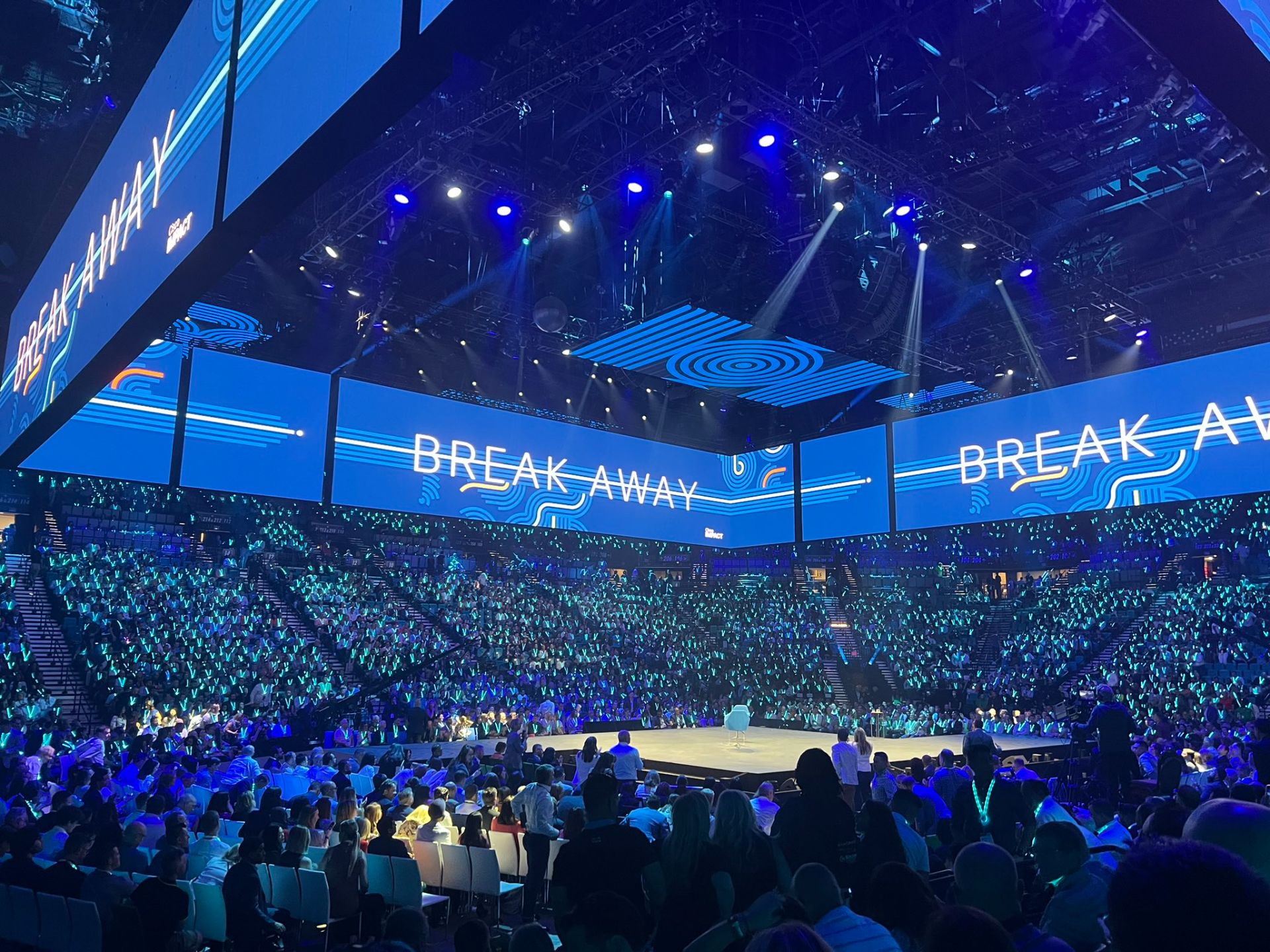
From Intimacy to Immensity: The Challenge of Scale
Designing a lighting experience for a club or theater is an exercise in intimacy. The tools are close, the canvases are contained, and every watt has a direct, measurable impact. Scale that up to a 20,000-seat arena or a 70,000-capacity stadium, and the physics of light present a formidable challenge. What felt dazzling in a small room can feel diluted and lost in a colossal space. The energy that once saturated a contained audience now dissipates into the vastness of tiered seating and open sky. This is the fundamental challenge for every tour production designer: how do you create moments of profound connection and visual awe when your canvas is measured in acres and your audience in the tens of thousands?
The modern tour designer must think less like a theatrical lighting director and more like an architect of shared emotion. The goal is no longer just to illuminate the artist but to paint the entire volume of the space, turning the venue itself into a dynamic, living instrument. This requires a multi-layered approach, balancing the raw power needed to cut through the distance with the nuance required to create texture, mood, and narrative.
The Three Tiers of Arena and Stadium Lighting
Effective large-scale lighting design operates on three distinct but interconnected tiers: the Stage, the Architecture, and the Audience.
1. The Stage: The Epicenter of the Story
The stage is the focal point, the narrative anchor. Here, the lighting must serve the artist and the performance above all else. It carves the performers out from the background, models their features for both the live audience and broadcast cameras, and translates the musical dynamics into a visual language. Key lighting, backlighting, and washes create depth and drama, ensuring the human element remains the heart of the spectacle.
However, in a stadium context, the stage lighting also serves as the primary engine of the show’s visual identity. It’s the source from which all other lighting effects ripple outward. The sheer scale demands powerful fixtures and bold, clean looks that can read from hundreds of meters away. Complexity is traded for clarity; subtlety is replaced by statement.
2. The Architecture: Painting the Bones of the Building
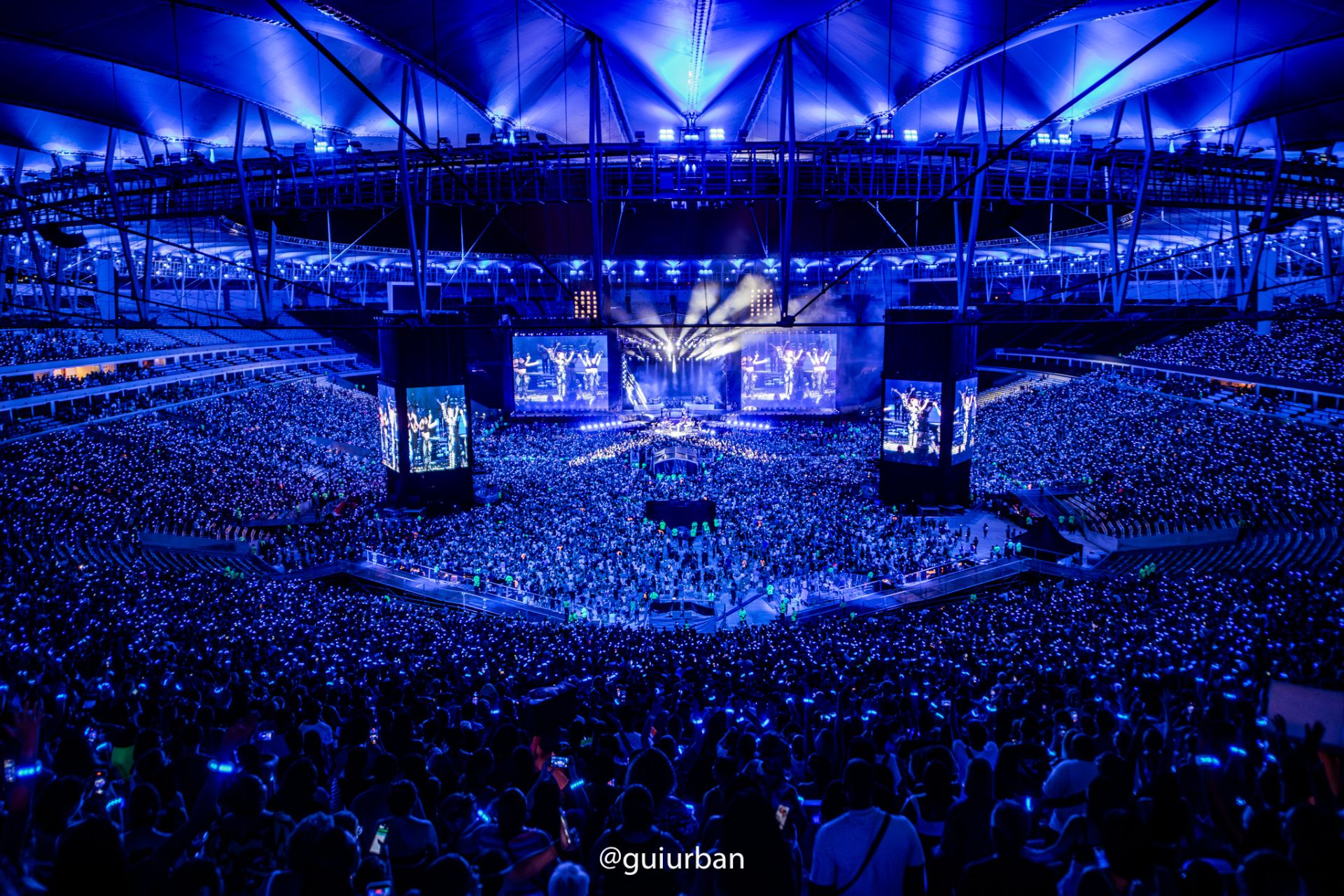
The second canvas is the venue itself. The trusses, the seating bowls, the roofline, the delay towers—these are not obstacles to be worked around but surfaces to be activated. By strategically placing fixtures to graze the architectural lines of an arena or stadium, designers can dissolve the sterile, utilitarian feel of the space and integrate it into the creative vision. A sweeping ballyhoo of moving lights across the tiered seats or a colour wash that crawls up the support pillars makes the entire structure feel like part of the set.
This approach transforms the venue from a container for the experience into a component of it. The audience isn’t just looking at a stage; they are sitting inside the light show. This architectural activation is crucial for maintaining visual energy across the vast distances of a stadium, ensuring that the fans in the furthest seats feel just as enveloped as those in the front row.
3. The Audience: The Human Canvas
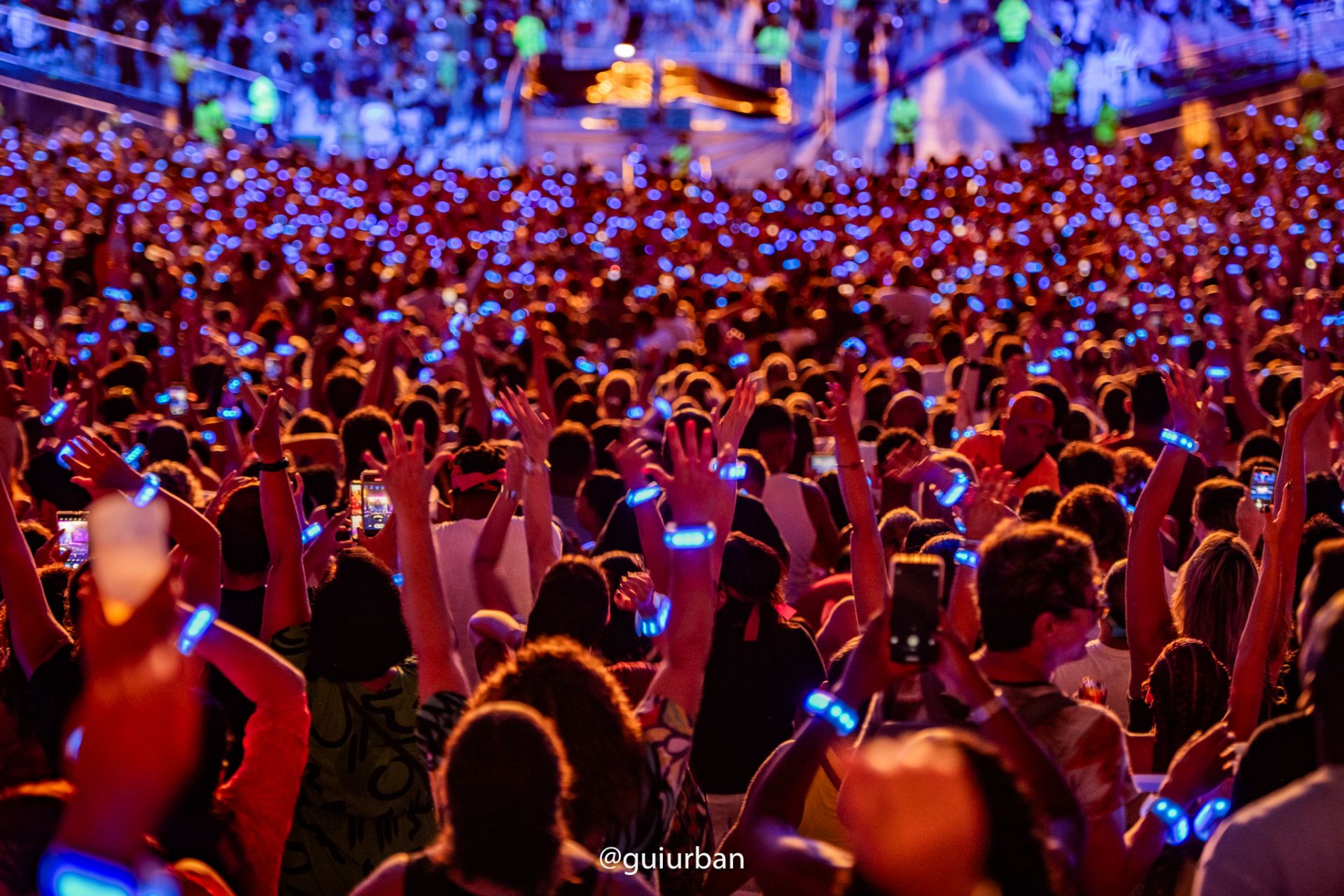
The final, and arguably most powerful, tier of lighting is the audience itself. For decades, the crowd was a dark, passive observer. Today, with the advent of wearable LED technology, the audience has become the most dynamic and immersive canvas available to a designer. It’s the principle that drove the invention of Xylobands: turning every individual into a pixel in a venue-wide display.
When tens of thousands of LED wristbands or LED Lanyards ignite in perfect sync, the effect is transformative. It demolishes the separation between performer and fan, uniting everyone in a shared visual and emotional moment. Our work with artists like Maluma, whose historic 54,000-person Medellín concert was a masterclass in stadium-scale immersion, demonstrates this power. The light show wasn’t just happening on stage; it was happening in the hands of every single attendee.
"When you see the entire stadium pulse with light, moving as one organism, you’re not just watching a show—you are part of it. It’s the ultimate fulfillment of the live experience: a sense of true collective participation."
Choreography, Not Just Illumination
The magic of stadium lighting lies in the choreography between these three tiers. A show’s most powerful moments often come from the interplay between them.
- Contraction and Expansion: A designer might collapse the entire visual world down to a single spotlight on the artist for an intimate ballad, plunging the stadium into darkness. Then, as the song crescendos, the light can explode outwards—first across the stage, then igniting the architecture, and finally, erupting across the audience in a wave of colour using thousands of concert wristbands. This creates a powerful sense of visual breathing, guiding the emotional journey of the crowd.
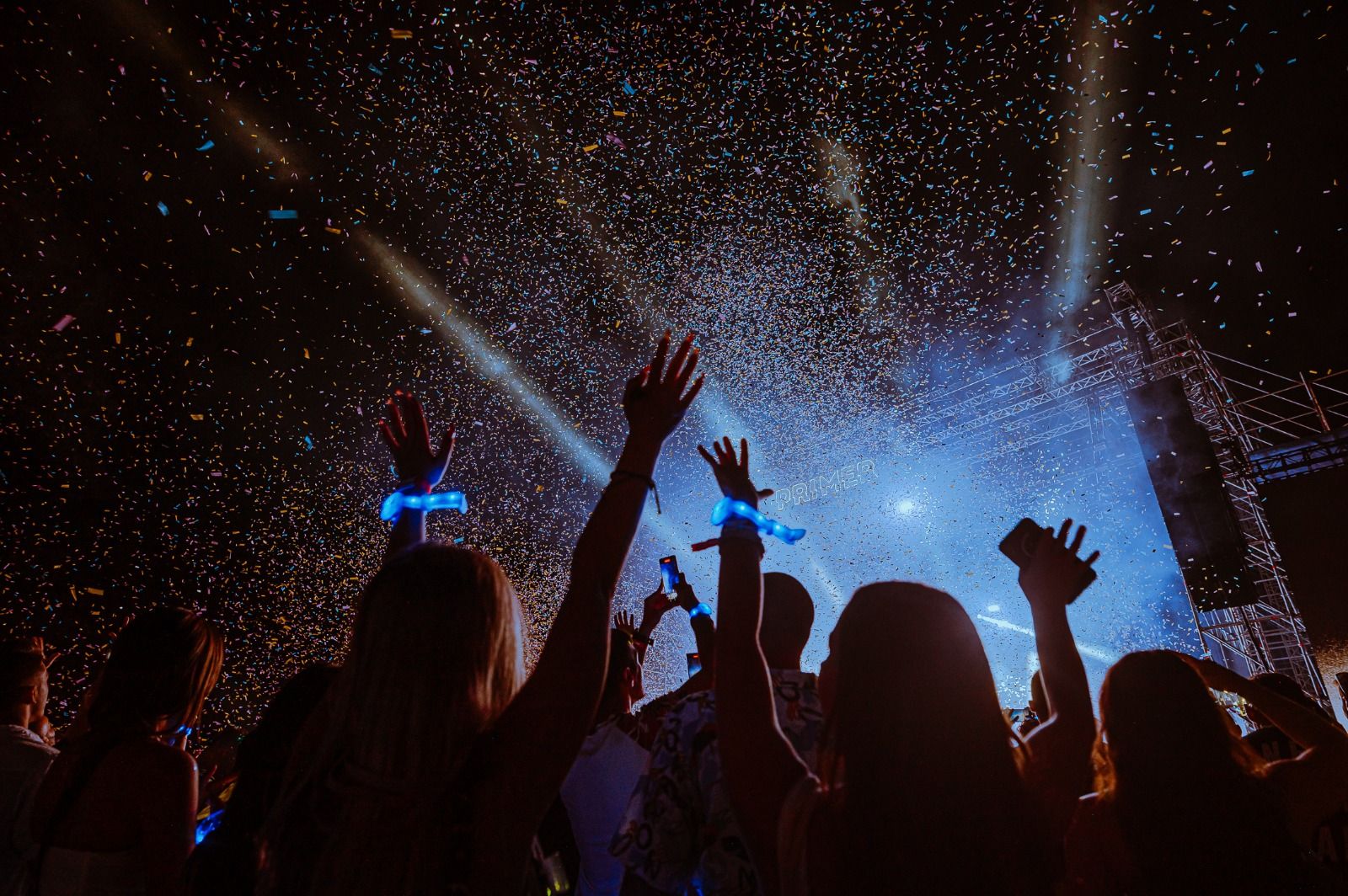
- Audience as a Mirror: The audience’s LED bands can mirror the colours and patterns of the stage video, creating a seamless visual flow from the stage to the back of the bowl. This is a technique we’ve seen used to stunning effect at major music festivals like Primer, where the sense of collective energy is paramount.
- Creating a Second Stage: For artists who move through the venue, from the main stage to a B-stage, radio controlled LED wristbands can create a pathway of light, guiding the audience’s focus and turning the entire floor into a secondary performance area.
This level of integration requires a deep collaboration between the artist, the lighting designer, the video director, and technology partners. It’s about building a cohesive visual world where every element serves the story. From celebrating Formula One’s 75th anniversary at the O2 Arena to lighting up Wizkid’s historic sell-out run, the goal is always to use light to foster a deeper connection.
Ultimately, designing for arenas and stadiums is an art of monumental storytelling. It’s about understanding that in a space built for thousands, true spectacle isn’t found in just making things bigger, but in making everyone, no matter where they are, feel like they are part of one singular, unforgettable moment. It’s about creating an experience so immersive that the physical scale of the venue dissolves, leaving only the shared human connection in its place.