The Camera Never Blinks: Mastering Event Lighting for the Broadcast Age
The Two-Audience Problem
There's a unique tension at the heart of every major live broadcast. In the electric, charged atmosphere of an arena, a stadium, or a festival, tens of thousands of people are having a singular, visceral experience. Their eyes, incredibly adaptive and forgiving, perceive a spectacle of light, shadow, and motion. But miles away, another audience—often orders of magnitude larger—is watching through a different eye: the cold, exacting lens of a broadcast camera. And that camera never blinks.
This is the two-audience problem. What feels immersive and powerful in person can translate as chaotic, blown-out, or poorly defined on screen. The dynamic range of the human eye far surpasses that of any camera sensor. Fog that creates beautiful, volumetric beams in a venue can look like muddy haze on television. A laser effect that dazzles a live crowd can be completely lost in translation. For producers of global events, from the Formula One 75th anniversary celebration to the Davis Cup finals, pleasing both audiences isn’t just a goal; it’s the entire game.
Painting with a Camera-Friendly Palette
Solving this challenge requires a lighting philosophy that treats the broadcast feed not as a secondary concern, but as a primary canvas. Traditional stage lighting is the first brushstroke, but it’s not enough. Blasting the crowd with generic house lights to make them visible on camera is a cardinal sin of production; it ruins the atmosphere for the live attendees, making them feel observed rather than part of the experience.
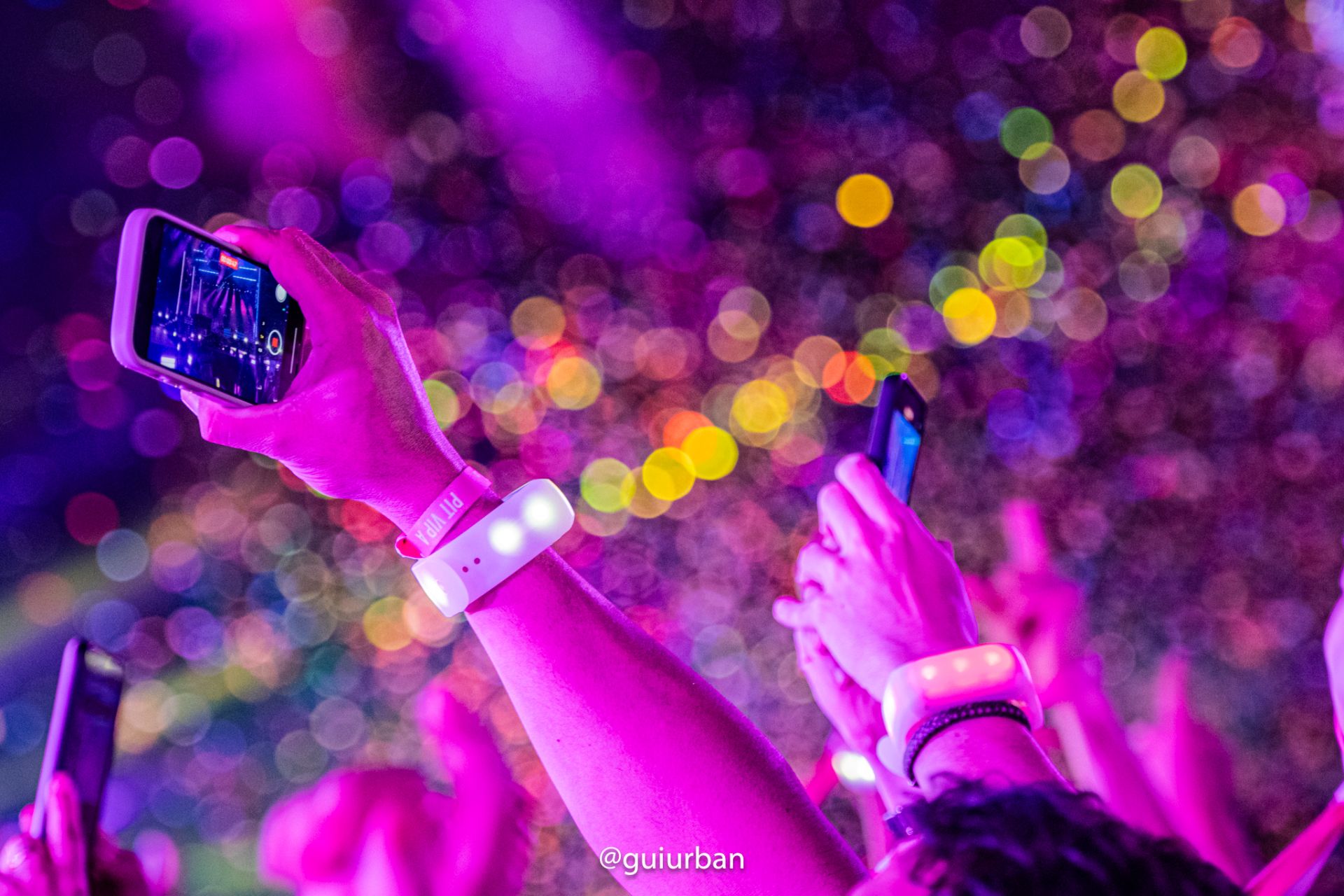
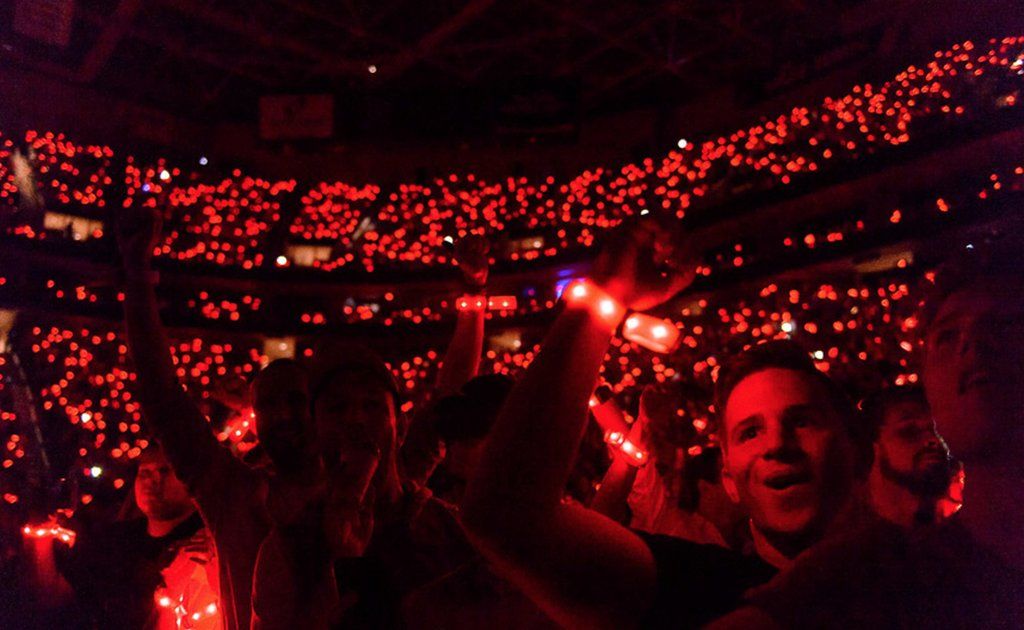
The solution lies in layering light and, most critically, in making the audience itself a source of illumination. This is the core principle behind modern LED Crowd Experiences. By turning attendees into individual, controllable pixels in a grand tableau, we can light the crowd from within. This creates a spectacle that is both deeply immersive for the people in the room and visually stunning for the camera.
With Radio Controlled LED Wristbands and other Wearable LED Technology, a lighting director gains granular control over the entire audience space. You can create gentle, sweeping waves of color, sharp rhythmic pulses synchronized to a beat, or intricate, branded patterns that reinforce a sponsor’s message. This is no longer just lighting; it’s crowd choreography.
The Technical Demands of the Lens
Broadcast cameras are unforgiving. To create camera-friendly immersive events, the technology must meet a specific and demanding set of technical criteria:
- Flicker-Free Operation: This is non-negotiable. Many consumer-grade LEDs produce a subtle, high-speed flicker that is invisible to the naked eye but results in distracting banding or strobing effects on camera, especially during slow-motion replays. Professional-grade systems, like those we deploy for clients like ITV on shows such as Beat The Chasers, are engineered to be flicker-free at any frame rate.
- Color Precision and Saturation: Not all colors are created equal on camera. Highly saturated reds can "bleed" on sensors, and certain blues can appear noisy. True broadcast-ready LED Bands allow for precise color calibration, ensuring the hues designed by the creative team are the same ones seen by viewers at home.
- Dynamic Control: The ability to control the intensity and fade rate of the light is crucial. A sudden flash might work for a single concert moment, but for broadcast, elegant fades and subtle shifts are often more powerful. Technologies like RF and DMX provide the robust, instantaneous control needed to paint these pictures in real-time, matching the energy of a performance or the drama of a sporting moment.
From Stadium to Living Room: A Unified Spectacle
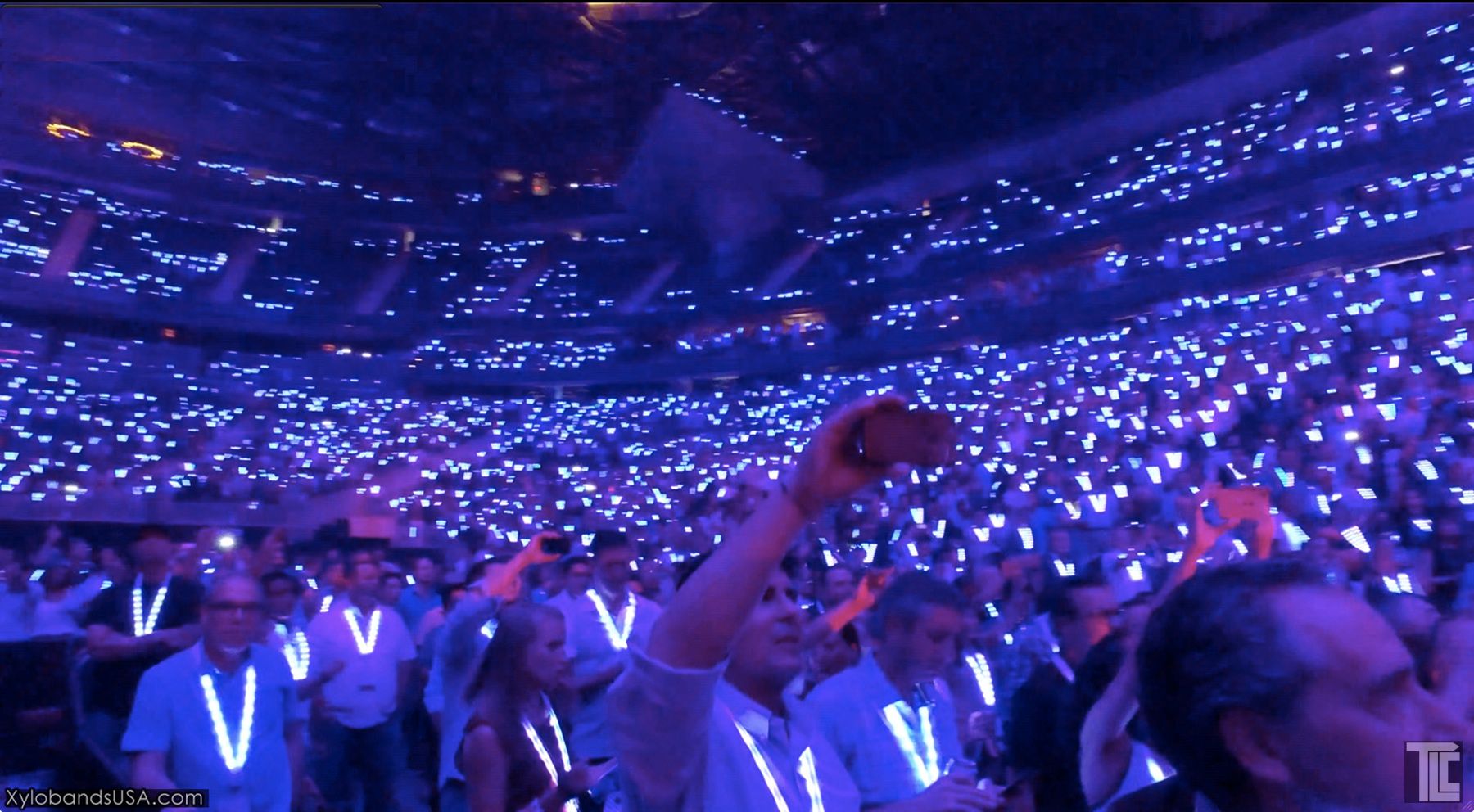
Consider two recent examples of massive, broadcast-first events. When Maluma played to 54,000 fans in his hometown of Medellín, the concert was streamed live to over 240 countries. The energy of that stadium—the sea of lights moving in unison—had to translate through the screen to create a shared experience for his global fanbase. Similarly, the Formula One 75th Anniversary show at The O2 Arena was a complex live TV production featuring multiple musical acts and all 20 F1 drivers. We deployed custom LED Lanyards (our Xylo Pendants) to create distinct visual zones in the crowd, allowing the broadcast director to cut to wide shots that were not just illuminated, but alive with dynamic, branded content.
"The goal is to create a single, unified spectacle, where the energy of the live crowd is perfectly packaged and transmitted to the broadcast audience. The light is the medium that bridges that gap."
The Future is Integrated
As live events become more deeply integrated with broadcast and streaming platforms, this focus on camera-friendly design will only intensify. The distinction between a "live show" and "broadcast content" is dissolving. It is now one single product, experienced through different windows. The savviest producers, brands, and artists are those who understand that you cannot prioritize one window over the other.
By embracing Immersive Event Technology that places controllable, high-quality light directly in the hands of the audience, they are future-proofing their productions. They are creating moments that are not only unforgettable for those in the room but are also crafted with the precision and technical excellence required to captivate millions around the world. For the camera, and the crowd, it’s a win-win. The camera never blinks, and with the right approach, it will capture a spectacle worth watching.