The Camera-Ready Crowd: Lighting for the Lens, Not Just the Room
The Dual Venue: The Room and The World
For any high-stakes live broadcast, the venue isn’t just the physical space — the arena, the studio, the stadium. It’s also the frame of the camera lens, a second stage that is infinitely larger and, arguably, more important. Event producers and lighting designers are tasked with creating a spectacle for two distinct audiences simultaneously: the thousands of people experiencing the energy firsthand, and the millions watching a carefully curated 2D version from their screens across the globe.
This duality presents a unique creative and technical challenge. A lighting effect that feels electric in person can appear chaotic or distracting on camera. What looks balanced to the human eye can be blown out or lost in shadow by a broadcast sensor. Mastering this balance is the hallmark of a truly modern, camera-ready production. It requires a shift in thinking — from simply lighting a venue to sculpting an experience that translates powerfully through the lens.
The Unforgiving Eye of the Broadcast Camera
Broadcast cameras don’t see the way our eyes do. They are less forgiving with dynamic range, more sensitive to flicker, and demand absolute precision in colour temperature and output. An inconsistent flicker rate or a subtle shift in colour that might go unnoticed in a live setting becomes a jarring distraction on a global broadcast feed.
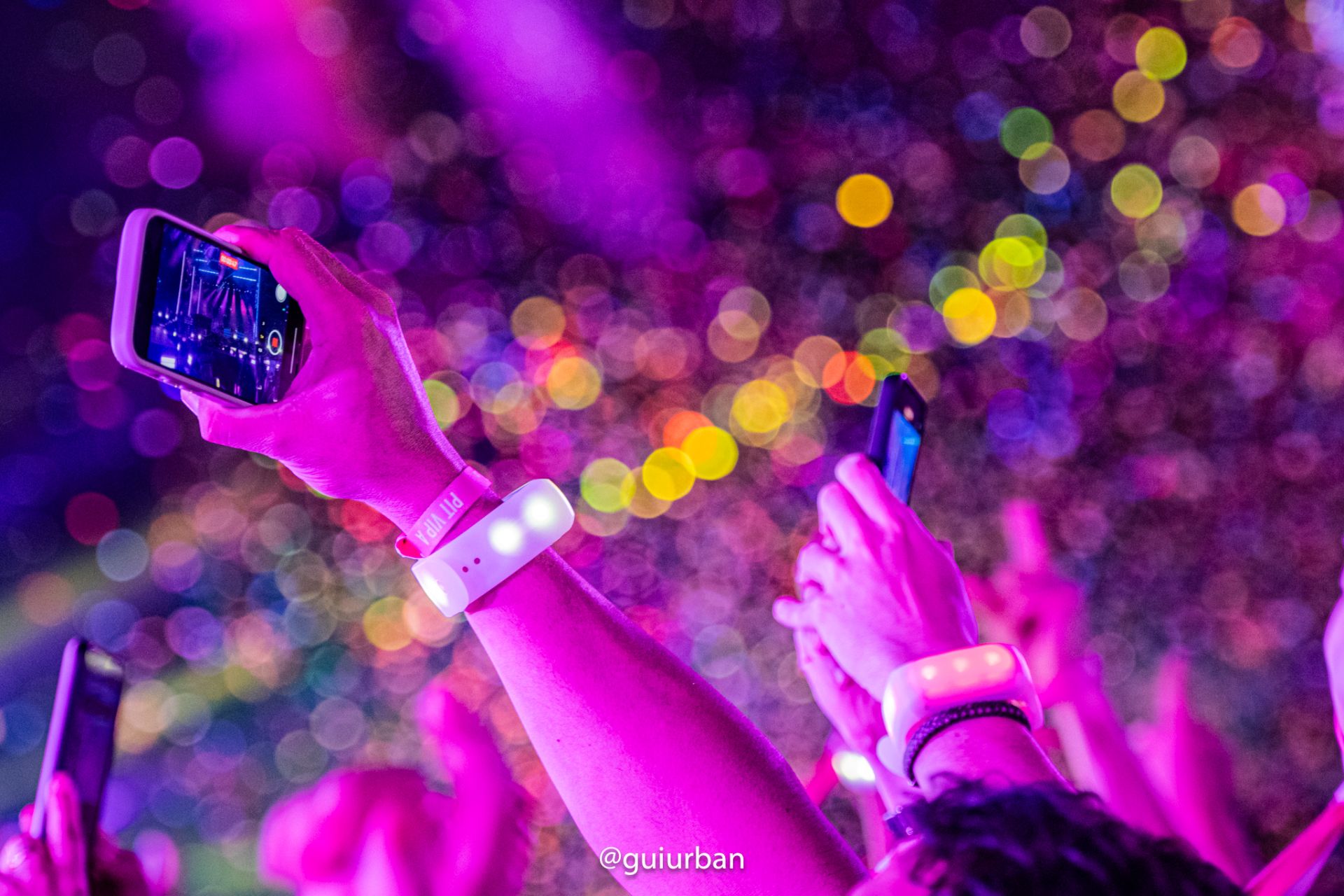
This is where the technical credibility of your equipment is non-negotiable. At Xylobands, our systems are engineered for this unforgiving environment. We understand that every pulse of light, every colour transition, must be flawless. Our radio controlled LED wristbands and other wearable LED technology are built with broadcast in mind, ensuring perfect synchronisation and zero visible flicker, even under the scrutiny of high-frame-rate cameras. It’s a level of technical assurance we’ve provided for major broadcasters and televised events, including our work with ITV on productions like Beat The Chasers, and for global spectacles like the Formula One 75th Anniversary celebration.
Painting with People: The Crowd as a Living Set
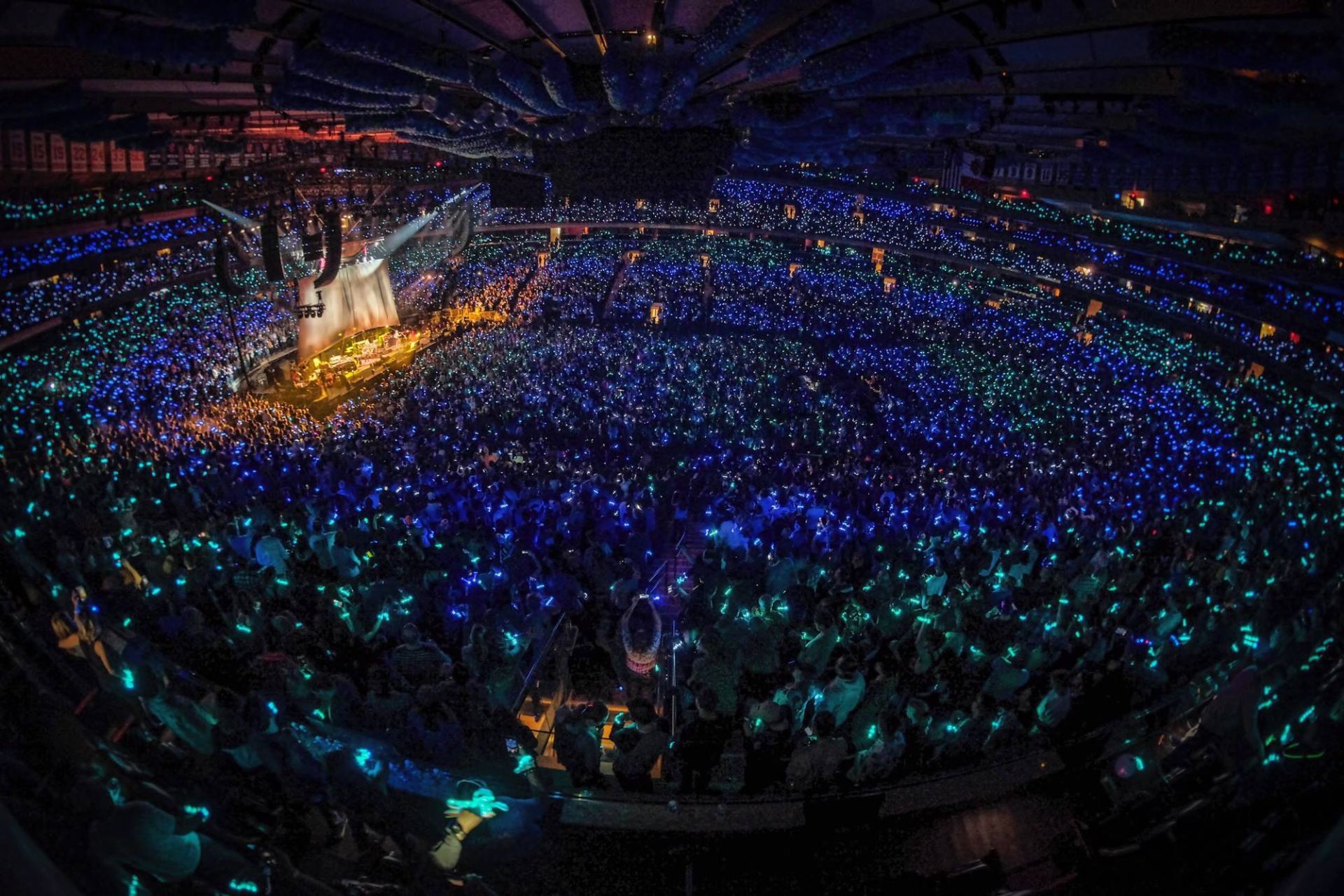
The most transformative shift in broadcast event production is the evolution of the audience from passive spectators to an active part of the visual landscape. With the right technology, the crowd is no longer just a sea of faces; it becomes a dynamic, living canvas. This is the core philosophy behind immersive event technology.
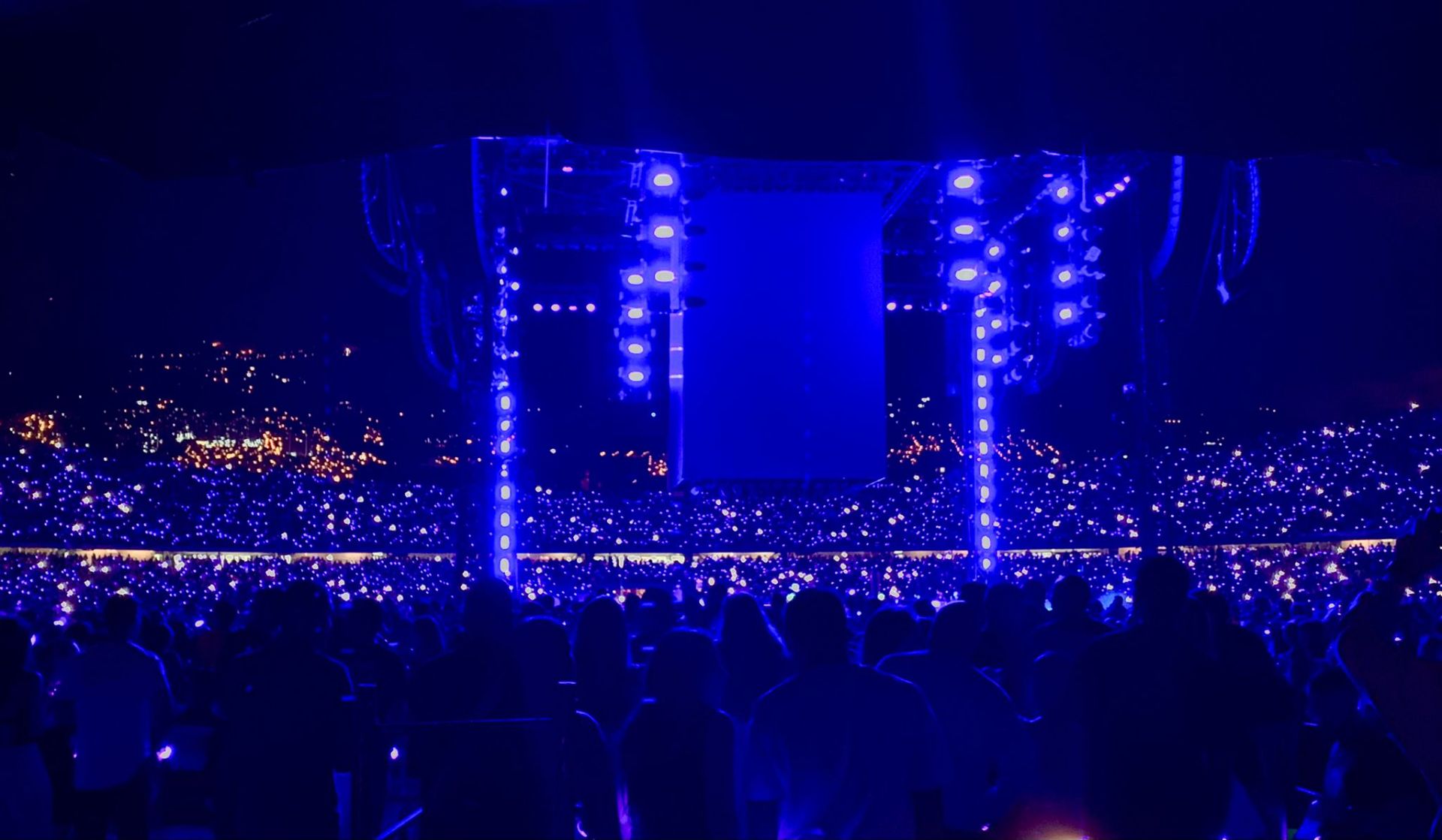
When Maluma played to a hometown crowd of 54,000 in Medellín — a concert streamed live to over 240 countries — the light from the stage didn’t stop at the barricade. It radiated outwards, turning every single attendee into a pixel in a colossal light show. Each wristband, a point of light synchronised to the music, created a visual spectacle that was as compelling for the viewers at home as it was for the fans in the stadium.
This approach offers broadcast directors an invaluable tool. Instead of a dark, anonymous mass, the audience becomes a vibrant, controllable set piece. Imagine cutting from a tight shot of the artist to a wide shot of 60,000 lights pulsing in unison. It’s a moment of awe that magnifies the scale and energy of the event, creating unforgettable television. The crowd becomes a key part of the story, their collective energy made visible through light.
Precision in the Zone: Designing for the Wide Shot
For a broadcast, the wide shot is the money shot. It establishes the scale, captures the atmosphere, and delivers the iconic moments that define an event. Designing for this shot requires a macro-level approach to lighting. It’s not about individual lights; it’s about creating broad, cohesive visual statements across vast spaces.
This is where zonal control becomes critical. Our technology allows for the granular segmentation of an audience, enabling designers to create complex and dynamic effects. You can:
- Create flowing patterns and chases that sweep across an entire arena.
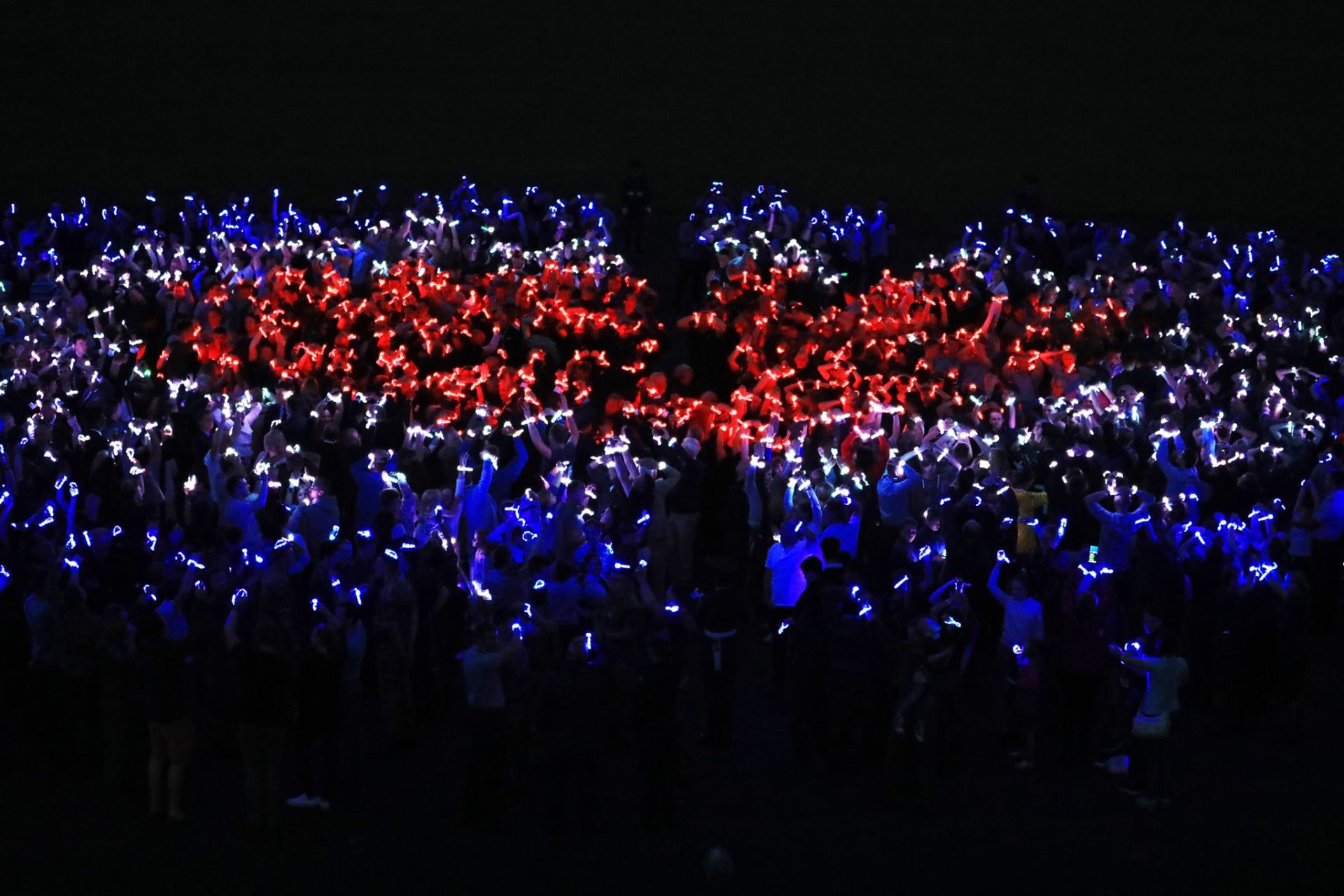
- Isolate specific blocks or tiers with different colours, creating team colours at a sporting event like the Davis Cup or highlighting sections of the crowd.
- Trigger dramatic full-venue strobes or blackouts for maximum impact at key moments.
At the Formula One 75th Anniversary event, we used custom LED Lanyards to execute this perfectly. By pre-positioning devices based on hospitality tiers and seating sections, the creative team could paint with the crowd, ensuring the visuals for the live broadcast were as meticulously planned and branded as the cars on display.
Beyond the Glow: The Future of Broadcast Experiences
As technology continues to evolve, so will the possibilities for creating camera-ready crowd experiences. The integration of LED crowd experiences with augmented reality (AR) overlays on broadcast feeds, for example, opens up a new frontier. Imagine wristbands triggering AR effects on screen, or viewers at home being able to influence the light show in the venue. The line between the live and broadcast experience will continue to blur, creating a more unified, participatory spectacle.
Ultimately, designing for the lens means seeing the event through a different set of eyes. It demands technical rigour, a deep understanding of how light interacts with sensors, and a creative vision that embraces the audience as a fundamental part of the spectacle. By turning thousands of individuals into a single, cohesive canvas, we create moments that are not only felt in the room but are seared into the memory of the millions watching around the world. We don’t just light up a crowd; we create a broadcast-ready phenomenon.