Cracking the Code: The Art and Science of Camera-Ready Live Experiences
The Two-Audience Challenge: Mastering Light for the Lens and the Live Crowd
In the world of major live events, the audience is no longer just the sea of faces in the arena. It’s also the millions watching from screens across the globe. This creates a fundamental challenge for production designers: how do you create a breathtaking spectacle for the people in the room while also delivering a flawless, visually rich experience for the broadcast audience? It’s an art form that requires mastering two distinct yet overlapping disciplines.
Lighting for a live audience is about immersion and visceral impact. It’s about shaping the energy of the space, painting the architecture with colour, and creating a sense of collective euphoria. But the camera sees things differently. What looks spectacular in person can appear blown out, noisy, or flat on screen. The dynamic range of the human eye is far more forgiving than that of a broadcast camera sensor. This is where the science of camera-ready lighting comes in, demanding a meticulous approach to colour temperature, flicker rate, and intensity.
The Unseen Details: Engineering for the Broadcast
When an event is broadcast live, every element of the production is magnified and scrutinised. For a company like Xylobands, this means engineering our technology to be not just reliable, but camera-perfect. This involves several key technical considerations:
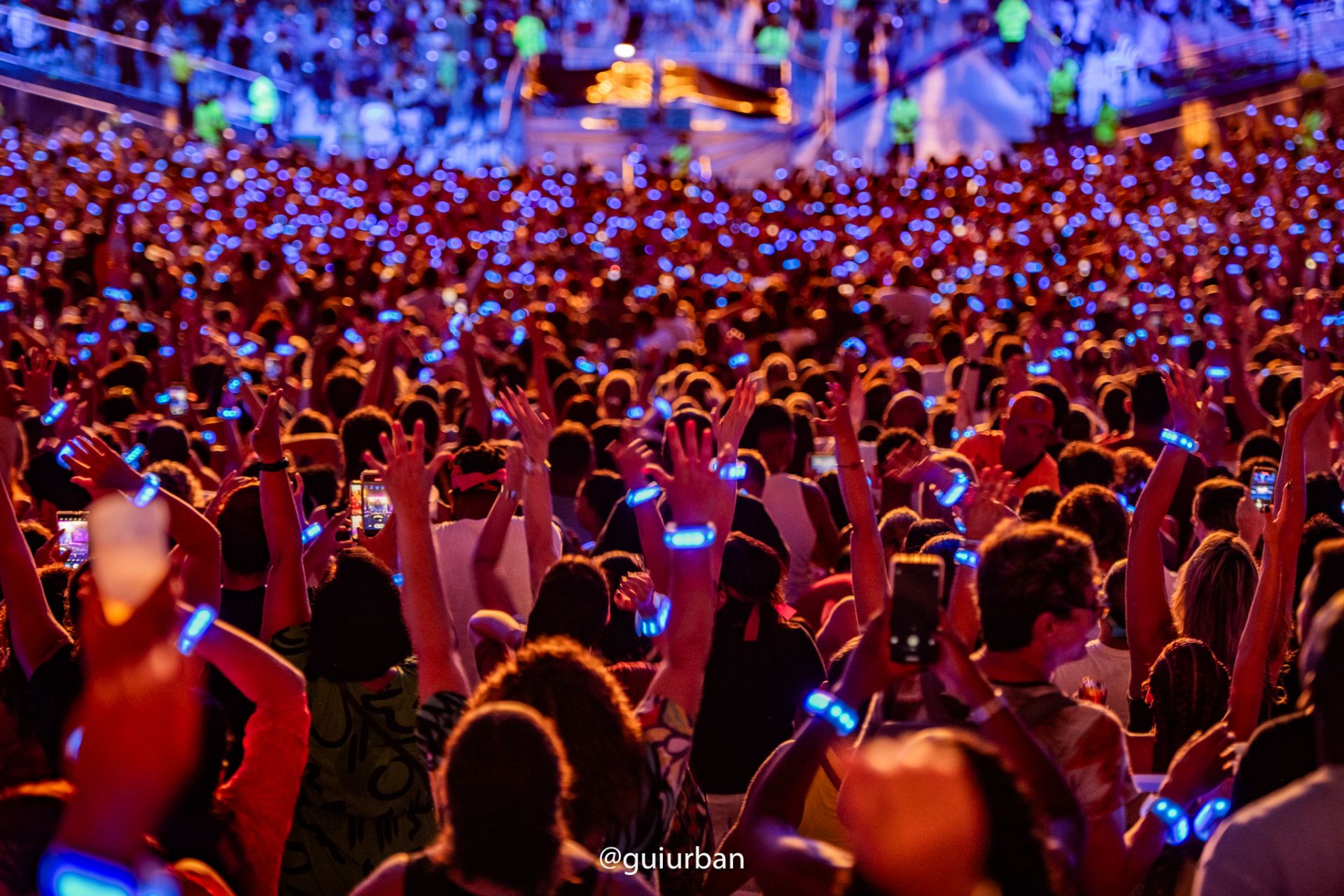
- Flicker-Free Performance: High-speed cameras and slow-motion replays are ruthless at exposing flicker in LED sources. Our radio-controlled LED wristbands and other wearables are engineered for high-frequency PWM (Pulse Width Modulation) to ensure a smooth, solid light output, even under the intense scrutiny of broadcast cameras.
- Colour Fidelity: The colour science of broadcast is exacting. The vibrant red of a team’s branding or an artist’s signature colour must translate accurately to the screen. We work to ensure our LED Bands produce consistent, rich colours that align with the palettes specified by lighting and broadcast directors, ensuring brand integrity and visual cohesion.
- Controlled Intensity: A burst of light that feels exhilarating in a stadium can be a blinding flare on camera. Our systems allow for granular control over brightness, enabling operators to create dramatic swells of light without overwhelming camera sensors. It’s about finding the sweet spot that delivers impact without sacrificing detail.
Case Study in Action: Illuminating Global Broadcasts
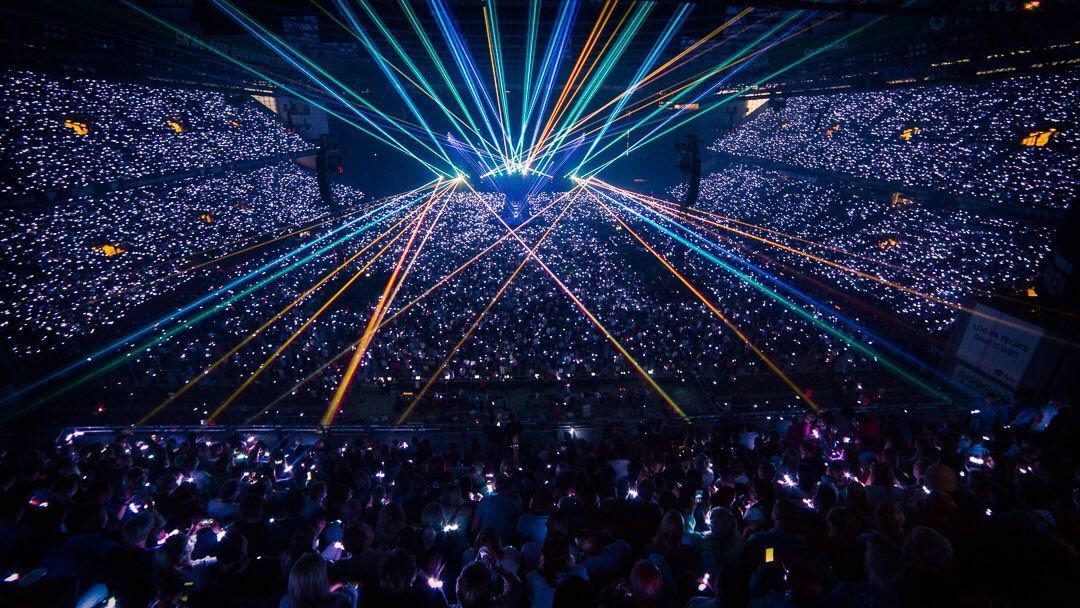
This challenge is one we’ve navigated for numerous high-stakes broadcasts, from sporting events like the Davis Cup and Formula One to iconic TV productions for clients like ITV and the globally syndicated game show Beat The Chasers. For Maluma’s 2022 “Medellín En El Mapa” concert, the stakes were immense. Not only was there a live audience of 54,000, but the show was streamed live on Amazon to over 240 countries. The LED crowd experiences we helped create had to be spectacular for both audiences, turning the entire stadium into a vibrant, pulsating canvas that looked as good on a smartphone screen in Tokyo as it did from the top tier of the stadium in Medellín.
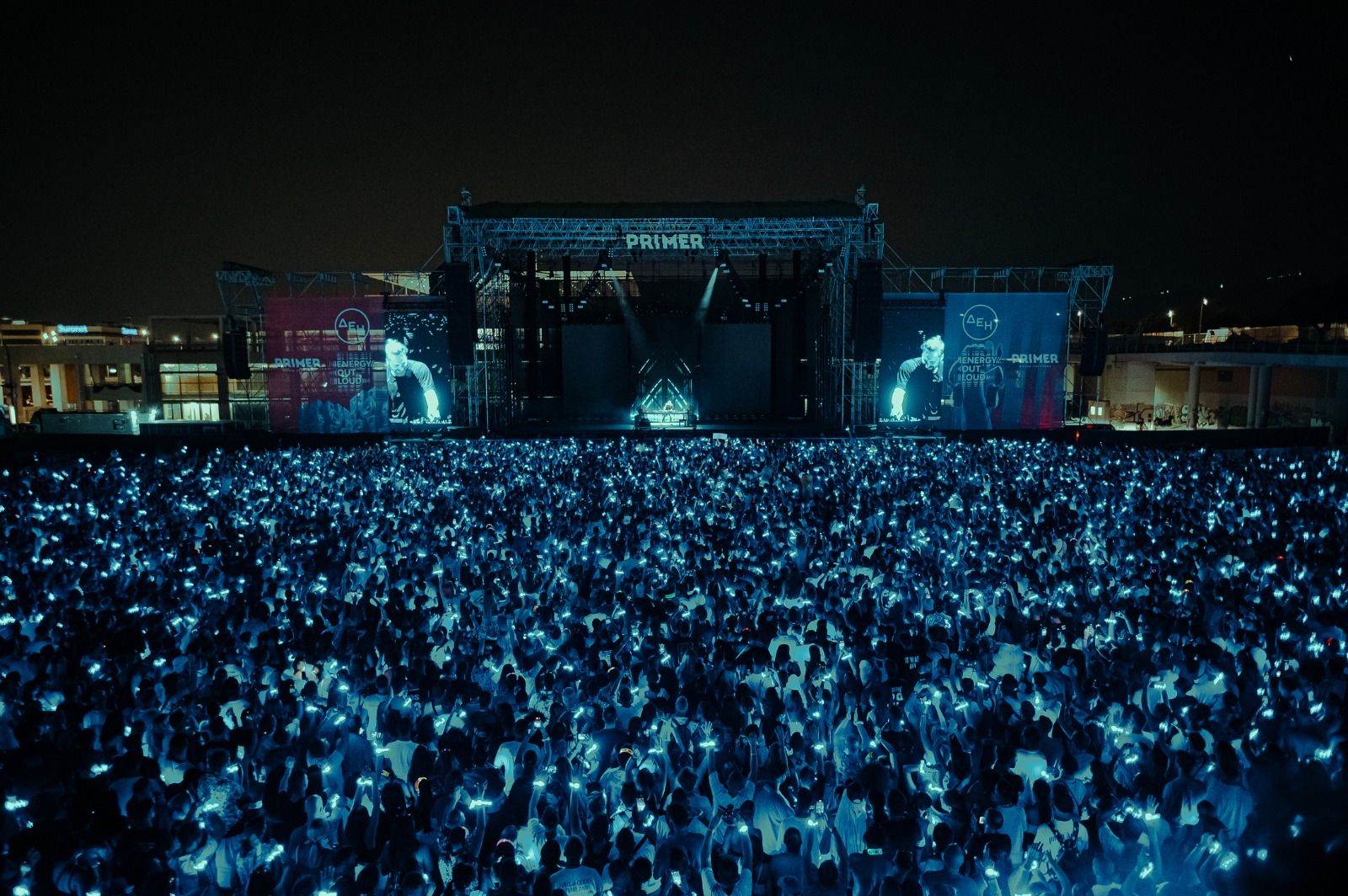
Similarly, at major music festivals like Greece’s PRIMER Music Festival, the event is increasingly a content-generation engine. The visuals created by thousands of synchronised festival wristbands are not just for the attendees; they are destined for after-movies, social media, and future promotional materials. The lighting must be designed with this second life in mind.
The Crowd as the Set: Extending the Visual Landscape
Perhaps the most powerful tool in the hybrid event arsenal is the audience itself. By transforming the crowd into a dynamic, pixel-mapped canvas, you solve a key broadcast challenge: filling the vast, dark spaces that often surround a stage or playing field. A dark, passive audience can look like negative space on television, but an illuminated one becomes a living, breathing part of the set design.
Instead of a static backdrop, the crowd becomes an active visual element, a low-resolution video screen that can display patterns, logos, and waves of colour that echo the action on stage. This creates a sense of scale and immersion that is incredibly compelling for the broadcast viewer.
This technique turns every fan into a pixel, creating massive, organic visuals that a traditional lighting rig alone cannot replicate. From transforming a section into a country’s flag during the Davis Cup opening ceremony to creating sponsor logos that sweep across an entire arena, wearable LED technology offers a unique way to bridge the gap between the live and broadcast experience.
A Unified Vision for a Hybrid World
The future of live events is undeniably hybrid. As streaming and broadcast technology continue to evolve, the line between the in-person and at-home audience will only become more blurred. The key to success lies in a unified creative and technical strategy that respects the needs of both. It’s about understanding the physics of light and the nuances of the camera, but also the psychology of the crowd.
By engineering immersive event technology that is both visually stunning in person and technically flawless on camera, we can create truly shared spectacles. The goal is no longer just to light the stage, but to light the entire experience, turning every seat in the house—and every screen at home—into the best seat in the house.