Closing the Distance: A New Philosophy for Arena and Stadium Lighting
The Tyranny of Scale
Stand in the upper tier of a sold-out stadium. The air crackles with anticipation. Below, the stage is a distant island of light and motion, the artists small figures commanding a vast space. For decades, the primary challenge of tour lighting was simply to be seen—to throw enough photons across enough distance to make the show visible. But visibility is not connection. The physical distance between the front row and the nosebleeds creates a psychological chasm, a sense of separation that can dilute the collective energy of a live performance.
Modern tour production for arenas and stadiums is no longer about just conquering this distance with raw power. It’s about dissolving it. The new philosophy of large-scale lighting design is one of inclusion and immersion, transforming the entire volume of the venue—and every person within it—into a single, cohesive canvas. It’s a discipline that trades the simple spotlight for a far more ambitious tool: an environment of shared light.
The Audience as the Medium
The conceptual leap required is to stop seeing the audience as passive spectators and start seeing them as an active medium for the show itself. This was the spark of insight that led to the invention of Xylobands. Watching Coldplay’s 2011 Glastonbury performance, our director Jason Regler was struck by the line “Lights will guide you home” and imagined a way to make that literal—to unify the crowd by making them part of the illumination. The idea of putting a radio-controlled light source on every single person wasn’t just a gimmick; it was a fundamental shift in the architecture of a live show.
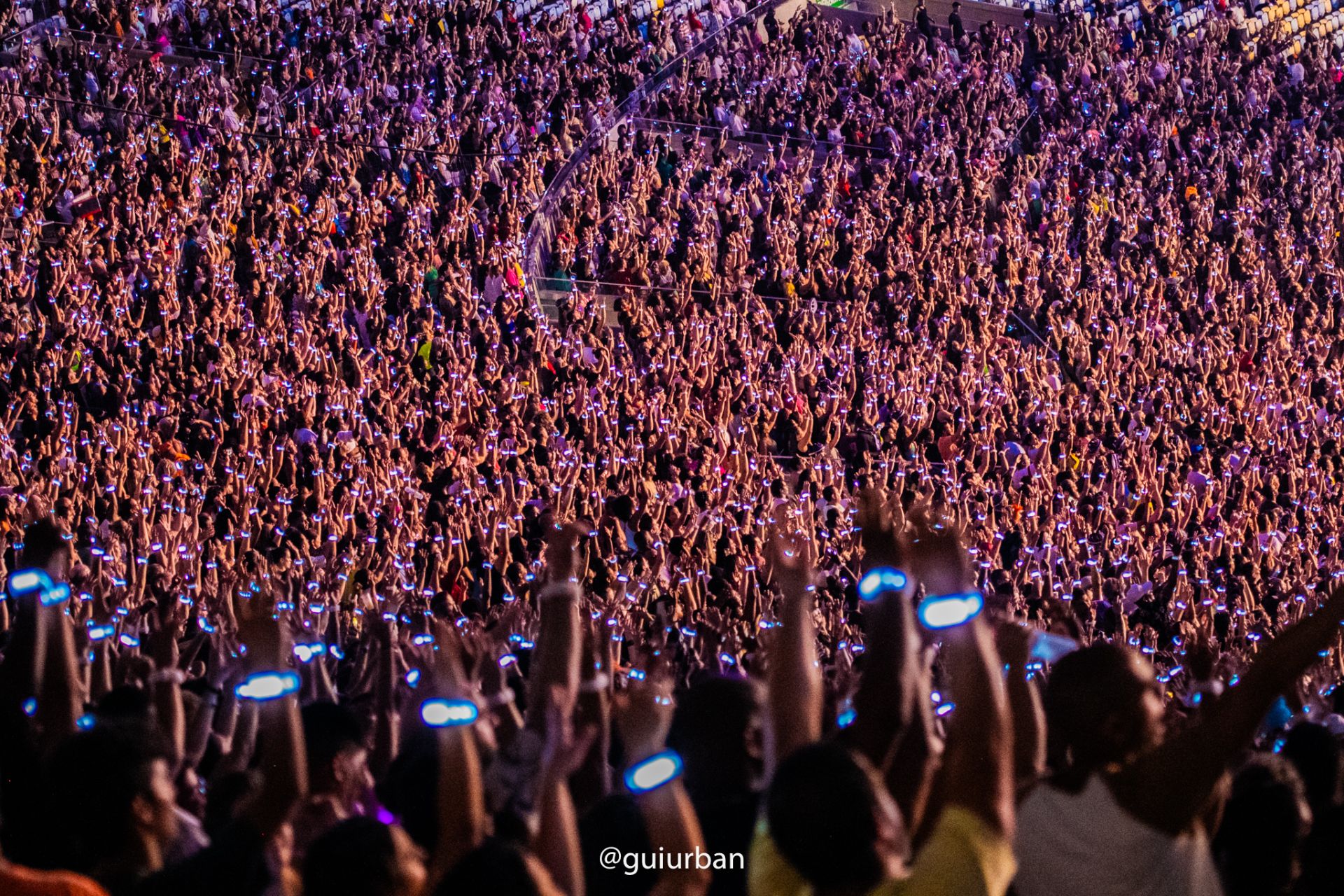
This approach has become a cornerstone of modern Immersive Events. By deploying Wearable LED Technology, designers can now paint with light on a scale previously unimaginable. Each audience member becomes a pixel in a grand, dynamic image. A sudden, synchronized flash across 50,000 wrists for a chorus drop. A slow, pulsing wave of color that rolls from the stage to the back of the arena. These moments do more than just dazzle the eye; they create a powerful, undeniable sense of unity. Suddenly, the person in the last row is connected to the artist and to every other fan in a shared, tangible experience.
Principles of Light Choreography at Scale
Designing for this living canvas requires a unique set of principles, a form of choreography that extends far beyond the stage.
Unity and Synchronicity
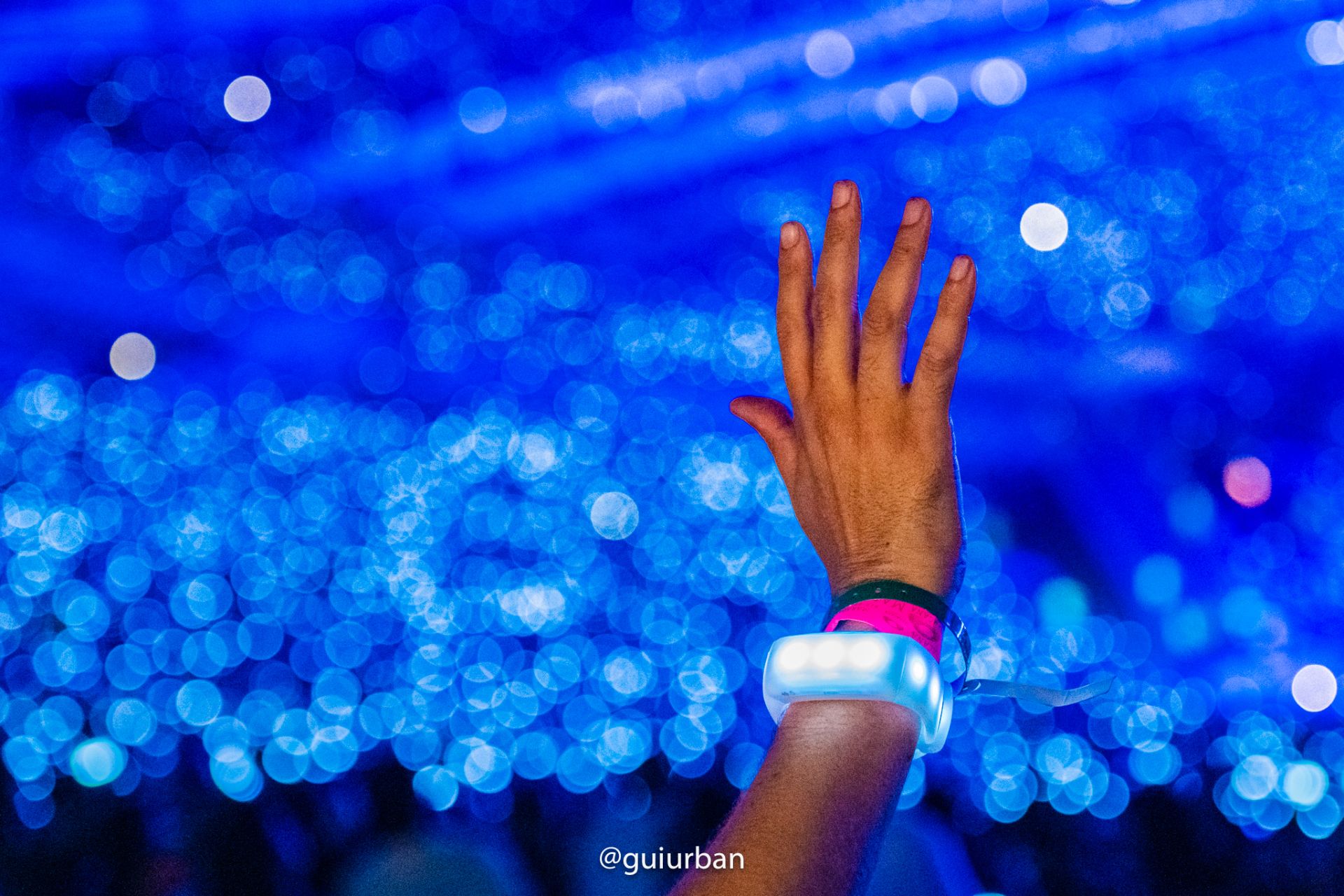
The most powerful tool in creating LED Crowd Experiences is synchronicity. The ability for Radio Controlled LED Wristbands to light up at the exact same instant, on the same beat, is the foundation of the technology’s emotive power. It transforms thousands of individuals into a single entity, reacting as one. This is the magic that defines the Coldplay Xylobands experience—a moment of pure collective consciousness, triggered by light.
Movement and Flow
With the audience as a canvas, light can have direction and velocity. Designers can create chases that sweep around the stadium bowl, pulses that emanate from the stage, or twinkling fields of light that gently shimmer. This movement adds a layer of visual storytelling that complements the music and performance. For global artists like Maluma, whose historic hometown concert in Medellín brought together over 54,000 people, this technology was key to ensuring the sheer scale of the event amplified the connection rather than diminishing it.
Zoning and Segmentation
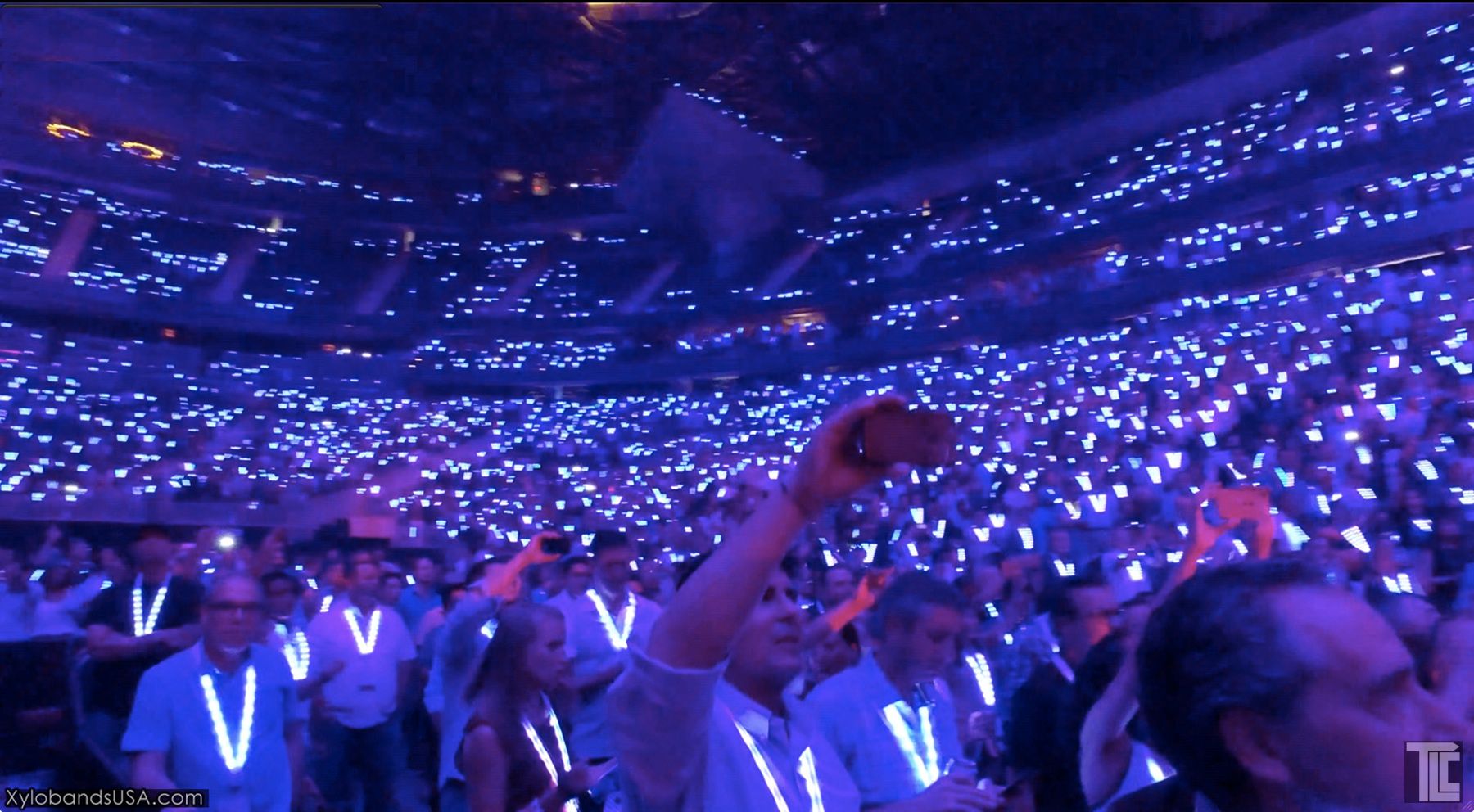
Advanced control allows for incredible precision. Designers are not limited to treating the crowd as a single block. They can create complex patterns by segmenting the audience into zones. Imagine a checkerboard of alternating colors, or pitting the left side of the arena against the right in a visual call-and-response. At the 75th-anniversary celebration for Formula One, custom LED Lanyards were distributed based on team affiliations and seating tiers, allowing for highly specific lighting effects that targeted different fan groups within the O2 Arena, making the creative possibilities for Corporate Event Activations more dynamic than ever.
The Integrated Spectacle
Crucially, this form of audience lighting is not an isolated effect. It must be woven into the very fabric of the show’s design. The most breathtaking spectacles are those where the light on a fan’s wrist is in perfect conversation with the video on the screens, the color of the PAR cans, and the rhythm of the music. It requires an immense level of creative collaboration and technical integration.
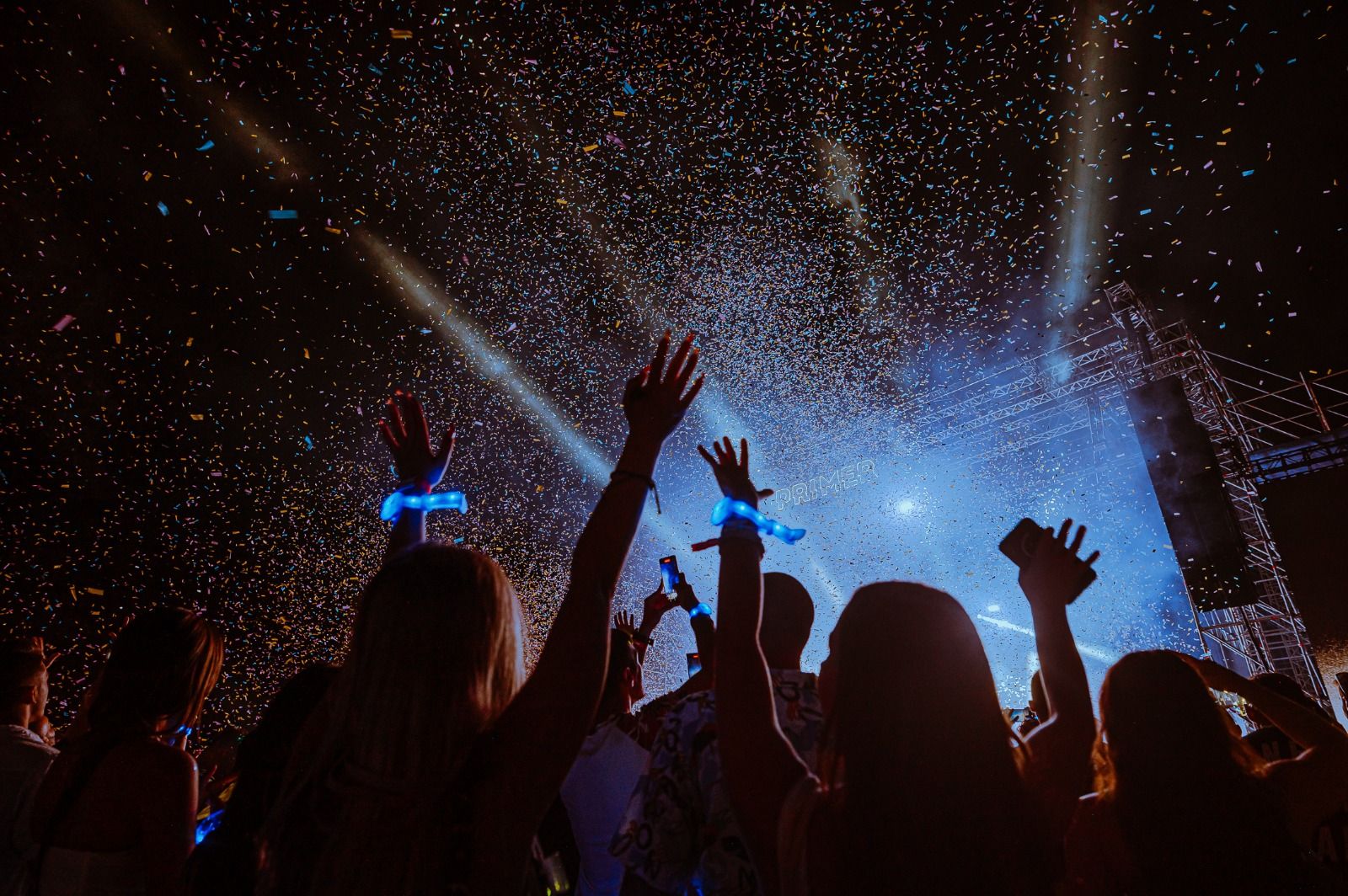
The color palette of the Concert Wristbands must match the aesthetic of a specific song. A strobe effect on the wristbands has to be perfectly timed with a blast of cryogenics from the stage. This unified approach ensures the technology serves the art, creating a holistic world that envelops everyone present. The audience isn’t just watching the show; they are *in* the show. Their participation, facilitated by light, becomes an essential part of the performance.
Lighting the Human Connection
The ultimate goal of stadium and arena lighting design is to foster human connection in the face of immense scale. While video walls get bigger and sound systems get louder, the frontier of innovation is in creating intimacy. Immersive Event Technology offers a profound solution, providing the tools to dissolve the distance between the stage and the seats.
By treating the crowd as the canvas, designers can create a shared sensory experience that binds tens of thousands of strangers together. It’s a philosophy that proves that no matter how vast the space, light has the unique power to guide us, connect us, and make us feel like we are part of something bigger than ourselves.