The Other Side of the Coin: How Dyslexic Thinking Drives Innovation

The Mind's Uncharted Path
In the structured world of business, we often default to linear thinking. We build strategies, design systems, and solve problems based on established, sequential processes. But what if the greatest creative breakthroughs don't live on this well-trodden path? What if they are found in the uncharted territory of a mind that processes information differently?
Dyslexia is commonly understood as a learning difficulty associated with reading, writing, and spelling. While these challenges are real, this one-dimensional view overlooks a profound truth: the dyslexic mind is not broken; it's wired differently. This cognitive diversity, far from being a liability, can be a formidable asset in entrepreneurship, technology, and the creative industries. It fosters a unique ability to see the bigger picture, connect disparate ideas, and simplify complex problems — skills that are indispensable in a world of accelerating change.
The Advantage of a Different View
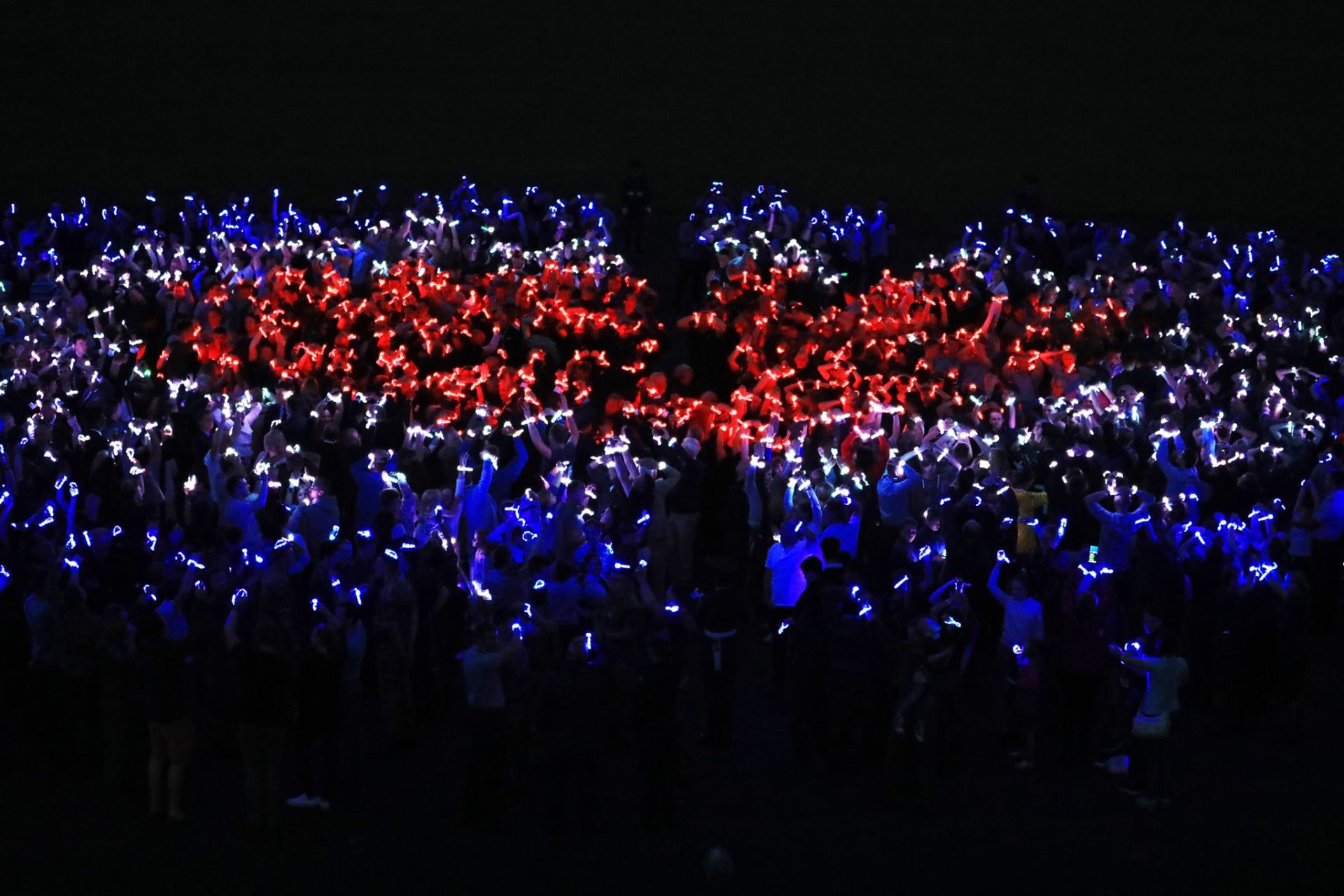
The founder of Xylobands, Jason Regler, is dyslexic. His story is a powerful testament to this idea. The concept for Xylobands wasn't born from a spreadsheet or a market analysis. It came from a moment of pure, unadulterated sensory experience at a Coldplay concert during the song "Fix You." As the lyric "Lights will guide you home" filled the festival air, he envisioned the crowd not just as spectators, but as a living, breathing part of the show itself — a unified canvas of light.
This is a classic example of dyslexic thinking in action: a holistic, experiential, and problem-solving approach. Instead of focusing on the individual components, the dyslexic brain often zooms out to see the entire system. It seeks patterns, simplifies complexity, and makes intuitive leaps that linear thinking might miss.
"I was watching all these people, and I had this idea," Jason has said. "I've always had this thing in my head where I can see how things work."
This ability to "see how things work" without getting bogged down in the minutiae is a hallmark of the dyslexic cognitive style. It’s a perspective that naturally gravitates toward innovation, asking "what if?" instead of "how to?".
Connecting the Dots: The Power of Big-Picture Thinking
Research from organizations like Made by Dyslexia highlights several key strengths associated with this way of thinking:
- Connecting and Communicating: Excelling at understanding and interacting with others, often with high levels of empathy. This is crucial for building teams and understanding an audience, whether for a corporate event or a global music tour.
- Visualising and Imagining: A strong ability to see things in 3D, to imagine possibilities, and to create novel solutions. This is the very essence of designing immersive event technology and creating unforgettable LED crowd experiences.
- Exploring and Innovating: An insatiable curiosity and a talent for seeing connections between seemingly unrelated concepts. This drives the R&D process, pushing beyond existing technology to create the next generation of wearable LED technology.
- Reasoning and Simplifying: The ability to cut through noise and identify the core of a problem, making complex ideas understandable and spotting patterns others miss.
These are not just soft skills; they are strategic advantages. In the world of live events, where the goal is to create a seamless, emotionally resonant experience for tens of thousands of people, big-picture thinking is paramount. When we deployed custom LED wristbands for Maluma’s massive homecoming concert in Medellín or created custom pendants for a Formula One anniversary, the task wasn't just technical. It was about translating an artist’s vision and a brand’s identity into a shared, visceral moment. It required seeing the stadium not as 54,000 individual lights, but as a single human canvas.
Building a Neurodiverse Future
For too long, the business world has been shaped by a narrow definition of intelligence, often favouring rote memorization and linear processing. This has led to workplaces where neurodivergent individuals feel they have to mask their true cognitive style to fit in. But a shift is underway.
Companies are beginning to recognise that true innovation doesn't come from conformity; it comes from the friction of different perspectives. Building a neurodiverse team isn’t about tokenism or social good — it’s a strategic imperative. The pattern-seeking, big-picture, and problem-solving skills inherent in dyslexic thinking are exactly what’s needed to navigate the complexities of the modern world.
From inventing radio controlled LED wristbands that turned into a global phenomenon with Coldplay to developing sophisticated systems for corporate event activations, the journey of Xylobands is inextricably linked to this different way of seeing the world. It’s a story built on the belief that an idea can connect thousands of people, that light can be a language, and that the perceived disadvantages of dyslexia are often the very source of its most powerful creative advantages.
The future belongs to those who can see things differently. It belongs to the pattern seekers, the visionaries, and the innovators who aren’t afraid to take the uncharted path. It belongs to the minds that see not just a crowd, but a potential symphony of light.