From Lighters to LEDs: A Brief History of Audience Participation
The Analogue Spark: A Sea of Flames
The story of audience participation begins not with a circuit board, but with a simple, universal symbol: fire. For decades, the flickering flame of a lighter held aloft at a concert was the first true form of mass audience expression. It was a poignant, analogue act of solidarity, a way for thousands of strangers to collectively say, "We are here, together, in this moment." It was the original signal, a way to honour an artist during a ballad or call for an encore. This simple gesture transformed a passive crowd into an active, visible community, creating a powerful visual that, for its time, was revolutionary.
This was the genesis of the crowd as a canvas. It wasn’t orchestrated by a producer or a technician; it was organic, born from the shared human desire to connect and be seen. But it was also limited. It was a single colour, a single action, and dependent on what each individual had in their pocket. The desire for something more, something that could be painted with, was quietly growing.
The Digital Dawn: Pixels and Phones
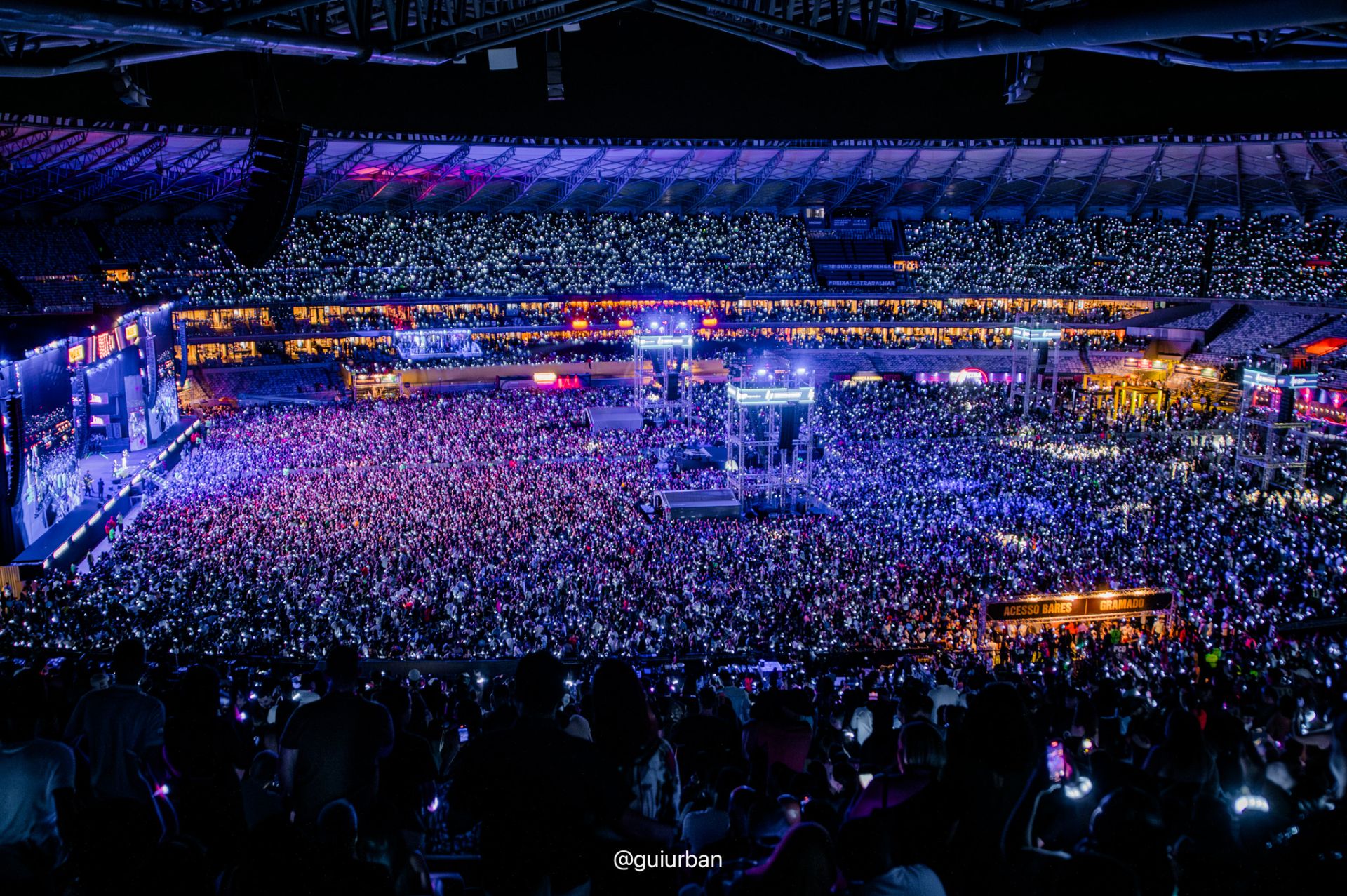
As lighters faded into the background, the mobile phone screen took its place. Suddenly, the single flame became a sea of digital rectangles. This new tool offered more versatility—apps could change screen colours, create strobing effects, and turn a stadium into a mosaic of individual pixels. It was a significant step forward, allowing for a degree of coordination and complexity that was previously impossible.
However, this new technology brought its own set of challenges. It relied on attendees downloading an app, having a charged phone, and actively holding it up. More importantly, it kept the audience tethered to their devices. Instead of immersing themselves in the performance, attendees were often looking at the show through their screens, one step removed from the immediacy of the live experience. The technology, while connecting the crowd visually, risked disconnecting them emotionally.
The Wearable Revolution: The Birth of Xylobands
The true paradigm shift arrived with the advent of wearable LED technology. The moment of inspiration is now part of industry lore: our founder, Jason Regler, watching Coldplay at Glastonbury, hearing the iconic line "lights will guide you home," and envisioning a crowd where every single person was a synchronised point of light. It was a vision that sought to combine the organic unity of the lighter flame with the limitless possibilities of digital control, all while freeing the audience from their phones.
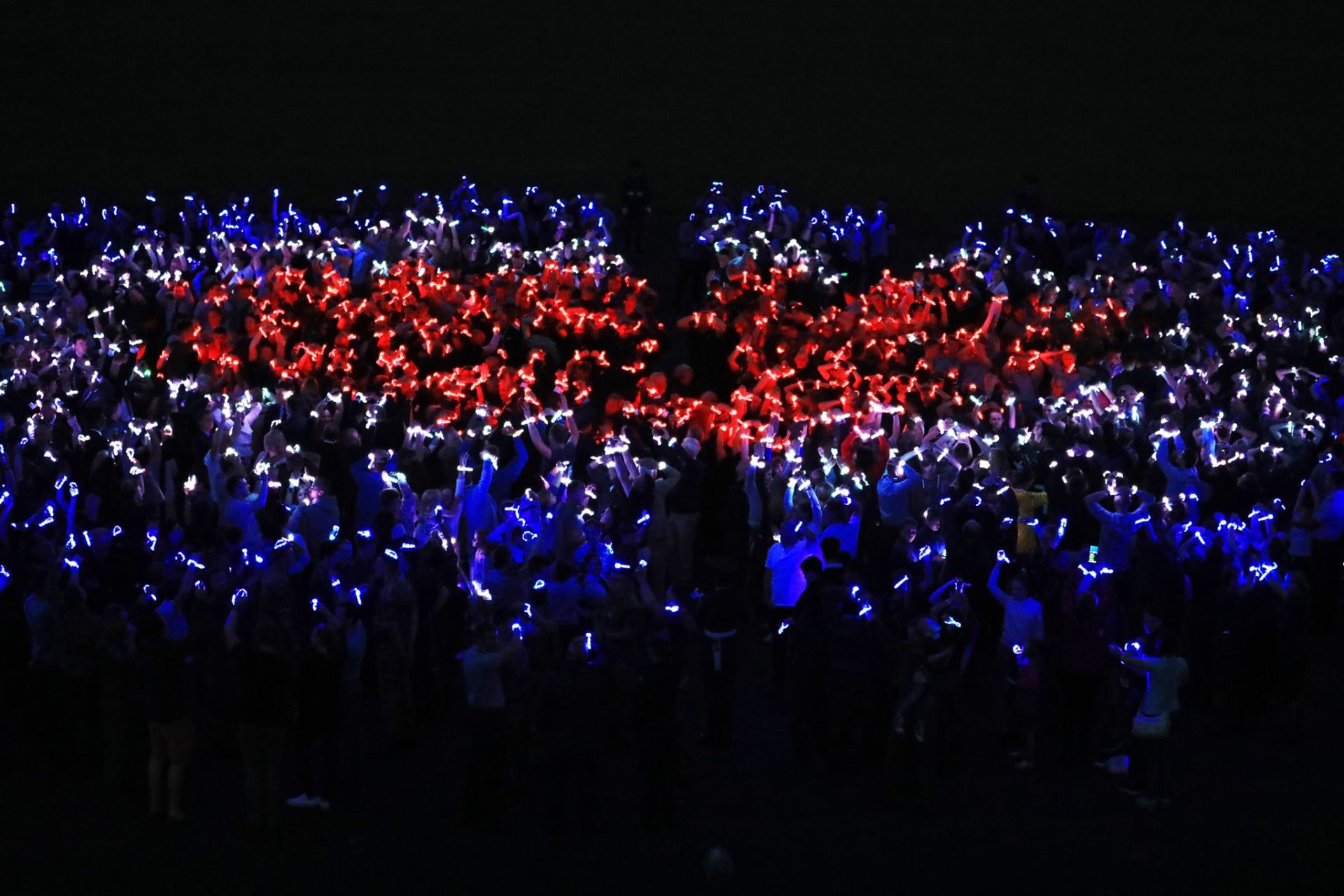
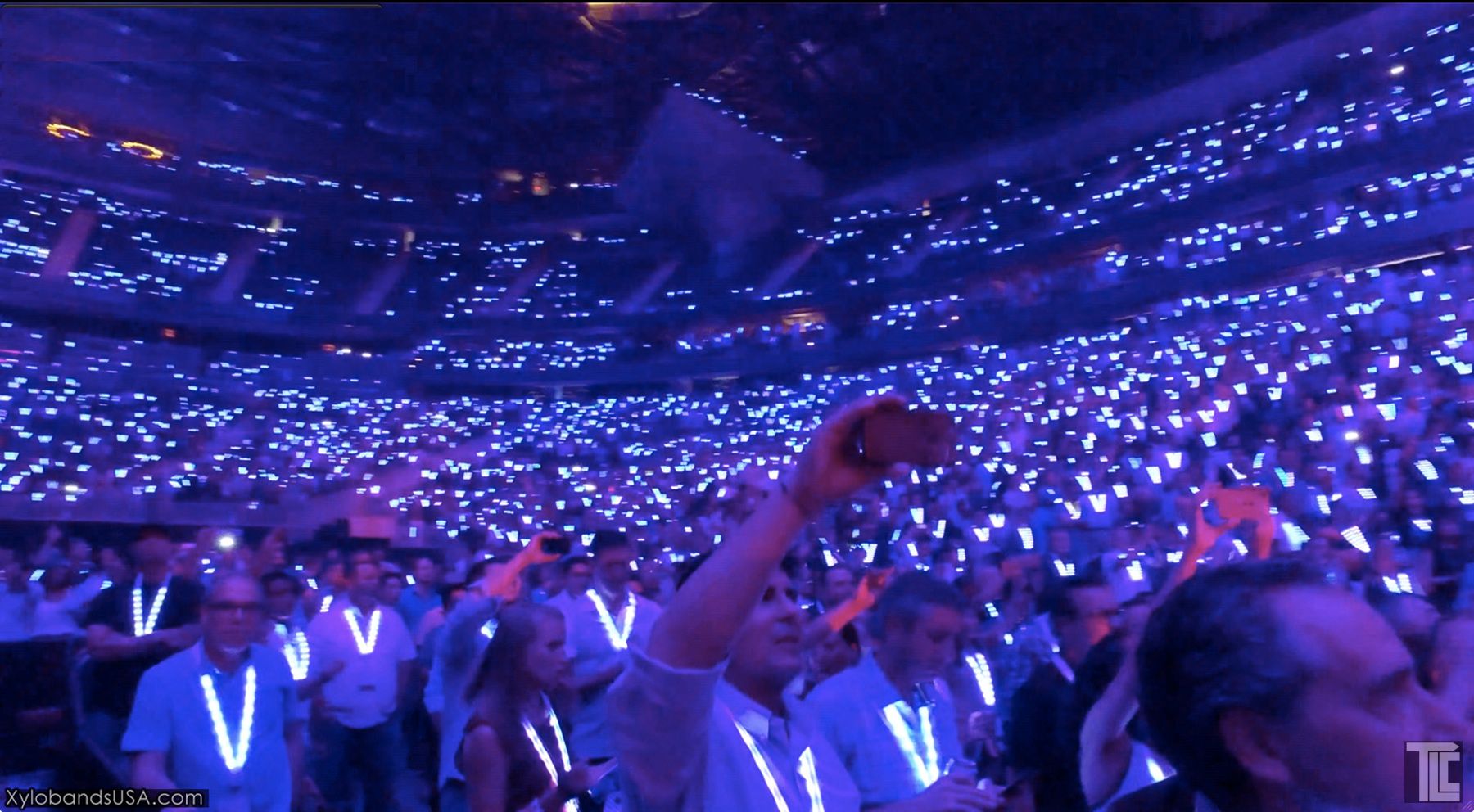
This led to the creation of Xylobands. First debuting on Coldplay’s Mylo Xyloto tour, these radio-controlled LED wristbands fundamentally changed the relationship between the artist, the audience, and the environment. No longer was the crowd just watching the show; they were the show. Every individual became a pixel, but a hands-free, fully-immersed one. The operator could now paint with the crowd, creating waves of colour, strobing pulses in time with the beat, and segmenting the arena into dynamic, breathing blocks of light.
"Instead of thousands of people holding up lighters or mobile phones, the entire audience could become one living light show, perfectly synchronised with the music. It would create moments of unity where artists and fans shared the same experience."
The Modern Era: Immersive Event Technology at Scale
Today, that initial concept has blossomed into a sophisticated ecosystem of immersive event technology. The single wristband has evolved. We now have LED Lanyards, LED Orbs, and custom wearables designed for specific events, like the custom Xylo Pendants created for the Formula 1 75th Anniversary celebration. This isn’t just about a simple blink; it’s about creating complex, layered LED crowd experiences.
Modern systems allow for zoned control, enabling lighting designers to isolate specific sections of a stadium, trigger effects based on crowd movement or sound, and integrate the lighting with broadcast feeds for a global audience. For artists like Maluma, whose hometown show in Medellín was streamed to over 240 countries, or Wizkid, who sold out three nights at the O2 arena, the technology ensures the at-home audience feels the same electric energy as those in the room. The crowd becomes a vibrant, essential part of the broadcast spectacle, a living, breathing set piece.
Beyond the Concert: A New Language for Events
The evolution didn't stop at music. The power of a connected crowd has been embraced across the spectrum of live events. It’s now a critical tool for corporate event activations, turning attendees at a product launch for brands like Samsung or Google from passive spectators into active participants. At major sporting events like the Davis Cup or the FIFA World Cup, this technology amplifies moments of peak excitement, uniting tens of thousands of fans in a single, coordinated pulse of light.
From music festivals like Primer in Greece to high-stakes TV productions for ITV, the goal remains the same: to deepen the sense of connection. By making each person a part of the spectacle, you foster a profound sense of belonging. The technology becomes an invisible thread, weaving individuals into a collective, shared experience.
The journey from a simple flame to a network of radio-controlled wearables traces the arc of our innate human need for connection. Each technological leap has been in service of a deeper, more meaningful shared moment. It’s about transforming a gathering of individuals into a unified, sentient entity, turning a live event into a memory that is not just seen or heard, but felt. The light is no longer just a guide; it’s a conversation.