From Lighters to Light Shows: The Unfolding Story of Audience Tech
The Echo of a Single Flame
It began with fire. In the arenas and rock halls of the 1960s and 70s, a new ritual emerged. As the house lights dimmed for an encore, a lone fan would strike a match or flick a lighter. A tiny point of light in the vast darkness. Then another would follow, and another, until the stadium was transformed into a flickering constellation of individual flames. This was more than just a call for one more song; it was a primal act of collective will, a spontaneous, analogue signal from the audience to the artist. It was the birth of audience participation technology.
This simple act, replicated thousands of times over, was a declaration: "We are here. We are with you. We are part of the show." It was the first time the crowd truly became a visual component of the performance, a living, breathing entity that could be seen as well as heard. It was beautiful, dangerous, and deeply human.
The Digital Dawn: Pixels and Participation
As technology evolved, so did the tools of participation. The analogue flame gave way to the pixelated glow of mobile phone screens. While safer and more modern, the effect was similar—a sea of individual lights, each representing a person, coming together to create a singular, shared moment. Yet, this evolution also highlighted a fundamental limitation: the participation was still passive and largely un-choreographed. The audience could signal their presence, but they couldn't truly be integrated into the creative vision of the show itself.
The industry needed a new language, a way to bridge the gap between the individual and the collective, the artist and the audience. The challenge was clear: how do you take thousands of individuals and unify them into a single, controllable canvas without losing the sense of personal connection?
The Spark of Synchronicity: The Xylobands Revolution
The answer, it turned out, was not just about light, but about control and synchronicity. The true breakthrough came from a moment of profound inspiration. In 2011, while watching Coldplay perform at Glastonbury Festival, our founder Jason Regler was struck by the lyrics "Lights will guide you home." He envisioned a future where every member of the audience could become a pixel in a grand, moving picture, a part of the performance in a way never before possible. This vision gave birth to Xylobands and the era of modern wearable LED technology.
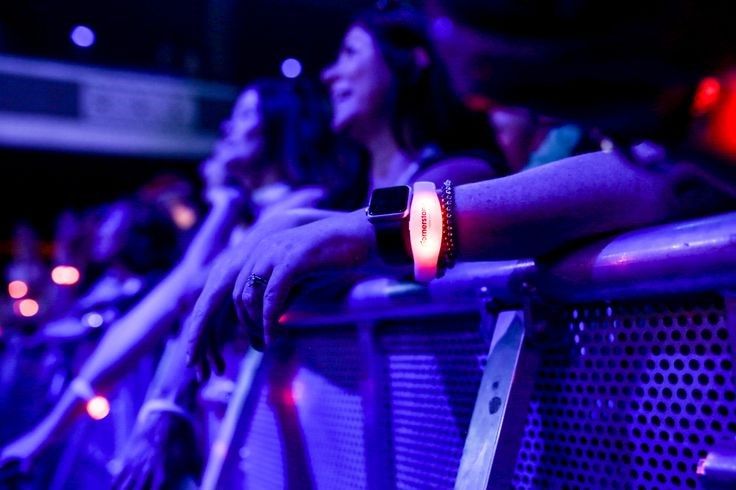
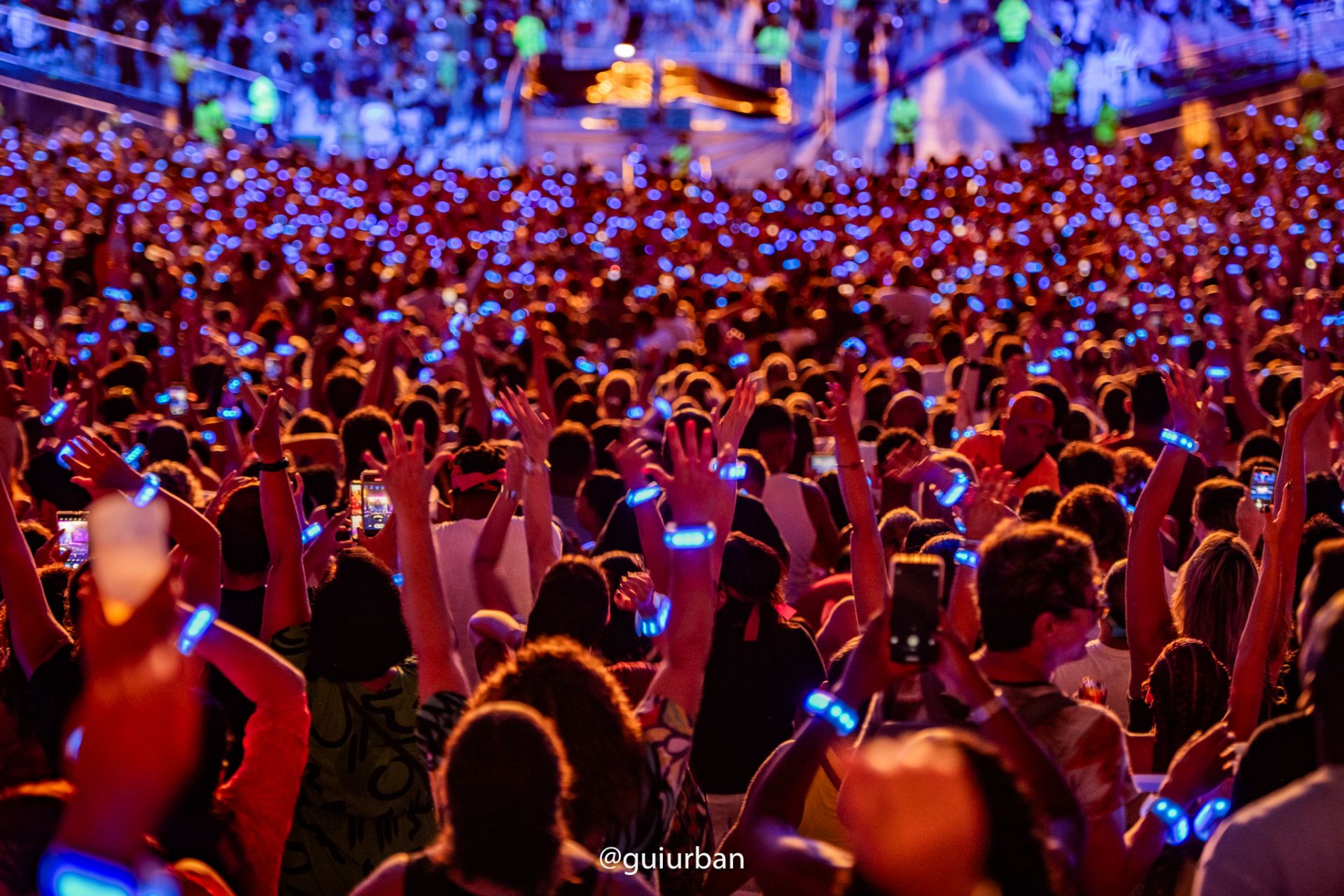
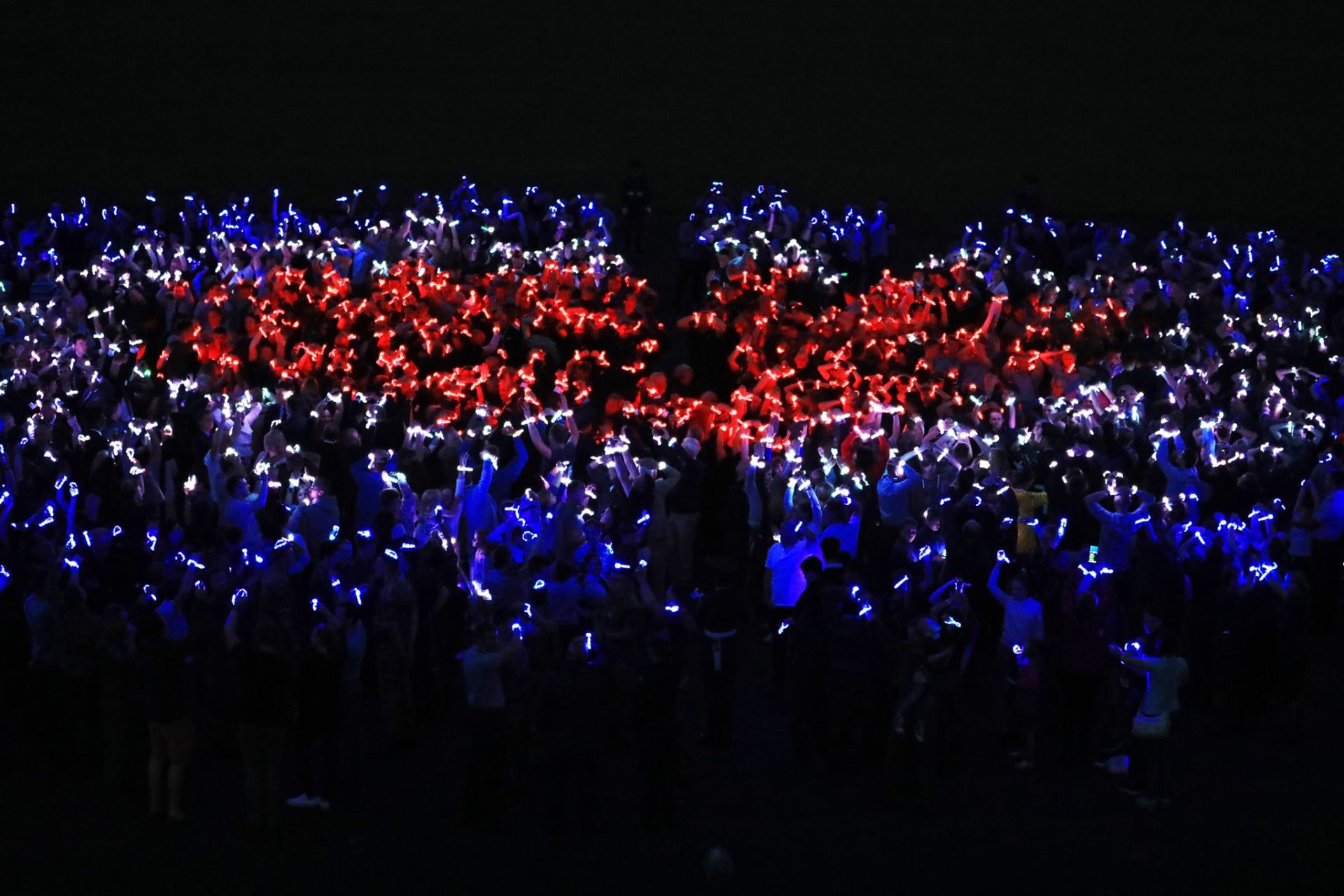
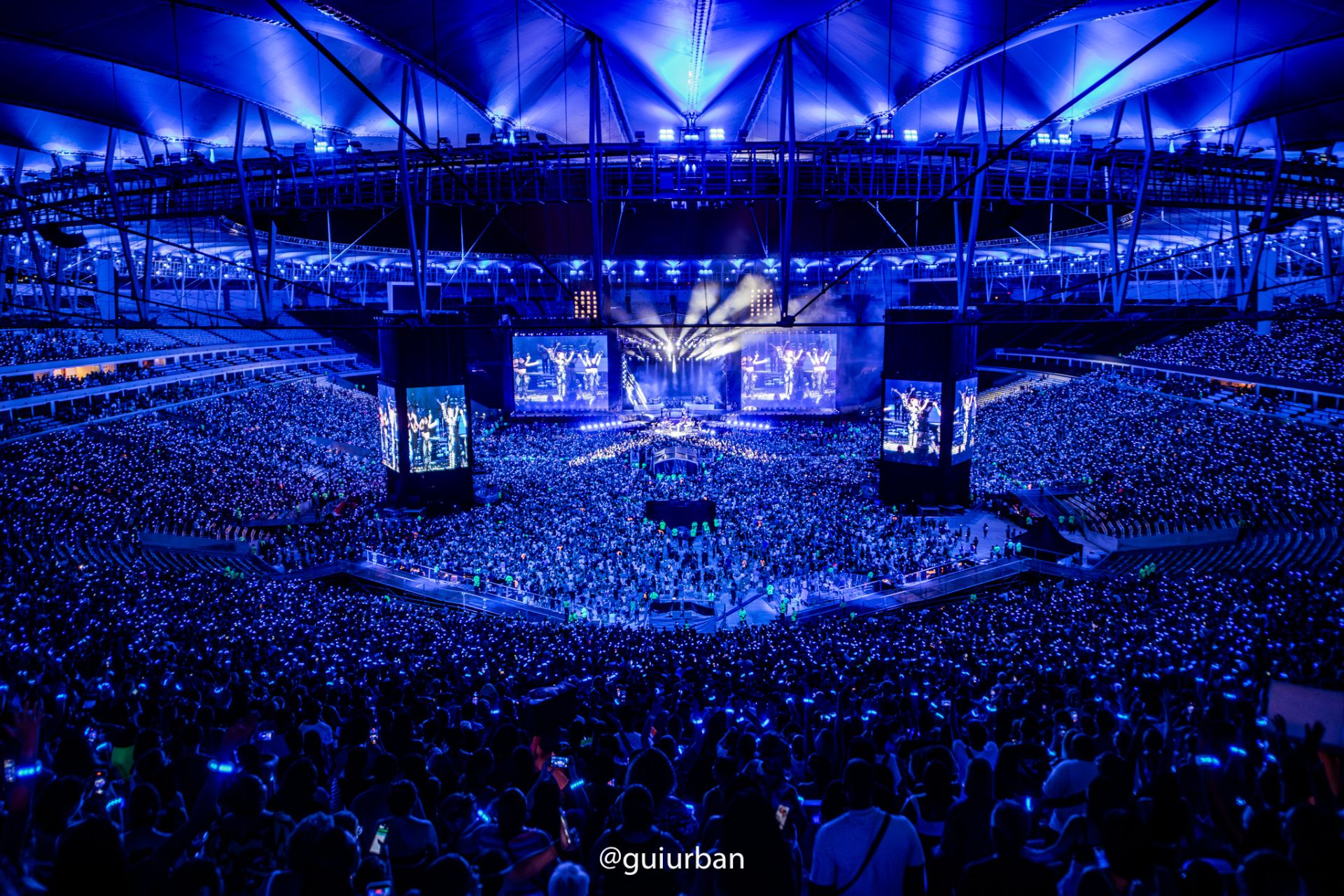
The concept was revolutionary: radio-controlled LED wristbands that could be synchronized to the music, the lighting rig, and the on-screen visuals. For the first time, a lighting designer could paint not just the stage, but the entire stadium. The audience was no longer just a collection of spectators; they were the spectacle.
The Network of Light: RF, DMX, and Infrared
Making this vision a reality required a sophisticated technical backbone. The ability to control tens of thousands of individual light sources in real-time, across vast and often challenging environments, is a monumental feat of engineering. Using a combination of radio frequency (RF), DMX (the standard for professional lighting control), and infrared (IR) technologies, a robust and invisible network is created that turns an entire audience into a dynamic, responsive ecosystem.
This is the unseen engine behind immersive events. Whether it's a stadium tour for artists like Wizkid or Maluma, a high-energy music festival like Greece's PRIMER, or a global broadcast like the Formula One 75th Anniversary show, the technology allows for unparalleled creative freedom. It enables producers to create massive, sweeping waves of colour, intricate chases, and sudden blackouts that punctuate the most dramatic moments of a performance. These LED crowd experiences transform a passive audience into an active participant in the storytelling.
The Human Canvas: Beyond the Concert
The applications for this technology have expanded far beyond the music industry. Today, radio controlled LED wristbands, LED lanyards, and other LED wearables are transforming all manner of live gatherings. Corporate events become powerful corporate event activations, turning employees and clients into brand ambassadors glowing in company colours. In the world of sports, halftime shows and opening ceremonies at events like the Davis Cup become breathtaking visual symphonies, heightening the drama and emotion of the competition.
On live television broadcasts for clients like ITV, the technology serves a dual purpose, creating a vibrant, camera-ready backdrop while simultaneously engaging the studio audience. The crowd becomes an integral part of the set design, a living, pulsing graphic that enhances the broadcast for millions of viewers at home.
The journey from a single lighter to a stadium full of synchronized Xylobands is more than just a story of technological progress. It's a story about the enduring human desire for connection and shared experience. It’s about the fundamental truth that the most powerful moments in live events happen when the line between performer and audience blurs, and everyone becomes part of the same collective heartbeat. The light has changed, but the flame of participation burns brighter than ever.