The Human Canvas: The Psychology of Audience-Centric Live Events
From Spectator to Spectacle: The New Psychology of Audience Engagement
For decades, the architecture of the live event was simple: a performer on stage, a crowd in the dark. The energy flowed in one direction, from artist to audience, with applause as the primary return signal. But a fundamental shift is underway. Today, the most innovative live experiences are not just performed for an audience; they are created with them. This evolution from passive consumption to active participation is grounded in a deep understanding of human psychology and enabled by a new generation of immersive event technology.
At its core, the desire to attend a large-scale event—be it a stadium concert, a global sporting final, or a major corporate summit—is about connection. It’s the drive to be part of something larger than oneself, to share a singular moment with a community. The most effective event producers understand this. They don’t just build a show; they build a temporary tribe. The challenge, and the opportunity, lies in how you transform a collection of thousands of individuals into a unified, sentient whole.
The Limbic System: Engineering Primal Connection
Our brains are wired for collective experience. When we find ourselves in a large group, focused on a single stimulus, our individual sense of self begins to soften. This phenomenon, often linked to the limbic system, is responsible for the primal thrill of a stadium chant or the goosebumps that ripple through a crowd during a powerful ballad. It’s a state of heightened emotional receptivity and lowered inhibition.
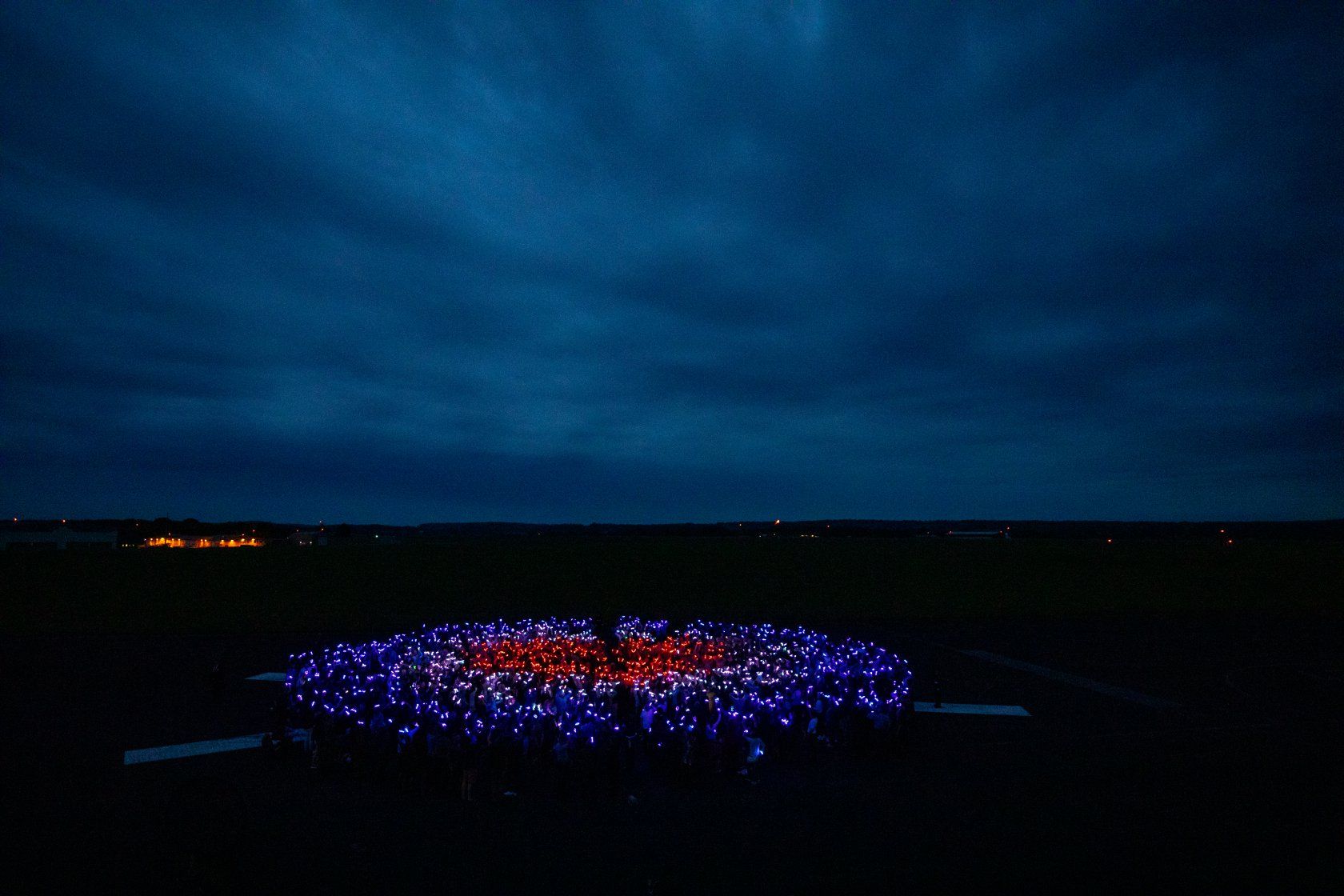
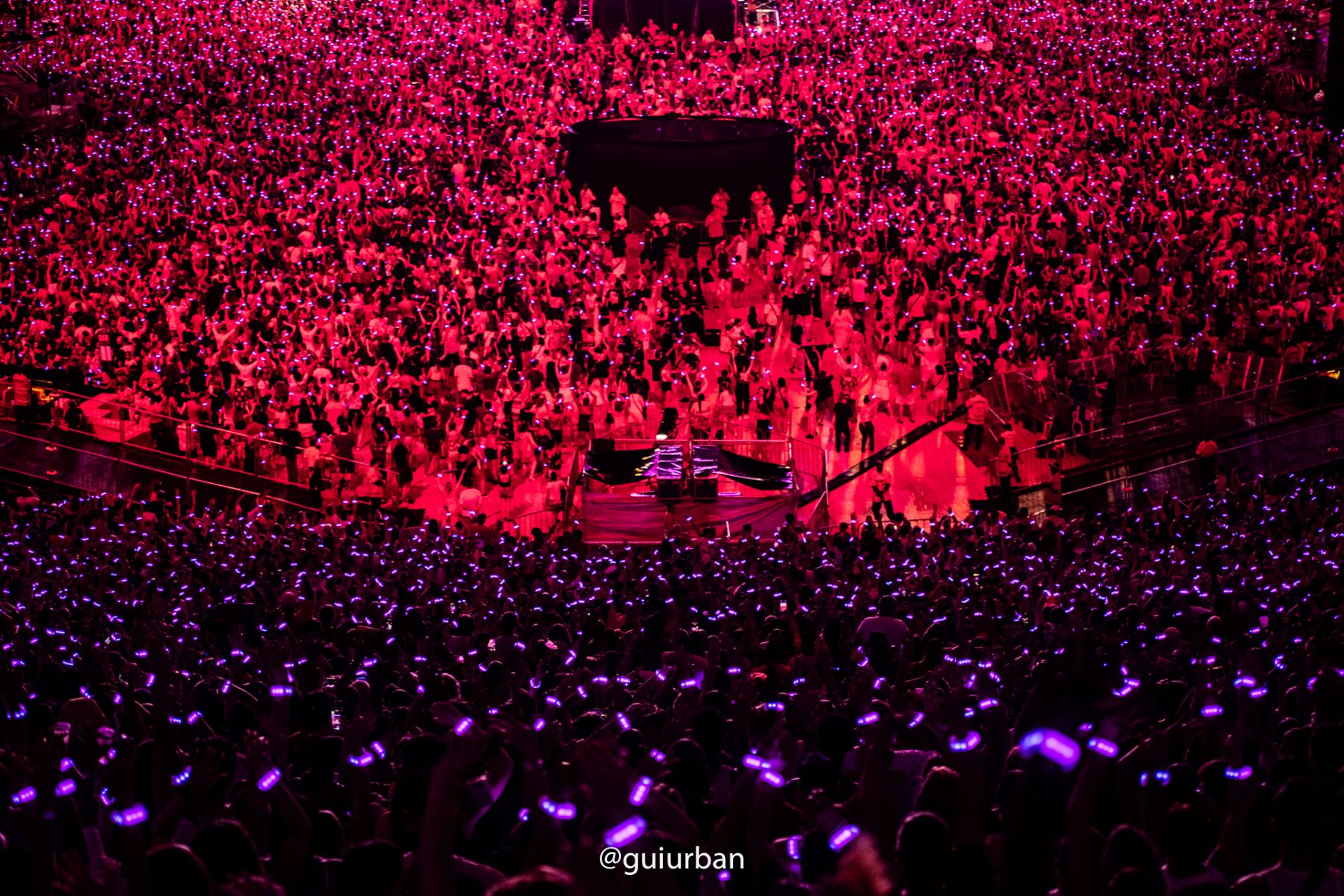
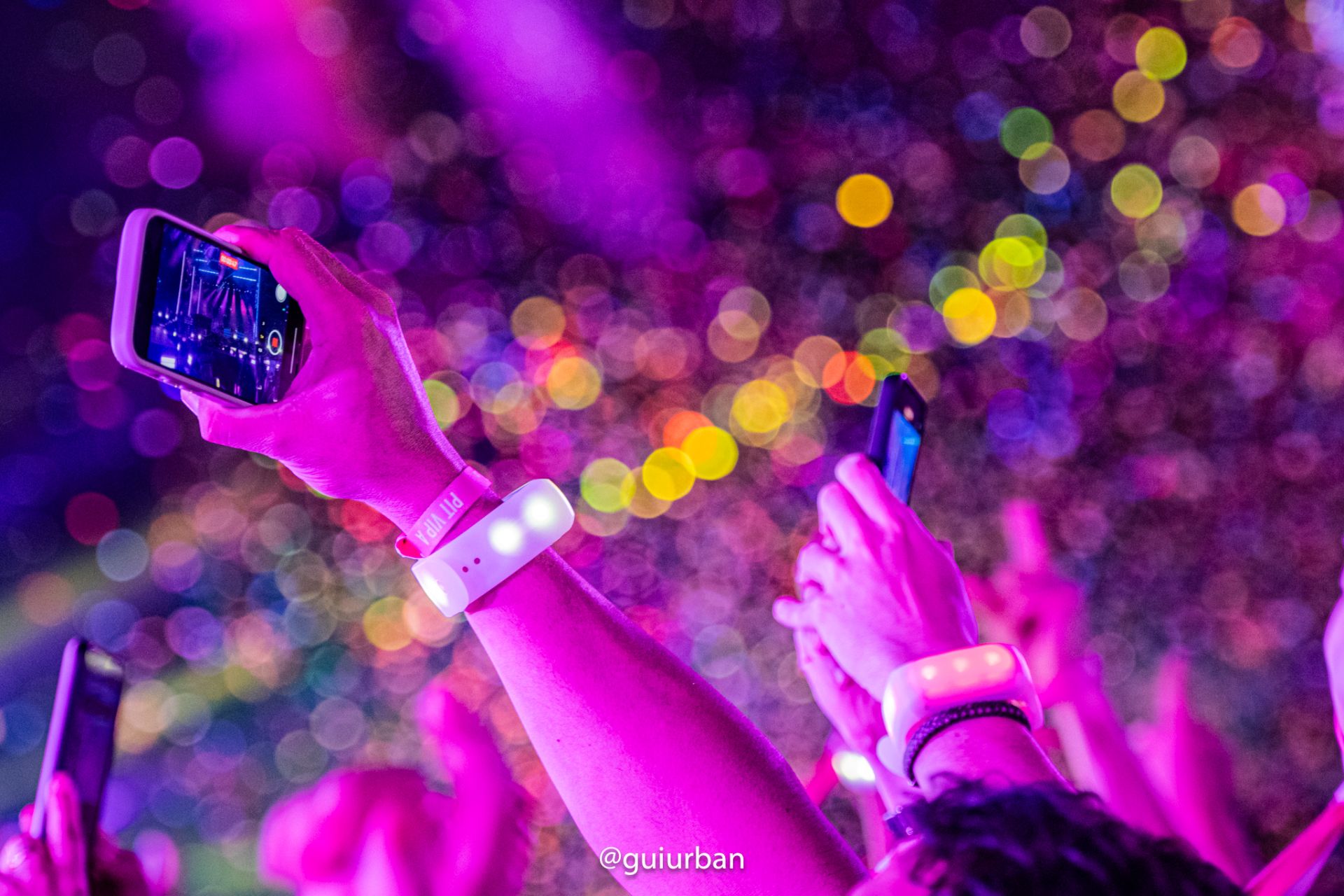
Historically, this was achieved through sheer scale and volume. But modern technology allows for a more nuanced and powerful approach. Consider the use of radio controlled LED wristbands, a technology Xylobands pioneered with Coldplay. When tens of thousands of lights, worn by each audience member, flash in unison, the effect is more than just visual. It’s psychological.
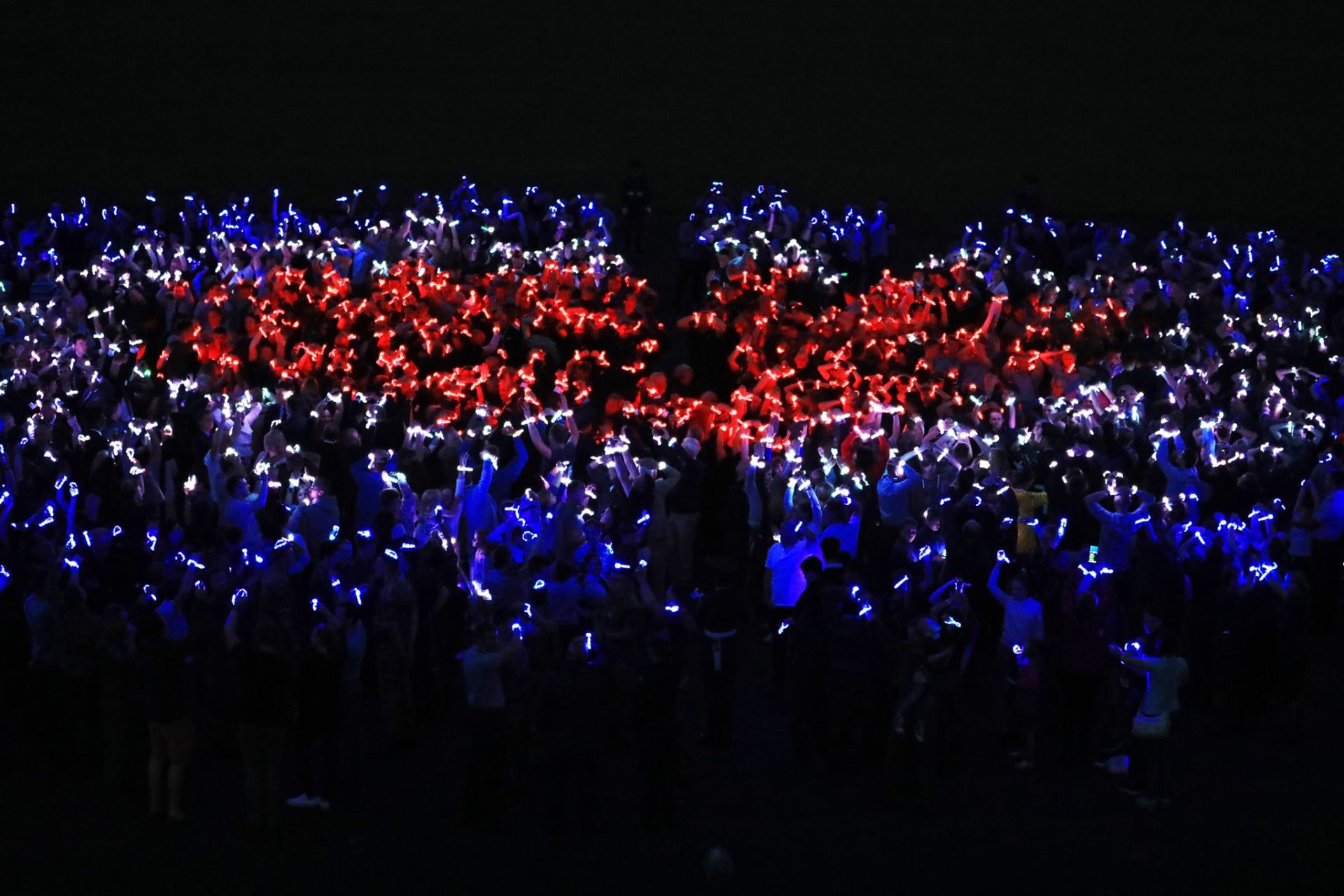
Each person is no longer just watching the show; they are a pixel in a vast, moving canvas. This shift in perspective is profound. It validates each fan’s presence, signalling that they are not just seen, but are an integral part of the spectacle itself.
This sense of individual significance within a collective is a powerful driver of engagement. We’ve seen it ignite arenas for artists like Maluma in his landmark Medellín concert and Wizkid during his historic sell-out run at The O2. The technology serves as a conduit for shared emotion, making the collective energy visible and tangible.
Choreographing the Crowd: The Power of Synchronicity
Synchronicity is one of the most potent tools in an event producer’s arsenal. Humans are inherently rhythmic beings, and when we move, breathe, or even just see light pulse in time together, it fosters a powerful sense of unity and cooperation. This is the principle that turns a collection of fans into a cohesive force.
Wearable LED technology allows creatives to choreograph the audience with the same precision as the lighting rig or the video content. It breaks down the fourth wall between the stage and the seats, creating a single, immersive environment. This is where products like LED Lanyards and custom pendants, such as those we developed for the Formula One 75th anniversary event, come into play.
- Segmentation and Storytelling: By controlling different sections of the crowd independently, designers can create waves of light, counter-rhythms, and complex visual narratives that sweep across the venue. The audience becomes a dynamic set piece.
- Audience Interaction: Technology can be used to respond directly to the crowd’s energy, or to cue them for specific actions, turning mass participation into a form of call-and-response.
- Brand Allegiance: In corporate and sporting events, such as the Davis Cup or for brands like Audi and Nike, lighting the crowd in team or brand colors forges a powerful, visible bond of allegiance and identity.
These LED crowd experiences transform the audience from passive observers into active, willing participants in the story of the event. It’s a principle that elevates everything from music festivals like Primer to high-stakes corporate event activations.
Beyond the Stage: The Future of Immersive Events
The core psychological principles of engagement—belonging, significance, and synchronicity—are timeless. However, the tools we use to evoke them are constantly evolving. The future of live events lies in creating deeper, more personalized, and more seamless integrations of the audience into the performance.
As event producers, tour managers, and brand marketers, our goal is to create moments that resonate long after the lights go down. We aim to craft memories that are not just seen or heard, but felt on a visceral level. The most successful immersive events recognize that the most powerful instrument in the room is the audience itself. By giving them the tools to become part of the light, part of the story, and part of a unified whole, we don’t just create a show; we create a shared human experience.
The human canvas is vast and ready. It’s our job to provide the light.