The Double-Edged Lens: Lighting for Both the Room and the Global Broadcast
The Two-Fold Challenge of Live Broadcast Lighting
Live television broadcasts are an exercise in duality. Event producers are tasked with creating an electrifying, palpable atmosphere for the thousands of fans in the room, while simultaneously composing a visually stunning, emotionally resonant spectacle for the millions watching at home. It’s a formidable challenge, requiring a delicate balance between presence and performance, intimacy and scale. Get it right, and you create a seamless, shared experience. Get it wrong, and one audience feels neglected at the expense of the other.
The core of the issue lies in how light interacts with its environment versus how it’s captured by a camera. A lighting rig designed purely for the in-venue experience—focused on creating mood, texture, and architectural highlights—can appear flat, over-exposed, or chaotic on screen. Conversely, lighting designed exclusively for the broadcast lens can feel sterile or disconnected for the live attendee. The secret is to serve two masters at once, without compromising either experience.
The In-Venue Experience: Painting with Presence
For the audience in the arena, stadium, or theatre, light is a physical, almost tactical element. It’s about creating a sense of place and shared energy. The goal is to make a vast space feel intimate and to connect every individual to the collective moment. This is where tools that extend the lightscape beyond the stage become invaluable.
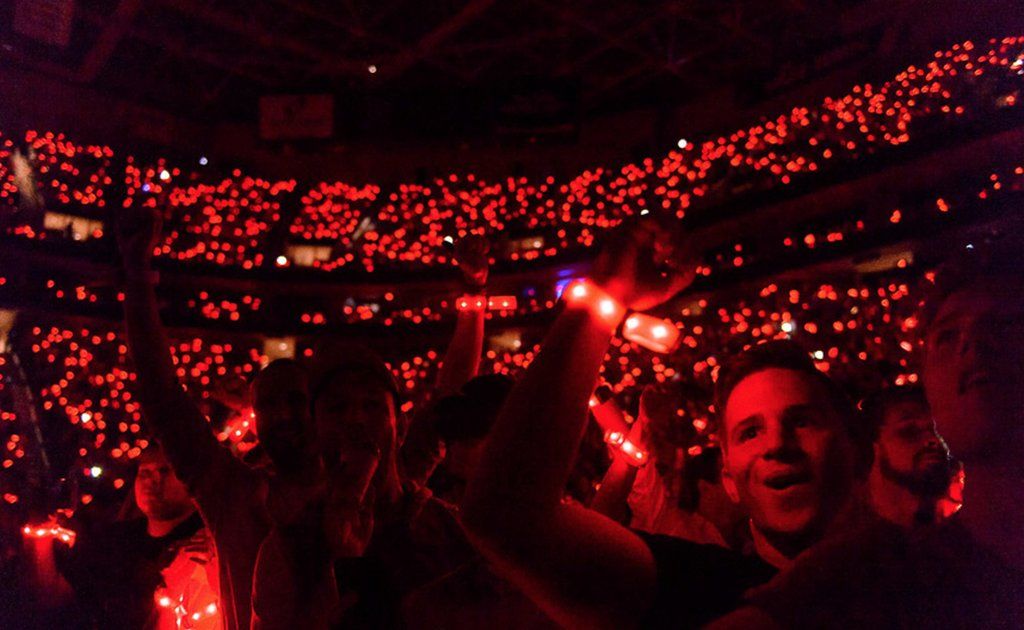
By turning the audience into a canvas, you break the fourth wall between performer and spectator. This is a core principle behind the design of our LED wristbands. When thousands of lights flash in unison, controlled by a single operator, the crowd is no longer just watching the show—they are the show. This creates powerful moments of unity that resonate both in the room and on camera.
Consider large-scale sporting events like the Davis Cup or the opening ceremonies for the FIFA World Cup. The energy in the stadium is monumental. By incorporating LED crowd experiences, that energy is made visible, painting the stands with team colours, national flags, or pulsating patterns that sync with the on-field action. It transforms a passive crowd into an active, visual participant.
The Broadcast Experience: Composing for the Camera
The broadcast audience experiences the event through a meticulously framed, 2D window. Every shot is a composition. The lighting director, in collaboration with the broadcast director, must think like a cinematographer, constantly managing contrast ratios, colour temperatures, and dynamic range.
Key considerations include:
- Flicker-Free Technology: One of the biggest technical hurdles in broadcast lighting is flicker. Many LED sources have a refresh rate that is imperceptible to the human eye but can create distracting banding or strobing effects on camera, especially during slow-motion replays. Professional, broadcast-ready wearable LED technology is specifically engineered to be flicker-free at a wide range of frame rates, ensuring a clean image for the broadcast feed. We have seen this put to great effect on shows like ITV’s Beat The Chasers, where our wristbands are used in the studio audience without issue.
- Colour Accuracy: The way a camera sensor interprets colour can be vastly different from human perception. What appears as a vibrant red in person might look like a washed-out orange on screen. Professional lighting systems, including Xylobands, are calibrated for colour accuracy, ensuring that brand colours for a sponsor like Coca-Cola or team colours for Arsenal FC are rendered faithfully for the viewing audience.
- Controlled Dynamics: While high-energy strobing can be exhilarating for a live crowd, it can be jarring and visually incoherent on television. For broadcast, lighting cues must be more deliberate and paced. Our control systems allow for nuanced programming, enabling operators to create everything from slow, gentle fades to dramatic, full-arena pulses, all timed perfectly to the broadcast’s needs.
Case Study: The Hybrid Spectacle of Formula One
A prime example of mastering this duality is the F1 75 event at The O2 Arena. The objective was two-fold: create an unforgettable live experience for the fans celebrating 75 years of Formula 1, and produce a slick, engaging 2-hour broadcast for a global audience. The event featured team unveilings, driver interviews, and performances from major artists.
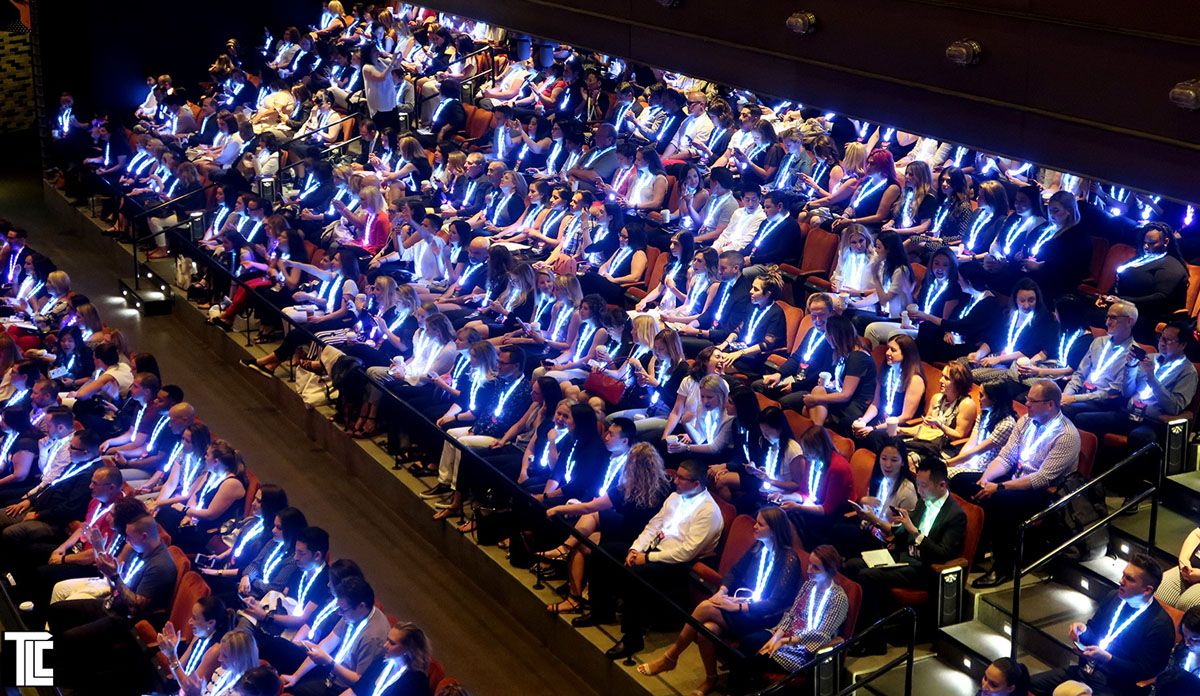
To bridge the gap between the live and broadcast audiences, we deployed 13,000 custom Xylo Pendants. These LED lanyards were distributed to attendees, with different branding for various hospitality tiers and teams. Our distro team strategically seated attendees based on the pendant type, allowing the creative team to design specific lighting effects that would translate powerfully to the camera. For instance, they could isolate the fans of one team in a specific colour or create a sweeping pattern across the entire arena that would look spectacular in a wide shot. The result was a deeply immersive event technology that made the in-venue crowd a vibrant, dynamic part of the broadcast, enhancing the experience for everyone.
Bridging the Gap: The Attendee as a Pixel
The most effective way to unify the live and broadcast experience is to reframe the audience’s role. They are not merely spectators; they are pixels in a larger image. When each person is wearing a programmable light source—be it a wristband, lanyard, or LED orb—the crowd transforms into a living, breathing video screen.
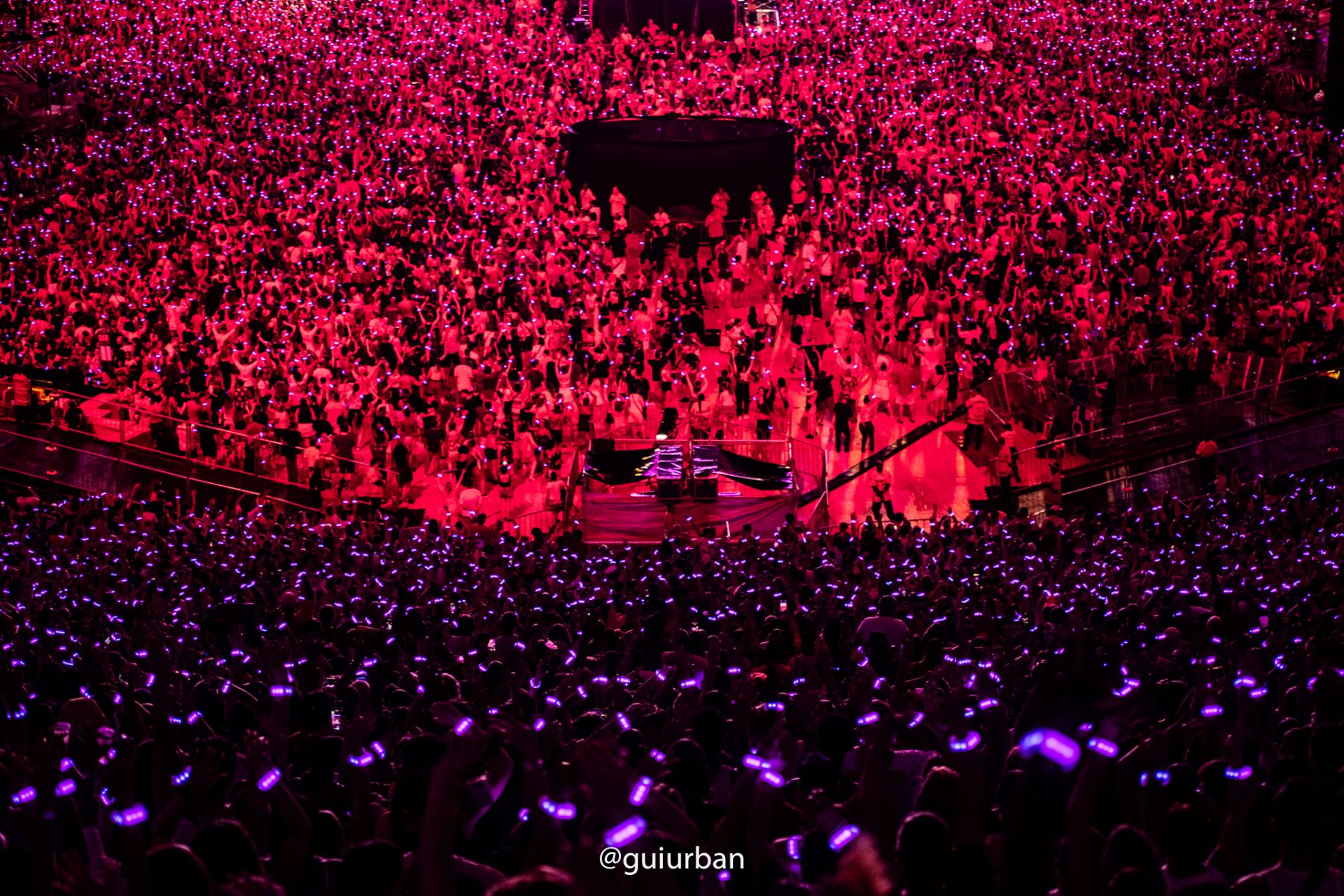
This approach was powerfully demonstrated at Maluma’s Medellín En El Mapa concert. The show was streamed live to over 240 countries, meaning the broadcast component was just as critical as the live experience for the 54,000 fans in his hometown. By deploying concert wristbands, the production team could choreograph massive visual statements that created jaw-dropping moments for both the stadium audience and the global viewership, making the sheer scale of the event a key part of its narrative.
Ultimately, lighting for a hybrid event is not about compromise. It’s about integration. It’s about using technology to create a single, cohesive spectacle that feels epic and personal at the same time. By designing for both the naked eye and the camera lens, and by empowering the crowd to be part of the visual landscape, producers can create truly unforgettable LED experiences that resonate long after the lights go down.