Lighting for the Lens: The Art of the Broadcast-Ready Spectacle
The Two-Fold Audience: In-Venue vs. At-Home
For event producers choreographing major televised events, a critical duality exists. There is the immediate audience—the thousands of bodies in the seats, feeling the energy, immersed in the physical atmosphere. Then there is the broadcast audience—the millions experiencing the event through a camera lens, their perception shaped by cinematographers, directors, and the technical translation of light and shadow to the screen. Designing for one often comes at the expense of the other. The secret to a truly global spectacle lies in mastering both.
Lighting that feels electric and immersive in a stadium can appear blown-out, chaotic, or flat on television. Conversely, lighting optimized purely for broadcast can leave the in-venue experience feeling sterile and disconnected. This is the central challenge for producers of major sporting events, high-profile awards shows, and live music specials: creating a single, cohesive experience that resonates powerfully for two vastly different audiences.
The Camera Doesn't See, It Interprets
A human eye can process an incredible dynamic range, discerning detail in deep shadows and bright highlights simultaneously. A broadcast camera cannot. It has a more limited dynamic range and requires careful management of light to produce a clean, compelling image. Key considerations for broadcast-friendly lighting include:
- Colour Temperature and Rendering: Modern broadcast cameras are highly sensitive to the colour temperature of light. Inconsistent or poorly chosen colour temperatures can result in unnatural skin tones and a disjointed visual palette. High-quality LED sources with a consistent, controllable colour rendering index (CRI) are essential to ensure that what the camera captures is true to life.
- Flicker Rate: Many LED lighting fixtures have a refresh rate, or "flicker," that is invisible to the naked eye but can create distracting banding and strobing effects when filmed, particularly with high-speed or slow-motion cameras. Professional-grade, broadcast-ready LED technology, like the systems developed at Xylobands, are engineered for high-frequency PWM (Pulse Width Modulation) to ensure a flicker-free output, guaranteeing a flawless capture for any camera.
- Controlling Contrast Ratios: Extreme contrast—plunging an arena into darkness and then hitting it with intense spotlights—can be dramatic in person but problematic for broadcast. It can crush blacks and blow out highlights, losing all detail. The most effective broadcast lighting designs use controlled, layered light to manage the contrast ratio, ensuring there is always detail for the camera to capture, even in the most dynamic sequences.
The Crowd as a Living Set Piece
In the modern broadcast, the audience is no longer just a passive observer; it is an integral part of the set. Productions for clients like ITV, including shows such as 'Beat The Chasers' and 'The Masked Singer', rely on the audience to create a sense of scale and energy that translates through the screen. By turning the crowd into a canvas of light, producers can extend the visual theme of the show right into the stands.
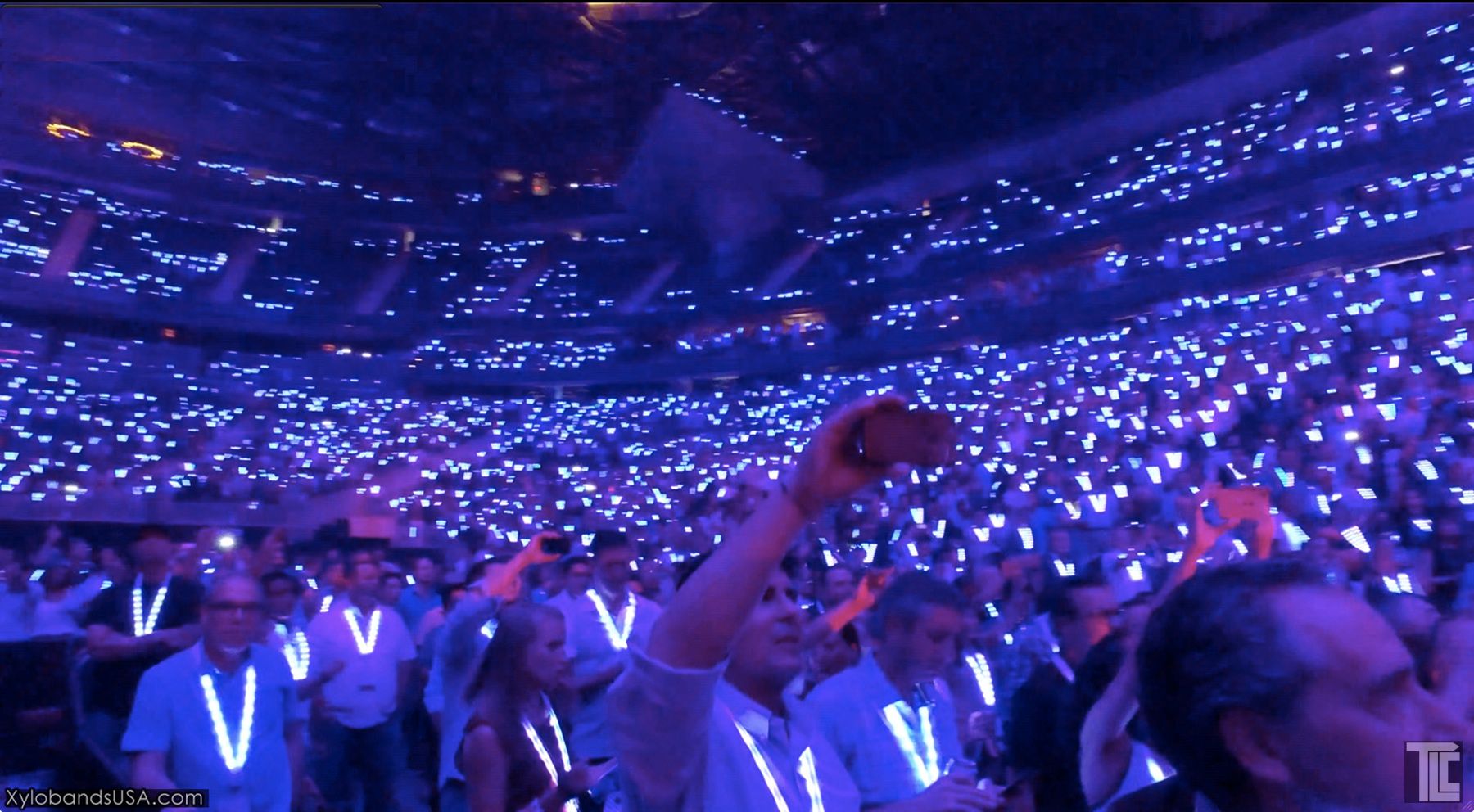
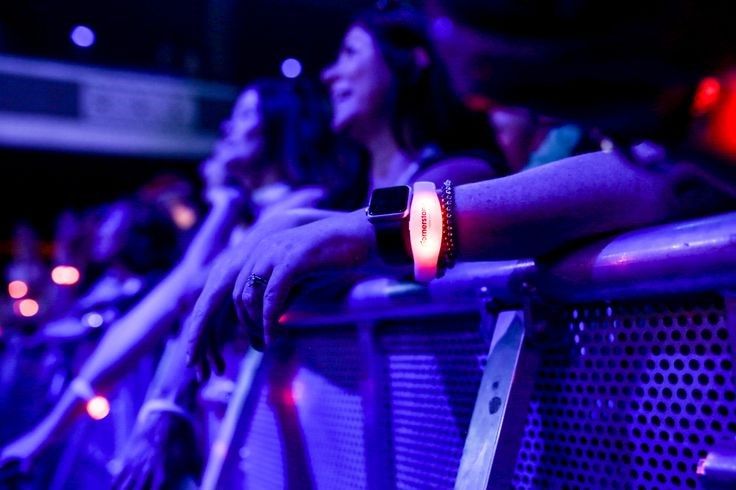
This is where wearable LED technology becomes a game-changer for broadcast. By equipping the audience with radio-controlled LED wristbands or lanyards, a lighting designer gains thousands of new, mobile points of light. This transforms the crowd from a dark, anonymous mass into a dynamic, programmable entity. Suddenly, you can:
- Paint with Light: Create sweeping gradients of colour across an entire stadium, perfectly synchronized with on-stage action or a musical beat.
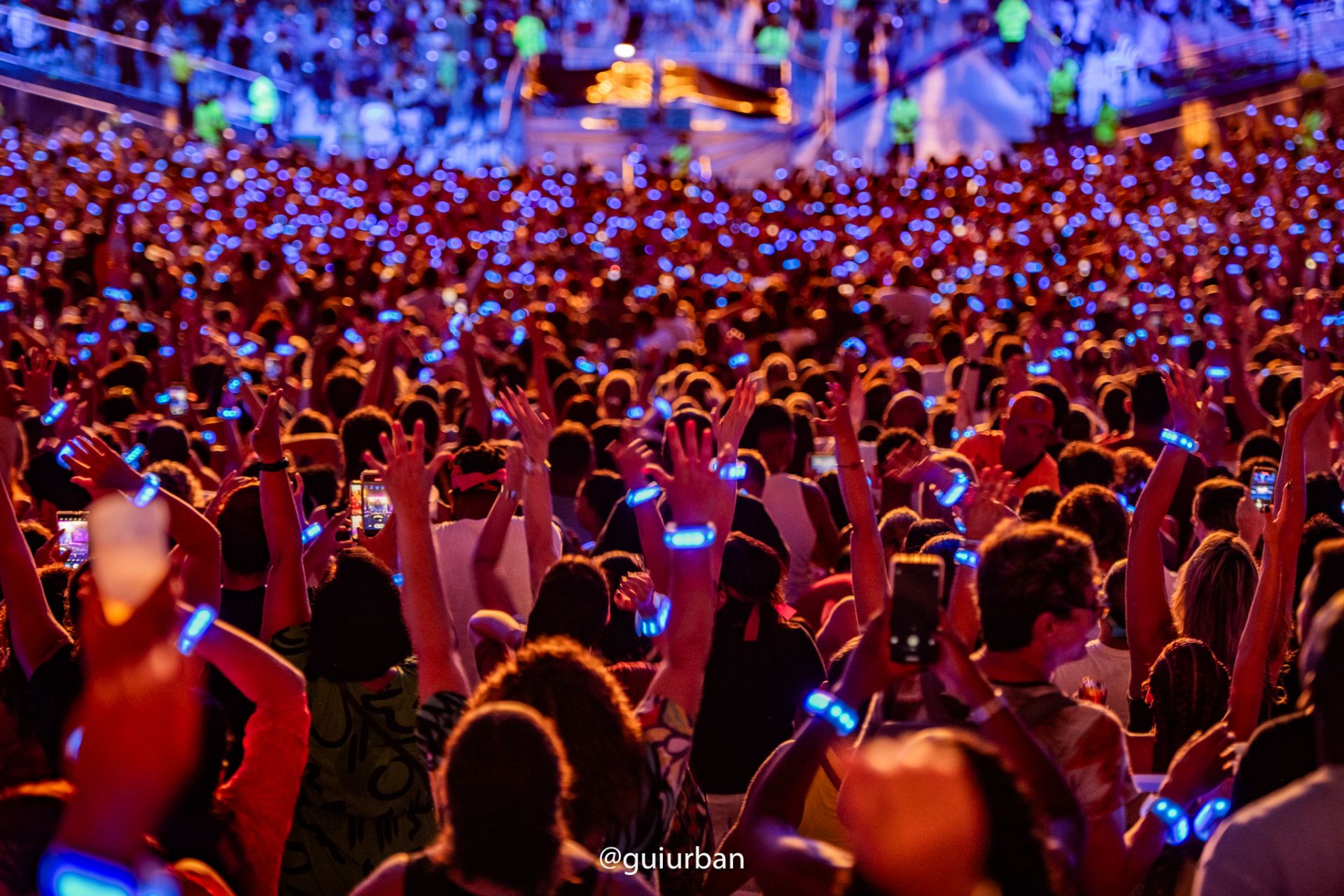
- Amplify Key Moments: Trigger synchronized flashes across the audience to punctuate a winning goal, a dramatic reveal, or a musical crescendo. This was powerfully demonstrated during Maluma's globally-streamed Medellín concert, where the illuminated crowd became a vital part of the broadcast spectacle.
- Integrate Branding: Pulse corporate colours through the crowd during a sponsored halftime show, as seen in major events for brands like Formula One, creating powerful, camera-friendly brand activations.
Case Study: The Global Broadcast Stage
From the Eurovision Song Contest to the Davis Cup, the world's biggest televised events understand that the spectacle must be designed for the camera. When an artist like Wizkid sells out The O2 arena for three nights, the event is documented and shared globally. The light show, including the thousands of Xylobands worn by fans, becomes part of the artist's legacy, captured in countless videos and photos. It’s not just about the live experience; it’s about creating iconic, shareable moments.
These immersive events are successful because they don’t treat broadcast as an afterthought. The lighting, the crowd, and the camera are considered a single, integrated system. The result is a richer experience for everyone. The in-venue audience feels like part of the show, and the broadcast audience gets a stunning visual feast that conveys the true energy and scale of the event.
For event producers, the mandate is clear: you are not just lighting a room; you are crafting a television show. By embracing technology that serves both the live and broadcast audiences, and by viewing the crowd as a dynamic part of the lighting design, you can create unforgettable spectacles that resonate far beyond the walls of the venue.