Lighting for the Lens: A Broadcaster's Guide to Audience Immersion
The Camera is the Most Important Person in the Room
In the world of broadcast television, there’s a saying: the camera is the most important person in the room. It’s the conduit through which millions of viewers experience the drama, the tension, and the elation of a live show. For producers and lighting designers at major networks like ITV, every decision is filtered through this lens. The central question is always: how will this look on screen?
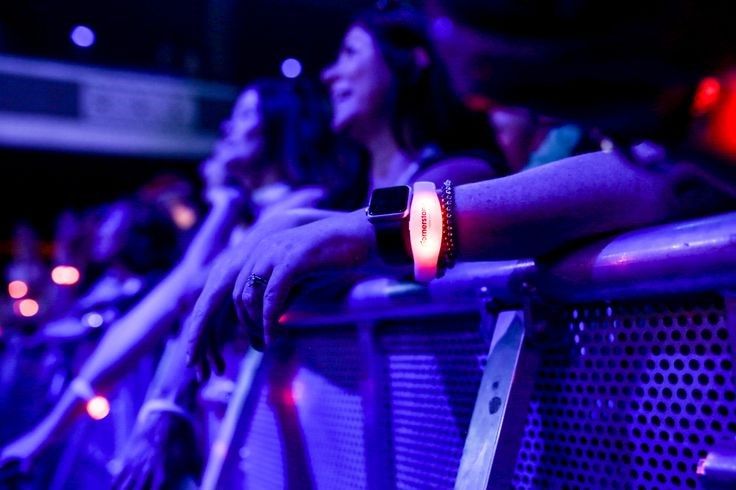
This principle is doubly true when a live studio audience is involved. An engaged, excited audience can be a show’s greatest asset, their energy palpable even through a screen. But a passive crowd can flatten the atmosphere, creating a disconnect between the studio and the viewer at home. This is the challenge and the opportunity that modern immersive event technology seeks to address. By strategically integrating tools like LED wristbands, broadcasters are no longer just lighting a set; they are lighting an audience, transforming them from spectators into a living, breathing part of the spectacle.
The Challenge: From Studio to Screen
Creating a visually compelling experience for a broadcast audience presents a unique set of challenges compared to a traditional live event. While a festival or concert is designed for the human eye, a television production is engineered for the camera sensor. The dynamic range is different. The way light is captured and rendered is different. What might look spectacular in person can appear chaotic or blown-out on camera.
At Xylobands, our collaborations with broadcasters like ITV have provided a masterclass in lighting for the lens. We’ve learned to see the audience not just as a collection of individuals, but as a dynamic, pixelated canvas. Our work on shows like Beat The Chasers UK demonstrates this principle in action. The rapid-fire format and high-stakes tension of the show demand a lighting scheme that can react in an instant, underscoring moments of victory or defeat. By deploying radio controlled LED wristbands to the studio audience, the show’s producers gain a powerful tool to magnify this drama, bathing the crowd in the signature colours of the program and syncing pulses of light to the on-screen action.
“When you’re producing a show for a global broadcast, the audience in the room is only half the story. The real audience is the millions watching at home. Our job is to make them feel like they’re right there in the studio.”
The Audience as a Living Set Extension
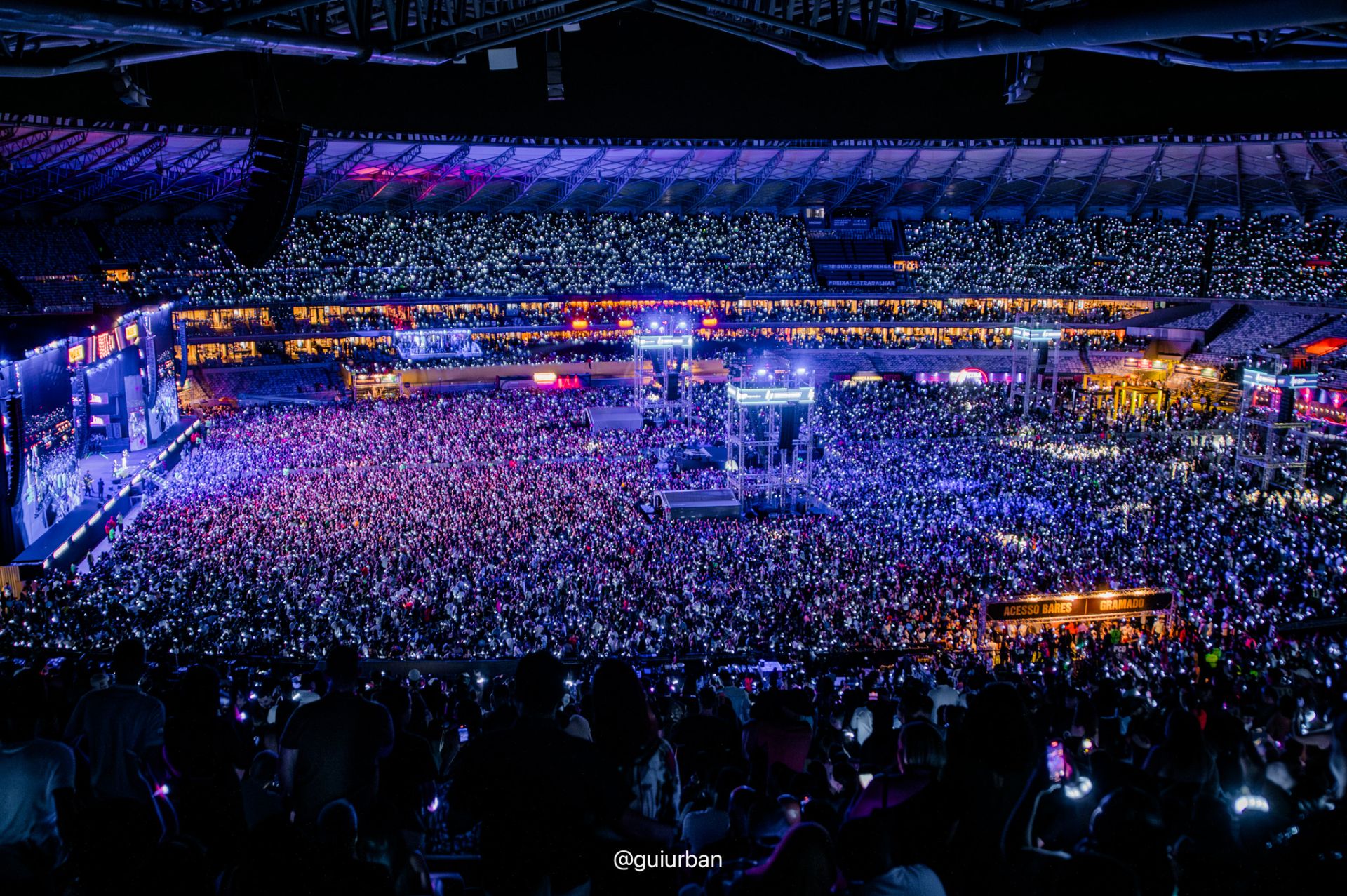
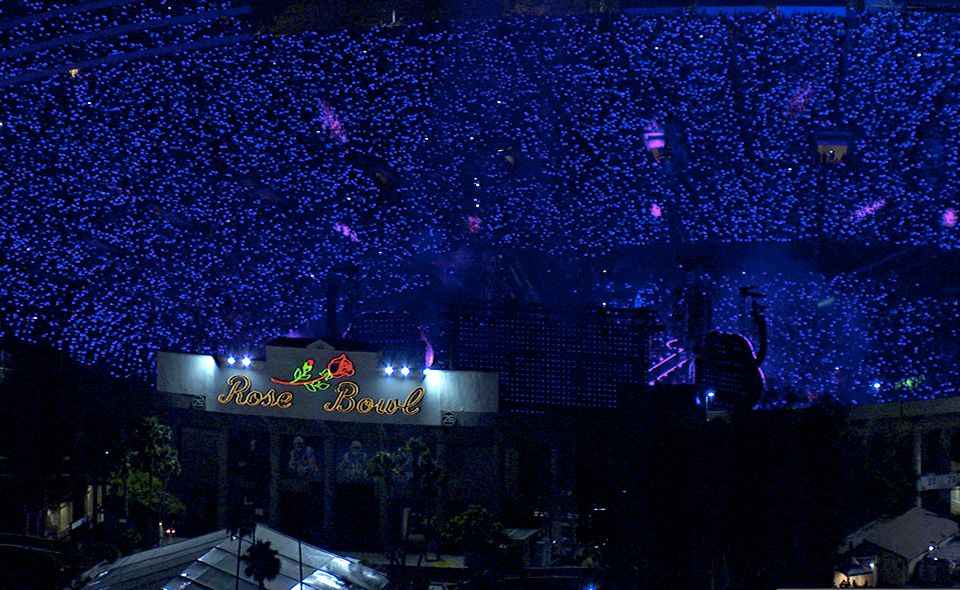
The true power of this technology lies in its ability to extend the set into the crowd. It blurs the lines between the stage and the seating, creating a cohesive, 360-degree environment. Think of the grand unveilings on The Masked Singer or the celebratory moments in the Eurovision Song Contest. These are shows built on spectacle. Using LED bands allows the production team to paint with light on a massive scale, ensuring that sweeping camera shots capture a world of synchronised colour and movement.
This approach has several key benefits for a broadcast production:
- Enhanced Visual Cohesion: By synchronising the audience’s wristbands with the main stage lighting and on-screen graphics, it creates a unified and branded visual experience. This was critical for our work with Formula One’s 75th-anniversary event, where we created custom-branded LED Lanyards to segment the audience by team and hospitality level, allowing for complex, targeted lighting cues that looked incredible on the global broadcast.
- Audience Engagement: When audience members are wearing a device that connects them directly to the show, their sense of participation skyrockets. They are no longer passively watching; they are part of the lighting design. This heightened engagement translates into more authentic and energetic reactions—a goldmine for directors.
- Camera-Ready Moments: Wide shots of the studio become exponentially more dynamic. Instead of a dark sea of people, cameras capture a vibrant, pulsating canvas that adds depth, scale, and excitement to the broadcast, making even a standard game show feel like a stadium event.
A Symphony of Light, Controlled and Calibrated
Of course, none of this happens by accident. The "secret sauce" is the robust control system and meticulous technical planning that underpins these LED crowd experiences. For our broadcast partners, precision is everything. Our proprietary control software allows lighting directors to integrate our Xylobands seamlessly into their main lighting desk.
Key Technical Capabilities:
- Zone Control: The ability to divide the audience into dozens of distinct zones and control them independently is fundamental. This allows for complex visual designs, such as creating waves of colour that sweep across the studio or isolating specific sections to highlight a particular moment.
- Real-Time Synchronisation: With powerful transmitters and optimized RF protocols, our system ensures instantaneous, lag-free response. This is non-negotiable for live television, where timing is everything.
- Intensity and Colour Calibration: We work closely with broadcast lighting teams to calibrate the brightness and colour palette of our wearable LED technology to match the precise specifications of the show and, most importantly, the camera settings. This prevents issues like light flaring or colour imbalances, ensuring a pristine on-screen image.
From game shows to major sporting events like the Davis Cup, the goal remains the same: to create a visually stunning experience that captivates the viewer at home. By turning the audience into an integral part of the lighting design, broadcasters like ITV are pushing the boundaries of television production, creating more dynamic, more immersive, and more memorable moments. They understand that when you light up the crowd, you light up the screen.