Lighting for Two Worlds: The Art of the Broadcast-Ready Live Event
The Two-Audience Problem
In the world of live broadcast, the event happens in two places at once. There is the immediate, visceral reality of the studio, arena, or stadium—the energy of the crowd, the tangible sound, the physical presence of the performers. Then, there is the second, far larger venue: the millions of screens around the world. These two audiences, the one in the room and the one on the glass, experience the same event through fundamentally different mediums. Lighting for one has often meant compromising for the other.
Traditional stage lighting, designed to dazzle the human eye, can be a crude instrument for the unforgiving lens of a broadcast camera. What appears as a dramatic, saturated wash of color in person might translate to a noisy, blown-out flare on screen. The subtle interplay of shadow and light, so effective in a live setting, can be lost entirely in the compression and color science of a broadcast feed. The core challenge for producers and lighting designers is not merely to illuminate a stage, but to engineer an experience that is equally potent, legible, and spectacular for both worlds.
The Camera Sees Differently
At the heart of this challenge is a technical divergence. The human eye is a marvel of dynamic range, capable of processing immense contrast and subtle shifts in color temperature. The camera sensor, for all its technological advancement, is not. It has limitations, and great broadcast cinematography is the art of working brilliantly within them.
Key considerations for camera-friendly lighting include:
- Flicker: High-speed cameras, essential for slow-motion replays and dramatic effects, will pick up the imperceptible flicker of lesser LED sources, rendering footage unusable. Professional-grade, flicker-free lighting is non-negotiable.
- Color Rendering: The rich, deep red that looks so vibrant on stage must hold its integrity on screen, without clipping or appearing as a flat, dimensionless block of color. This requires precise control over the light’s color spectrum.
- Dynamic Range: A broadcast feed must balance the brightest points of light with the darkest shadows. Lighting the audience, traditionally a dark void in wide shots, without overwhelming the focal point of the stage is a delicate balancing act.
The Audience as the Medium
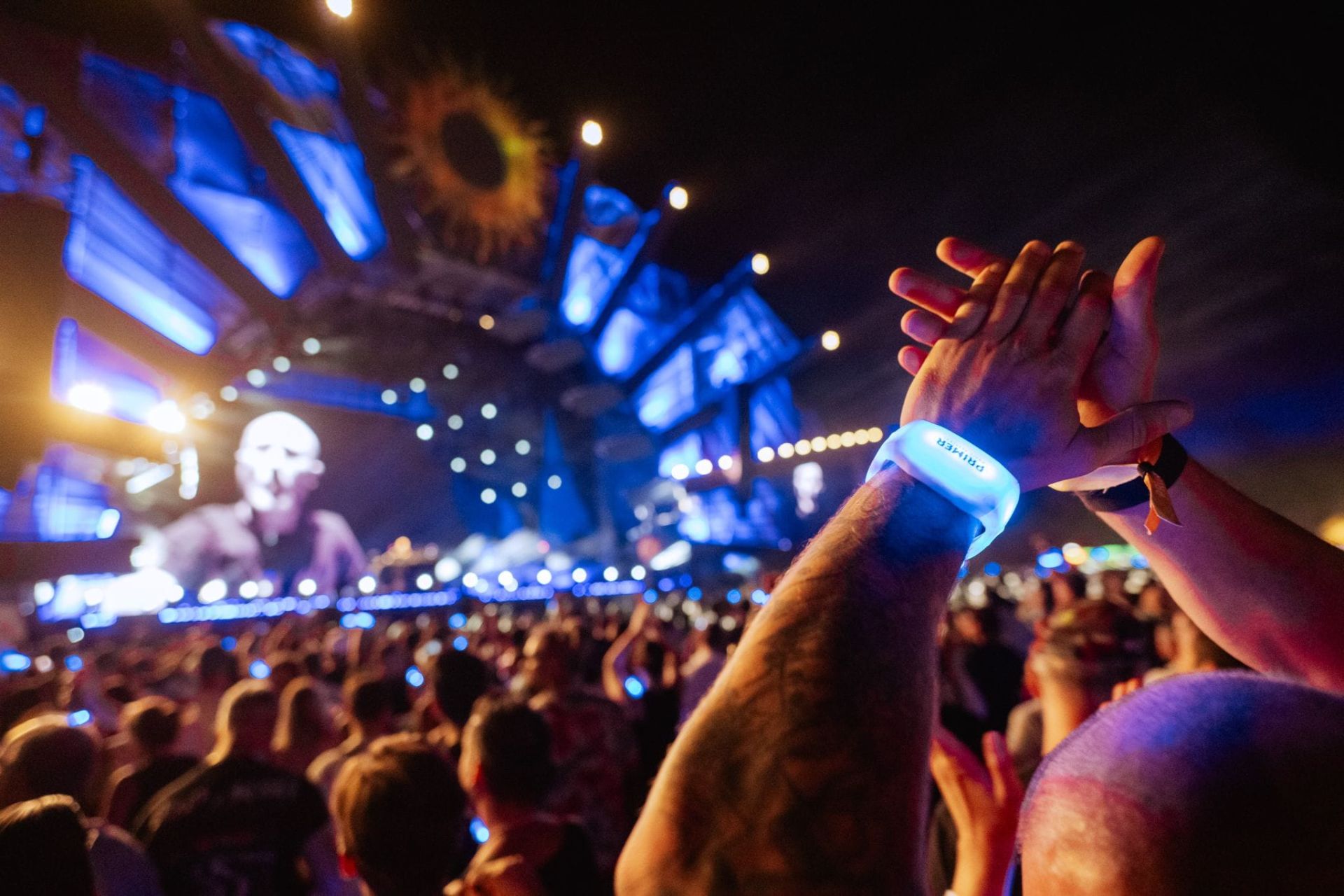
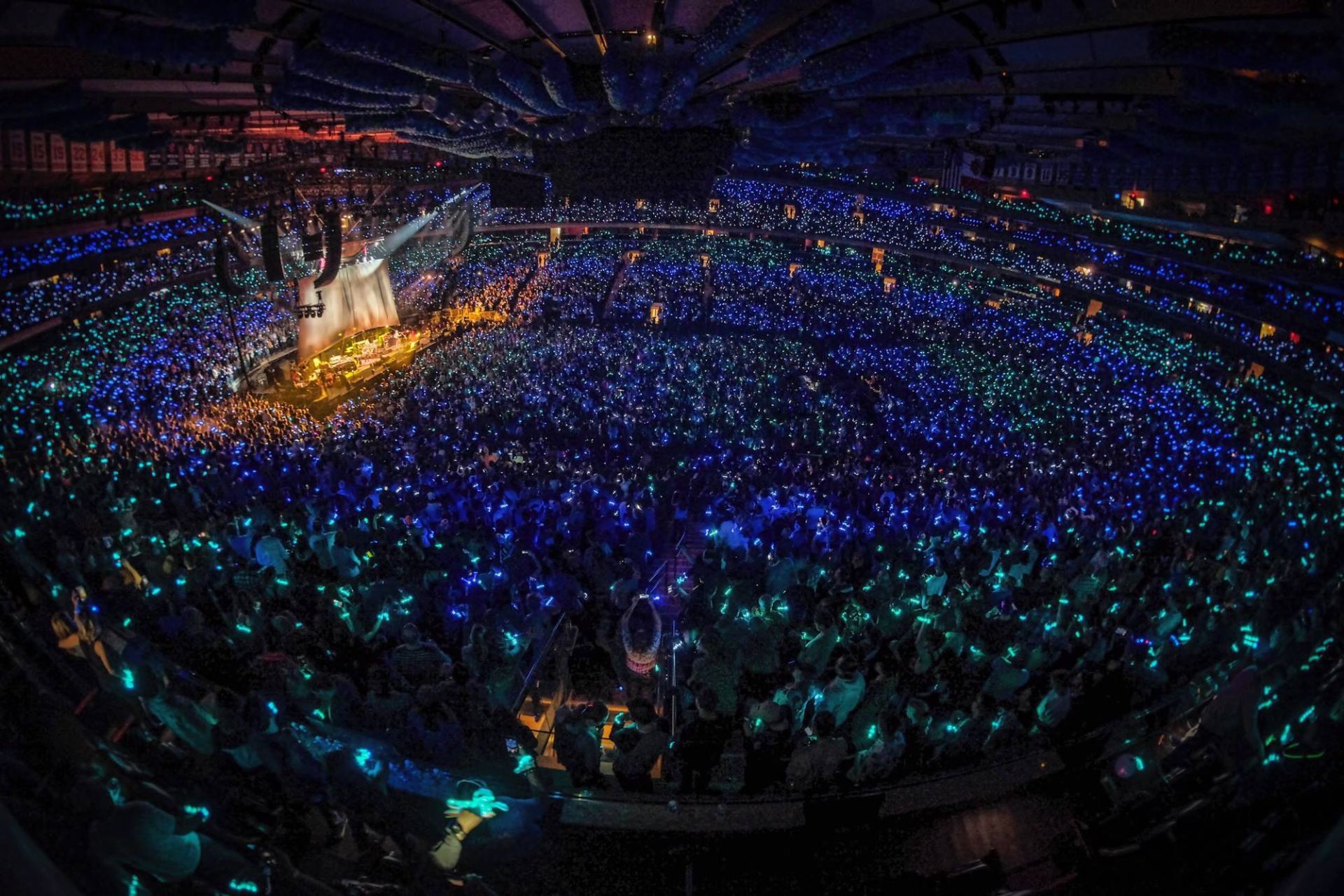
The solution to the two-audience problem is not to light the crowd from the gantry, but to light the crowd from within. This is where Wearable LED Technology transforms from a novelty into a critical broadcast production tool. By making each audience member a point of light, you are no longer fighting the darkness; you are turning it into a living, dynamic canvas.
This is a principle we have put into practice with major broadcast partners like ITV. On high-energy productions like Beat The Chasers, the audience is an integral part of the set. Our Radio Controlled LED Wristbands create a pulsating, reactive environment that gives the studio audience a powerful sense of inclusion while providing the camera with a rich, textured backdrop full of depth and energy. The crowd isn’t just watching the show; they are part of its visual signature. This approach creates stunning wide shots, eliminates the “black hole” effect of an unlit audience, and immerses the viewer at home in an environment that feels vast and alive.
“Instead of thousands of people holding up mobile phones, the entire audience could become one living light show, perfectly synchronised… creating moments of unity where artists and fans shared the same experience.”
Scaling the Spectacle for a Global Lens
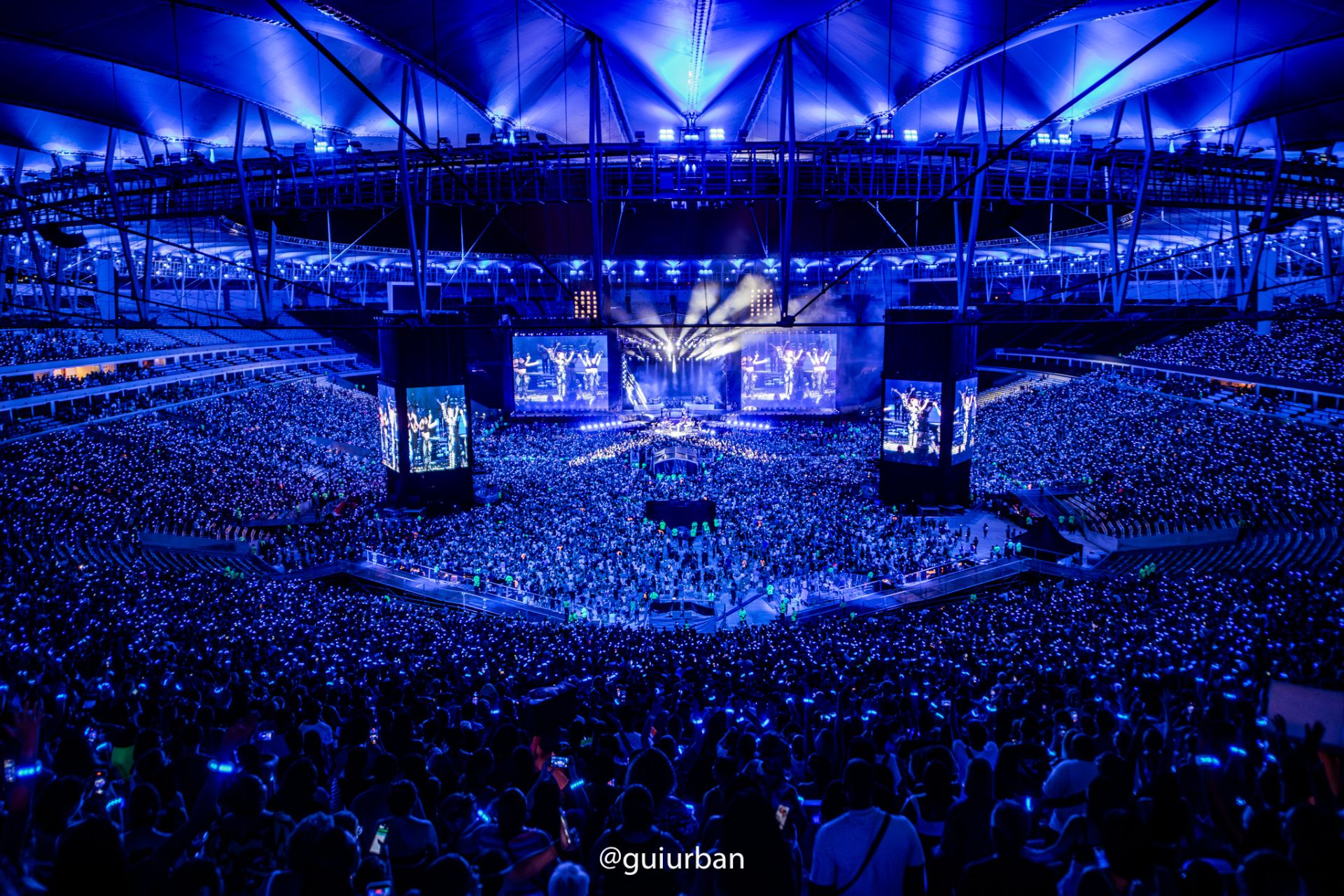
This philosophy extends far beyond the television studio. For globally televised events, where the broadcast audience can number in the hundreds of millions, choreographing the crowd is essential to conveying the scale of the spectacle. When Maluma played to a sold-out stadium in his hometown of Medellín, the event was streamed live on Amazon to over 240 countries. The coordinated light show from tens of thousands of Xylo Bands in the crowd didn’t just create an unforgettable atmosphere for those present; it translated the sheer scale and passion of the night to screens across the globe.
Similarly, for the Formula 1’s 75th-anniversary broadcast, a live event at The O2 Arena, we deployed custom LED Lanyards (The Xylo Pendant). These were pre-programmed and distributed to segment the crowd, allowing lighting designers to create visuals that corresponded to specific teams and moments in the show. This is a level of Immersive Event Technology that adds a powerful narrative layer for the broadcast, helping to tell the story in a way that is immediately and visually understood by viewers everywhere.
A Unified, Camera-Ready Experience
Ultimately, the art of the modern broadcast is about creating a single, unified experience. It’s about ensuring the fan in the back row and the viewer on their couch feel the same surge of excitement, the same dramatic tension, the same moment of collective euphoria. By turning the audience into an instrument of light, we provide a solution that serves both masters: the live experience and the camera’s unblinking eye.
The LED Crowd Experiences of today are no longer just for the benefit of those in the room. They are a fundamental tool for modern broadcasting, creating dynamic, camera-ready environments that capture the energy of the moment and transmit it to the world. It’s not about choosing which audience to light for; it’s about creating one spectacular world, built for two very different windows.