The Macroscope: A Manifesto for Arena and Stadium Lighting
From the Garage to the Gods: The Art of Scaling Light
Every legendary tour begins as a sketch, an idea discussed in a production office or over a coffee-shop table. The first lighting cues are often programmed on a laptop, designed for the intimacy of a rehearsal space. But how do you take that initial creative spark and scale it to fill a 50,000-seat stadium without losing its soul? This is the central challenge for the modern lighting designer: mastering the art of the macroscope.
Designing for arenas and stadiums isn’t just about using more lights; it’s a fundamentally different philosophy. It’s about painting with a broader brush while still retaining the ability to create intimate, personal moments. It’s a discipline that balances raw power with subtle nuance, transforming a cavernous space into a shared, sentient environment.
Principle 1: Designing for Distance and Dimension
In a stadium, the "cheap seats" can be hundreds of metres from the stage. A lighting effect that looks dazzling up close can completely disappear from the upper tiers. The first principle, therefore, is designing for distance.
This means favouring bold, geometric strokes over fine, intricate details. It involves creating massive, legible shapes with light and colour that can be understood from every corner of the venue. Think less about a single beam and more about how hundreds of beams can be choreographed to create a single, unified architectural form. You’re not just lighting the performers; you are sculpting the negative space around them, turning the vast emptiness of the arena into a tangible, structured part of the show.
For a show to connect on a mass scale, its core visual ideas must be powerful enough to cross vast distances. It’s about creating moments of awe that are universally understood, whether you’re in the front row or the back.
Principle 2: The Audience as a Medium
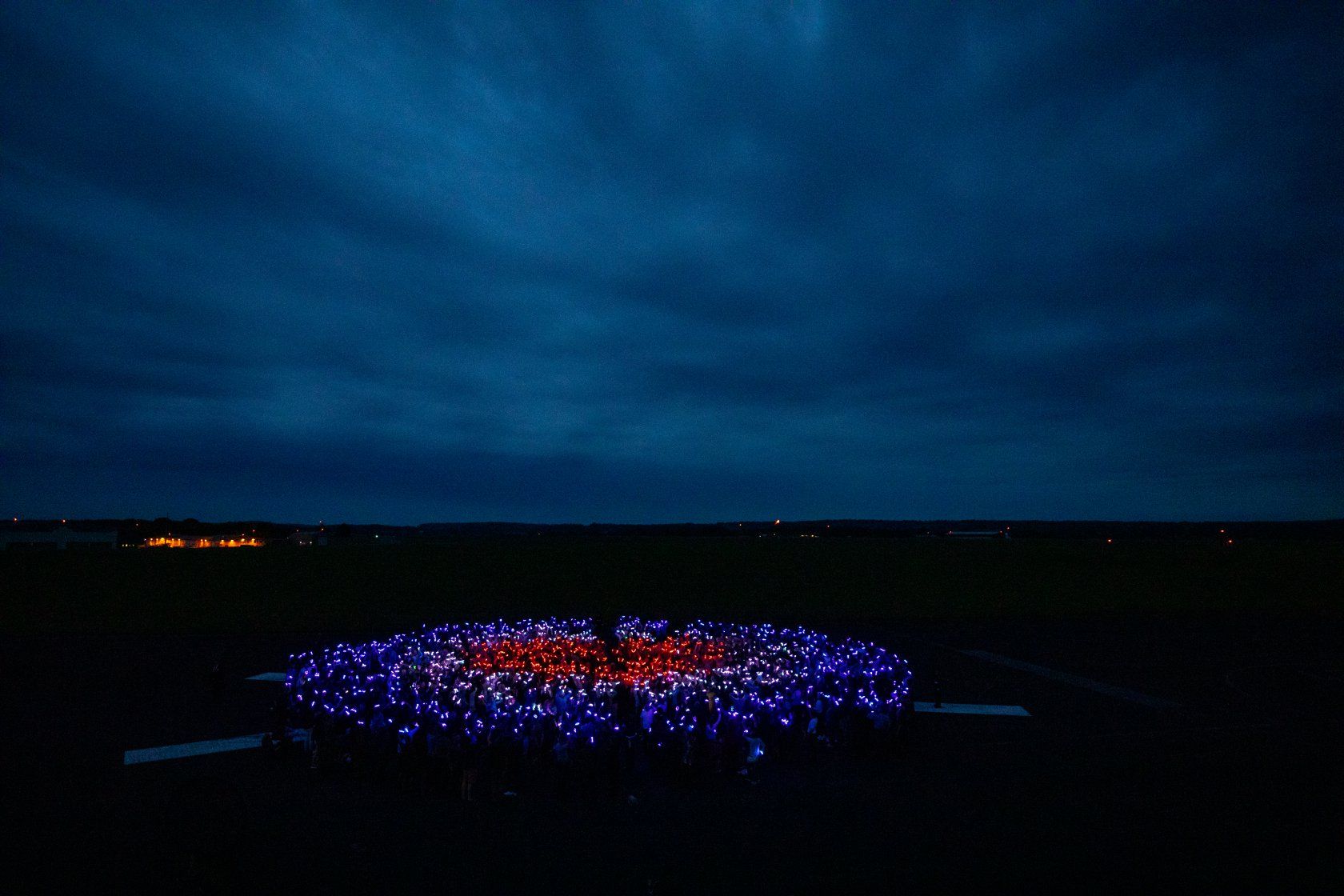
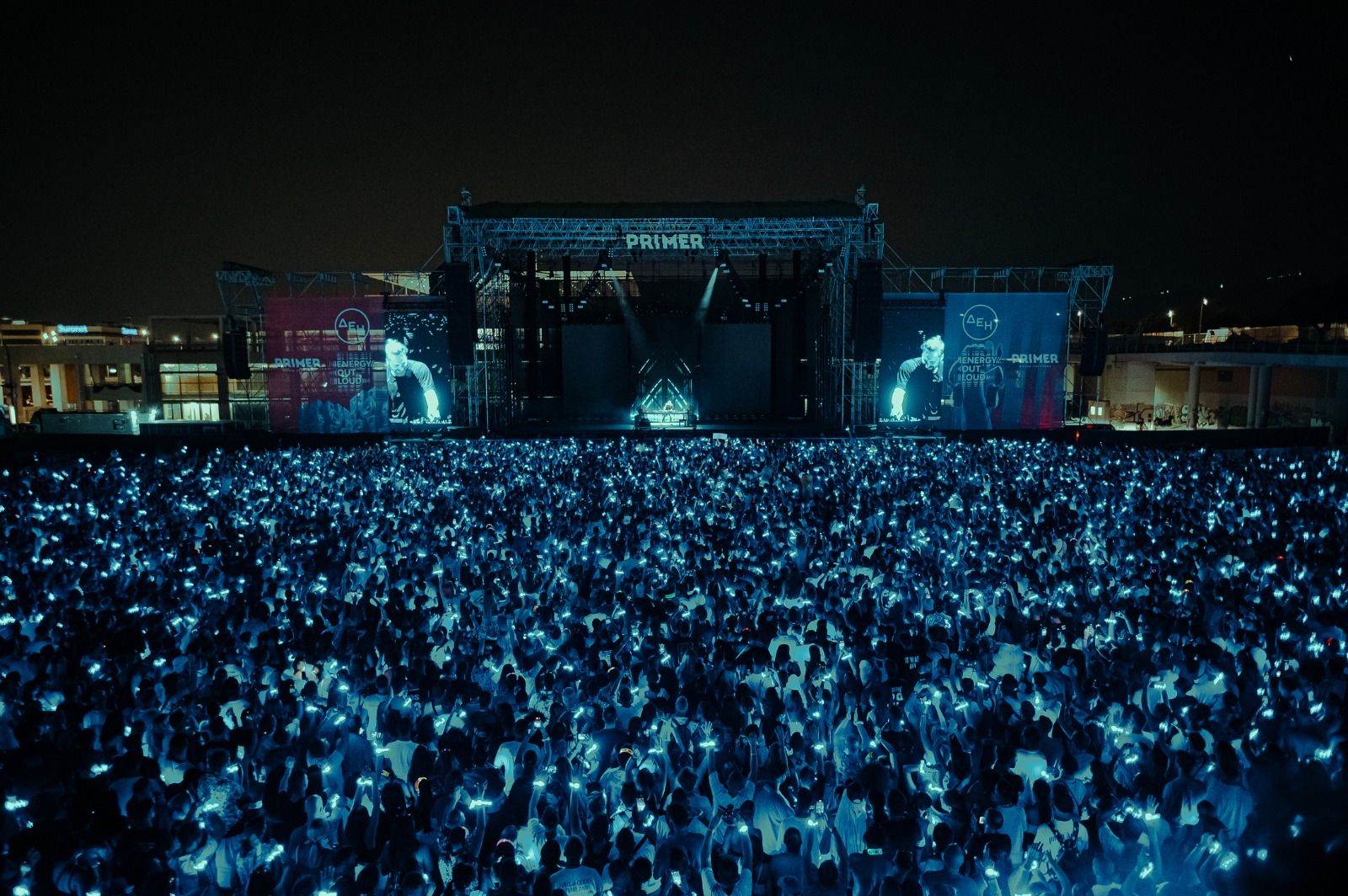
The single greatest asset—and the biggest canvas—in any arena or stadium is the audience itself. Leaving the crowd in darkness is a relic of a bygone era. Today, the most forward-thinking productions understand that the audience is not a passive observer but an active participant in the spectacle. This is where wearable LED technology becomes an indispensable tool.
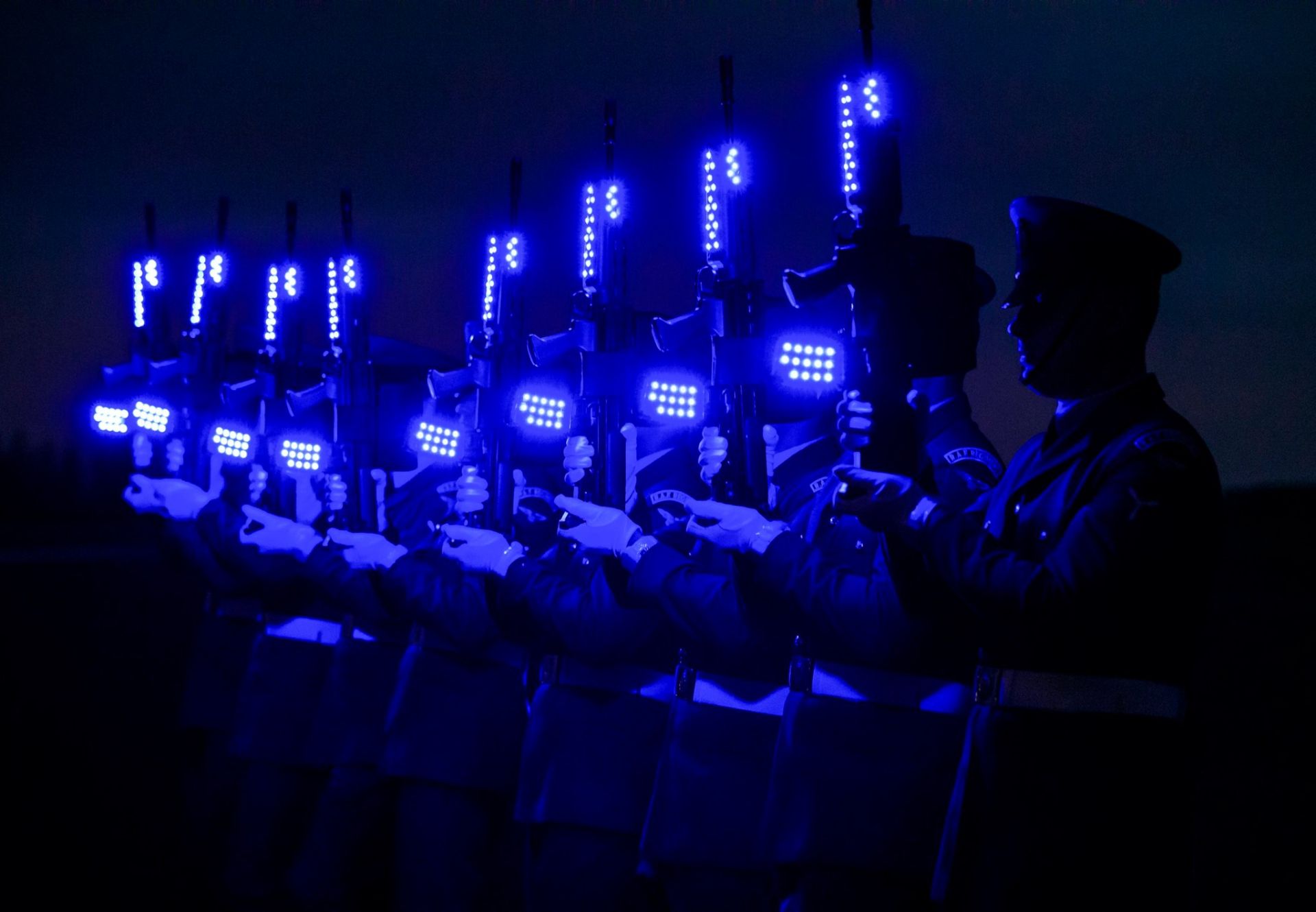
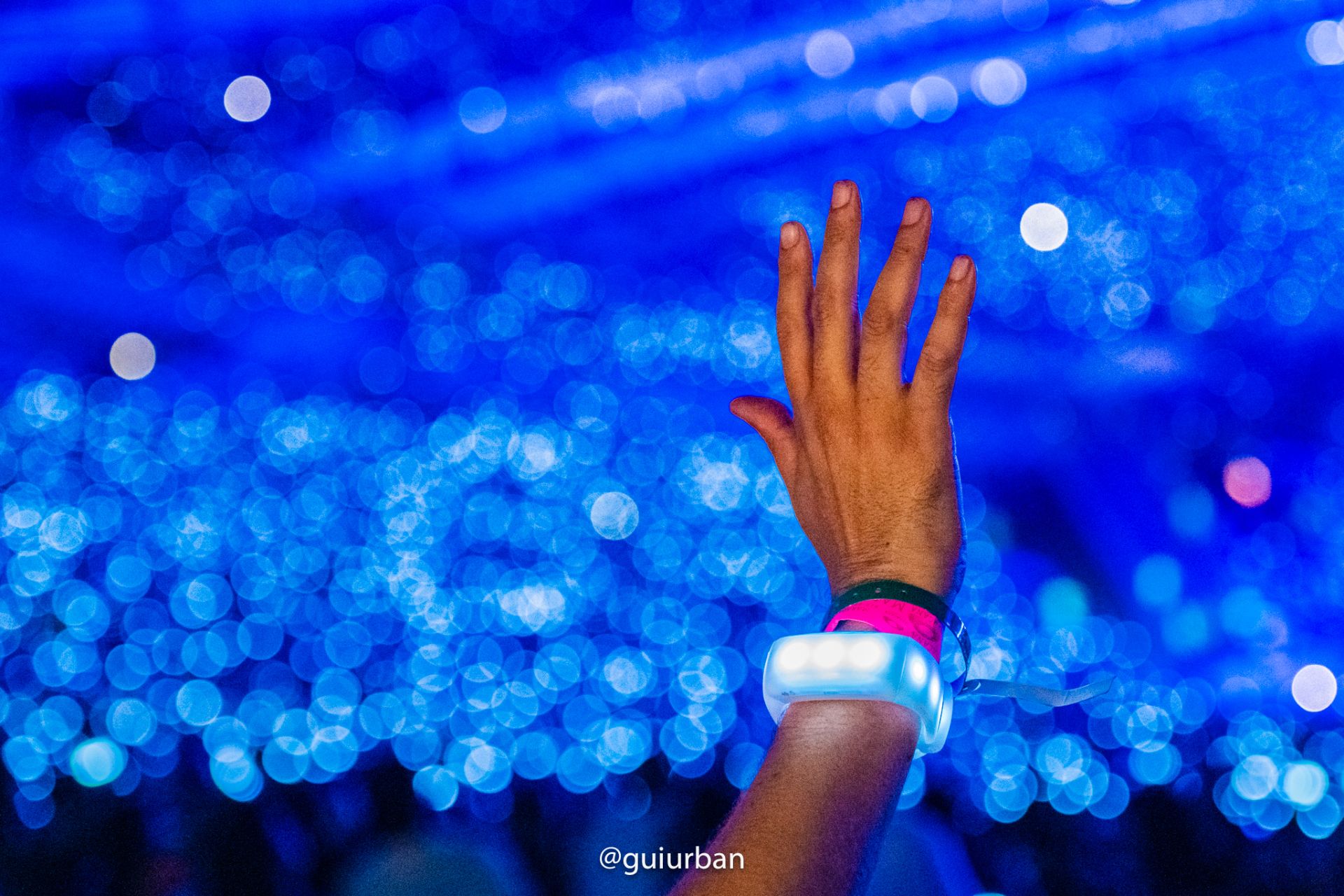
By turning tens of thousands of individuals into pixels in a grander design, you dissolve the barrier between the stage and the seats. Technologies like Xylobands allow a lighting designer to extend their vision beyond the proscenium and envelop the entire venue in light. We’ve seen this create breathtaking moments of unity and power on a global scale, from Maluma’s historic homecoming concert in Medellín to Wizkid’s record-breaking sell-out shows at London’s O2 Arena. These LED crowd experiences transform a gathering of strangers into a single, cohesive entity, all breathing and glowing in unison. It’s no longer just a concert; it’s a shared, biological response.
Principle 3: The Camera is the Second Audience
In the age of global streaming and social media, the live show is only half the story. Every major tour is now also a broadcast event. Lighting that looks spectacular in person can appear flat, blown-out, or noisy on camera. A modern lighting designer must serve two audiences simultaneously: the people in the room and the millions watching at home.
This requires a deep understanding of sensor dynamics, colour temperatures, and frame rates. It means collaborating closely with the video director to ensure that key moments are perfectly lit for the lens without sacrificing the energy of the live experience. It’s a delicate balancing act. The spectacular lens flare that looks magical on an iPhone screen might be a blinding distraction for the live audience. Conversely, the subtle, moody wash that feels intimate in the arena can be lost entirely in the compression of a live stream. Productions like the Formula 1 75th Anniversary event demonstrate this dual-purpose design, creating a stunning visual for the broadcast while providing an immersive event technology experience for the 13,000 guests in the arena.
Principle 4: Narrative Before Novelty
With an ever-expanding arsenal of fixtures, LED surfaces, and control technologies, it’s easy to fall into the trap of using technology for its own sake. However, the most effective lighting design always serves the story of the show. Every colour choice, every strobe effect, and every cue should be motivated by the music and the artist’s performance.
The masterstroke of a great lighting designer is not how many effects they can deploy, but the restraint they show. It’s about knowing when to be silent. It’s about creating dramatic tension by plunging a 60,000-seat stadium into a single pin-spot or a profound, shared darkness, only to erupt into a joyous, full-crowd blaze of colour. These are the moments that create narrative arcs and emotional resonance, transforming a collection of songs into an unforgettable journey.
The Unseen Future
As technology evolves, so too will the principles of large-scale lighting design. The integration of real-time data, augmented reality, and even more sophisticated radio controlled LED wristbands will continue to blur the lines between the physical and digital realms. Yet, the core tenets will remain. It will always be about scale, about connection, and about serving the story. In the grand theatre of the stadium, light is more than just illumination; it is the primary language of collective emotion, the unseen force that guides us, connects us, and ultimately, brings us together in the dark.