Beyond the Arena: Mastering Light for the Global Broadcast Audience
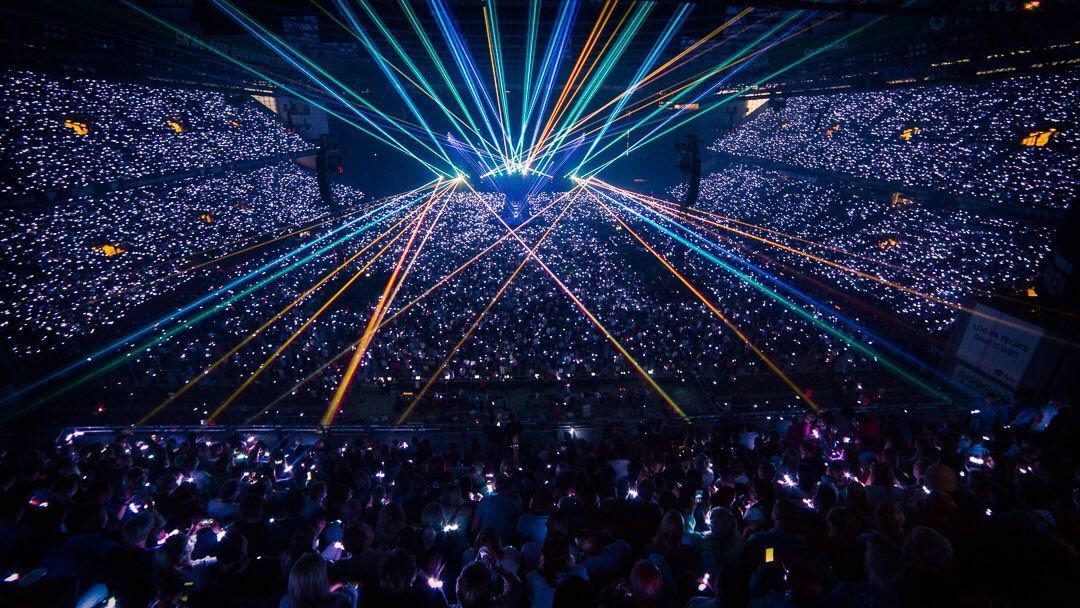
The Dual Frontier: Lighting for The Room and The World
In modern live production, the audience is no longer just the sea of faces in the arena; it's the millions watching from screens across the globe. This creates a dual frontier for event producers and lighting designers. An effect that feels electric in person can appear chaotic or underwhelming on camera. A sequence designed for the pristine clarity of a 4K broadcast can leave the in-venue audience feeling disconnected. Mastering this balance is the new hallmark of a truly successful large-scale event.
The challenge is to create a single, unified experience that translates seamlessly across these two distinct environments. It requires a philosophy that treats the broadcast feed not as a secondary consideration, but as a co-equal priority. From major sporting events like the Davis Cup to high-stakes TV formats like Beat The Chasers, the camera is the conduit to the largest part of your audience. Every lighting choice must serve both the human eye and the camera sensor.
The Camera's Eye: A Different Kind of Spectator
A broadcast camera interprets light differently than the human eye. What we perceive as atmospheric haze, a camera can read as muddy noise. A subtle, slow-building fade might feel emotionally resonant in a stadium but lack the punch needed to hold a viewer's attention on a second screen. This is where the technical and the artistic must converge.
Key Considerations for Camera-First Lighting:
- Flicker Frequency: The bane of many broadcast productions. LED sources must be of a professional grade with high refresh rates to avoid the distracting flicker and banding that cameras, especially those shooting in slow motion, will pick up.
- Color Gamut and Temperature: Consumer-grade LEDs can produce colors that look vibrant to the eye but appear washed out or incorrectly hued on camera. Professional LED event technology is calibrated for broadcast standards, ensuring that a specific shade of red in the arena is the same shade of red on a viewer's television in another continent.
- Dynamic Range: Cameras have a much narrower dynamic range than the human eye. Extreme contrasts between bright and dark areas can result in a loss of detail. Lighting schemes must be compressed, in a sense, to fit within this range, ensuring that both the brightly lit performer and the subtly illuminated crowd are visible.
Extending the Set: Bringing the Audience into the Picture
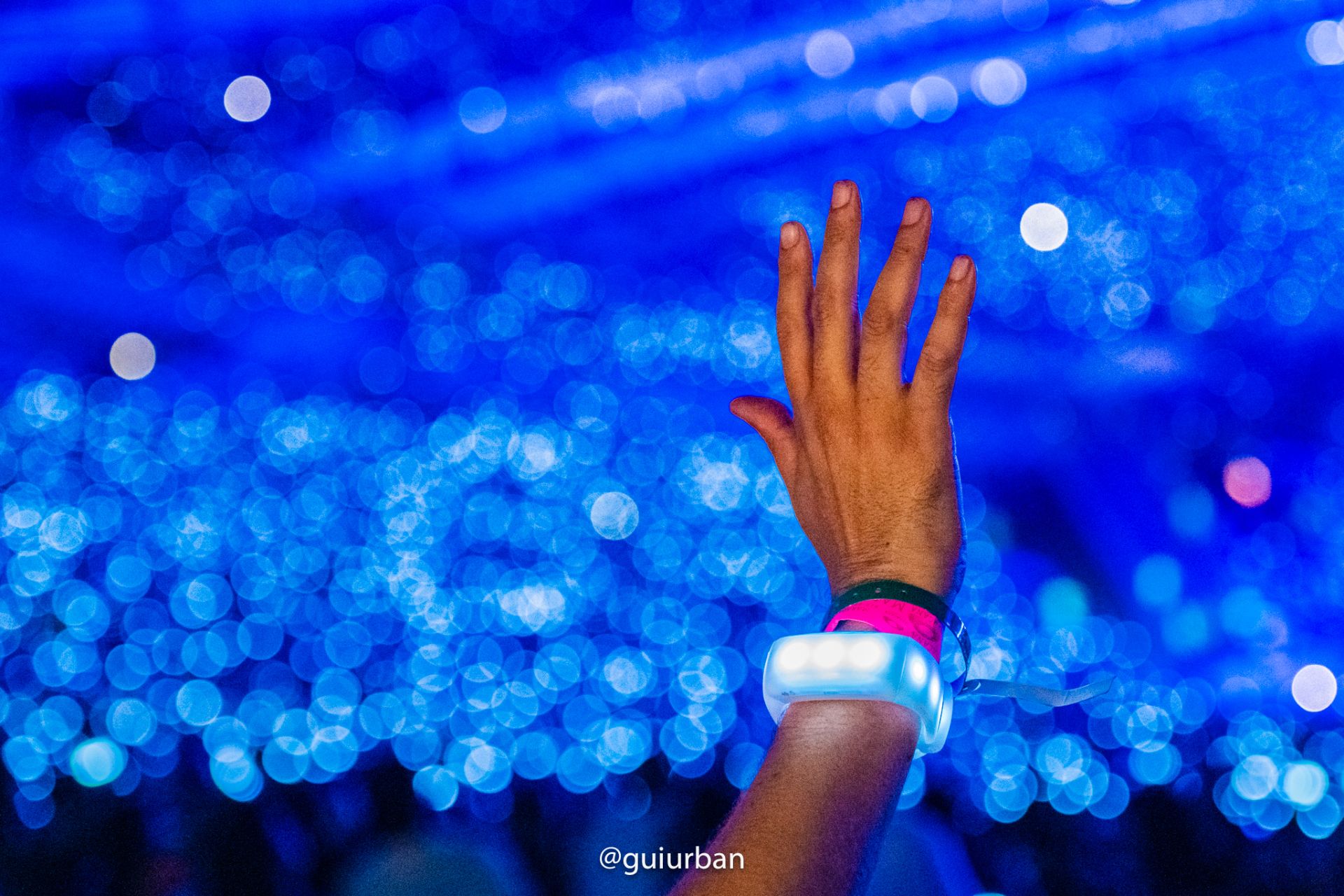
One of the most powerful tools for bridging the gap between the live and broadcast experience is to transform the audience itself into an extension of the set. This is where wearable LED technology becomes a game-changer. By making the crowd a canvas for light, you create a spectacle that is inherently camera-friendly, providing scale, depth, and dynamic energy to every shot.
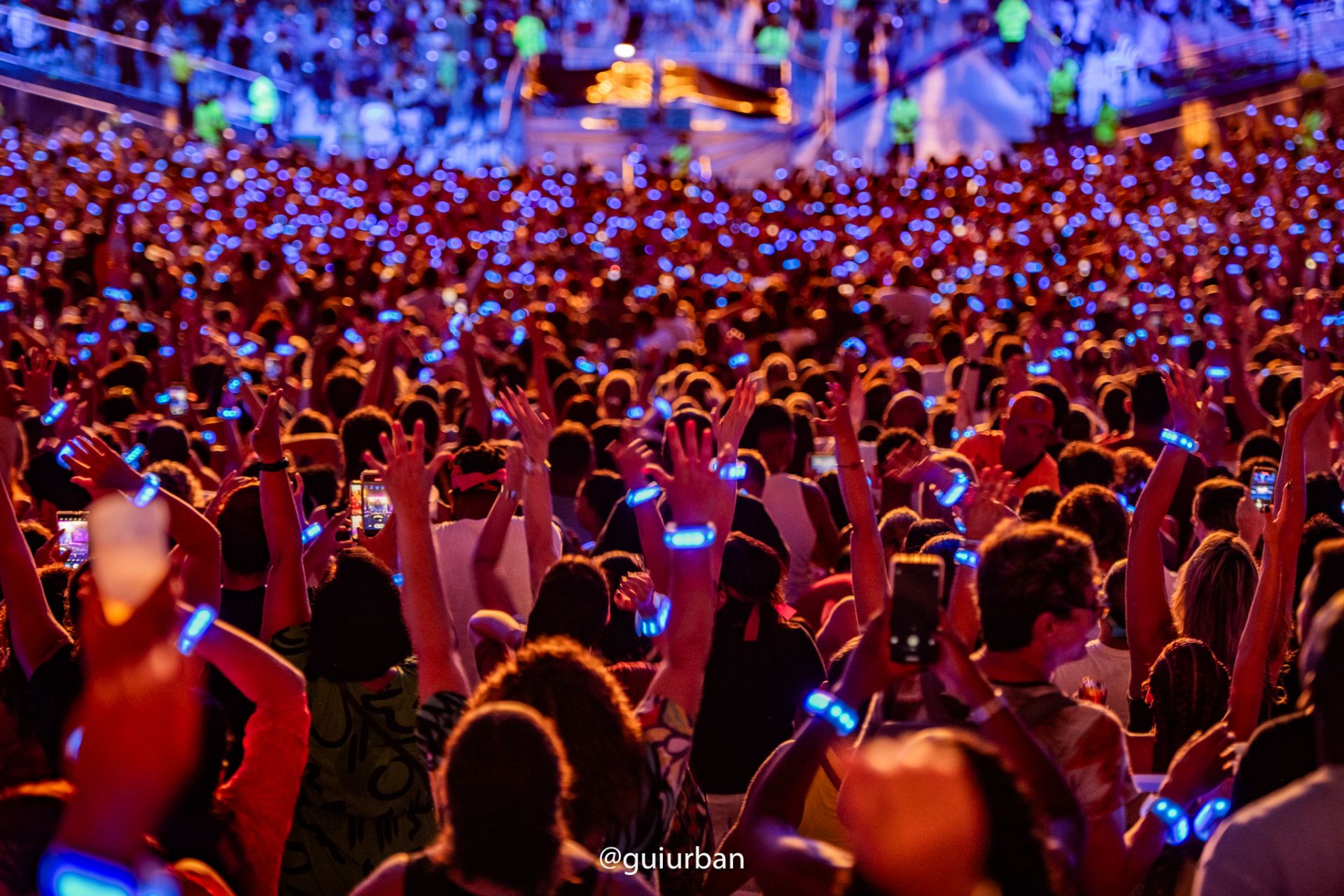
When Maluma’s historic Medellín En El Mapa concert was streamed to over 240 countries, the 54,000 fans didn't just watch the show—they became part of it. The synchronized LED bracelets turned the entire stadium into a pulsating, living organism of light, creating a visual feast for the cameras and a profound sense of unity for those in attendance. For the viewer at home, this wasn't just another concert; it was an immersive event, and the sheer scale was undeniable.
For a global broadcast, the audience is your most valuable visual asset. Lighting them with precision turns passive spectators into an active part of the spectacle, giving the broadcast director a rich, dynamic canvas to draw from.
Case Study: The Precision of Live Television
Nowhere is the demand for broadcast-ready lighting more acute than in live television. In a studio environment, every element is meticulously controlled. For formats like ITV's Beat The Chasers UK, where tension and split-second timing are key, lighting is a critical narrative tool. Here, the audience's LED wristbands serve multiple purposes. They amplify the drama of the game, flashing and changing color to signal key moments. For the camera, they create a vibrant, textured backdrop that makes the studio feel larger and more energetic. They are not just lighting; they are a core component of the show's visual identity, creating one of the most compelling LED crowd experiences on television.
Similarly, for massive broadcast events like Formula One's 75th-anniversary celebration, custom LED Lanyards allowed show designers to segment the audience and create complex, team-specific lighting cues. This level of granular control is what allows a broadcast to feel intentional and polished, telling a clear visual story to a global fanbase. Each fan becomes a pixel in a larger picture, perfectly synchronized for the watching world.
The Future is a Shared Experience
The line between a live event and a broadcast production has dissolved. Today’s event producers are in the business of creating global moments, and this demands a new level of technical and creative sophistication. By embracing camera-first design principles and leveraging immersive event technology like Xylobands, we can build experiences that resonate with equal power, whether you're in the front row or watching from thousands of miles away. It is about more than just lighting a stage; it is about illuminating a shared, global experience and ensuring the spectacle is just as powerful through the lens.