The Unblinking Eye: Mastering Light for the Global Broadcast Audience
The Camera Never Blinks: Engineering Light for the Global Broadcast
The final ten seconds of a live broadcast are a universe of their own. The air crackles with a specific, high-stakes tension that exists only in the nexus between a live audience and the millions watching at home. In this shared moment, every cue, every camera angle, and every pulse of light is magnified. The roar of the in-house crowd must translate into palpable energy through the screen. The spectacle must feel both immense and intimate. For the production team, this is the final exam. For the camera, it is the only reality that matters.
Live events are no longer confined to the four walls of a venue; they are global broadcasts. From international song contests like Eurovision to historic sporting milestones like the Formula One 75th Anniversary show, the at-home audience is now a primary consideration in every creative and technical decision. This shift demands a radical new approach to lighting design—one that serves two masters: the human eye and the camera lens.
The Duality of Light: Designing for the Room and the Lens
Lighting for a live audience is an exercise in immersion and emotional engineering. It’s about creating depth, painting the architecture of a space, and shaping the collective energy of the crowd. Lighting for broadcast, however, is a science of precision. The camera sensor interprets light differently than the human eye. It is less forgiving. Colors can oversaturate, dynamic ranges can be crushed, and the subtle interplay of shadow and light can be lost entirely.
The challenge, then, is to create a design that feels electric and atmospheric in person without compromising the quality of the broadcast feed. This is where the concept of the audience as a canvas becomes critical. By extending the lighting design into the crowd itself, we can create a visual experience that is both breathtakingly expansive for those in the room and perfectly framed for those watching on screen.
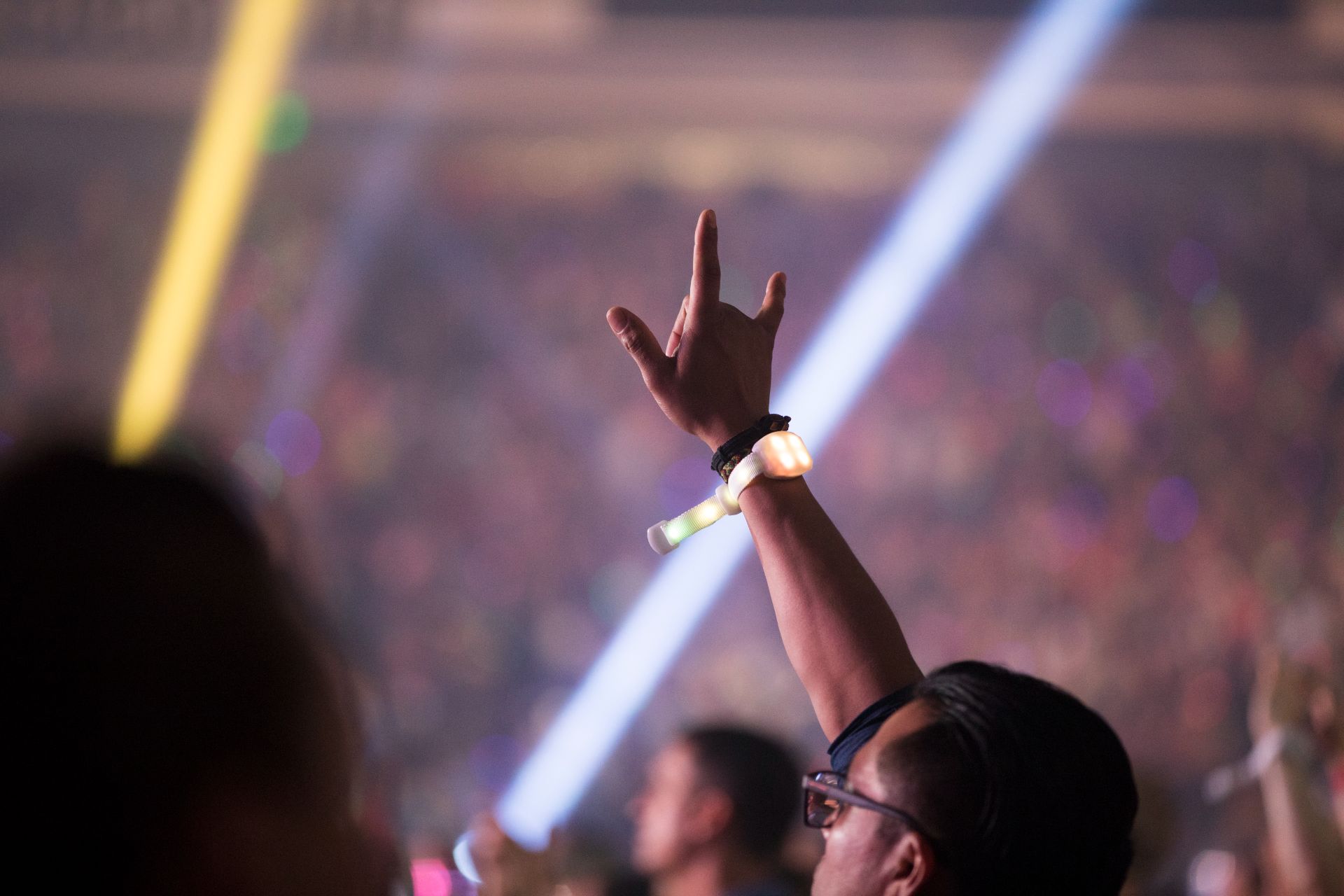
This is a principle we have brought to life for major broadcasters like ITV, powering experiences for shows like Beat The Chasers. In a studio environment, where the audience is an integral part of the set, their reactions and engagement are part of the story. Using LED wristbands, we can turn the audience into a dynamic, responsive backdrop—pulsing with light to build tension during a countdown or exploding in a celebration of colour for a win. It adds a layer of visual data for the home viewer, signaling the emotional temperature of the room in a way that is immediately understood.
Extending the Set, Not Just the Stage
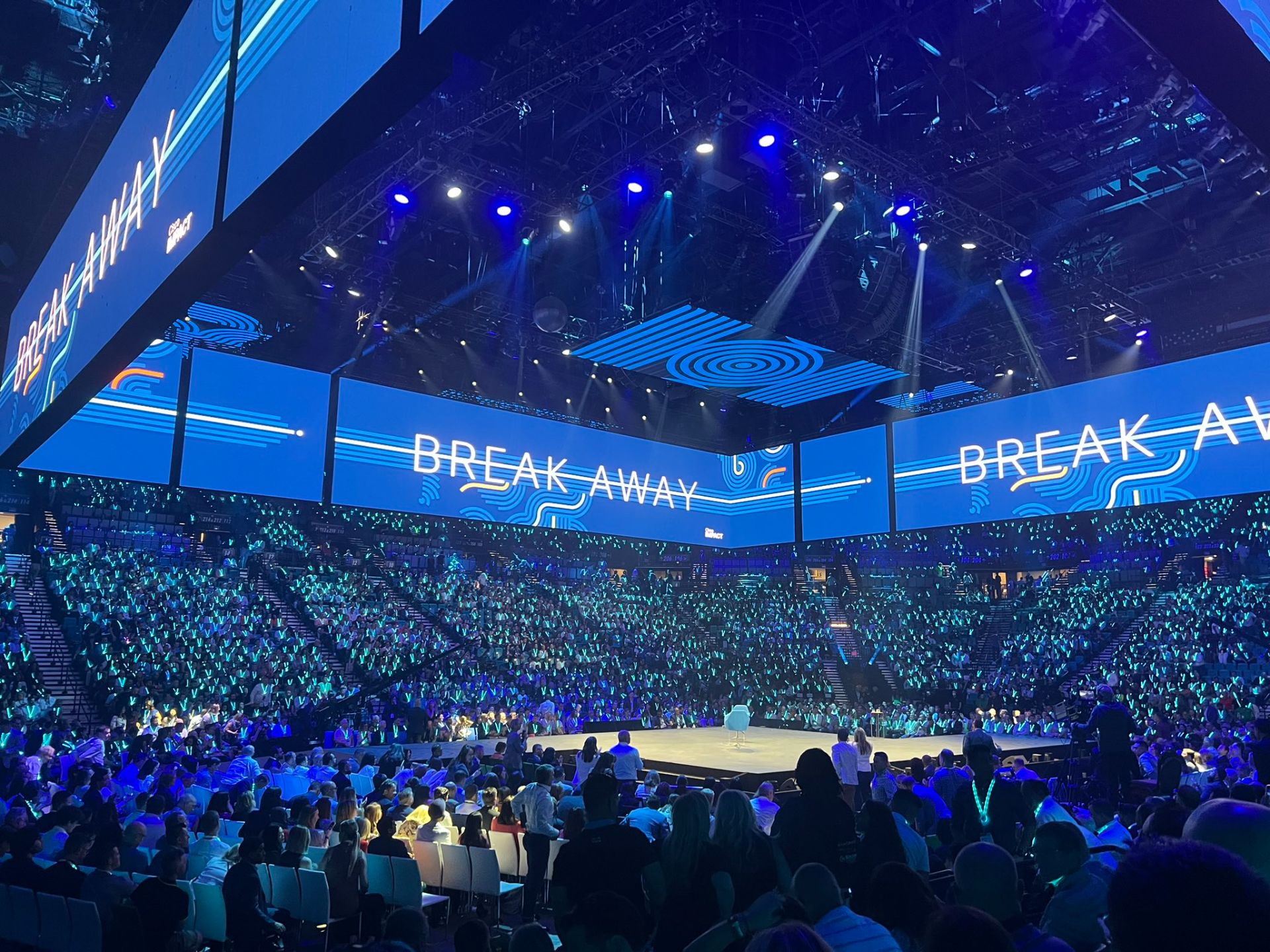
Modern event production thinks beyond the proscenium arch. The most innovative experiences treat the entire venue as a single, cohesive environment. By strategically placing programmable LED wearables, lanyards, or orbs throughout the audience, a lighting designer gains thousands of new, mobile points of light to command.
Key considerations for broadcast-friendly audience lighting:
- Color Science: Not all LED colors translate well to broadcast. Certain shades of blue, for instance, can cause "color clipping" or flaring on camera. Our systems are calibrated to produce a spectrum of rich, stable colors that look as good on a 4K television as they do in an arena.
- Flicker-Free Technology: The refresh rate of LEDs can create unsightly flicker or banding when filmed by broadcast cameras operating at different frame rates. Our radio controlled LED wristbands are engineered to be flicker-free at any frame rate, ensuring a clean, stable image for the broadcast director.
- Controllable Intensity and Zoning: A flash of intense light that dazzles a live crowd can blow out the exposure on camera. The ability to control the brightness and segment the audience into precise zones is paramount. This allows a designer to create subtle, rolling effects for a close-up camera shot while simultaneously deploying a high-energy, full-stadium pulse for a wide-angle view.
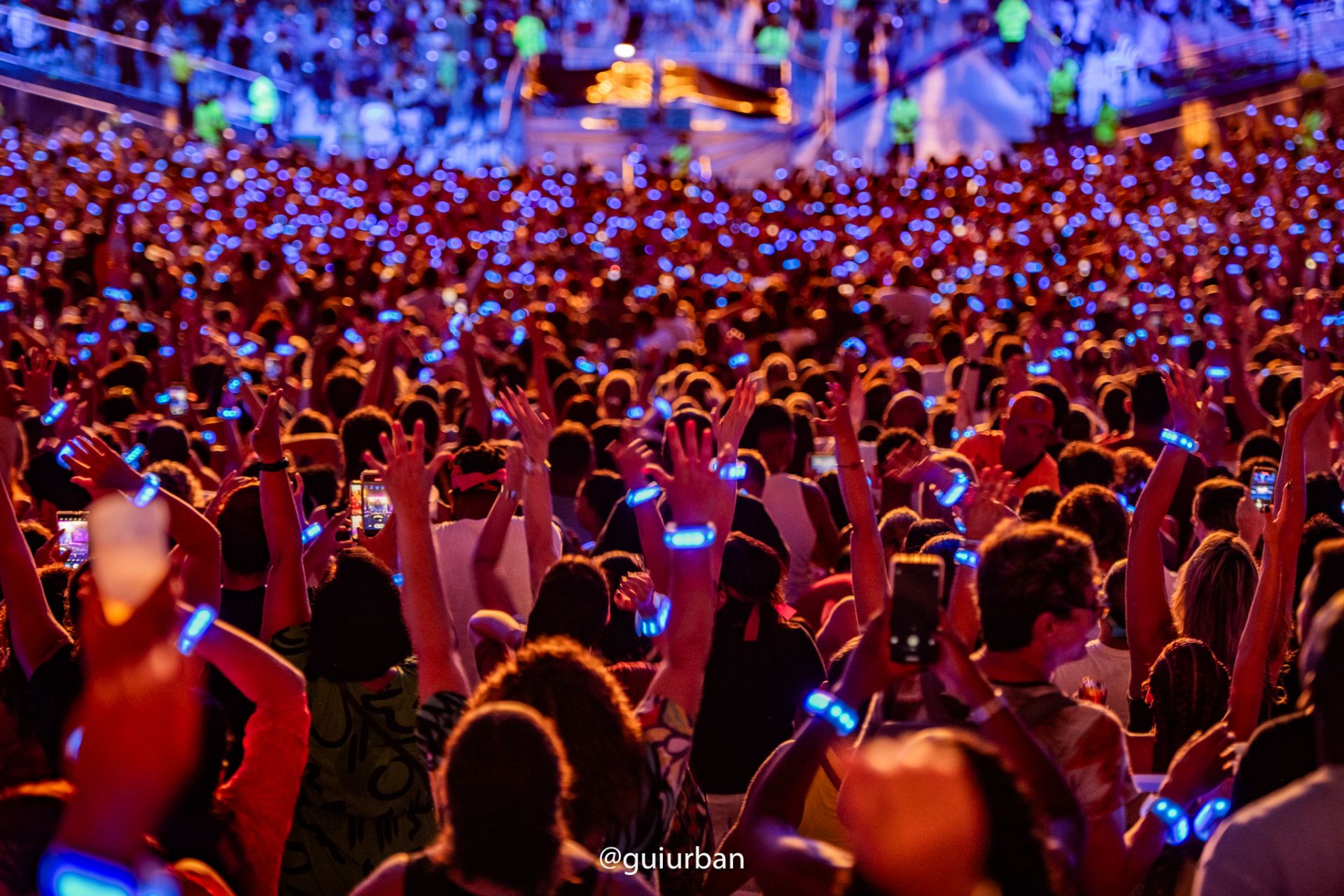
When Maluma played to 54,000 fans in his hometown of Medellín—a concert streamed live to over 240 countries—the scale of the event was immense. Using Coldplay Xylobands, the production extended the visual excitement of the stage across the entire stadium, making the massive crowd a living, breathing part of the broadcast and ensuring that even the viewers furthest from the stage felt connected to the performance.
The Audience as a Living Light Show
Ultimately, the goal is to create a feedback loop. The energy of the crowd, amplified by light, enhances the performance. The performer, feeding off that energy, delivers a more powerful show. The broadcast captures this heightened reality, and the viewer at home feels it viscerally. They are no longer just watching an event; they are part of a shared experience.
This approach transforms the audience from passive spectators into active participants—a core element of modern immersive events. Whether it’s the high-octane environment of a Formula One launch or the tense studio atmosphere of a game show, the principle remains the same. The crowd is not just watching the show; the crowd *is* the show.
As the line between live and broadcast continues to blur, this holistic approach to event lighting isn’t just an advantage; it’s the new standard. The camera’s eye is unblinking, and it demands a spectacle that is not only seen but felt, no matter where you are in the world.