The Art of Scale: Modern Lighting Design for Arenas and Stadiums
The Challenge of Scale
Designing for a theatre is a craft; designing for a stadium is a logistical and creative battle against physics. In an arena or stadium, the sheer scale of the environment presents the single greatest challenge. A lighting fixture that feels dazzling in a 2,000-seat venue can be swallowed whole by a 50,000-capacity stadium. The distances are immense, the sightlines are complex, and the canvas is not just the stage—it's the entire volume of the building, including the audience itself.
Modern tour lighting design has moved beyond simply illuminating the performers. It’s about creating a total environment, a world for the audience to inhabit for a few hours. This requires a multi-layered approach, where every element, from the keylight on the artist to the vast architectural sweeps of colour, works in service of a single, unified creative vision. The goal is to make a person in the last row of the upper deck feel just as engaged as someone in the front row. This is where the concept of the audience as a canvas comes into play, turning tens of thousands of individuals into a single, dynamic entity.
The Audience as the Canvas
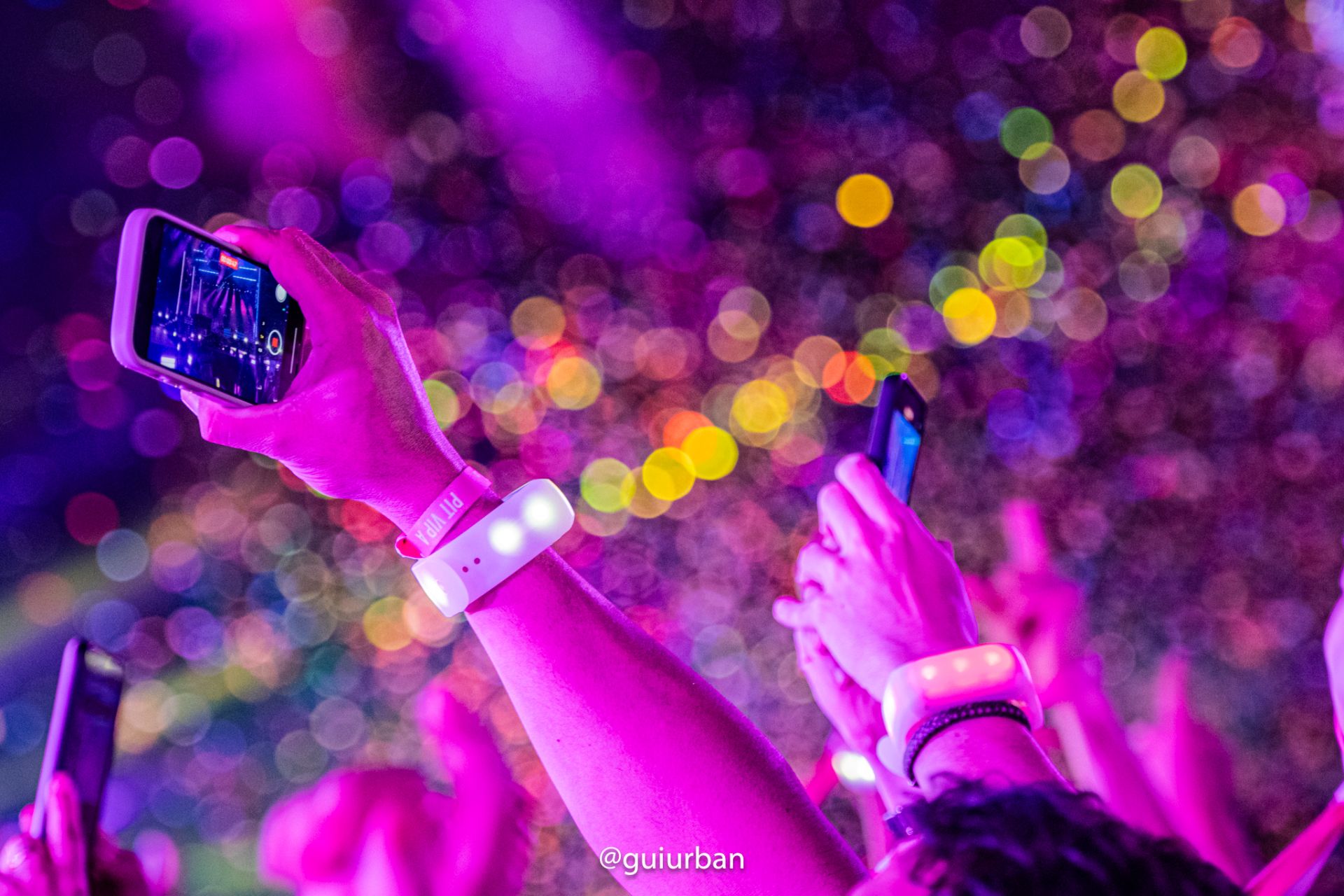
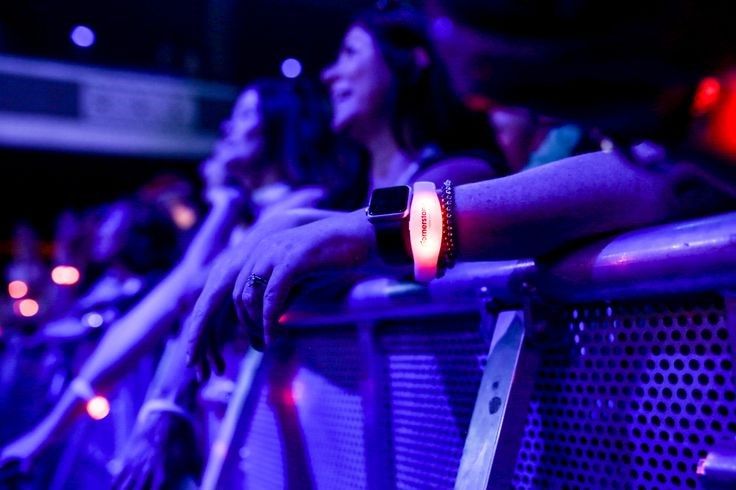
For decades, the audience existed in darkness, a passive observer to the spectacle on stage. Today, that model is obsolete. The most forward-thinking productions understand that the crowd is not just watching the show; they are the show. This is the principle behind the global success of Xylobands, a technology born from a desire to unite the artist and audience in a shared experience of light.
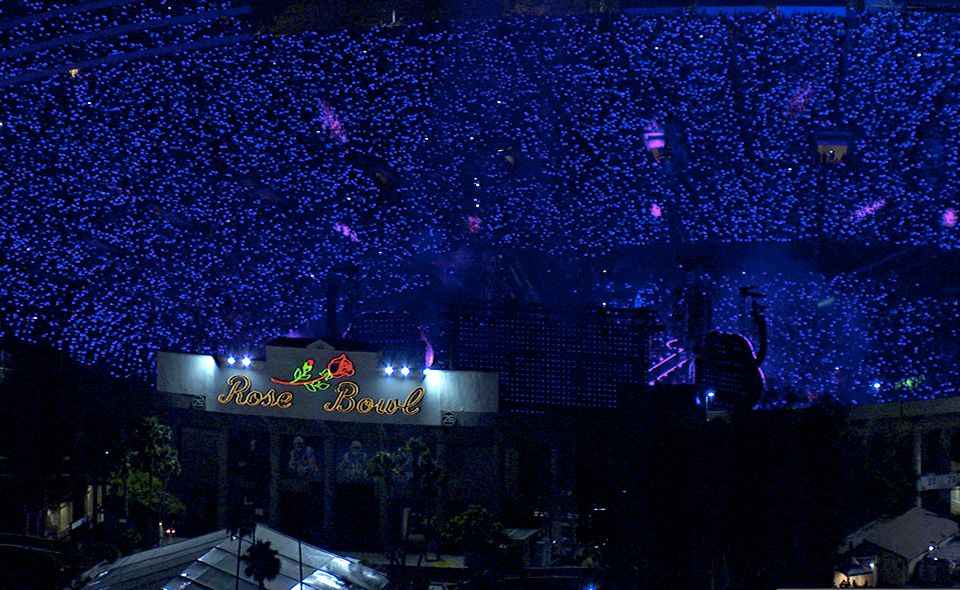
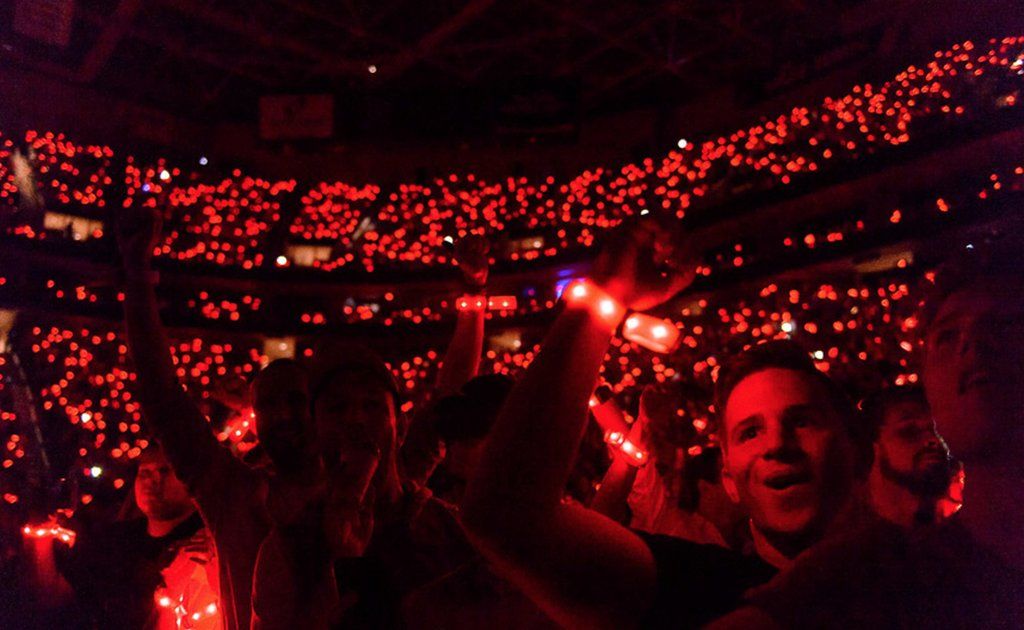
When Coldplay first took their Coldplay Xylo Band-powered tour to stadiums, they didn’t just add another lighting effect; they fundamentally redefined the relationship between the stage and the seats. By giving each audience member a radio-controlled LED wristband, they handed over a piece of the show to every individual. Suddenly, the entire stadium bowl became a dynamic, pixel-mapped screen. This approach transforms cavernous, impersonal spaces into intimate, connected environments. A wave of light can now sweep from the back of the arena to the front, a unified pulse of colour can sync with a song's heartbeat, or the crowd can be segmented into massive, shifting blocks of team colours at a sporting event like the Davis Cup.
This technique is no longer a novelty; it is a core principle of modern large-scale design. It acknowledges that the emotional impact of a show is magnified when the audience sees themselves—and their collective energy—reflected in the visual landscape. Whether it's with custom LED wristbands for a global artist like Maluma or LED lanyards at a major corporate event, wearable LED technology turns spectators into participants.
Designing for Depth and Dimension
With a canvas as large as a stadium, a flat, two-dimensional lighting design will fail. The key is to create depth, layering light in three-dimensional space to craft a compelling visual journey. This involves several distinct but coordinated layers:
1. The Performance Area (The Stage)
This is the anchor of the entire design. It's where the narrative begins. Lighting here must be precise and powerful, capable of drawing focus amidst a sea of visual information. It’s about sculpting the performers, defining the performance space, and providing the bright, broadcast-quality illumination needed for both the live audience and the cameras, as seen in major televised events like those for ITV or the Formula One 75th-anniversary show.
2. The Architectural Space (The Air)
This is the space above and around the stage and audience. Here, beams of light, lasers, and atmospheric effects (like haze and fog) create a sense of volume and architecture. This layer adds the epic scale. Sweeping movements and bold colour changes can transform the perceived shape and size of the venue, making the enormous space feel both grand and intentional. This is the layer that delivers the "wow" moments that read from every seat in the house.
3. The Audience Area (The Human Canvas)
As discussed, this is the layer that provides the emotional core. Synchronized LED wristbands, LED orbs, and other forms of immersive event technology allow designers to paint with light across the entire seating area. This doesn't just add to the spectacle; it fosters a powerful sense of unity and shared experience. When 50,000 people light up in unison, they are no longer strangers. They are a single, connected body, sharing a moment. This has become a defining feature for massive events, from music festivals like Primer to concerts by global stars like Wizkid.
The Unseen Pillar: Control and Integration
None of this is possible without a robust and sophisticated control infrastructure. Modern stadium shows rely on a complex network of systems to ensure every single light source—from a single spotlight to 80,000 radio controlled LED wristbands—is perfectly synchronized. This requires seamless integration between different technologies and protocols, such as DMX, Art-Net, and proprietary radio frequency (RF) systems.
The lighting designer or show operator acts as a conductor, orchestrating this symphony of light from a single console. The programming process is meticulous, with every cue and transition planned and timed to the millisecond. For touring productions, the challenge is amplified. The system must be robust enough to be deployed, operated, and dismantled on a tight schedule in different venues around the world, each with its own unique technical challenges.
Ultimately, the art of scale in lighting design is a balancing act. It is a dance between the epic and the intimate, the technical and the emotional. It’s about using technology not for its own sake, but as a tool to tell a story, evoke an emotion, and unite thousands of people in a single, unforgettable moment. By embracing the entire volume of the space and treating the audience as a living, breathing part of the design, today's creatives are not just lighting shows—they are building temporary worlds.