Beyond the Stage: The New Rules of Arena and Stadium Lighting
The Scale of the Sky
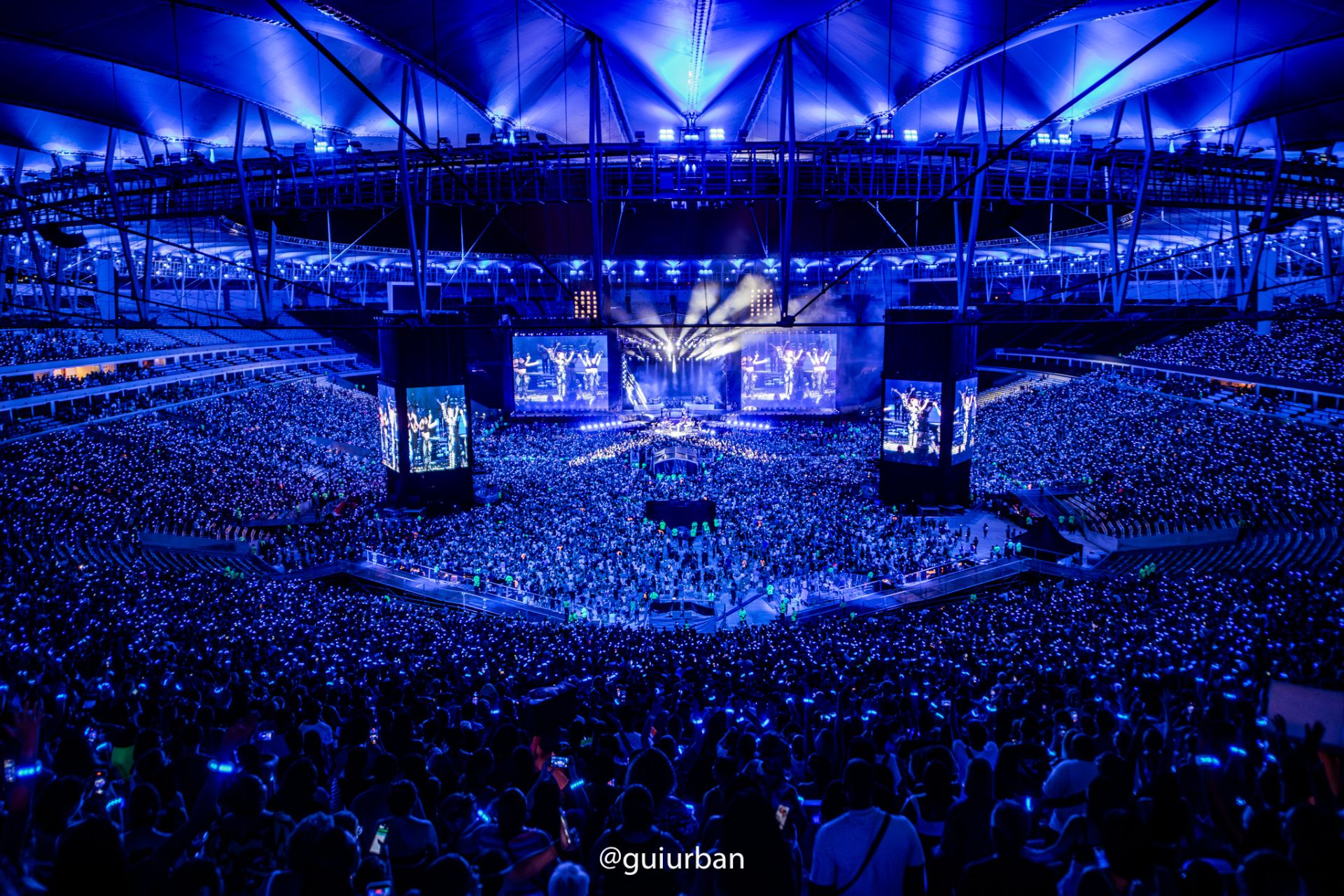
An arena is not a theatre. A stadium is not an arena. The first principle of designing for today’s largest live events is embracing the sheer scale of the environment. When you have 50,000 or more people—like the crowd at Maluma’s historic 2022 Medellín concert—every creative decision must be amplified. A lighting gesture that feels seismic in a 2,000-seat hall becomes a whisper in a stadium. Subtlety must be traded for bold, clear, and powerful statements that can travel hundreds of meters and still resonate with the fan in the very last row.
This is a world of broad strokes. It’s about leveraging geometry, architecture, and sightlines to create massive, unified visual moments. The lighting designer is no longer just painting the artist; they are painting the entire volume of space, treating the architecture itself as a dynamic set piece. The goal is to ensure that no matter a person’s vantage point, they are inside the picture, not just looking at it.
The Audience as the Medium
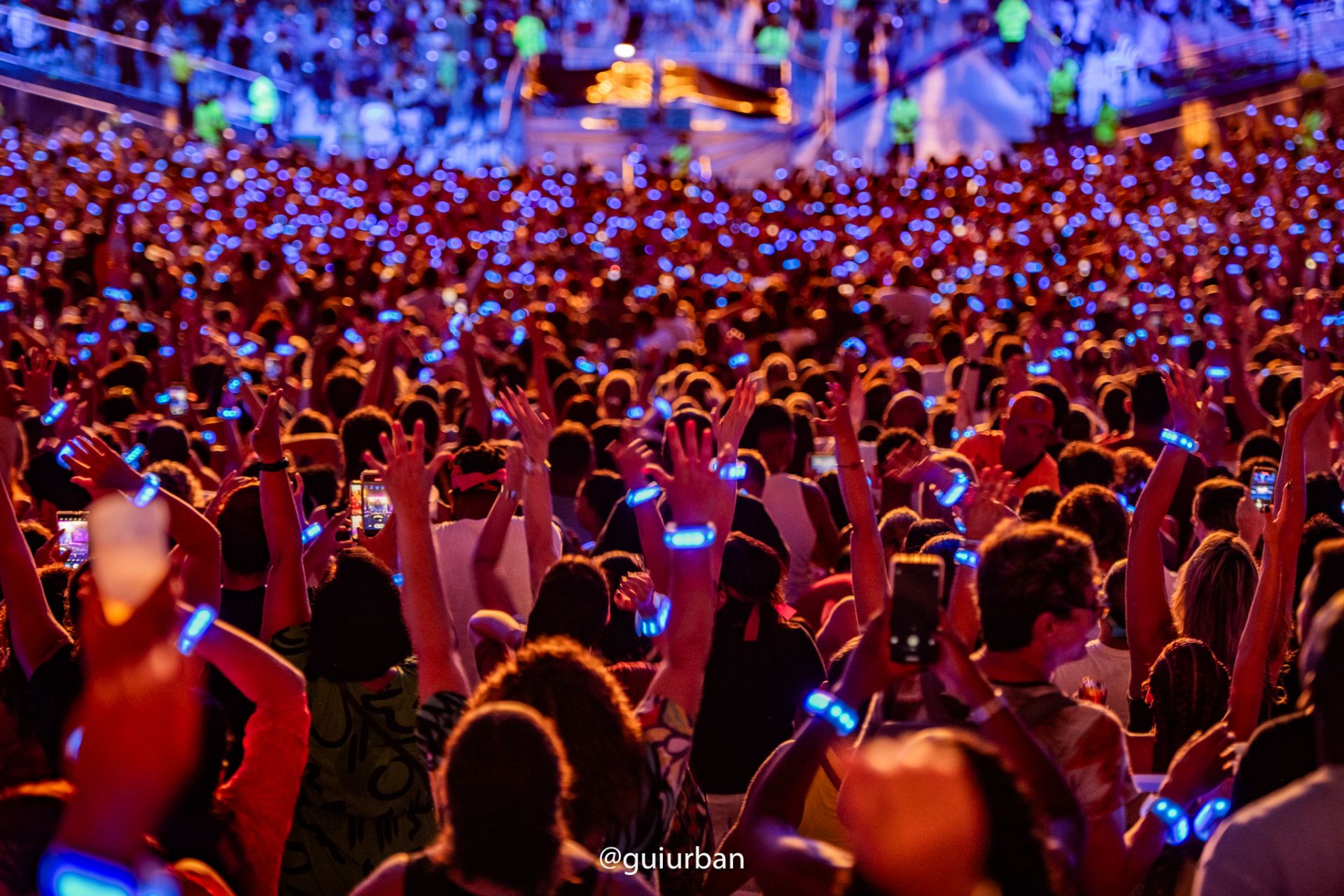
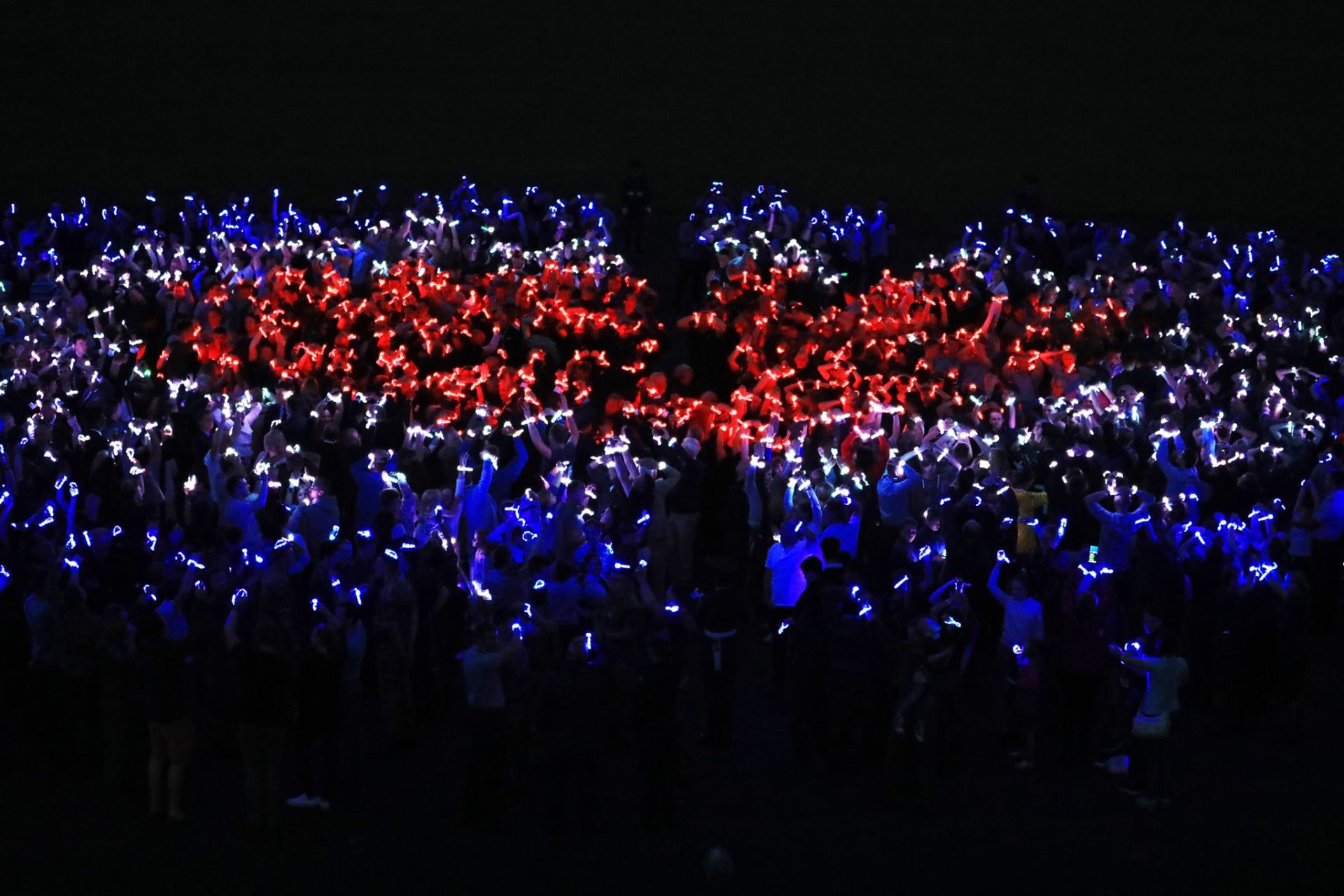
For decades, the crowd was a passive observer, shrouded in darkness. The most revolutionary shift in modern event production has been the inversion of this model. The audience is now the medium. This philosophy is the very foundation of Xylobands, born from a vision at Glastonbury to transform the crowd into a collective light show. When Coldplay first took this idea on their Mylo Xyloto tour, it redefined the relationship between the stage and the seats, forever blurring the line between them.
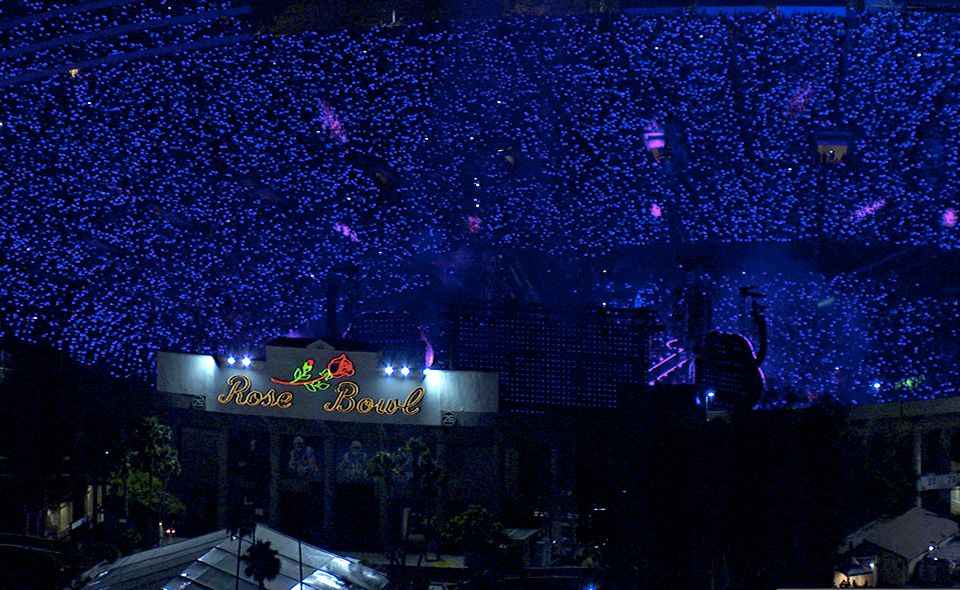
Today, this principle is central to designing immersive events on a grand scale. By deploying wearable LED technology, such as custom LED wristbands or even LED lanyards, every single audience member becomes a pixel in a colossal, moving canvas. These are no longer just concert wristbands; they are programmable nodes in a decentralized light show. This turns thousands of individuals into a single, sentient entity, pulsing with the same energy and light. It’s a powerful tool for visual storytelling and creating moments of profound unity.
Choreographing Emotion with Light and Shadow
With a canvas this vast, the temptation is to keep it constantly illuminated. But effective lighting design understands the power of dynamics and contrast. A stadium show’s emotional arc is not a sprint; it's a marathon of carefully paced crescendos and decrescendos. Light is used to build tension, to signal a shift in mood, or to carve out a moment of perceived intimacy in a sea of 80,000 people.
A driving rock anthem might demand a frantic, full-stadium visual assault. But a solo acoustic ballad might be most impactful with a single spotlight on the artist, with the surrounding thousands of LED bands glowing with a soft, steady, unified colour. This control over light and shadow allows designers to guide the audience’s focus and amplify the emotional narrative of the performance. It’s not about the quantity of light, but its quality, timing, and intent.
The Unseen Technological Backbone
Orchestrating these vast LED crowd experiences requires a robust and invisible technological framework. Turning tens of thousands of individual concert wristbands into a perfectly synchronised spectacle doesn’t happen by accident. It’s the result of sophisticated LED event technology, typically powered by radio-frequency (RF) transmission.
From a central control desk, a technician can send precise commands to every single LED wearable in the venue. These signals dictate colour, pattern, and timing with near-zero latency, ensuring the visual effect is instantaneous and perfectly aligned with the music and on-stage action. This network of radio-controlled LED wristbands is the nervous system of the modern immersive event, translating creative vision into a unified, physical reality across an entire stadium.
Designing for the Human Eye and the Camera Lens
A modern stadium show has two audiences: the people in the room and the millions watching on screens around the world. As Maluma’s concert was streamed live to over 240 countries, it highlights a critical new principle: lighting must be engineered for both the human eye and the camera sensor. What appears vibrant and magical in person can look blown-out or cause flicker on a broadcast feed.
This requires a delicate balance. Designers must be masters of colour temperature, refresh rates, and intensity to create a spectacle that feels electric to the live audience while translating into a clean, compelling, and shareable visual for those watching at home. In an age where every fan is a potential broadcaster via their smartphone, every moment is designed to be camera-ready. From global broadcasts by ITV to music festivals like PRIMER, engineering for the lens is no longer an afterthought—it’s a core component of the creative process.
Ultimately, the art of arena and stadium lighting design is an exercise in unity. It’s about using every tool available—from the stage rig to the Xylobands on every fan's wrist—to dissolve the distance, erase the darkness, and forge a single, shared experience of light and sound. It’s how you make a crowd of 50,000 feel like one.