The Unseen Architecture: The Psychology of Collective Awe in Live Events
The Architecture of Awe: Deconstructing the Psychology of Mass Audience Engagement
An audience is not a monolith. It is a temporary society, a complex organism assembled for a shared purpose, whether in a darkened stadium, a sprawling festival field, or a corporate arena. For decades, the primary model of engagement was passive reception: the artist performs, the speaker presents, the audience consumes. But a fundamental shift is underway, driven by a deeper understanding of human psychology and enabled by sophisticated immersive event technology. The goal is no longer just to entertain, but to enmesh—to transform thousands of individuals into a single, cohesive entity, experiencing a moment of collective awe.
This is the new frontier of live experience design. It’s an architecture built not of steel and concrete, but of sensory input, psychological triggers, and shared narratives. To build it, we must first understand the invisible forces at play.
From Individual to Collective: The Power of Synchrony
At the heart of collective engagement is the principle of synchrony. When humans move, vocalise, or even just breathe in unison, a powerful psychological transformation occurs. Research shows that synchronized action fosters pro-social behaviour, increases feelings of connectedness, and blurs the lines between ‘self’ and ‘group’. It’s an ancient, primal mechanism that has bound communities together for millennia, from tribal dances to military marches.
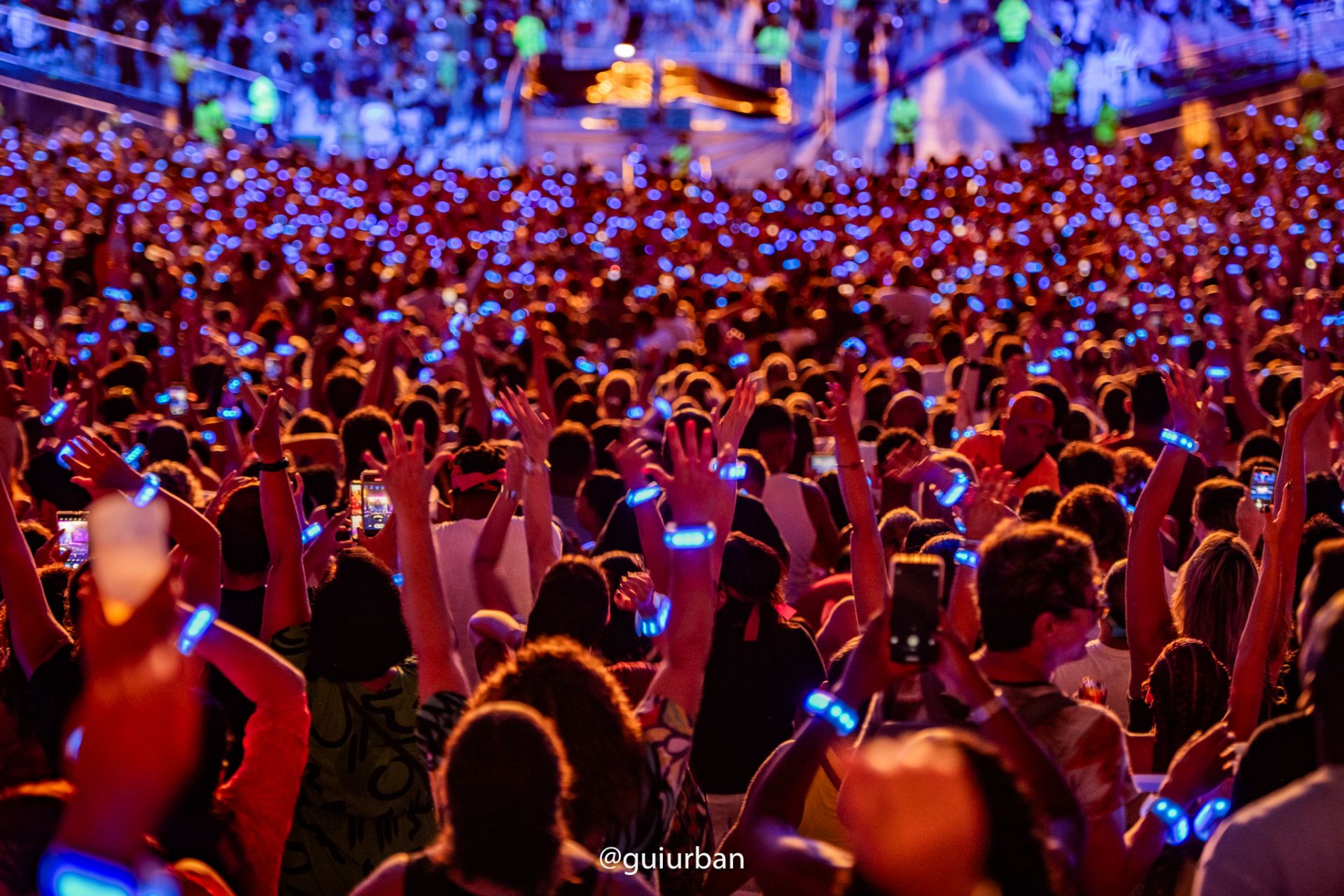
In a modern event context, this synchrony can be engineered. Think of a stadium tour for an artist like Maluma or Wizkid. When tens of thousands of LED wristbands flash in perfect unison—a pulse of light timed to the beat drop, a wave of colour washing over the stands—it’s not merely a visual effect. It is a mass behavioral cue. It triggers a neurological response, unifying the crowd’s focus and generating a shared emotional state. This is where wearable LED technology transcends simple illumination and becomes a tool for conducting emotion on a mass scale.
The individual feels their personal experience amplified, reflected back at them by thousands of others. This feedback loop creates a powerful sense of belonging and validation, turning a passive viewing experience into an active, participatory one.
The Narrative Arc: Light, Sound, and Story
Effective audience engagement is not a series of disconnected moments; it is a story. Like any good narrative, it requires structure: a beginning, a middle, and an end, with rising action, a climax, and a resolution. Immersive events are most powerful when the technology serves this narrative, rather than simply decorating it.
Consider the difference between random flashing lights and a choreographed spectacle. The former is noise; the latter is communication. Advanced control systems—whether RF, DMX, or infrared—allow designers to "speak" to the audience through light.
- Anticipation: A slow, pulsing glow can build tension and signal that something is about to happen. This primes the audience, focusing their attention and creating a shared sense of expectation.
- Climax: A sudden, brilliant flash of coordinated light at a key musical moment provides a massive sensory payoff, releasing the built-up tension in a wave of collective euphoria.
- Unity: Dividing the audience into coloured sections that play off each other, as seen in global sporting events like the Davis Cup or Formula One celebrations, fosters a sense of tribal identity and playful competition before uniting them in a single, all-encompassing visual for the finale.
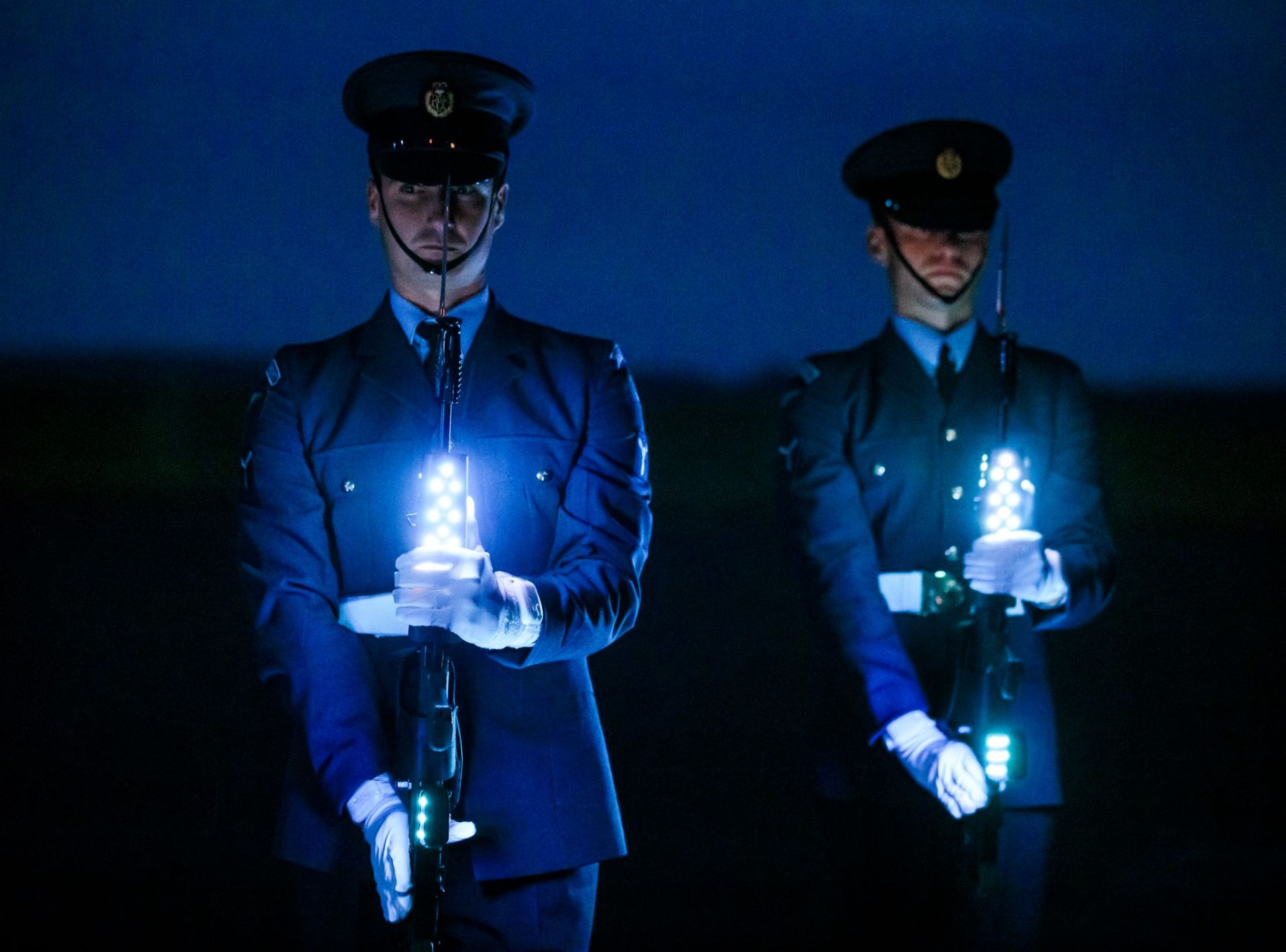
These are not just lighting cues; they are narrative beats. They guide the audience’s emotional journey, making them a part of the story, not just spectators of it. When a fan sees their wristband—their personal space—become part of a grander picture, they are no longer just watching the show. They are the show.
The Psychology of Participation and Agency
The passive consumption model is broken. In an era of constant interactivity, audiences crave agency. They want to feel that their presence matters, that they can influence the environment around them. This is a key differentiator in modern corporate event activations and large-scale public spectacles.
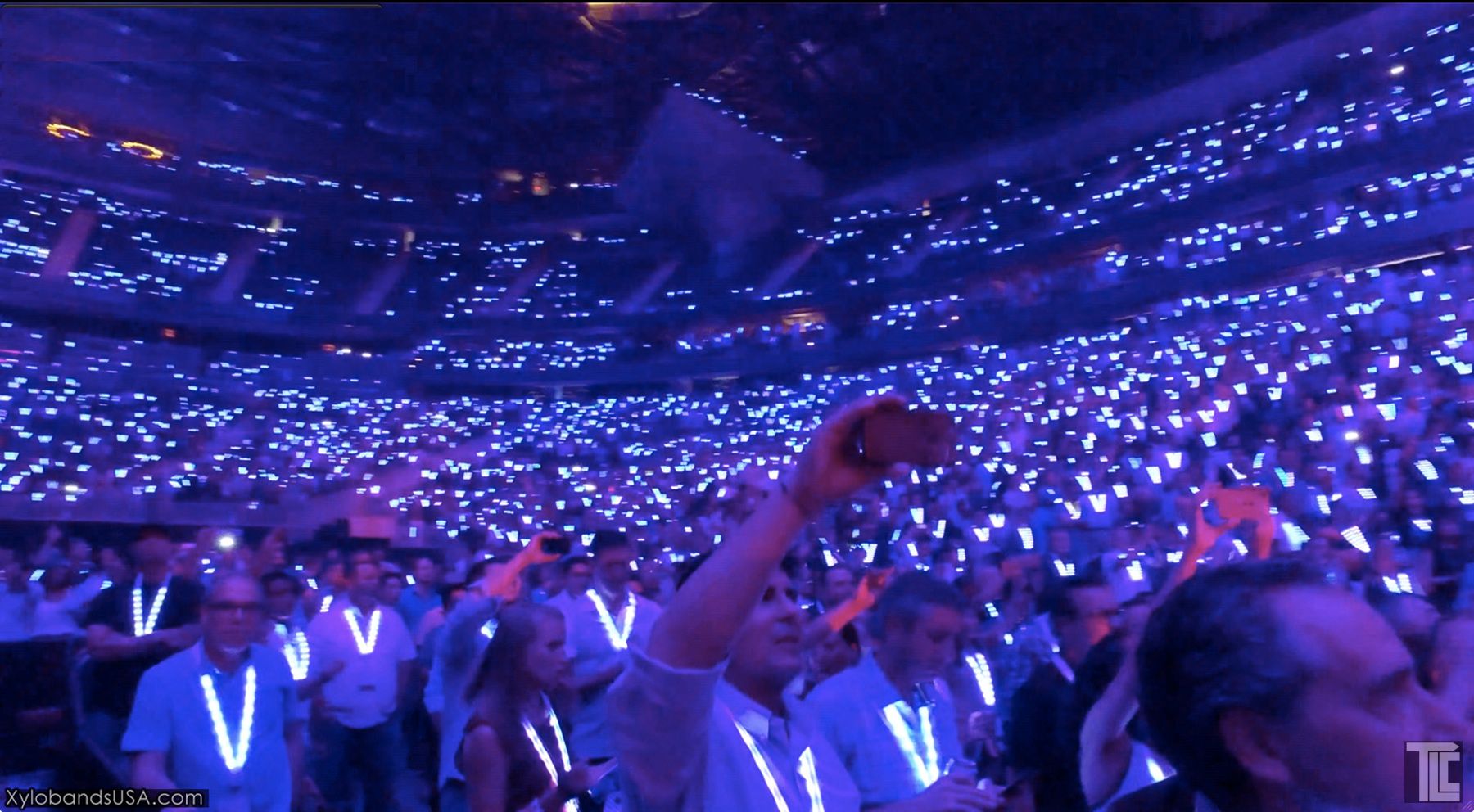
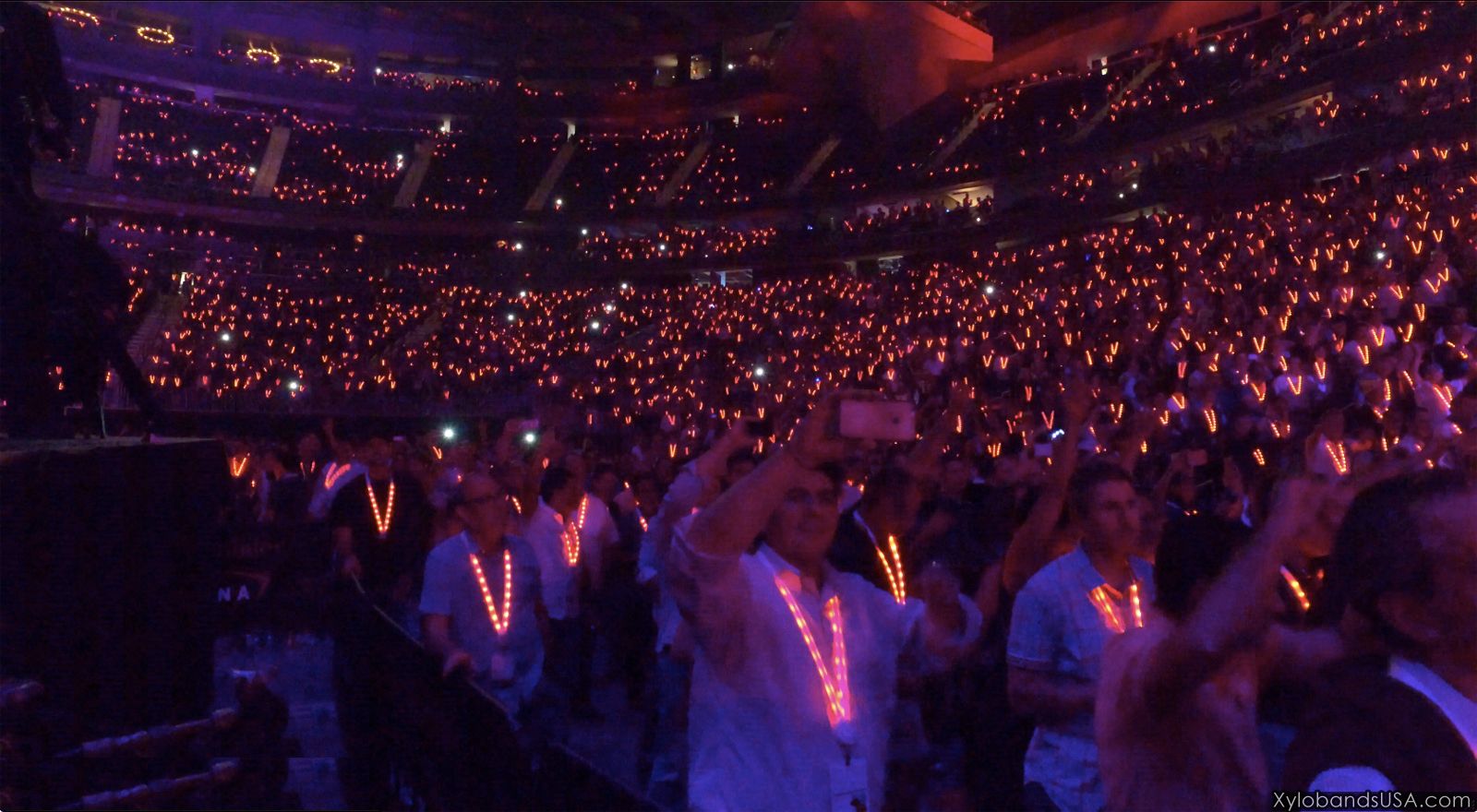
Technology like Xylobands provides a seamless, low-friction form of participation. It doesn’t require the audience to learn a complex action or even take out their phone. By simply being present, they become a pixel in a vast, moving canvas. This subtle but profound shift gives each person a role to play. The light on their wrist is their contribution to the collective masterpiece.
This principle extends to other forms of interactive tech. LED Lanyards at a corporate conference can be programmed to light up when attendees enter specific zones, creating networking opportunities. LED Orbs tossed through a festival crowd, changing colour on contact, give the audience direct, tangible control over their environment. Each interaction reinforces a sense of agency and deepens the participant’s investment in the experience.
“The most memorable experiences are not the ones we just see, but the ones we feel a part of. We’re moving past the era of one-to-many broadcasting and into an age of many-to-many participation. The audience is no longer just the recipient of the signal; they are the signal itself.”
Conclusion: Designing for Collective Awe
The future of live events lies in understanding and designing for the psychology of the collective. It’s about more than just dazzling visuals or powerful sound systems. It’s about building a temporary community, bound by shared experience and synchronized emotion.
By leveraging the principles of synchrony, embedding technology within a strong narrative arc, and granting the audience a sense of agency, we can architect moments of true collective awe. We can transform a crowd of thousands into a unified, living, breathing entity. These are the LED crowd experiences that people don’t just remember—they feel them. And in the economy of attention, feeling is everything.