The Intimate Crowd: The Psychology of Connection in Large-Scale Events
The Paradox of the Intimate Crowd
At the heart of every truly memorable large-scale event—be it a stadium concert, a global broadcast, or a major festival—lies a fundamental human paradox: the desire for individual experience within a collective. An audience of 50,000 is not a monolith; it is 50,000 individual people, each seeking a personal connection to the moment. The magic, and the challenge, for event producers and artists is to bridge this gap. How do you make a stadium feel as intimate as a small club? How do you transform a passive audience into an active, unified participant in the spectacle? The answer lies in understanding the psychology of crowd behavior and leveraging technology not as a barrier, but as a bridge to deeper human connection.
From Spectator to Participant: The Drive for Agency
Historically, the role of the audience was passive. They were there to watch, to listen, to applaud. The evolution from lighters held aloft to the synchronized glow of mobile phones was the first sign of a collective desire for a more active role. This wasn’t just about creating light; it was about individuals signaling their presence and participation. It was a declaration: "I am here. I am part of this."
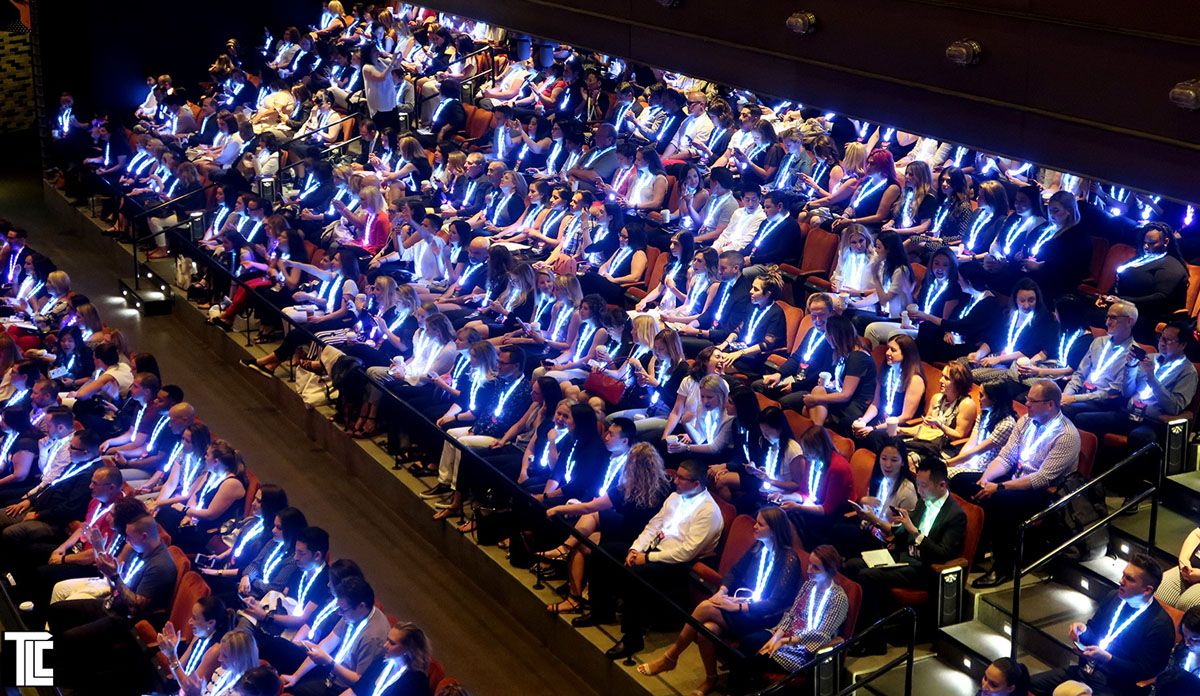
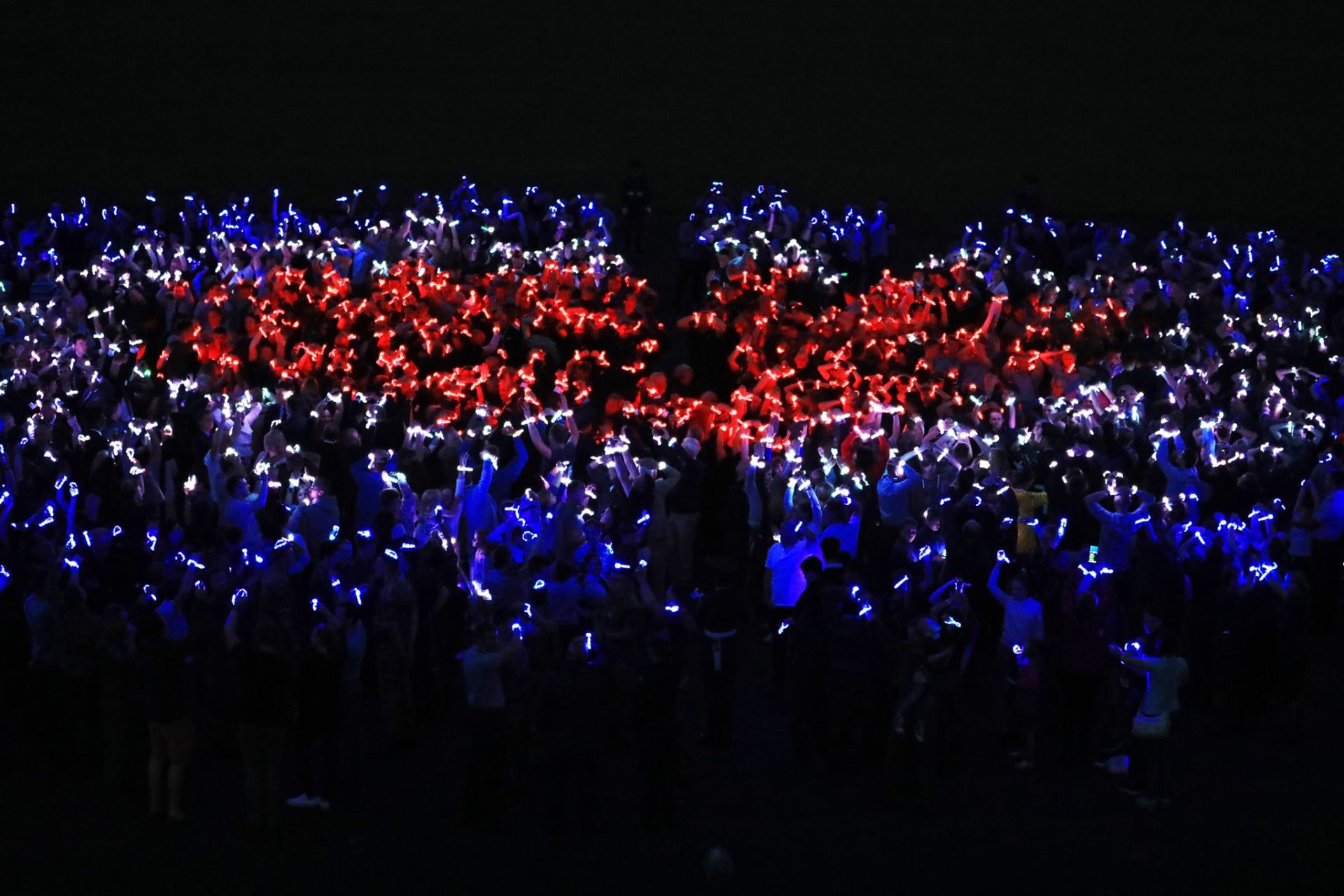
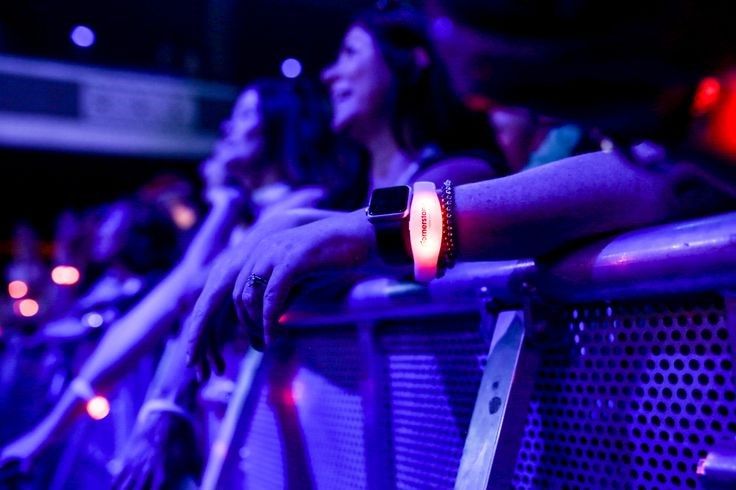
This innate drive for agency is a powerful tool. When an attendee feels they can influence their environment, even in a small way, their engagement level skyrockets. This is where immersive event technology comes into play. Technologies like our radio-controlled LED wristbands are not merely accessories; they are conduits for participation. When a sea of 50,000 individuals wearing Xylobands illuminates in perfect sync with a musical crescendo or a dramatic beat, each person is no longer just a spectator. They have become a pixel in a grand, collective canvas. Their personal device, the wristband, connects their physical presence to the overarching creative vision of the show, making them an integral part of the performance itself.
The Psychology of Synchrony
One of the most potent psychological forces in a large crowd is synchrony. When people move, act, or in this case, light up in unison, it fosters a powerful sense of unity and belonging. Neurological studies have shown that synchronized activities can lead to increased cooperation and positive feelings toward others in the group. This is the principle that transforms a collection of strangers into a community, if only for a few hours.
By transforming the audience into a living, breathing part of the light show, you are tapping into this deep-seated human need for connection. The shared visual experience—a pulse of red light sweeping across the stadium, a unified flash of white to mark a peak moment—creates thousands of simultaneous, shared micro-experiences. This is the foundation of collective effervescence, the term sociologist Émile Durkheim coined to describe the feeling of energy and harmony that arises when a group of people comes together to participate in the same action.
Case Study in Connection: The Global Stage
Consider the scale of an event like Maluma’s "Medellín En El Mapa" concert. A crowd of 54,000 people in his hometown, with millions more streaming live. The challenge is immense: create a moment that feels both like a global broadcast spectacle and an intimate homecoming. Or look at Formula One’s 75th-anniversary celebration at The O2, a live broadcast event where fans from rival teams came together. In these scenarios, light becomes the universal language.
By using wearable LED technology, creative directors can paint on this vast human canvas, transcending language and loyalty. A custom LED lanyard or wristband doesn't care which team you support or where you're from; it responds to the central command, uniting everyone in a shared visual narrative. This turns the audience itself into a key part of the LED crowd experiences, a dynamic backdrop for both the fans in the arena and the millions watching at home. This was the effect at Wizkid's historic, sold-out O2 Arena shows, where our LED bracelets turned a 20,000-strong crowd into a pulsating, unified entity for three consecutive nights.
Designing for Shared Experience
For event producers and marketers, the takeaway is to think of the audience not as consumers of the experience, but as co-creators. The goal of corporate event activations and large-scale public events alike should be to design moments of shared experience.
Key Principles for Engagement:
- Empower the Individual: Give each attendee a tool that allows them to be part of the show. This fosters a sense of ownership and personal stake in the event.
- Design for Synchrony: Create moments that unify the entire crowd in a single action or visual. Use light, sound, and interactive elements to create pulses of collective energy.
- Tell a Visual Story: Use the canvas of the crowd to extend the narrative of the performance. Radio controlled LED wristbands allow for complex choreography of light that can mirror the emotional arc of a concert or event.
- Blur the Lines: The most powerful immersive events are those that blur the line between the stage and the seats. When the audience becomes the spectacle, everyone is in the front row.
The future of live events lies in this intimate understanding of the crowd. By embracing the psychology of connection and leveraging technology to foster unity, we can turn any large-scale gathering into a profoundly personal and unforgettable shared experience. We can make 50,000 people feel like one.