The Unity Principle: The Psychology of Shared Experience in Large-Scale Events
The Architecture of Belonging
A stadium, an arena, a festival field. These are more than just venues; they are temporary cities built for a single purpose: shared experience. When thousands of individuals gather, they bring with them a desire not just to witness a spectacle, but to be part of one. The fundamental human need for belonging, for connection, is the invisible architecture upon which every successful large-scale event is built. But how do you transform a collection of 50,000 individuals into a single, cohesive entity?
The answer lies in understanding the psychology of the crowd. In our normal lives, we operate with a strong sense of self. In a crowd, that boundary begins to blur. This phenomenon, known as 'deindividuation,' can be a powerful force. When channeled correctly, it lowers inhibitions, heightens emotional response, and fosters a profound sense of unity. The roar of the crowd, the shared gasp, the collective swell of a chorus—these are moments where the 'I' gives way to the 'we'. For event producers and artists, the challenge and opportunity is to architect these moments with intention.
Synchronicity and the Collective Brain
One of the most potent tools for forging this collective consciousness is synchronicity. When people act in unison—clapping, singing, or moving to the same rhythm—their brains begin to mirror each other. Neuroscientists have observed that synchronized activity can lead to the release of endorphins, creating feelings of pleasure and social bonding. It’s a primal mechanism that has united groups for millennia, from tribal dances to military marches.
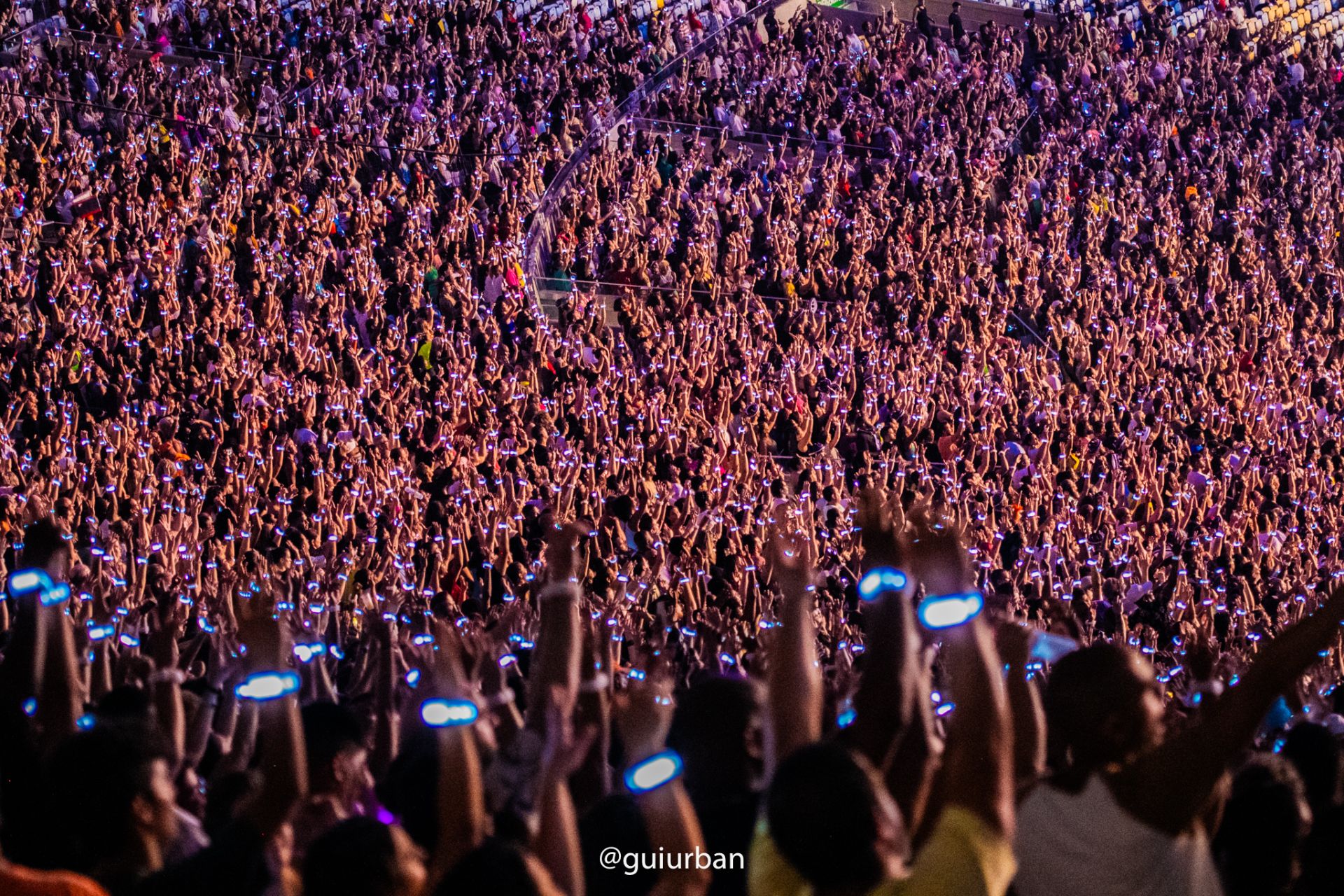
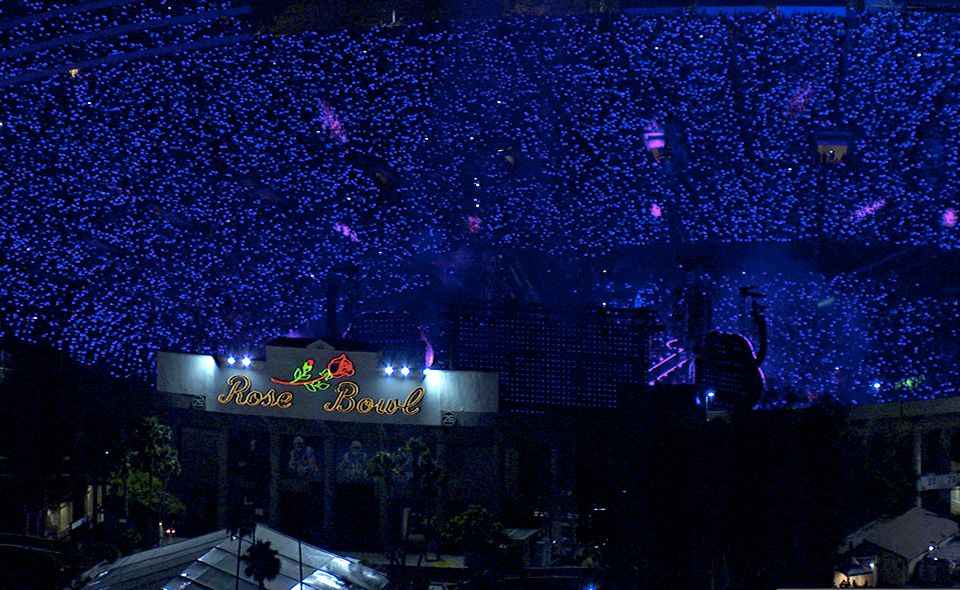
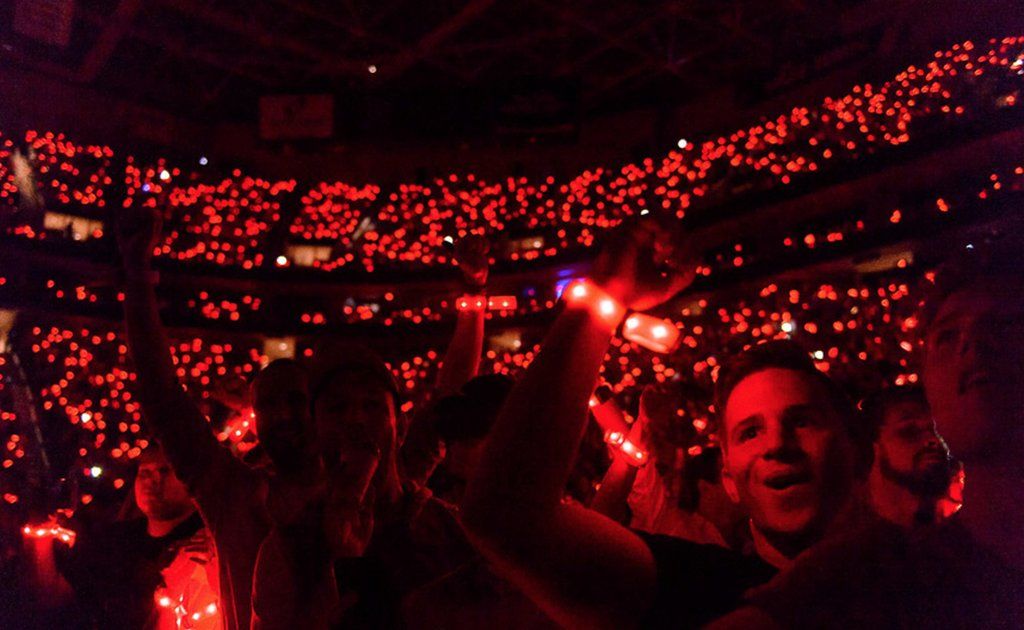
In the context of a modern live event, technology provides a new palette for orchestrating this synchrony. It’s no longer just about the beat of a drum. It’s about a shared visual pulse. Imagine an entire stadium of 50,000 people, like at Maluma’s landmark homecoming concert in Medellín, where every single person is illuminated by a point of light that is perfectly in sync with the music and each other. This is the power of wearable LED technology. A technology that Xylobands pioneered with Coldplay, turning a simple idea into a global phenomenon.
When each attendee wears a device—a wristband or lanyard—that is centrally controlled, they become a pixel in a vast, living canvas. The technology becomes an invisible conductor, guiding the emotional and visual journey of the entire audience. This creates powerful LED crowd experiences that are not just watched, but felt on a neurological level.
Light as a Language
Light is a primal language that speaks directly to our emotions, bypassing the critical faculties of the conscious mind. A sudden plunge into darkness creates tension and anticipation. A slow, warm glow fosters intimacy. A rapid, pulsing strobe ignites energy. When you apply this language to an entire crowd, you create a powerful form of non-verbal communication between the artist and the audience.
"Lights will guide you home." It was this lyric from Coldplay that sparked the initial vision for Xylobands. The idea of transforming the audience from passive observers into an integral, illuminated part of the show itself.
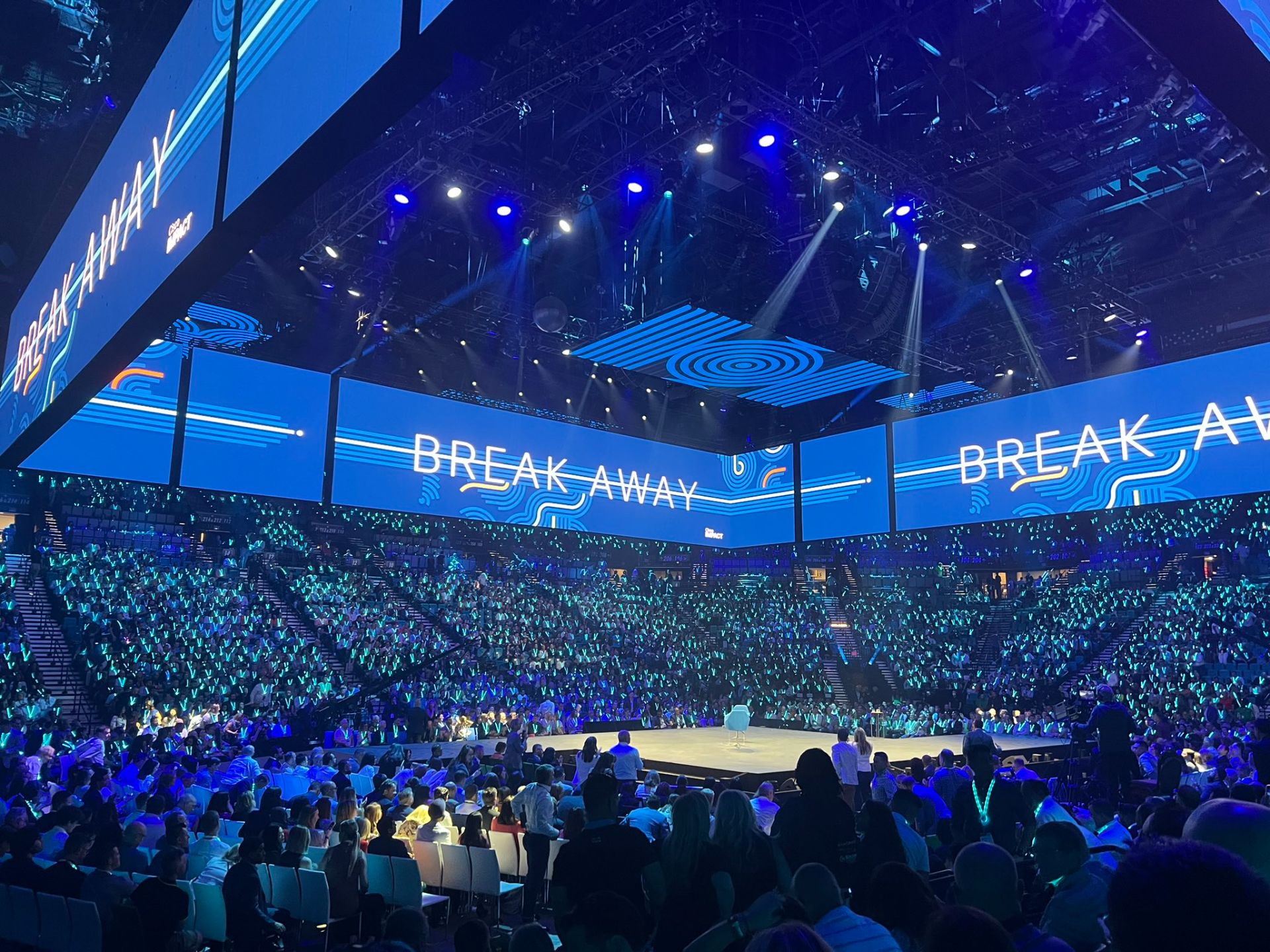
This principle is scalable across genres and formats. At an electronic music festival like Primer in Greece, festival wristbands can pulse with the high-energy beats of the DJ, creating waves of color that wash over tens of thousands of dancers. At a major corporate event or a brand celebration like the Formula One F1 75 anniversary, custom LED wristbands or pendants can segment the audience, creating targeted visual effects that amplify brand messaging and create unforgettable corporate event activations. The technology allows for a new, more dynamic choreography of light and emotion, making immersive events more than just a buzzword.
The Psychology of Participation
The final layer is the shift from passive consumption to active participation. Being given a piece of technology, like one of our LED bands, fundamentally changes an attendee's role. It’s an invitation. It says, "You are not just here to watch the show; you are the show."
This sense of active contribution is psychologically powerful. It fosters a sense of ownership and agency, deepening the individual's connection to the event. They are no longer just a face in the crowd but an essential component of the spectacle. The radio controlled LED wristbands respond to their presence, and in turn, their collective energy is reflected back to them as a unified visual force. It closes a loop, creating a symbiotic relationship between performer, technology, and audience.
From the high-stakes tension of a TV game show like Beat The Chasers to the global stage of a stadium tour, the goal remains the same: to make every single person feel seen, connected, and part of something larger than themselves. By understanding and applying the principles of crowd psychology, and by leveraging immersive event technology thoughtfully, we can design experiences that don't just entertain, but resonate on a deep, human level, creating moments of unity that last long after the lights go down.