The Gravity of the Cue: A Leadership Manifesto for Modern Production
The Unblinking Clock
It’s the universal truth of our industry. Whether it’s a global tour for an artist like Maluma, a broadcast final for Beat The Chasers, or a multi-day brand festival, the clock is unforgiving. There is no “can we push it by ten minutes?” There is only the moment of the cue—an irreversible point in time when thousands of hours of planning, millions of dollars of technology, and the careers of countless specialists are rendered down to a single, public test. To stand in the centre of that vortex and steer it towards brilliance is the job of the leader.
In the world of touring, production, and creative agencies, leadership is more than a title on a call sheet. It is an active, gruelling, and deeply consequential discipline. It’s the invisible architecture that supports the spectacle, the force that converts a brilliant creative concept into a tangible, breathtaking reality for tens of thousands of people. It’s the difference between a show and an experience.
Principle I: The Clarity of the Blueprint
No great structure was ever built from a vague sketch. The primary role of a leader in production is to be the keeper of the blueprint—the single source of truth for the project’s vision. This vision must be so clear, so compelling, and so consistently communicated that it becomes the North Star for every department, from logistics to lighting, from catering to creative.
When you’re coordinating corporate event activations for a global brand like Formula One, uniting teams, drivers, and broadcast partners under one roof, the leader’s vision ensures every element serves the central narrative. It dictates not just what will happen, but why it will happen. This clarity empowers teams to make autonomous, aligned decisions. The lighting designer programming a stadium-wide effect using radio controlled LED wristbands knows the emotional beat they need to hit. The logistics manager routing freight through three continents understands the non-negotiable deadline tied to the core artistic goal. The vision is the connective tissue, the shared consciousness of the entire production.
Principle II: The Architecture of Trust
The scale of modern productions forbids micromanagement. A leader cannot personally oversee every flight case, every line of code, every lighting fixture. To attempt to do so is to guarantee failure. True leadership lies in building an architecture of trust—a framework where world-class specialists are empowered to do their best work.
A leader’s job is to recruit the best, provide them with the best tools and a clear objective, and then create an environment where they can execute without একজন. It’s about building a team whose collective expertise far exceeds your own.
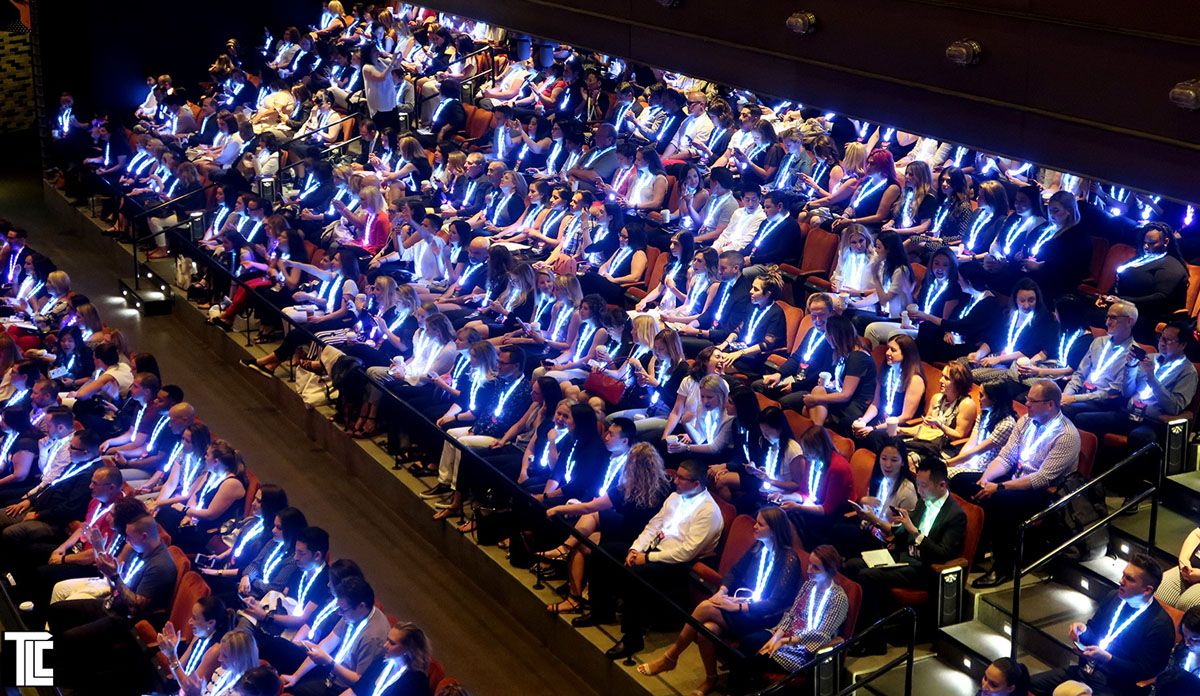
When you’re creating stunning LED crowd experiences, you are placing your faith in the RF technicians, the on-site distribution team, and the show programmers. You trust them to manage the complex interplay of signals and software that makes thousands of LED bands light up as one. Integrating immersive event technology is an act of trust. This means letting go of control over the "how" and focusing relentlessly on the "what" and "why." It’s a culture of accountability, not authoritarianism, that allows for the seamless execution of highly complex, multi-faceted live experiences.
Principle III: Grace Under Pressure
Every production, no matter how meticulously planned, will face a moment of crisis. A generator fails. A key piece of equipment is held in customs. A sudden storm threatens an outdoor festival. These are the moments that define a leader. Panic is a contagion; it ripples through a crew faster than any RF signal. But so does calm.
The effective leader is the calm centre of the storm. They absorb the pressure, filter out the noise, and provide the team with decisive, clear-headed direction. Their composure becomes the crew’s composure. Their confidence becomes the crew’s confidence. This isn’t about being emotionless; it’s about channelling the intense adrenalin of a live environment into focused, productive problem-solving.
Think of the final minutes before a headline act like Wizkid takes the stage at a sold-out arena, or the countdown to a live global broadcast. The leader’s role is to project an unwavering belief that "the show will go on," and more than that, that it will be exceptional. This psychological stability is as critical as any piece of hardware in the rig.
Principle IV: The Mandate for Innovation
Finally, leadership is about refusing to accept the status quo. The live events landscape is littered with the ghosts of one-hit wonders. Lasting success belongs to those who relentlessly pursue "what’s next." A great leader fosters a culture of innovation, encouraging their teams to experiment with new ideas and emerging technologies.
The journey from fans holding lighters aloft at a concert to the synchronized spectacle of the Coldplay Xylo Band phenomenon was not accidental. It was the result of a visionary idea meeting leadership willing to take a chance on a new form of wearable LED technology. Today, that same spirit drives the evolution into more complex LED experiences, incorporating custom shapes like LED Lanyards or even dynamic LED Orbs.
In a world of ever-more-sophisticated immersive events, the leader’s job is to ask the challenging questions. How can we make the audience a more integral part of the show? How can our LED event technology tell a better story? How do we create not just a moment, but a lasting memory? It is this forward-looking mindset that ensures a production company or creative agency remains relevant, exciting, and essential to its clients.
The Final Count
Leadership in our world is not a soft skill; it is a hard-edged, technical, and psychological discipline. It is bearing the immense gravity of the cue and converting that pressure into a shared, unforgettable moment of light and sound. The technology, the talent, the logistics—they are all instruments. But it is the leader who, in the final count, is the conductor.