The Scale of Light: Principles of Arena and Stadium Tour Lighting
The Architecture of Awe
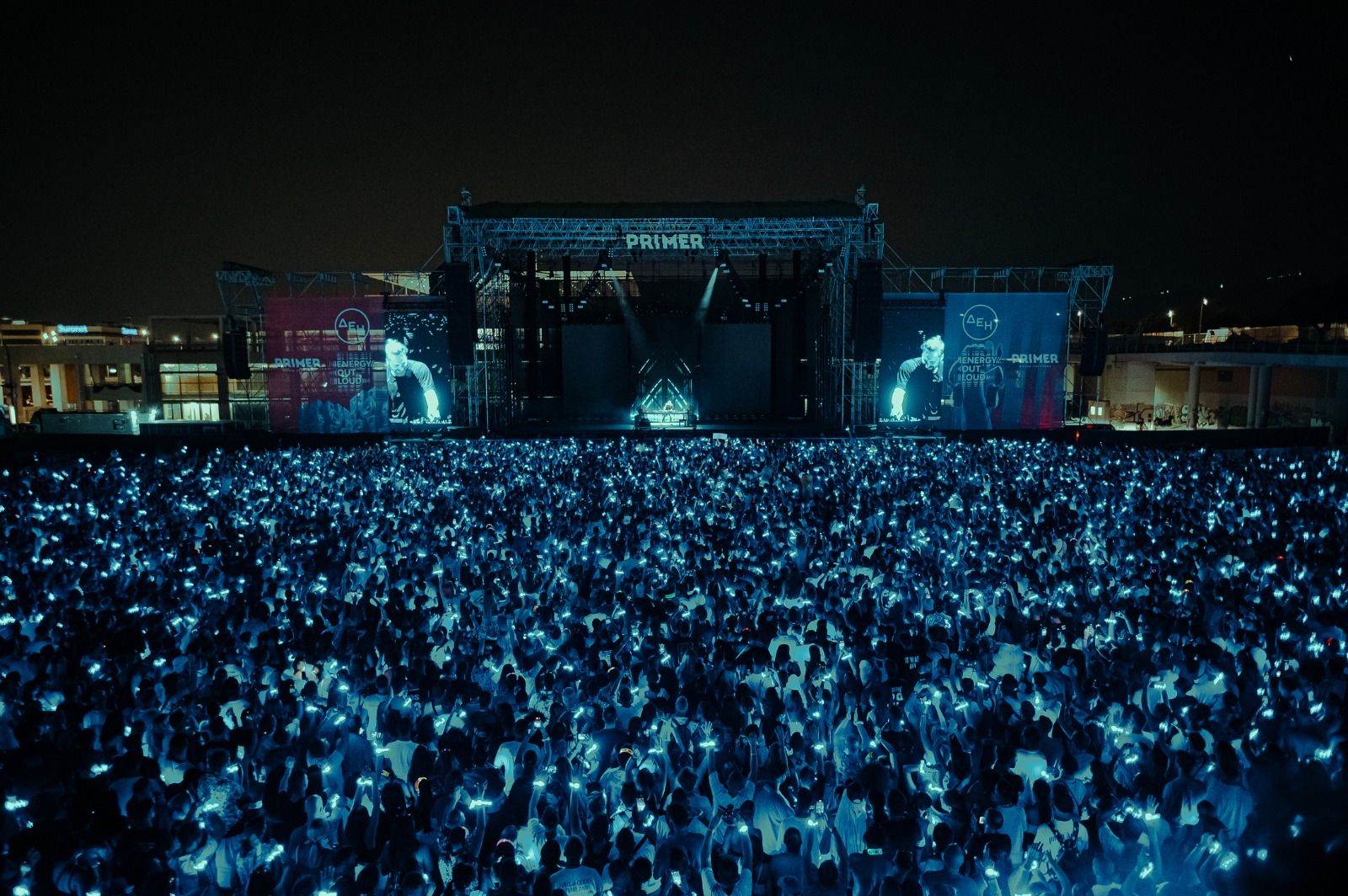
The house lights go down. A roar builds from 50,000 people, a sound wave of pure anticipation. For the next two hours, they will be part of something bigger than themselves—a temporary universe sculpted from sound and light. For the modern tour designer, the challenge is immense: how do you make an experience feel both monumental and deeply personal for every single person in a vast stadium? The answer lies not just in illuminating the stage, but in mastering the entire volume of the arena, treating the architecture, the air, and the audience as a single, unified canvas.
This is the new philosophy of large-scale tour lighting. It’s an evolution from simply lighting a performer to engineering a holistic sensory environment. It’s a discipline that understands that in a stadium, the most powerful instrument isn’t a single spotlight, but the collective energy of the crowd itself. The goal is to move beyond passive observation and architect a shared experience, turning tens of thousands of individuals into a single, living entity. It’s a task of immense technical and creative complexity, grounded in a few core principles.
Principle 1: Mastering Scale and Intimacy
A stadium is a paradox. Its sheer scale is what creates the epic, once-in-a-lifetime feeling, yet the most resonant moments are often those that feel surprisingly intimate. The best lighting design plays with this duality. It’s the art of using light to shrink and expand the perceived space. One moment, a single, sharp spotlight can make a 70,000-seat venue feel like a quiet theatre, drawing every eye to a single, vulnerable figure on stage. The next, an explosion of light across the entire structure can create a jaw-dropping sense of galactic scale.
This requires a dynamic range that goes far beyond simple on/off cues. It’s about creating textures and "rooms" of light within the larger space. This was a key challenge for shows like Maluma’s celebrated “Medellín En El Mapa” concert, where a hometown crowd of 54,000 gathered for a landmark performance. For an artist and an audience sharing such a meaningful moment, the design must foster connection across vast distances. The lighting becomes the bridge, ensuring the fans in the highest tiers feel as much a part of the show as those in the front row. It’s about ensuring that the emotional arc of the performance is perfectly mirrored by the visual one.
Principle 2: The Audience as the Medium
The most profound shift in event lighting over the past decade has been the transformation of the audience from spectators into the spectacle itself. This is the frontier of Immersive Event Technology, and it’s a concept Xylobands helped pioneer. The genesis moment—our founder imagining the crowd at Glastonbury lit up in time to the music—was the spark for an entire category of LED Crowd Experiences.
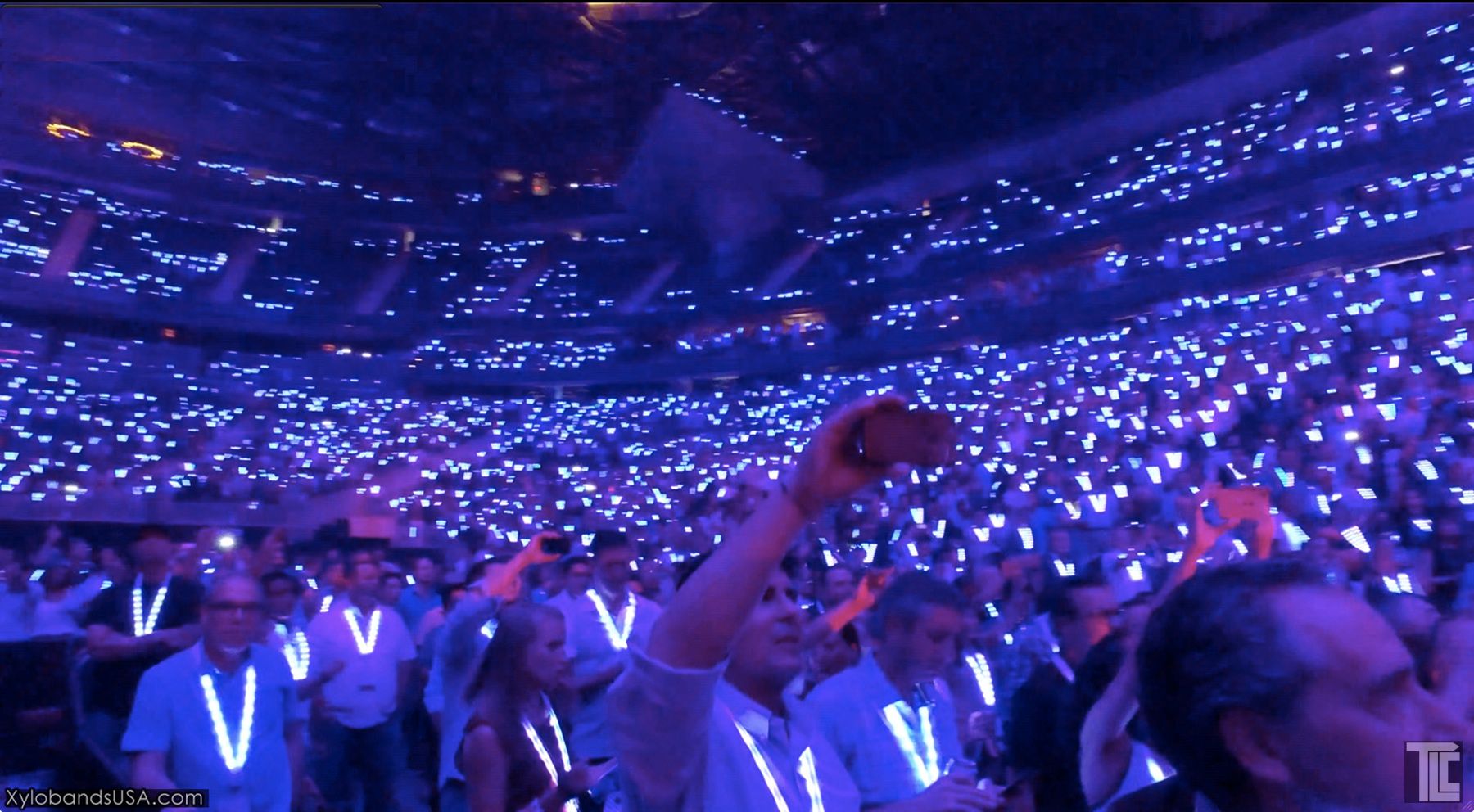
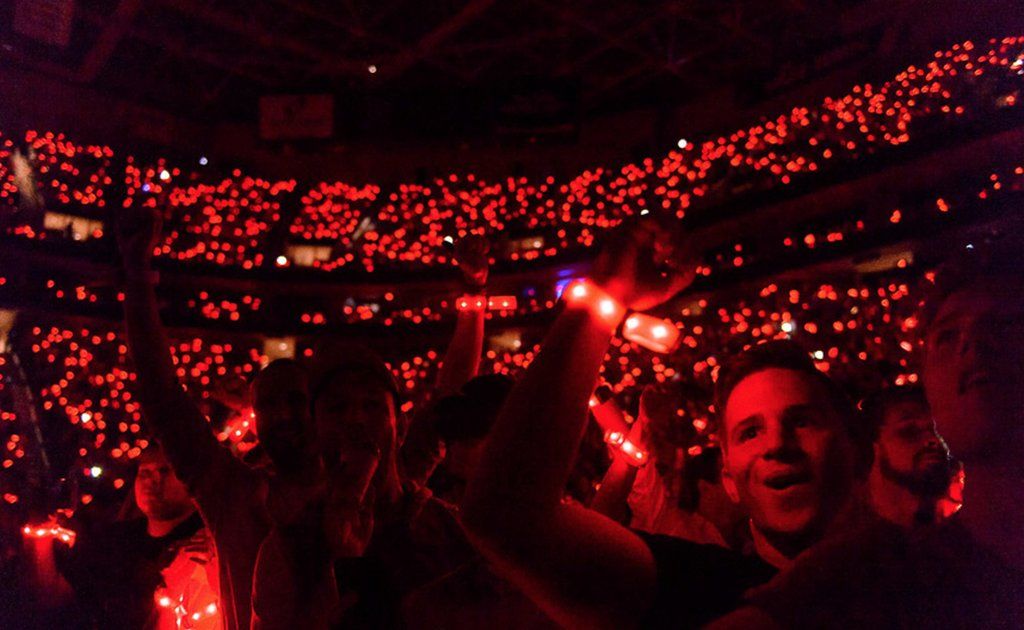
Today, Radio Controlled LED Wristbands are a fundamental layer of modern tour design. They are not merely an effect; they are the medium. For a lighting designer, this is the equivalent of being handed a new primary color. Suddenly, the most dynamic and emotional element in the room—the people—can be painted with light. This unlocks a powerful psychological tool. When 50,000 wristbands flash in perfect unison, it creates a powerful, visceral sense of unity. It dissolves the space between individuals, making them part of a single, synchronized sea of light.
When Wizkid made history selling out three consecutive nights at The O2 arena, the inclusion of our LED Bands amplified the sheer energy of the room, turning the audience into a pulsating, visual extension of the artist’s performance. This transforms the fan’s role from a passive consumer of the show to an active co-creator of its most stunning visual moments.
Principle 3: Unifying the Live and Broadcast Image
Major arena and stadium tours are no longer just for the people in the room. They are global broadcasts, streamed live to millions around the world, as was the case with Maluma’s show and the ambitious Formula One 75th anniversary event. This presents a critical technical challenge: how to design a show that looks spectacular to both the human eye and the camera sensor.
Light that feels powerful and atmospheric in person can appear dim or noisy on screen. Conversely, lighting designed purely for the camera can feel sterile or blinding to the live audience.
This is where crowd-based lighting systems offer a powerful solution. A dark, anonymous audience can look like a void on camera. However, a crowd illuminated by thousands of points of controlled light—whether Custom LED Wristbands or the bespoke LED Lanyards we created for the F1 event—becomes a rich, dynamic, and textured backdrop. It provides depth, scale, and energy for the broadcast shot without overwhelming the in-person experience. It solves the ‘two-screen problem’ by creating a visual that translates seamlessly from the arena to the living room.
Principle 4: The Invisible Architecture of Control
Underpinning every one of these principles is the invisible architecture of technology and logistics. The most brilliant creative vision is meaningless without flawless execution. For a stadium tour, that means a robust control system that can communicate with every single wearable device, instantly and without fail. It means a global logistics operation capable of delivering, deploying, and recovering hundreds of thousands of units of Wearable LED Technology across continents.
The magic of a perfectly synchronized crowd moment rests on the reliability of the RF or Infrared signal. There can be no dead pixels in a living canvas of 50,000 fans. The system must be powerful enough to cut through the incredible amount of signal noise in a modern arena while being precise enough to deploy complex, pixel-mapped effects across specific sections of the audience. This technical foundation is the unseen hero of the modern light show.
The Final Composition
Lighting a stadium tour today is an act of holistic world-building. It requires a deep understanding of how to manipulate scale, a willingness to hand over creative control to the audience, the technical knowledge to serve both live and broadcast masters, and the logistical prowess to make it all happen, night after night. It’s about creating a universe where, for a few hours, everyone is connected, everyone is part of the art, and everyone is illuminated. The light doesn’t just guide the audience home; it makes them the heart of the spectacle itself.