The Unblinking Eye: A New Era of Broadcast-Ready Live Events
The Two-Audience Problem
An arena pulsates with 20,000 fans. A festival field transforms into a city of light. A corporate theatre hosts a pivotal product launch. In the past, the energy in these spaces was contained, ephemeral. Today, that energy is broadcast to millions. The line between a live spectacle and a global television event has been erased. This convergence presents a new, fundamental challenge for producers and lighting designers: how do you create a breathtaking experience for the people in the room, while also delivering a flawless, compelling visual story for the millions watching through a camera lens?
This is the two-audience problem. The human eye perceives light, colour, and motion differently than a camera sensor. What feels electric and immersive in person can appear chaotic, blown-out, or flat on screen. What a camera captures with pristine clarity might feel sterile and distant to the live attendee. Mastering this dual-medium production is no longer a niche skill—it’s a prerequisite for any high-stakes modern event.
Lessons from the Broadcast Studio
For decades, broadcasters like ITV have perfected the art of lighting for the camera. In a controlled studio environment, every variable is meticulously managed. Kelvin temperature, flicker rate, diffusion, and CRI (Colour Rendering Index) are not just technical terms; they are the foundational elements of a visual language. In game shows like Beat The Chasers UK, the lighting does more than just illuminate the set; it builds tension, directs focus, and signals key moments in the gameplay, all while ensuring every shot is crisp, colour-accurate, and broadcast-ready.
The challenge is to take these principles of precision and apply them to the dynamic, unpredictable environment of a live event. The solution lies in treating the entire audience not as a passive backdrop, but as an intelligent, controllable canvas. This is where wearable LED technology becomes an essential tool for the modern broadcast.
Controlling the Canvas: Flicker, Frequency, and Frame Rates
One of the biggest hurdles in filming live-event lighting is flicker. Many LED products—especially lower-grade consumer items—are not designed for the high-speed shutters and variable frame rates of professional cameras. The result is the distracting strobing or banding that can ruin a shot.
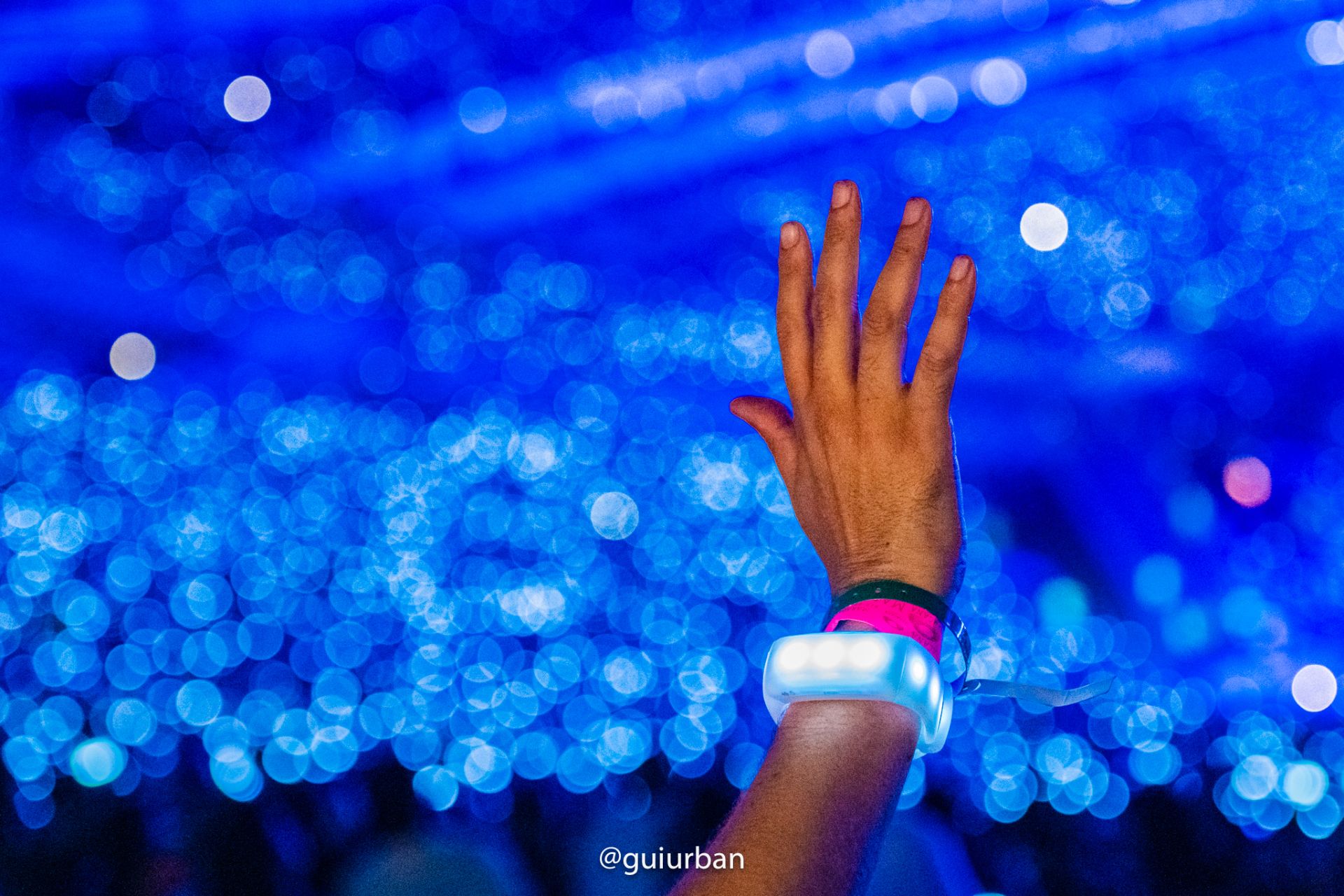
Professional-grade radio controlled LED wristbands and other wearables are engineered specifically to avoid this. At Xylobands, our systems are designed with high-frequency PWM (Pulse Width Modulation) to ensure our lights appear solid and consistent to the camera, regardless of shutter speed. This technical integrity is the baseline requirement. Without it, you’re not just failing the broadcast audience; you’re compromising the visual quality for everyone.
Extending the Set, Not Just Lighting the Crowd
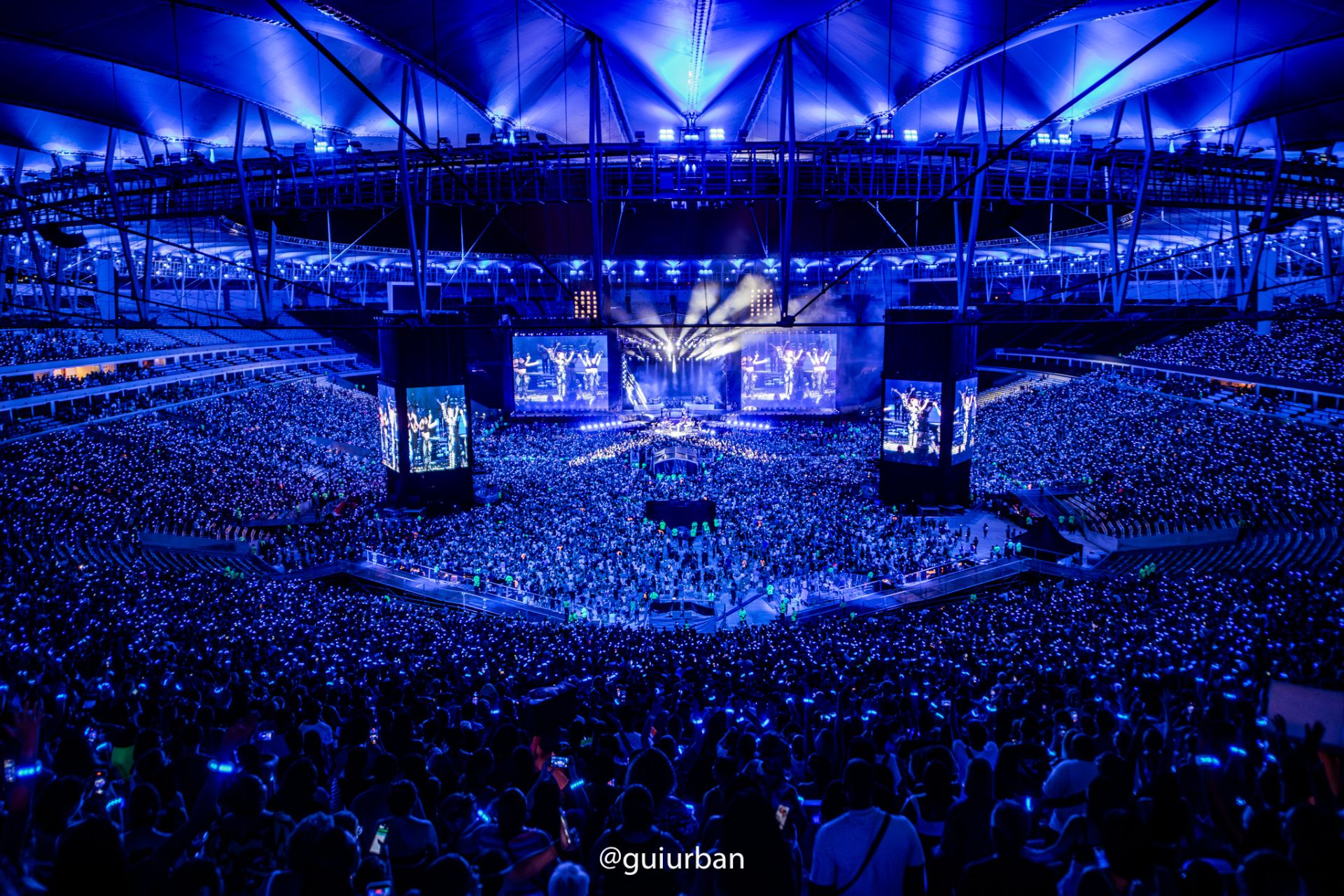
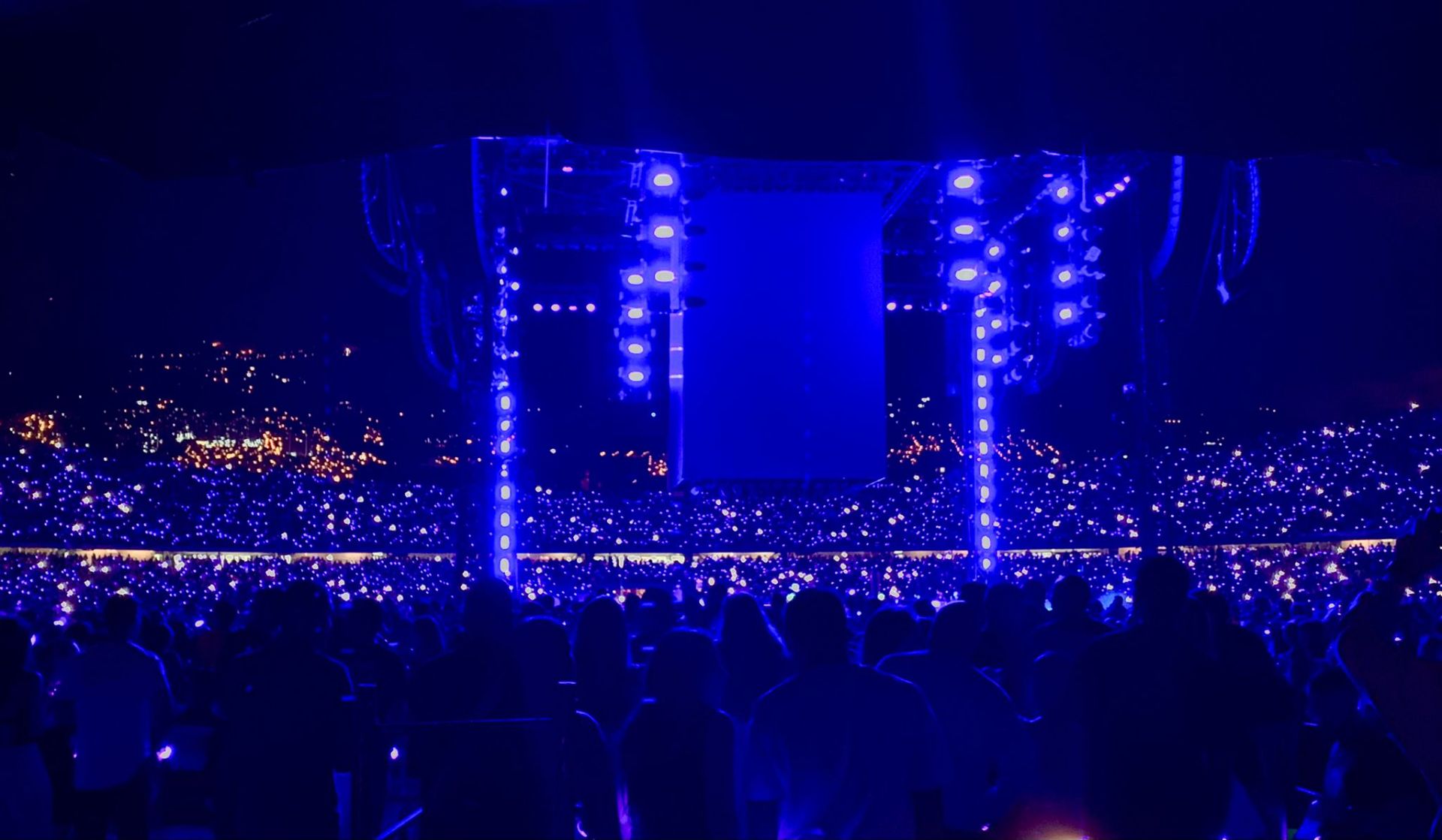
When Maluma’s Medellín En El Mapa concert was streamed to 240 countries, the 54,000 fans in the stadium weren’t just spectators; they were an extension of the stage design. When an entire stadium bowl is activated with synchronised light, the camera is no longer just capturing a performer and some distant fans. It’s capturing a single, unified spectacle. The scale of the production is magnified tenfold.
This approach transforms the audience from a lighting liability into a creative asset. Instead of fighting the unpredictable glare of thousands of phone screens, a designer can now compose with light on a massive scale. You can:
- Create zonal effects: Isolate sections of the crowd in different colours to support a narrative moment or a team competition, as seen at events like the Davis Cup.
- Execute seamless colour fades: Create slow, cinematic transitions across an entire arena that guide the viewer’s eye.
- Produce dramatic "blackout" moments: Instantly plunge the entire audience into darkness to create suspense before a big reveal.
For a broadcaster, this is a gift. It provides dynamic, large-scale visuals that translate powerfully to the screen, turning what would be wide, static shots of a dark crowd into compelling, story-driven moments. It gives the director a vibrant, living set to play with.
The Audience as a Pixellated Display
The most advanced application of this technology treats the crowd as a low-resolution video screen. At Formula 1’s 75th-anniversary event in London, custom LED Lanyards were distributed to attendees. Our team precisely mapped and positioned these wearables throughout The O2 Arena, allowing the show’s creative team to send complex patterns, logos, and animations rippling through the audience.
This isn’t just an effect; it’s a form of immersive event technology that merges the crowd, the lighting, and the broadcast feed into a single coherent experience. The patterns seen by the camera are the same patterns experienced by the fans, creating a powerful sense of unity between the two audiences. This technique has transformed everything from corporate event activations to halftime shows, making the crowd a central part of the story.
Key Considerations for Broadcast-Ready Crowd Lighting:
- System Reliability: The RF technology must be robust enough to perform flawlessly in arenas packed with competing wireless signals.
- Flicker-Free Performance: The LED wearables must be engineered for high-frequency PWM to work with professional cameras.
- Precise Control: The system should allow for real-time, granular control over individual zones and the entire audience canvas.
- Creative Integration: The technology provider should be a creative partner, capable of helping your team design and execute complex visual concepts.
Beyond the Broadcast: A New Language of Live Experiences
Mastering lighting for the camera in a live setting is no longer about compromise. It’s about enhancement. By embracing technologies like Xylobands, producers can solve the two-audience problem and, in the process, unlock a more powerful, immersive, and visually stunning form of storytelling.
You are no longer just lighting a show. You are conducting an orchestra of light, creating an experience that is as breathtaking for the fan in the last row as it is for the viewer a thousand miles away. The camera’s unblinking eye is not a limitation; it’s an invitation to think bigger, paint on a larger canvas, and design the next generation of LED crowd experiences that resonate across the room and around the world.