The Unfolding Audience: A History of Participation Tech
From Applause to Algorithms: The Evolution of Audience Participation
The relationship between the performer and the audience is a dance as old as performance itself. From the call-and-response chants of ancient rituals to the roar of a modern stadium, the desire for a shared experience, a collective release, is a fundamental human driver. But the *way* we participate has undergone a radical transformation, shaped by technological innovation and a growing understanding of human psychology. This is a brief history of the unfolding audience, from passive spectators to an integral, illuminated part of the show.
The Age of Analogue Interaction
For centuries, audience participation was purely analogue. It was the unified stomp of feet on wooden theatre floors, the coordinated shouts in a Shakespearean groundling pit, or the solemn harmony of a congregation. These were powerful, visceral forms of connection, but they were largely organic and self-directed. The first glimmers of managed, large-scale participation emerged in the 20th century. Think of the simple genius of the stadium wave, a low-tech, peer-to-peer phenomenon that turned tens of thousands of individuals into a single, undulating organism. It was a visual spectacle born from nothing more than human cooperation.
Then came the lighters. The iconic image of a sea of tiny flames held aloft during a ballad became a defining concert ritual of the 1970s and 80s. It was a spontaneous, beautiful gesture of solidarity and emotional connection, a way for each fan to cast their own small light and feel part of a greater whole. This simple act laid the conceptual groundwork for what was to come, proving the immense power of turning an audience into a visual canvas.
The Digital Dawn: Control and Creativity
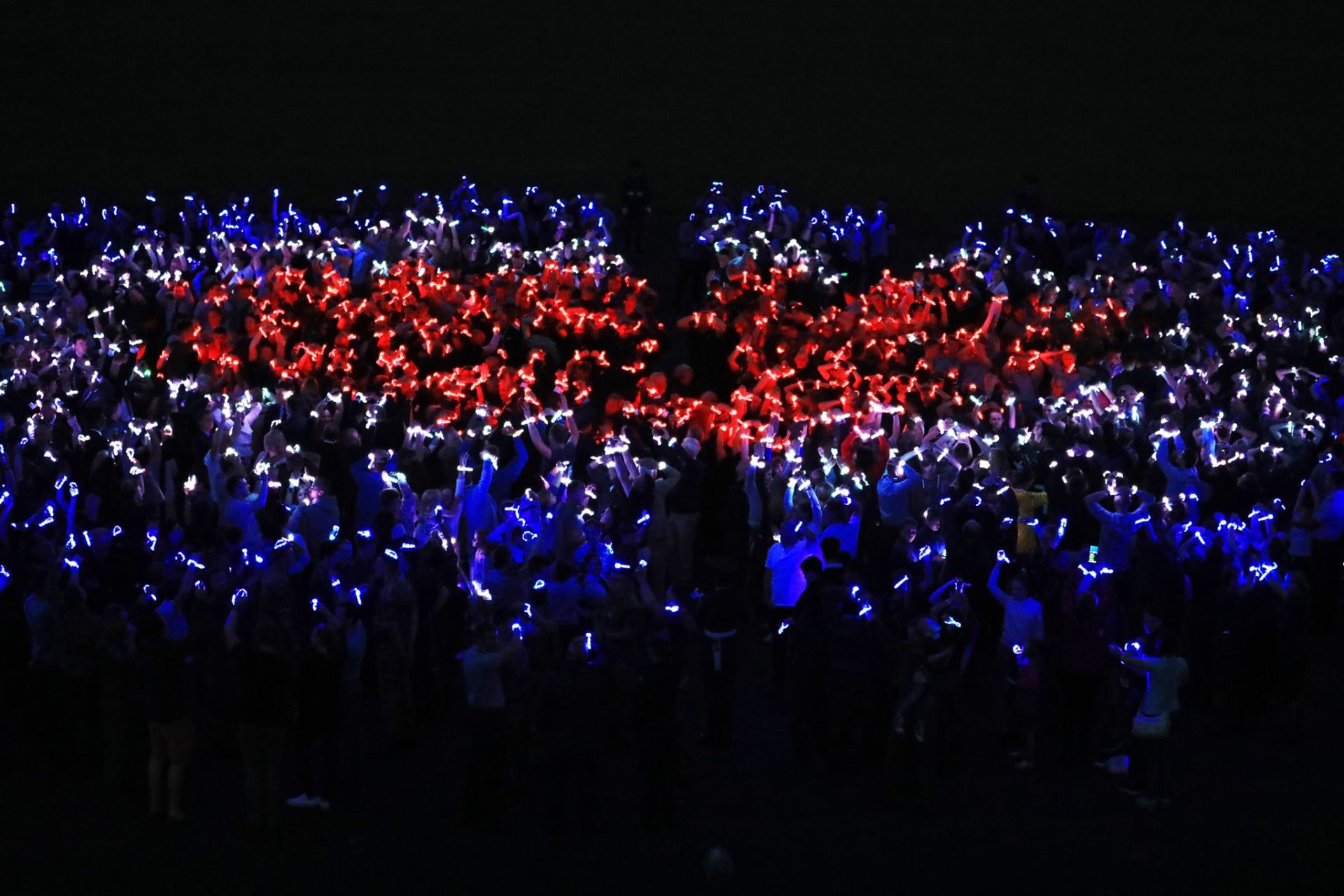
The advent of digital technology cracked open a new frontier. Suddenly, the chaotic beauty of lighters and the organic swell of the stadium wave could be harnessed, choreographed, and integrated directly into the creative vision of a show. Early experiments involved distributing simple coloured cards or flags, as seen in countless opening ceremonies or the halftime shows that are now a staple of major sporting events like the Davis Cup. These moments required immense planning and audience cooperation, but they demonstrated a clear desire to paint with the crowd.
The true paradigm shift, however, arrived with the invention of Radio Controlled LED Wristbands. The story of Xylobands is a perfect case study in this leap. Inspired by the lyrics of Coldplay’s “Fix You” at Glastonbury, our founder Jason Regler envisioned a way to make the iconic line—“Lights will guide you home”—a literal, shared experience. The idea was to give every single audience member a light source that could be controlled remotely, synchronised to the music, video, and stage lighting. The audience was no longer just a collection of individuals; it became a dynamic, living, breathing part of the performance itself.
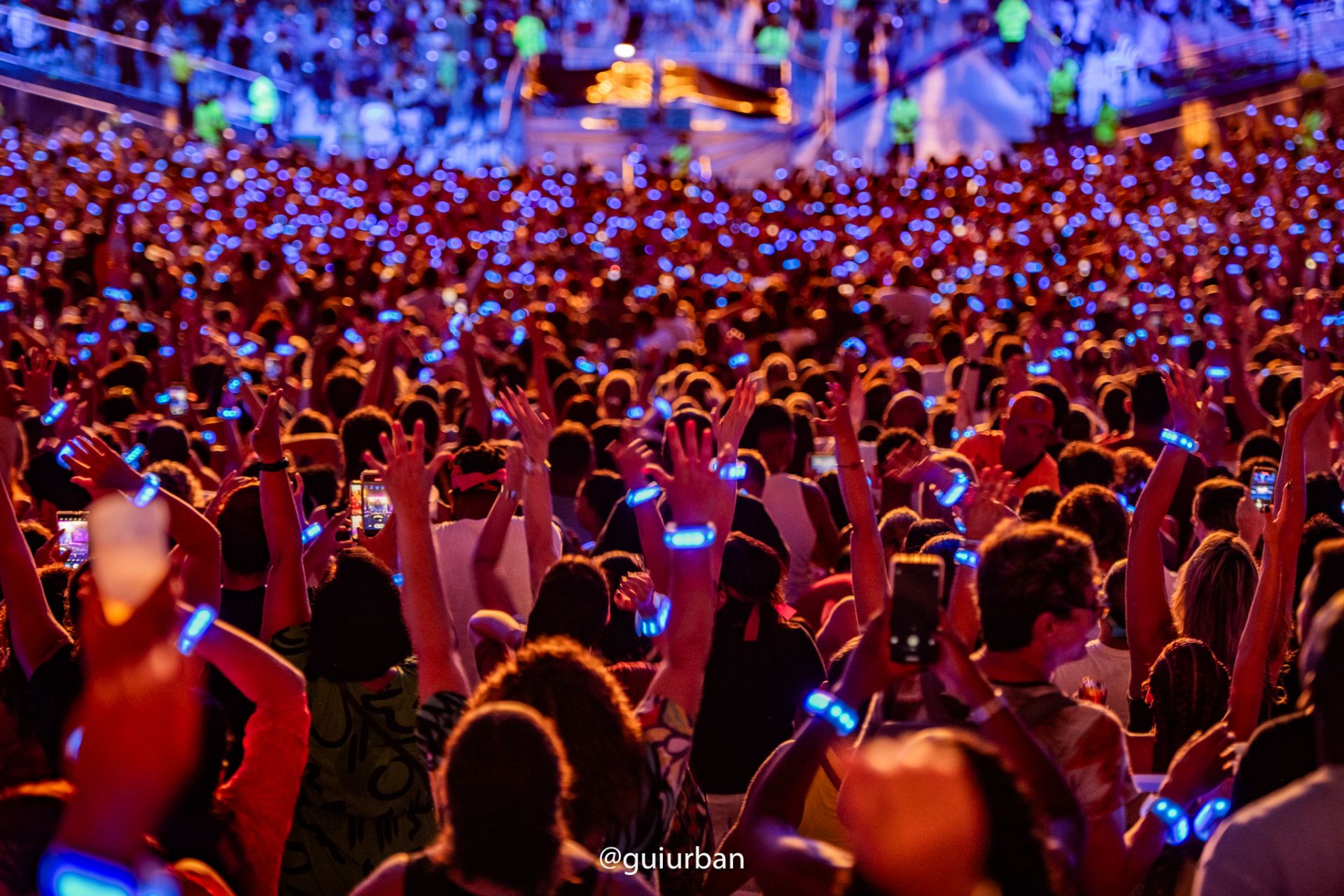
When Coldplay Xylobands debuted on the Mylo Xyloto tour in 2012, the effect was immediate and profound. The technology transformed the vast, anonymous space of an arena into an intimate, unified environment. This wasn’t just about passive viewing; it was about immersive, shared experience. Fans weren’t just watching the show; they *were* the show.
The Modern Era: Immersive Event Technology
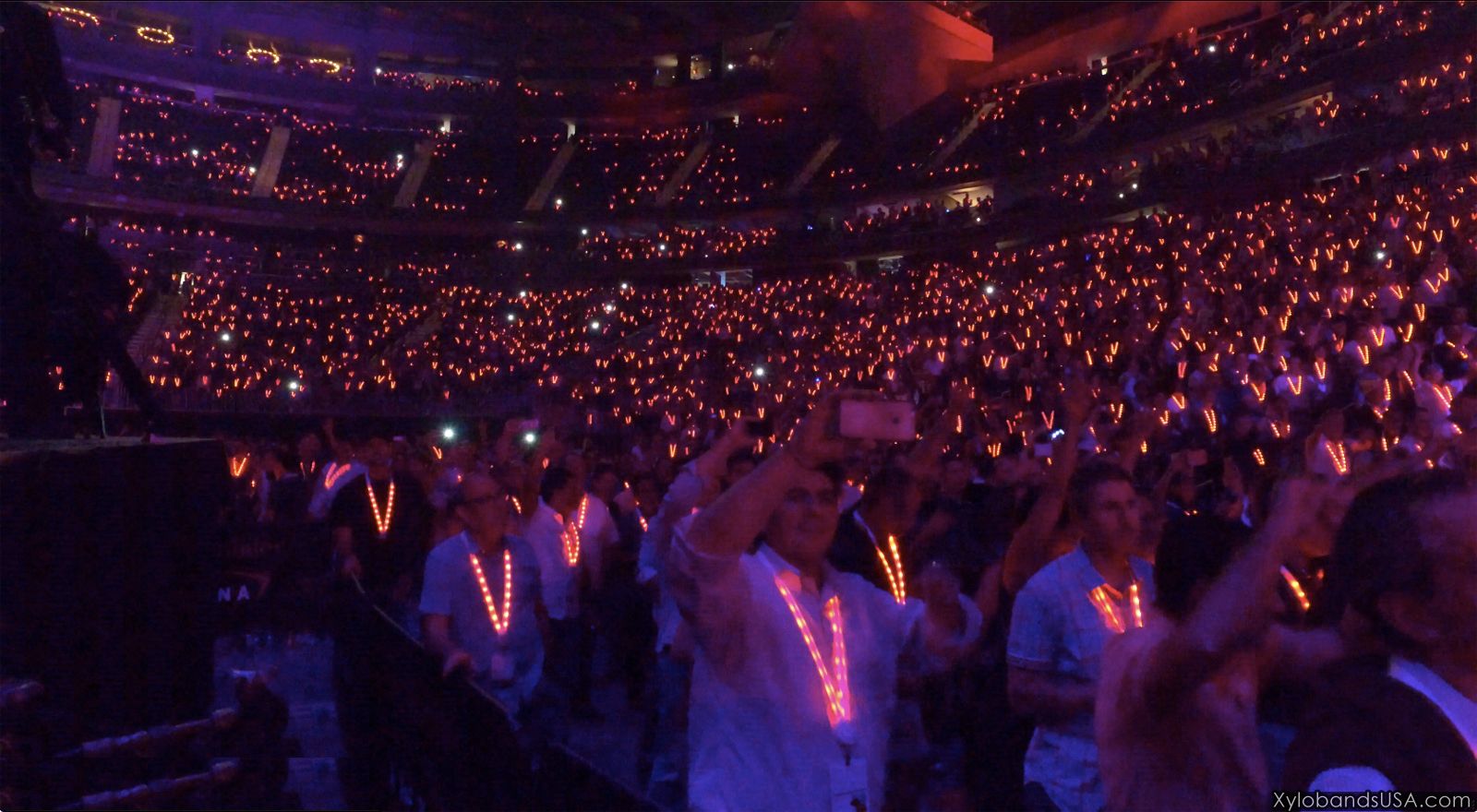
Today, this technology has become a cornerstone of LED Crowd Experiences. The palette has expanded far beyond simple flashes of light. Modern LED Wearables, including Custom LED Wristbands and even LED Lanyards, can produce millions of colours, intricate patterns, and complex sequences. Controlled by robust RF or DMX systems, lighting designers can now write the audience directly into their programming, creating waves of colour that sweep across a stadium, pinpointing specific sections, or making the entire venue pulse with the beat.
This level of control has unlocked new possibilities across every corner of the live events industry:
- Concert Wristbands are now a staple for major tours, used by artists from Maluma to Wizkid to deepen their connection with fans.
- Festival Wristbands help create landmark moments at gatherings like Greece's PRIMER Music Festival, unifying tens of thousands of people in a single visual experience.
- Corporate Event Activations use this Immersive Event Technology to transform standard conferences into memorable brand spectacles, as seen at major events for brands like Formula One.
- Live television broadcasts, like Beat The Chasers UK, use LED Bands to make the studio audience an integral, camera-ready part of the set design, enhancing the energy for viewers at home.
The Future is Shared
The evolution from applause to algorithms is about one thing: a deeper form of connection. It’s about breaking down the fourth wall between the artist and the audience, the brand and the consumer, the team and the fan. By turning spectators into a canvas of light, we move beyond passive consumption and into active, collective participation.
The lighter has been replaced by the LED Bracelet, the stadium wave has been supercharged by synchronized radio signals, but the fundamental human need to be part of something larger than ourselves remains unchanged. The technology is simply a new tool for an ancient desire. As we continue to innovate with Wearable LED Technology and create more sophisticated LED Experiences, the future of live events will not just be about what happens on the stage, but about the shared, unfolding spectacle that we all create together.