The Unfolding Canvas: A Brief History of Audience Participation
From the Chorus to the Crowd: The Ancient Roots of Participation
The desire to bridge the gap between performer and spectator is not a modern phenomenon. Its roots stretch back to the amphitheaters of ancient Greece, where the chorus served as a conduit between the actors and the audience. They were the first narrators, the collective voice that commented on the drama, mourned the tragic hero's fate, and celebrated their triumphs. The chorus was, in a sense, the audience's representative on stage, a mechanism for shared emotional investment. This fundamental concept—that the audience is not just a passive observer but an active participant in the narrative—laid the groundwork for centuries of innovation to come.
As performance moved indoors, the dynamic shifted. The proscenium arch, introduced during the Renaissance, physically framed the stage and created a distinct separation—the proverbial "fourth wall." Yet, even in this more formal setting, the impulse for interaction persisted. From the raucous crowds of Shakespeare's Globe Theatre, who would shout, cheer, and throw produce, to the call-and-response traditions in music and vaudeville, the line between stage and seating was always more permeable than it appeared.
The Analogue Age: Lighters, Clapping, and the Quest for Connection
The 20th century saw the birth of mass media and the stadium concert, scaling live events to unprecedented sizes. In these vast spaces, the challenge of creating a sense of intimacy and collective experience became more acute. Lacking purpose-built technology, audiences innovated. The simple act of clapping in unison, the stadium-wide "wave," and, most iconically, the sea of lighters held aloft during a power ballad were all analogue attempts to transform a disconnected crowd into a unified body.
These were powerful, organic expressions of shared emotion. A flame in the darkness is a potent symbol of hope, remembrance, and unity. It was the audience’s way of talking back to the artist, of creating a visual spectacle that was their own. It was a clear signal to performers and producers: audiences didn't just want to watch the show; they wanted to be the show.
The Digital Dawn: Breaking the Fourth Wall with Technology
The true revolution in audience participation began with the advent of digital and wireless technologies. Early experiments with interactive voting systems in theatre and television were novelties, but they hinted at a future where the audience's input could have a real-time effect on the performance.
The turning point arrived with the miniaturization of electronics and the development of reliable radio-frequency (RF) control systems. Suddenly, the audience themselves could become nodes in a network, individual pixels in a vast, dynamic canvas. This is where the story of Xylobands begins. Inspired by the line "Lights will guide you home" during a Coldplay performance at Glastonbury Festival, our founder Jason Regler envisioned a way to systematize the lighter-in-the-air moment, transforming it from a spontaneous gesture into a choreographed spectacle of light and color.
The vision was simple but profound: what if every single person in the crowd could be part of the light show, perfectly synchronized to the music and the moment? This idea led to the creation of radio-controlled LED wristbands, a new form of wearable LED technology that would forever change the landscape of immersive events.
The Modern Era: From Wristbands to Integrated LED Experiences
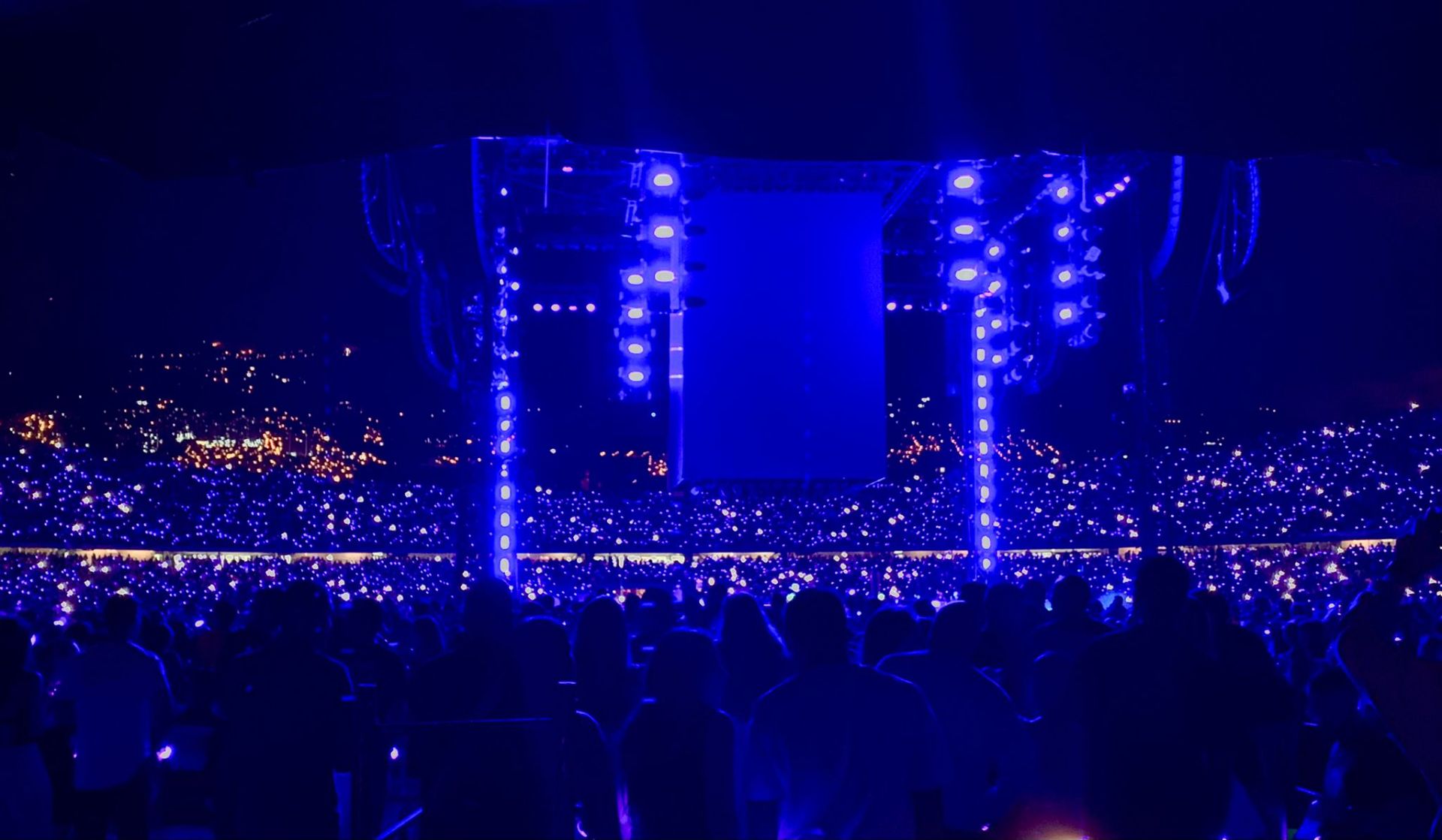
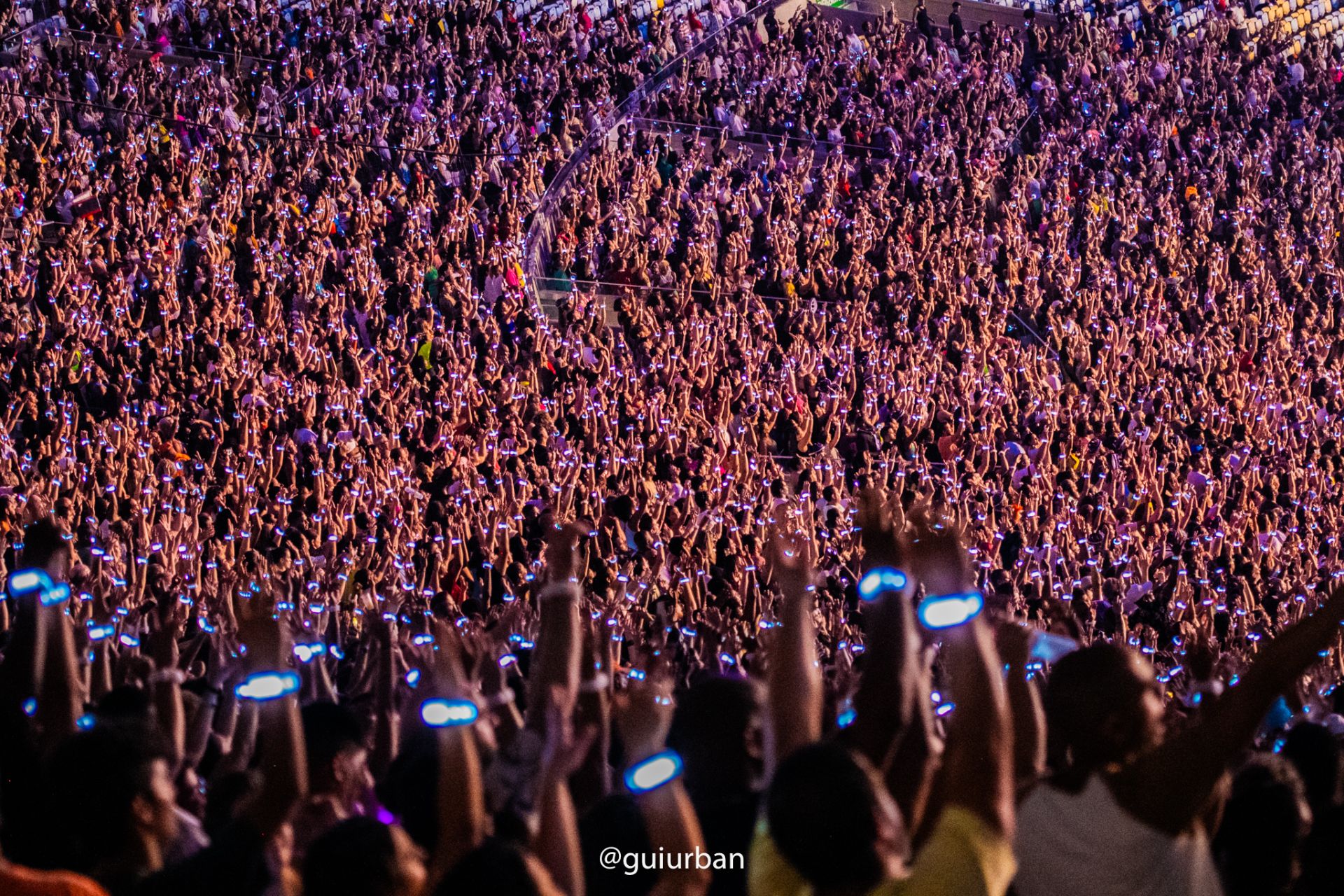
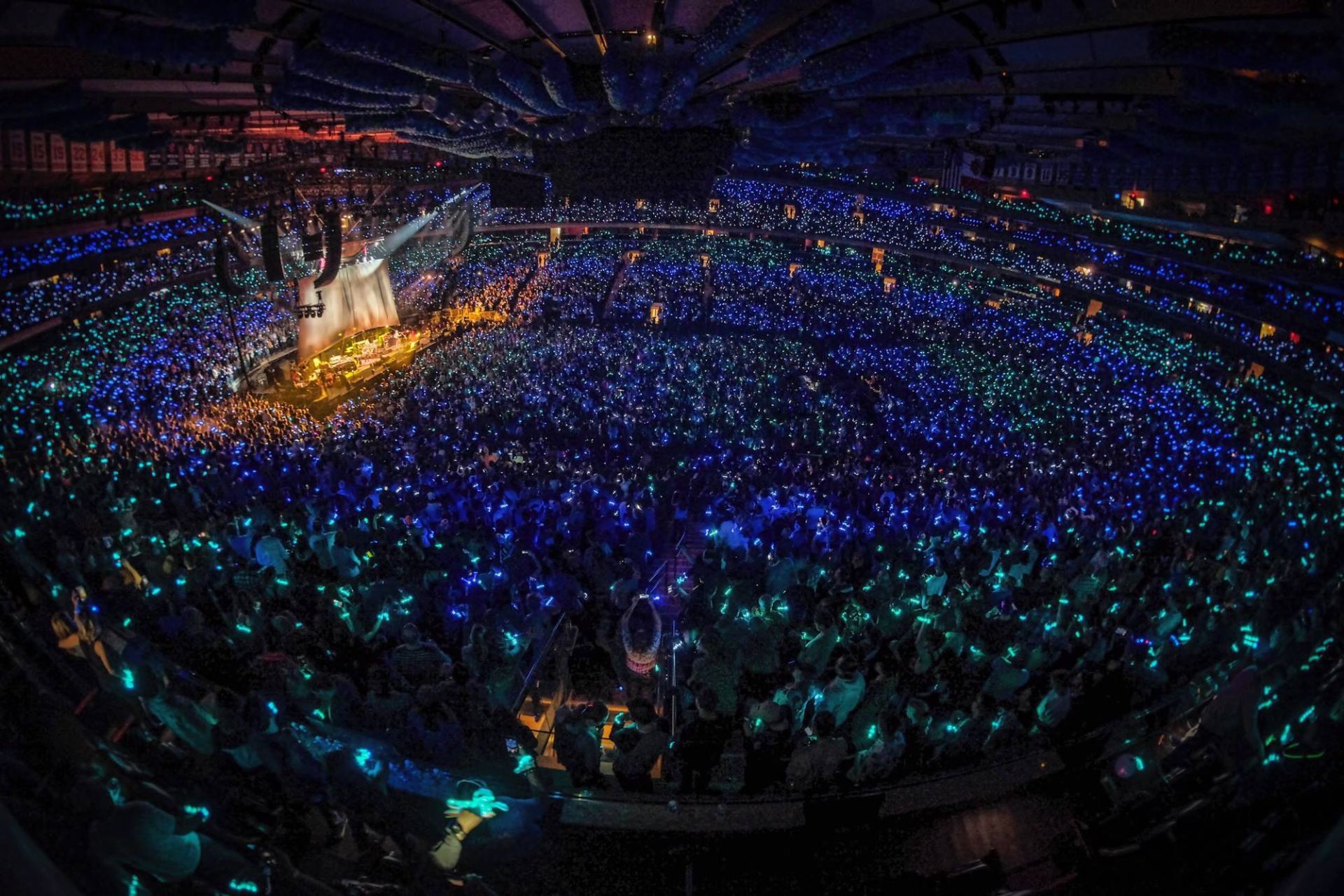
The debut of Coldplay Xylobands on their 2012 Mylo Xyloto tour marked a paradigm shift. For the first time, a tour manager or lighting designer could control tens of thousands of individual light sources distributed throughout the audience. The crowd was no longer just illuminated; they were the illumination. This breakthrough opened up a new grammar for live production.
Key Innovations in Immersive Event Technology:
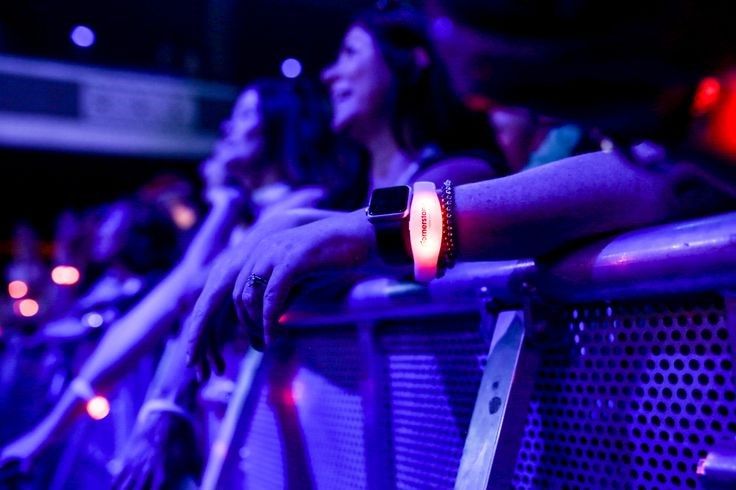
- Radio-Controlled LED Wristbands: The foundational technology. These devices receive RF signals that trigger specific colors, patterns, and effects, turning the entire audience into a single, cohesive visual element. From festival wristbands at major music events to corporate event activations, these have become a staple of modern production.
- Expanding the Ecosystem: The technology has evolved beyond the wrist. Today, the same control systems can power LED Lanyards, badges, and even large, throwable LED Orbs, creating multiple layers of light within a single space. This allows for more complex and nuanced designs, segmenting the audience by color or creating waves of light that ripple through different sections of a venue.
- DMX & Infrared Integration: Sophisticated productions now integrate wearable LEDs with the main stage lighting and video via DMX, the industry-standard protocol. This allows for flawless synchronization, where a color wash on stage can seamlessly flow out across the entire audience. For broadcasted events or permanent installations, infrared (IR) systems offer even more granular, zoned control, ensuring that specific sections of the audience can be targeted with precision.
This technological evolution has transformed the role of the audience. They are no longer passive recipients of the performance but are now an integral, dynamic component of the show’s aesthetic. They are the human canvas upon which the artists and designers paint.
The Future of Participation: Data, Personalization, and Collective Storytelling
The journey of audience participation technology is far from over. The next frontier lies in greater personalization and interactivity. Imagine a future where LED wearables not only receive signals but also send them, providing real-time data on crowd movement, density, and even biometric responses. This isn't just about creating a more spectacular show; it's about creating a smarter and safer one, allowing producers to understand and respond to the "human data stream" in real time.
As this technology continues to evolve, it will unlock new forms of collective storytelling. From global sporting events like the FIFA World Cup and Formula One to major music tours and brand spectacles, immersive event technology is providing a powerful toolkit for creating moments of profound unity and shared experience. The age-old desire to break the fourth wall, to connect performer and spectator, has found its most powerful expression yet. The lights are no longer just on the stage; they are on all of us, and we are all part of the show.