The Unseen Architecture: Inside the Innovation Lab of a Live-Events Tech Brand
The Whiteboard and the Warehouse: The Duality of Live-Event Innovation
Every groundbreaking piece of event technology begins its life in two places at once: on a whiteboard, as a tangle of diagrams and theoretical physics, and in the less glamorous, infinitely practical reality of a warehouse. It’s in the interplay between these two worlds—the conceptual and the concrete—that true innovation is forged. For a company operating at the intersection of light, sound, and human emotion, the research and development process isn’t a department; it’s the very core of our operational DNA.
This isn’t about chasing novelty. It’s a disciplined, relentless pursuit of a deeper, more resonant connection between the artist and the audience. It’s about asking not just “what can we make?” but “what new feeling can we create?” The journey from a speculative sketch to a stadium filled with tens of thousands of synchronized LED Bands is one of managed risk, obsessive testing, and an unwavering belief in the power of a shared experience.
Principle 1: Curiosity is the Engine
The culture of innovation begins with a foundational, almost childlike curiosity. It’s the voice in the room that asks “what if?” What if a wristband could do more than glow? What if it could carry data? What if it could respond not just to an operator’s cue, but to the ambient energy of the crowd itself? This was the spark behind the original Xylobands, born from a moment at Glastonbury Festival and the lyric, “Lights will guide you home.” That single “what if” launched an entire category of immersive event technology.
This curiosity must be systemic. It’s encouraged in design meetings, during debriefs after a global tour, and in conversations with clients. When we collaborated with Formula One for their 75th-anniversary show, the challenge wasn’t just to light up The O2 Arena. The task was to create custom Xylo Pendants that represented ten different teams, hospitality tiers, and general admission, all while enabling the creative team to paint specific, dynamic effects across the architecture of the crowd. The solution was born from a culture that treats every event as a new R&D opportunity.
Principle 2: The Prototype is Law
Ideas are weightless. Prototypes are not. A concept can be perfect on paper, but it means nothing until it has survived contact with reality. This is where the warehouse becomes a laboratory. Our process is one of rapid, iterative prototyping, moving from 3D-printed shells and rough circuit boards to fully functional test units that can be subjected to the unforgiving conditions of a live show.
We build, we test, we break, and we repeat. Can the casing withstand being dropped? Will the battery outlast a three-hour set and an encore? How does the RF signal perform in a dense, steel-and-concrete stadium environment?
This phase is unforgiving. More ideas are discarded than approved. The debut of the Xyloband Lite on Wizkid’s Made in Lagos tour was the result of countless preceding versions that didn’t make the cut. Each failure wasn’t a setback, but a critical data point that informed the next iteration. This philosophy ensures that by the time a piece of wearable LED technology reaches an audience member, it is not an experiment. It is a proven, reliable tool for creating a moment of mass synchronicity.
Principle 3: The Edge is the Frontier
Innovation rarely happens in the comfort zone. It happens at the edge—the physical, technical, and creative boundaries of what is currently possible. For our technical teams, this means pushing the limits of radio-frequency control, data transmission, and battery efficiency. For our creative partners, it means designing shows that use the audience as a living, moving canvas in ways never before imagined.
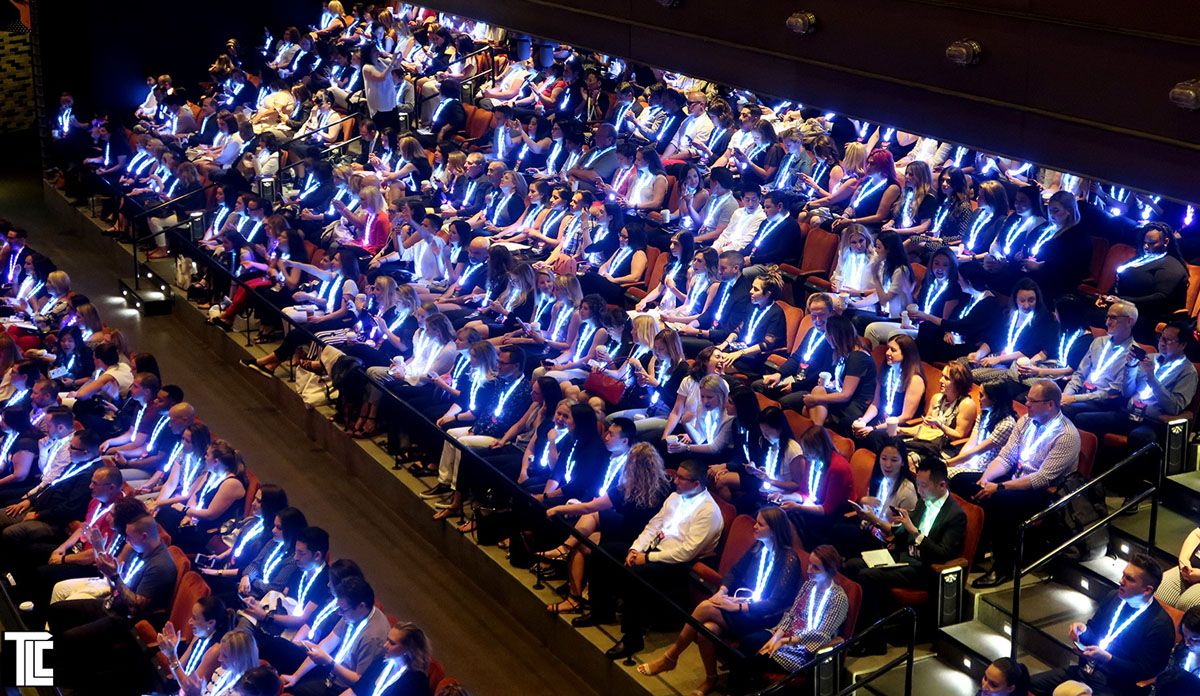
This is where deep collaboration becomes essential. The process is a continuous dialogue between our engineers and the world’s leading show designers, tour managers, and brand marketers. From transforming corporate events with LED Lanyards to designing unique concert wristbands for global superstars like Maluma, the conversation is always the same: “Here’s what the technology can do. Now, how can we push it further?”
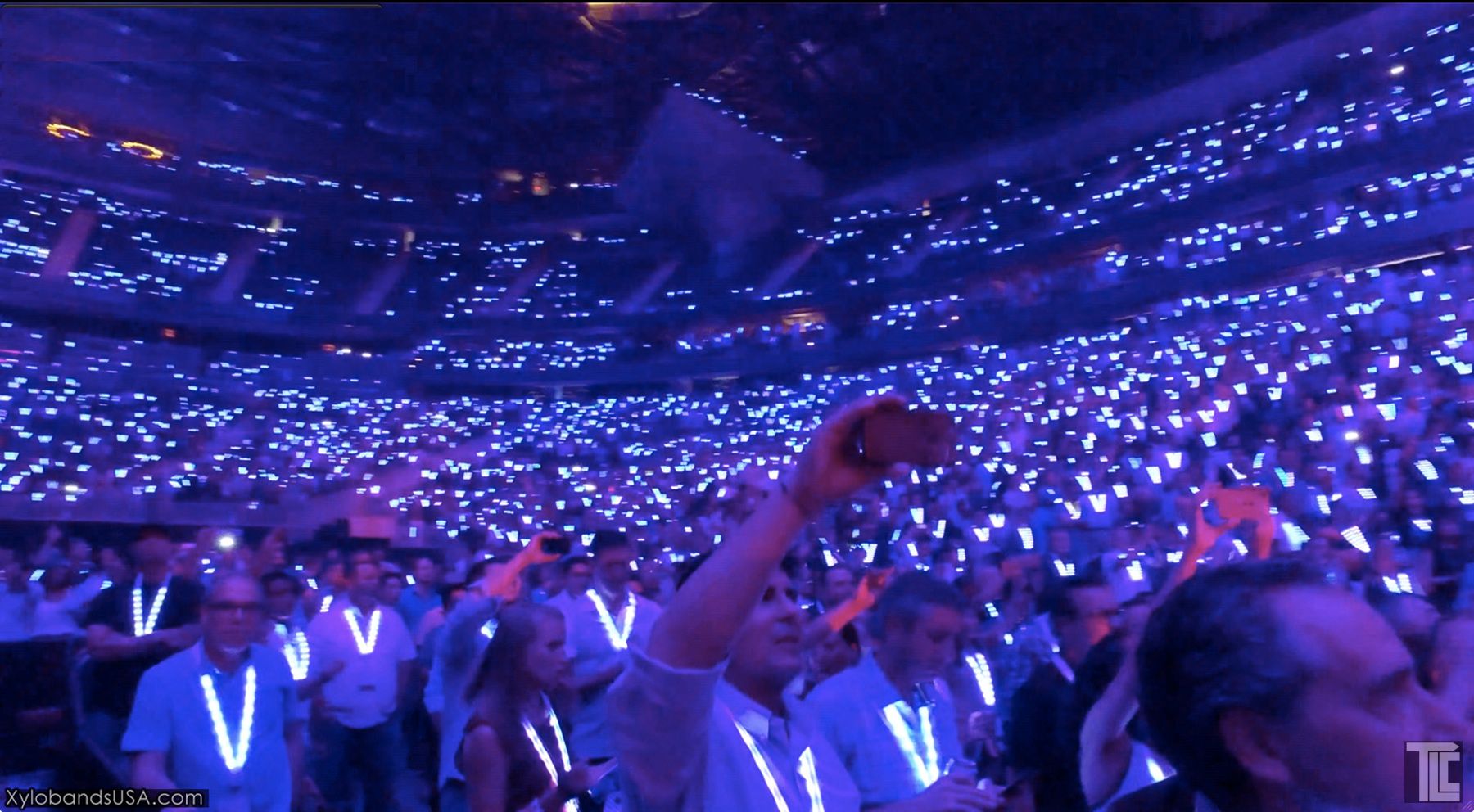
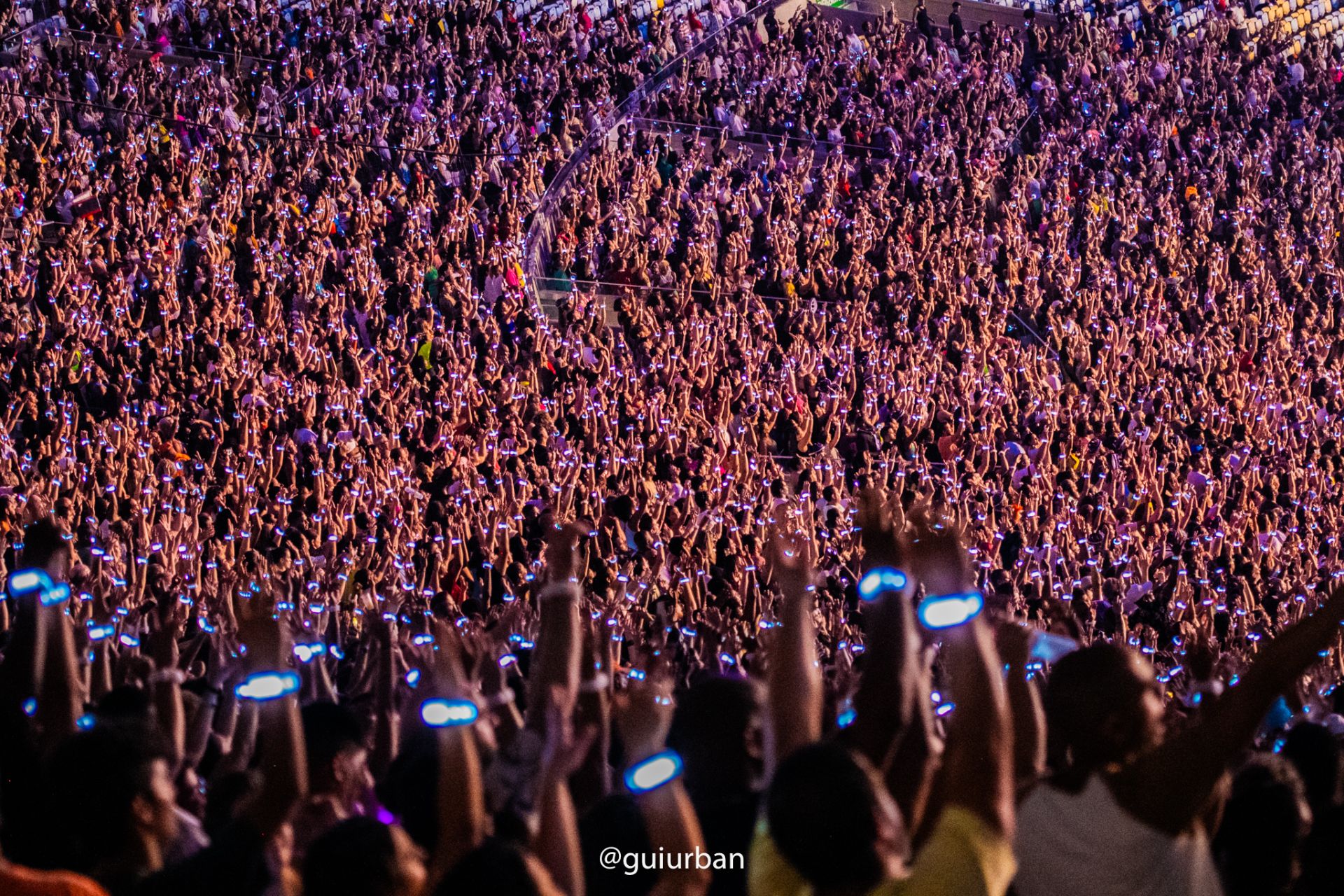
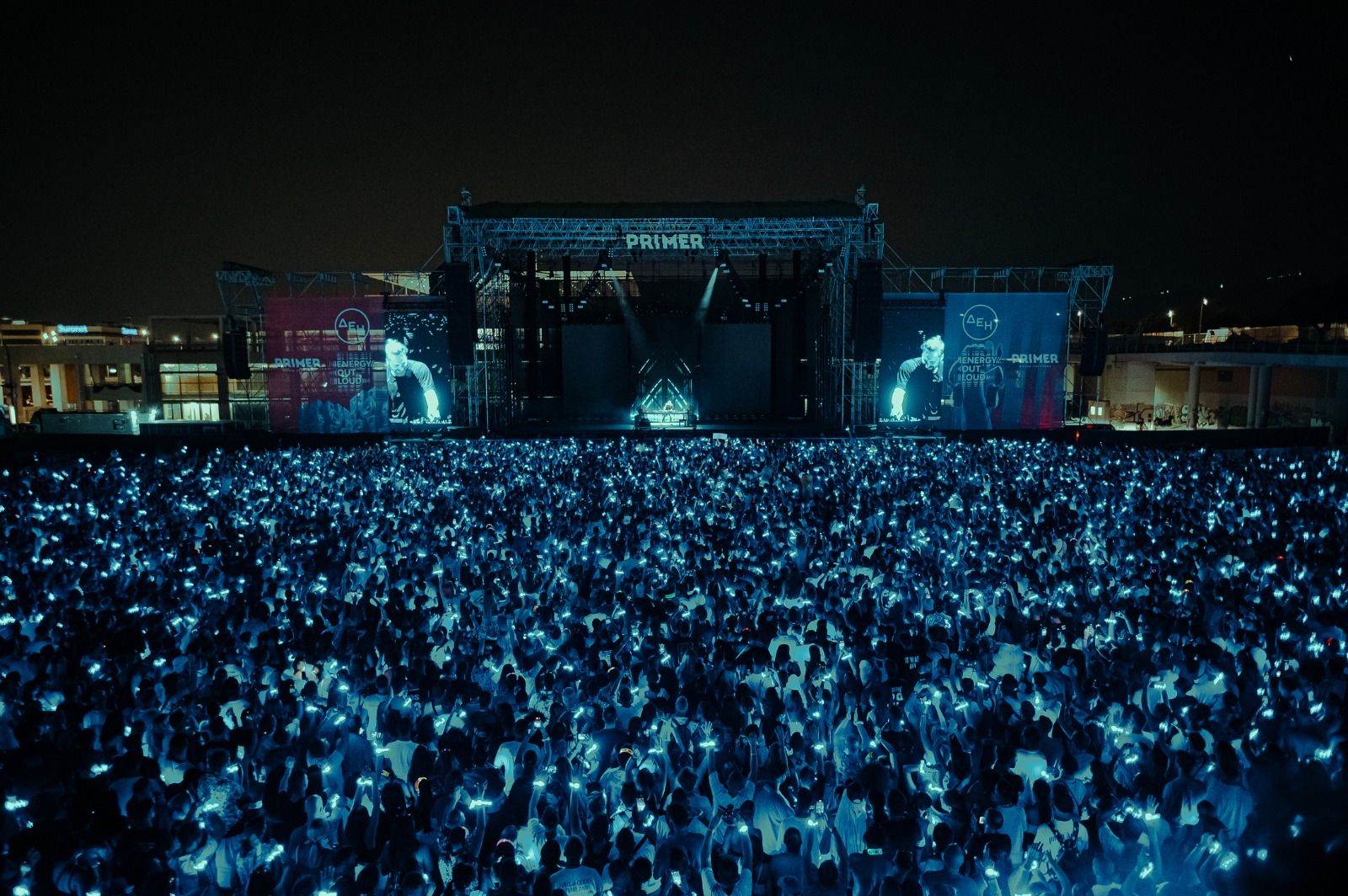
This relentless drive to the edge is what elevates a simple light-up wristband into a tool for creating genuine LED crowd experiences. It’s the difference between a gimmick and a technology that can unify a crowd of 54,000 in Medellín or add another layer of spectacle to a premier electronic music event like Primer Music Festival.
Principle 4: From the Stadium to the Screen
The modern live event doesn’t just exist for the people in the room; it exists for the millions watching at home. This duality is a core driver of our R&D. The lighting that creates a breathtaking immersive experience for the live audience must also translate flawlessly to the broadcast camera. This requires a deep understanding of sensor dynamics, colour science, and refresh rates.
Our work on broadcast events like Beat The Chasers UK and the Eurovision Song Contest is a testament to this principle. The technology must be calibrated to perform for two different audiences simultaneously. The pulses of light, the colour fades, and the strobing effects are all designed and tested to be as impactful on a television screen as they are in the arena. It’s a complex, unseen layer of engineering that ensures the magic of the moment is shared by everyone, everywhere.
The Perpetual Beta
Ultimately, a culture of innovation is a culture of perpetual beta. It’s an understanding that the work is never truly finished. Every event, from a high-stakes corporate activation to a record-breaking stadium tour, is a source of new data, new insights, and new questions. The answers to those questions become the next generation of immersive events technology.
The goal is, and has always been, to close the distance between the artist and the fan. To dissolve the fourth wall and make the audience an integral part of the spectacle. It’s a mission that lives in the tension between the whiteboard and the warehouse—a perpetual, evolving project to engineer the future of shared human experience.