The Unseen Engine: Powering the Spectacle with a Culture of Innovation
The Anatomy of a Collective Gasp
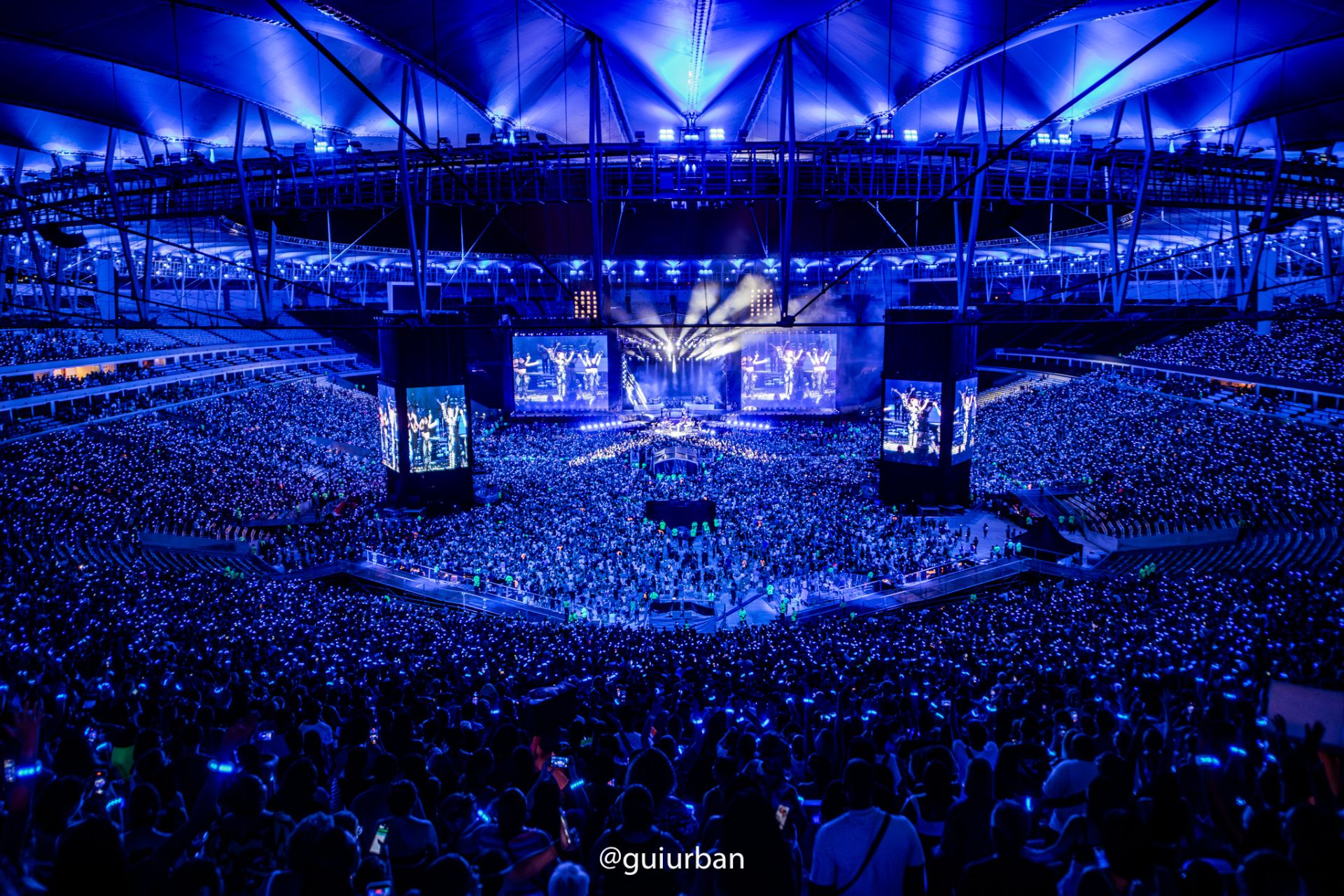
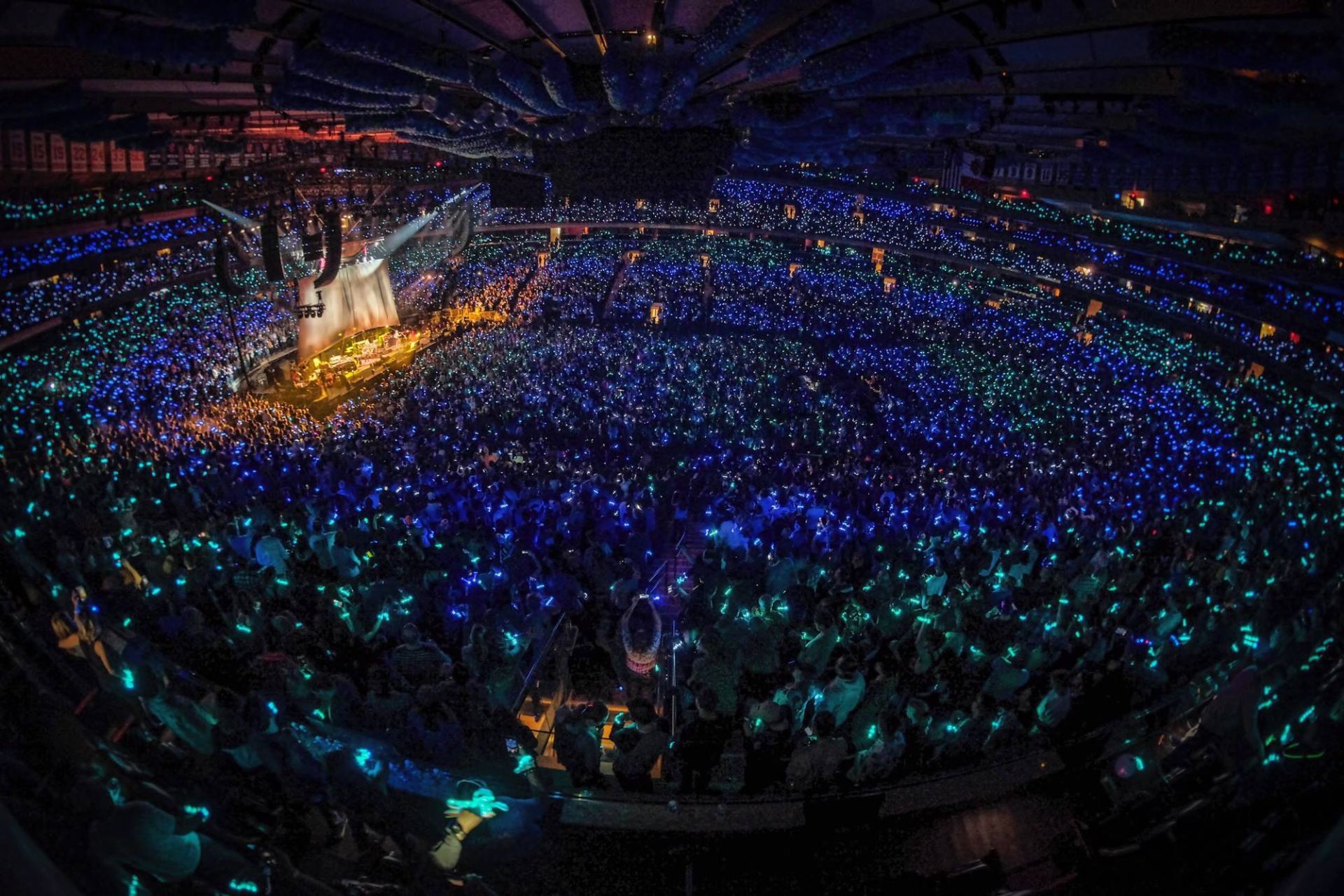
It’s a moment of pure alchemy. A stadium of 50,000 strangers, plunged into darkness. Then, in a single, silent beat, the entire space erupts in a synchronized wave of light. Every wrist, a pixel; every fan, a part of the canvas. This is the spectacle, the shared, visceral gasp that defines modern immersive events. But this moment, as effortless and magical as it appears, is not born on show day. It’s the final, visible manifestation of a deep, relentless, and often unseen engine: a culture of innovation and research.
Behind every colossal light show, every perfectly timed pulse that ripples across a festival field, lies a multi-year journey of ideation, engineering, and relentless refinement. It’s a process driven not just by technology, but by a foundational belief in asking, “What if?” For brands trusted to deliver these experiences for the world’s biggest artists and organizations—from Coldplay to Formula One—the R&D lab is not a room. It’s a mindset.
The Genesis of an Idea: Beyond the Eureka Moment
Every innovation begins with an observation. For Xylobands, that observation happened in a field in Somerset. Watching Coldplay perform at Glastonbury, our founder Jason Regler heard the lyric “Lights will guide you home” and envisioned a new kind of connection. It wasn’t a technical blueprint that came first, but an emotional one: the desire to unify a crowd and dissolve the barrier between the stage and the sea of faces before it.
This is the critical starting point for meaningful R&D in the live events space. It’s not about technology for its own sake. It’s about identifying a human desire—for connection, for participation, for belonging—and then architecting the technology to serve it.
The concept of the original Coldplay Xylo Band was born from this principle. The challenge wasn’t simply to create a wristband that lit up; it was to create a centrally controlled system that was scalable, reliable, and capable of turning an entire audience into a single, cohesive entity. This required a fundamental shift from passive merchandise to active, wearable LED technology.
From Prototype to World Tour: The Gauntlet of Iteration
An idea is a spark; a globally deployed product is a feat of engineering. The journey from that initial Glastonbury vision to the history-making Mylo Xyloto World Tour was a crucible of research and development. It involved pioneering work in radio-frequency communication, battery optimization, and durable, mass-producible plastics. The collaboration with Coldplay wasn’t merely a transaction; it was a partnership in innovation, stress-testing the technology in the most demanding environment imaginable: a multi-year, multi-continent stadium tour.
This phase is where ambition meets physics. The R&D process must answer a thousand brutal, practical questions. How do you ensure a signal reaches the 50,000th wristband in a concrete bowl as reliably as the first? How do you manage battery life for a two-hour show, plus an encore? How do you create a product that is both visually stunning and resilient enough to survive the energy of a live concert?
The Evolutionary Imperative: Solving for an Ever-Changing Stage
A successful product is not an endpoint; it is a platform for further innovation. A true R&D culture never considers the job “done.” The challenges presented by new clients, new environments, and new creative ambitions are the fuel for the next evolutionary leap.
Responding to Creative Demands
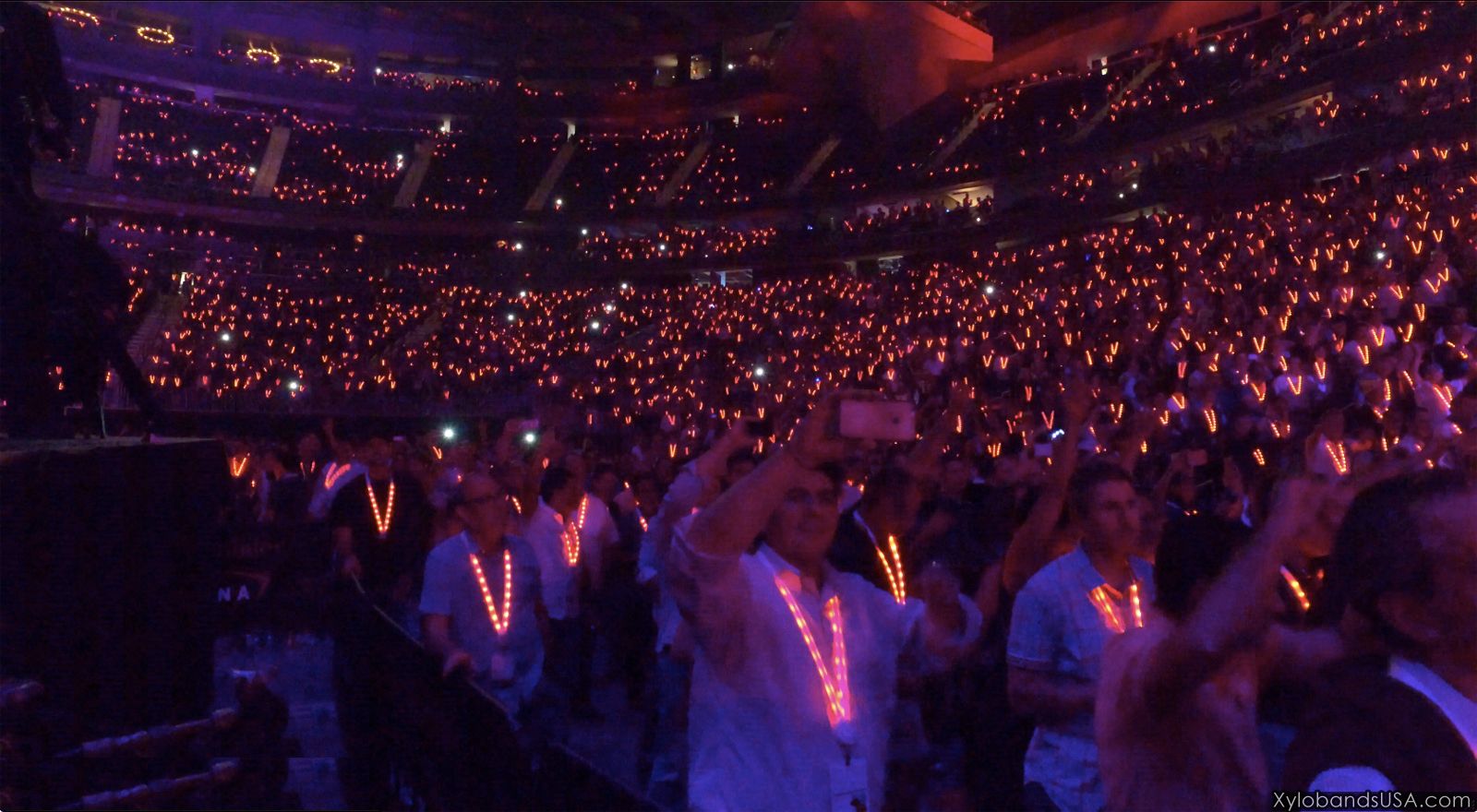
Consider the Formula One 75th anniversary event in London. The creative brief went far beyond a standard wristband. The show design required a custom form factor—the LED Lanyards known as Xylo Pendants—and complex, multi-layered branding for ten different teams and various hospitality tiers. Furthermore, the light show itself demanded that specific seating sections be mapped and controlled independently. This is R&D in response to creative vision, requiring rapid prototyping and sophisticated software development to give show designers a more granular, powerful tool.
Mastering New Environments
The needs of a primetime television broadcast are fundamentally different from those of a music festival. For long-standing clients like ITV, and on high-stakes productions like Beat The Chasers, the technology must be flawless. The R&D focus shifts to things the audience never sees: ensuring zero flicker for high-speed cameras, guaranteeing signal integrity in a studio saturated with RF interference, and building systems that integrate seamlessly with broadcast lighting desks. These corporate event activations and TV shows push the boundaries of reliability and control, leading to innovations that benefit all users of the technology.
Expanding the Product Ecosystem
Innovation also means accessibility and adaptation. When Wizkid became the first African artist to sell out three nights at London’s O2 Arena, it marked the debut of the Xyloband Lite. This development was a direct result of an R&D process focused on creating a more streamlined, efficient version of the classic wristband. This ongoing effort to diversify the product line ensures that powerful LED crowd experiences can be delivered at varying scales, from intimate corporate gatherings to massive festivals like PRIMER in Greece.
Culture as the Core Operating System
Ultimately, a company’s capacity for innovation is not determined by its patents or its labs, but by its people. An effective R&D culture is a feedback loop in constant motion. It connects the engineers who design the circuits, the road crew who deploy thousands of festival wristbands in a muddy field, and the project managers who translate a client’s most audacious dream into a technical specification.
It’s a culture that has the confidence to embrace complexity and the humility to learn from every single show. It’s about building a team where the default response to a challenge is not “we can’t,” but “how could we?”
The next time you’re lost in a sea of synchronized light, remember the unseen engine. The final, breathtaking spectacle is simply the visible evidence of a thousand small, deliberate acts of invention—the product of a culture committed, above all else, to the alchemy of ambition.