The Architecture of Awe: Modern Principles for Stadium and Arena Lighting
From Illumination to Immersion: The New Language of Light
For decades, the lights in a stadium or arena served a singular, utilitarian purpose: to illuminate the stage, the field, the court. They were a necessary, if unremarkable, part of the architecture, designed to cut through the darkness and focus attention. But in the modern era of live entertainment, that role has undergone a seismic shift. Light is no longer just about visibility; it’s about narrative, emotion, and immersion. It’s a language in itself, capable of transforming tens of thousands of individuals into a single, cohesive entity—a living, breathing part of the spectacle.
The modern tour lighting designer is an architect of awe, sculpting with beams and pixels to build a temporary world. The goal is no longer simply to light the artist, but to envelop the entire venue in a dynamic, responsive environment. This evolution has been driven by both artistic ambition and technological innovation, forever changing the relationship between the performer, the audience, and the space they share.
Principle 1: The Multi-Layered Canvas
Designing for a stadium is a lesson in scale. A single spotlight, so effective in a theatre, is swallowed by the vastness of an arena. The modern approach, therefore, is to think in layers, creating a rich visual tapestry that fills the vertical and horizontal space. This involves a carefully orchestrated interplay of different lighting elements:
- Key Light: The foundational layer, focused on the performers themselves. This ensures they remain the focal point, crisply defined against the larger backdrop.
- Environmental Light: This includes the massive LED screens, moving washes, and atmospheric effects that paint the architecture of the venue itself. These elements define the mood and transform the cold steel and concrete into a dynamic set piece.
- Audience Light: The most transformative layer in modern production. This is where the crowd ceases to be a passive observer and becomes an integral part of the canvas.
The Sentient Crowd: Turning Spectators into the Spectacle
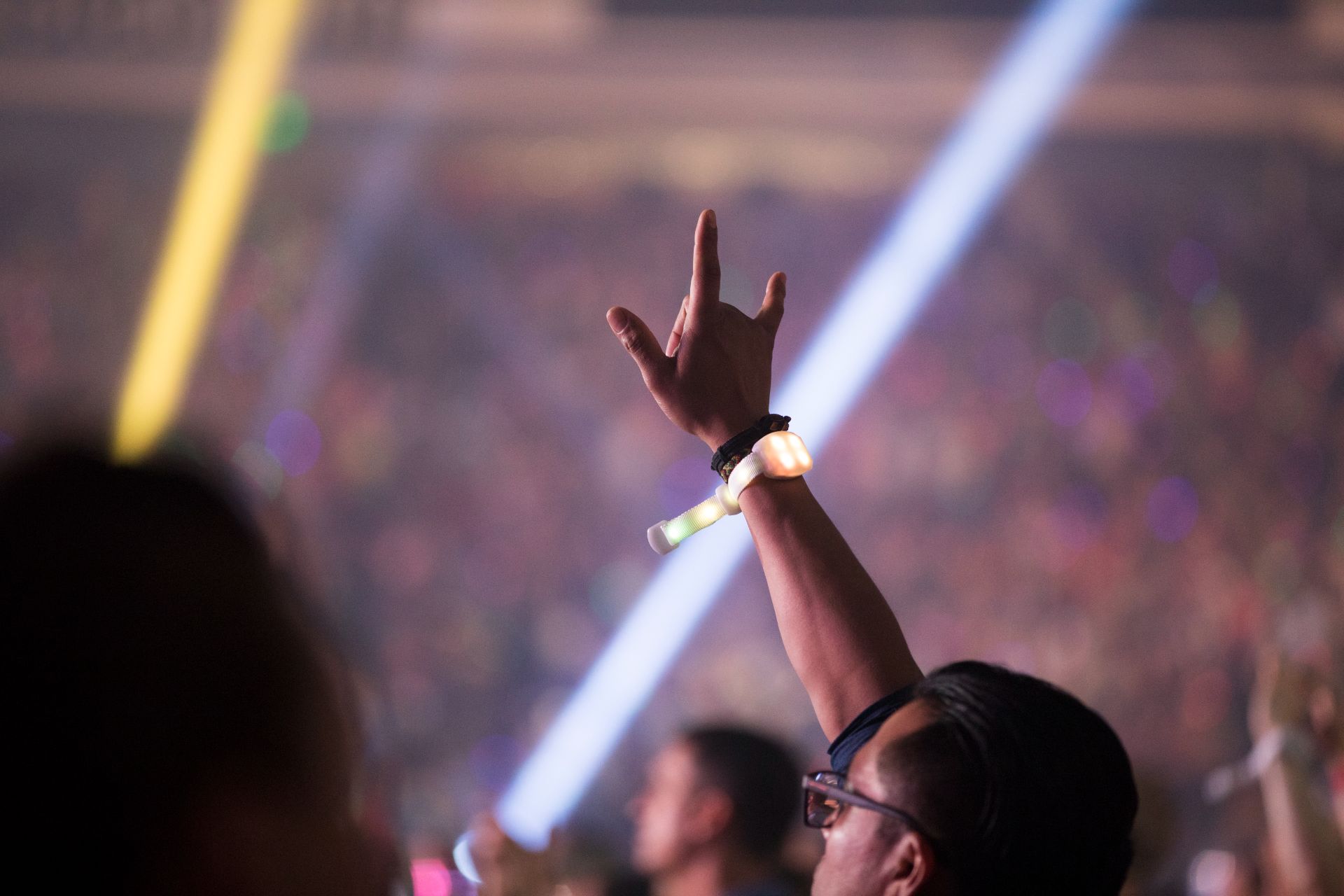
The concept of audience lighting has been revolutionized by Wearable LED Technology. This is where Xylobands pioneered a new frontier. Inspired by a transcendent moment at a Coldplay concert, our founder envisioned a crowd not just watching the light show, but becoming it. This simple idea led to the development of Radio Controlled LED Wristbands, a technology that has since become a staple of large-scale productions worldwide.
These LED Bands or LED Bracelets—often called Coldplay Xylobands in a nod to their origin—allow designers to choreograph light across thousands of people. Suddenly, the audience is a living pixel map. A wave of colour can sweep from the front row to the back; intricate patterns can pulse in time with the music; the entire arena can plunge into a unified moment of darkness before exploding into light. This creates powerful LED Crowd Experiences, fostering a sense of unity and shared energy that is impossible to achieve with stage lighting alone.
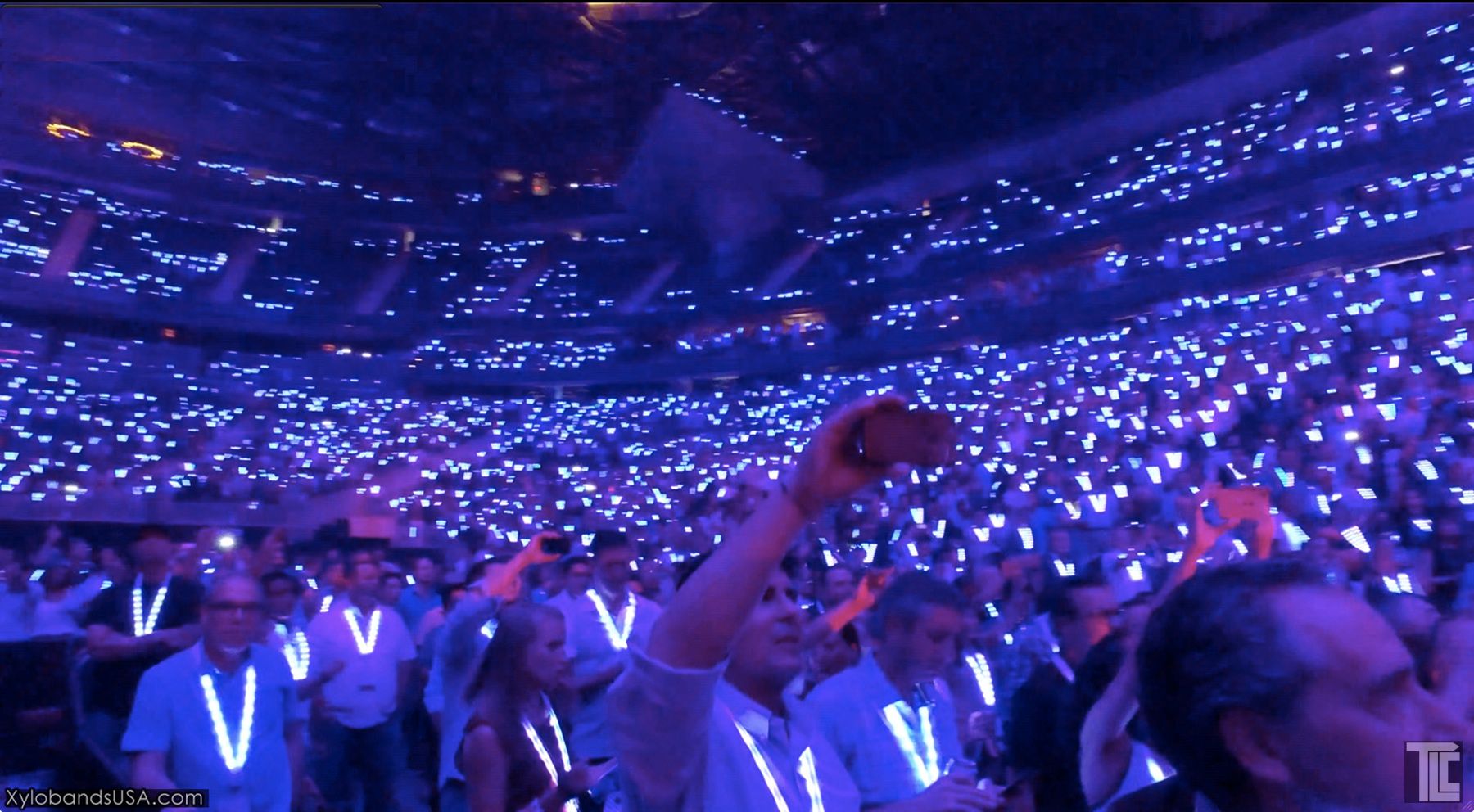
This technology is not limited to wrist-worn devices. At the Formula One 75th-anniversary celebration at The O2 in London, custom LED Lanyards (the Xylo Pendant) were distributed to 13,000 attendees. Our team pre-positioned these pendants around the arena based on the desired visual effects, allowing the creative team to integrate the audience directly into the broadcast-heavy show, creating a truly immersive experience for both the live and television viewers.
Principle 2: Designing for Two Audiences
Many of today’s largest events are built for a dual audience: the thousands in the venue and the millions watching at home. This presents a unique challenge. What reads as spectacular in person can appear chaotic or blown-out on camera. The lighting designer must serve two masters, creating a show that is both emotionally resonant for the live attendee and technically flawless for the broadcast.
This is where the precision of modern LED Event Technology becomes critical. When Maluma played to a hometown crowd of 54,000 in Medellín, the concert was also streamed live in over 240 countries. The lighting had to be grand enough for the stadium but nuanced enough for the cameras capturing every detail for a global audience. The use of synchronized Concert Wristbands helped bridge this gap, creating large-scale visual moments that translated powerfully to the small screen, making viewers at home feel part of the immense collective energy.
“The ability to control the light on every single person in the crowd gives you a level of creative granularity that was previously unimaginable. You’re not just lighting a stage; you’re painting with people.”
Principle 3: The Narrative Arc of Light
The most effective lighting design tells a story. It’s not a random sequence of effects but a carefully crafted journey that mirrors the emotional arc of the performance. A show might begin with subtle, intimate lighting, drawing the audience in, before building to explosive, full-venue strobes during a crescendo. The encore might see a shift to a single, unifying colour, bathing the entire audience in a warm, communal glow.
Immersive Event Technology like Xylobands provides designers with an expanded vocabulary to tell these stories. For events like PRIMER Music Festival in Greece, our Festival Wristbands help amplify the beats of international DJs, turning the crowd into a pulsating extension of the music itself. These Immersive Events are no longer just concerts; they are multi-sensory experiences where light, sound, and human energy merge.
From Corporate Event Activations looking to make a lasting brand impression to global music tours, the goal is the same: to create a moment of collective effervescence. The technology—whether it’s LED Orbs, pendants, or the iconic Xylo Bands—is merely the tool. The real art lies in using it to forge a connection, to tell a story, and to build a temporary community in the dark, bound together by light.