Beneath the Surface: The Technology That Powers Immersive LED Experiences
The Unseen Command
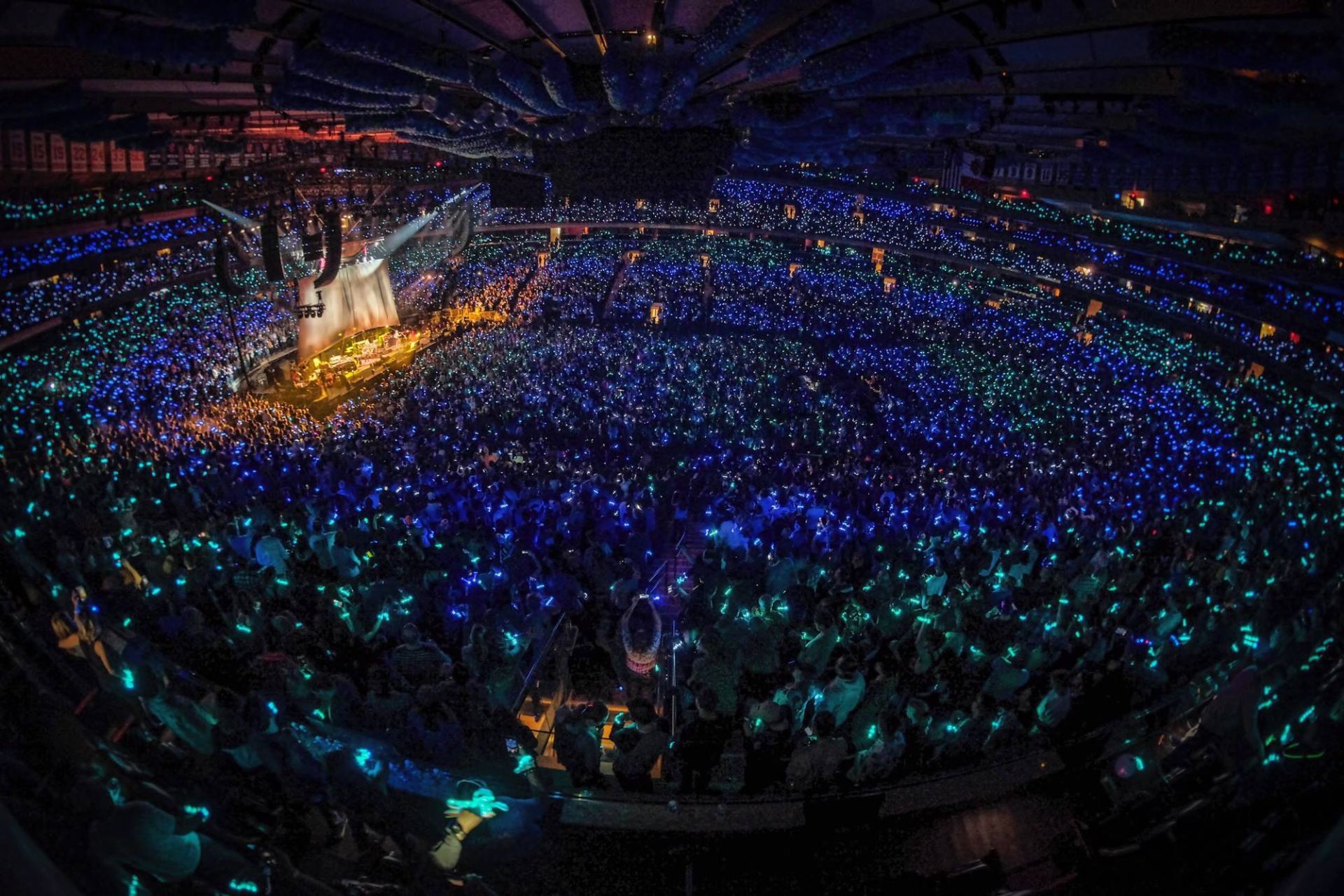
From the world’s largest stadiums to intimate corporate event activations, a quiet technological revolution has been transforming the very fabric of live events. When tens of thousands of lights on the wrists of fans pulse in unison—a flash of color sweeping across an arena, a gentle fade painting the crowd in soft hues—it feels like magic. But it’s not magic; it’s a sophisticated and robust technological ecosystem. It’s the invisible command that turns a passive audience into a living, breathing canvas of light. This is the world of wearable LED technology, and it is powered by a symphony of radio frequencies, lighting protocols, and infrared signals.
Understanding the technology beneath these LED crowd experiences is essential for any producer, tour manager, or creative director looking to harness their full potential. The ability to control light on this scale—reliably, instantly, and with artistic precision—depends on choosing the right tool for the job. The three primary methods of control are Radio Frequency (RF), DMX, and Infrared (IR), each with its own unique strengths and applications.
The Backbone of the Arena: Radio Frequency (RF) Control
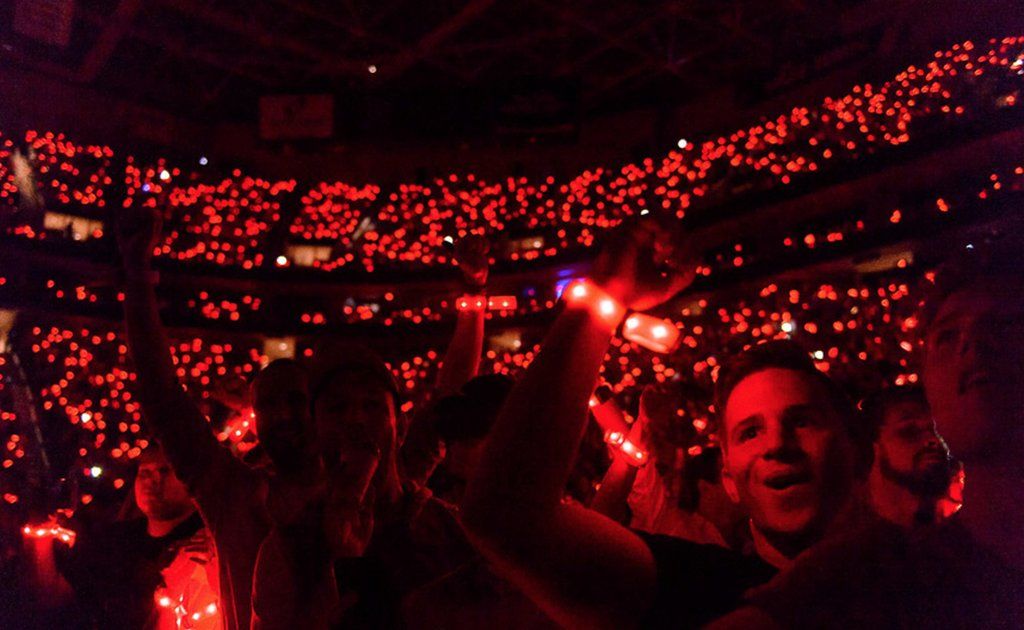
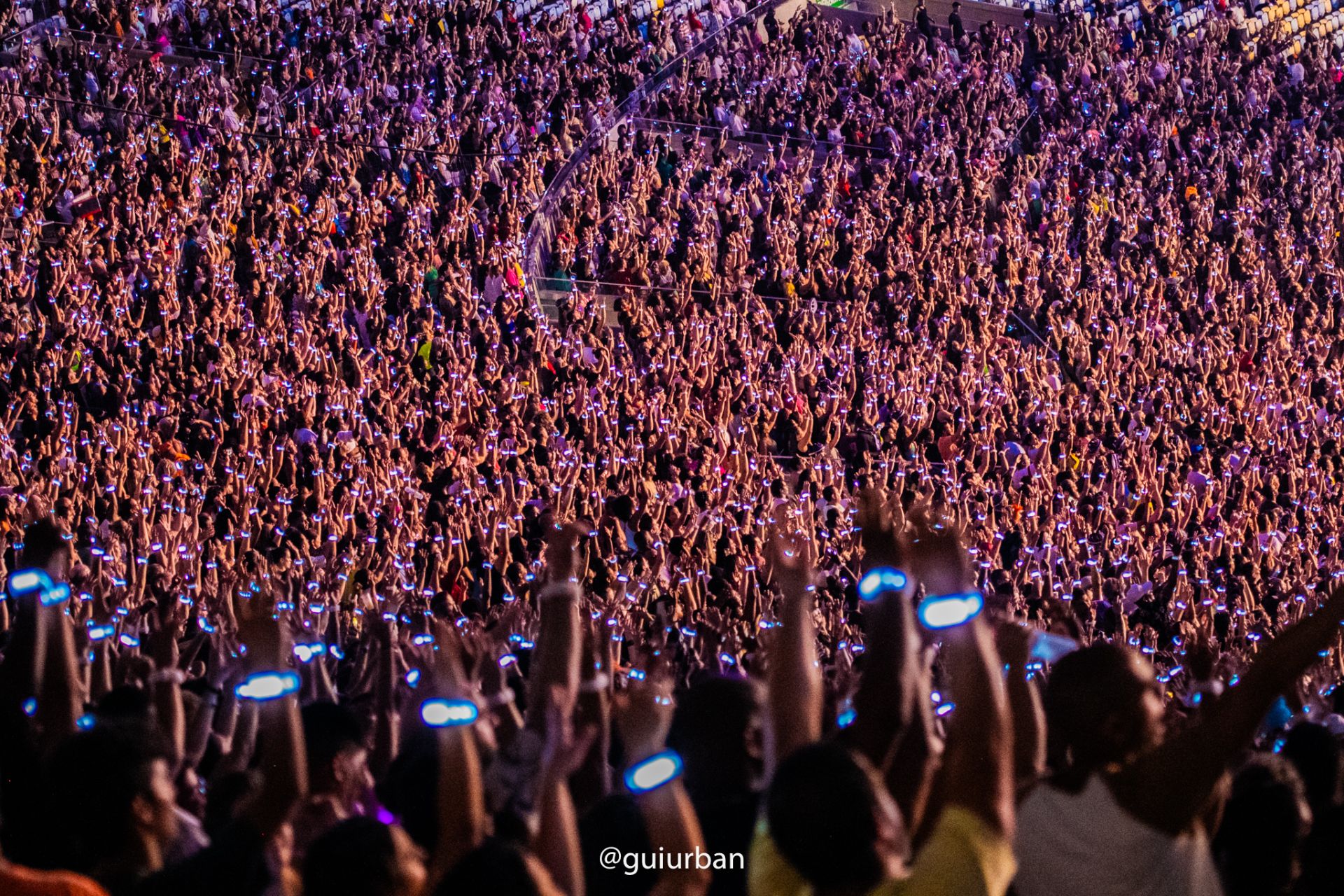
Radio Frequency is the workhorse of large-scale immersive events. It is the technology that powers the iconic Coldplay Xylobands and lights up massive crowds at festivals like Greece’s PRIMER Music Festival. The system consists of two core components: a transmitter and the receivers embedded within each Xyloband.
Here’s a breakdown of the process:
- The Command Signal: A lighting designer or show operator uses a dedicated software interface to program lighting cues. These cues are then sent to a powerful RF transmitter, often located at the front-of-house or another strategic point in the venue.
- Broadcasting the Message: The transmitter converts these digital commands into radio waves, broadcasting them over a specific, licensed frequency. This signal radiates throughout the venue, capable of covering vast areas like stadiums and festival fields. The range can be precisely controlled, from a few meters to over a thousand, ensuring every corner of the audience is reached.
- Receiving the Order: Each wristband’s internal receiver is constantly listening on that frequency. When it detects a valid command signal, it instantly translates the instruction into action—turning on, changing color, flashing, or fading, all in perfect synchrony with thousands of its counterparts.
The power of RF lies in its scalability and reliability. It can command hundreds of thousands of radio controlled LED wristbands simultaneously, making it the go-to solution for stadium tours, major sporting events like the Davis Cup, and large-scale festival wristbands. It turns the entire audience into a single, cohesive visual entity.
The Language of Light: DMX Integration
While RF provides the broad command structure, many high-level productions require a more nuanced and integrated approach. This is where DMX comes in. DMX (Digital Multiplex) is the industry-standard protocol for controlling professional stage lighting, from moving heads and lasers to smoke machines. It’s the universal language of show lighting.
Integrating Xylobands with a show’s DMX network offers unparalleled creative control:
By connecting the Xylobands RF transmitter to the main lighting console via a DMX bridge, a lighting director can control the wristbands just like any other fixture in their rig. This isn’t just about syncing up; it’s about true integration.
This means the LED bands can be programmed directly into the show’s master timeline. A wave of light from the stage can seamlessly flow out into the crowd. A specific color accent on an artist can be mirrored on the wrists of the audience in the same instant. This level of integration is critical for broadcast events, such as those for clients like ITV, where the audience’s reaction must be perfectly timed for the cameras. It ensures the crowd lighting is not an afterthought but a fundamental part of the overall visual design, creating a truly immersive and cohesive experience for both the live and at-home viewers.
Proximity and Precision: Infrared (IR) Triggers
While RF masters the macro, Infrared (IR) excels at the micro. IR technology, similar to that used in a television remote, is perfect for creating zones of light and triggering specific behaviors based on proximity. It offers a line-of-sight solution for targeted activations.
Small, discreet IR transmitters are placed in specific locations—doorways, interactive displays, or different sections of a venue. When a wristband enters the transmission field of one of these units, it receives a command. This has powerful applications for corporate event activations and zoned experiences:
- Zoned Control: Imagine an arena where different seating blocks light up in competing team colors, or a conference where attendees’ LED lanyards change color as they move between different breakout zones. This was used to great effect at the Formula One 75th Anniversary event, where custom pendants for different teams and hospitality levels could be controlled to create dynamic, segmented effects across the arena.
- Interactive Experiences: IR can be used to "gamify" an event. For instance, a wristband could light up green when a guest approaches an interactive kiosk, or flash when they enter a specific brand activation zone, signaling a successful interaction.
The Art and Science of Immersion
The choice between RF, DMX, and IR—or a combination of all three—is not a technical decision but a creative one. It depends entirely on the story you want to tell and the experience you want to create. Do you need the sweeping, unified power of RF for a stadium-wide moment of collective awe? Do you require the seamless, frame-perfect integration of DMX for a tightly choreographed broadcast? Or do you need the targeted precision of IR to guide attendees and create personalized, interactive moments?
This is the core of immersive event technology. It’s the thoughtful application of these powerful tools that transforms a gathering into a community and a performance into a shared memory. By understanding the technology that drives these LED experiences, event producers can move beyond simply lighting up a crowd and begin to design truly unforgettable moments of connection.