Beyond the Game: Choreographing Light and Story in Modern Sports Entertainment
The New Main Event
For decades, the halftime show was an interlude. A tactical pause. A chance for fans to grab a beer while marching bands held the field. Today, it’s a multi-million dollar spectacle in its own right, a high-stakes blend of music, logistics, and technology that often rivals the main event for sheer cultural impact. From the Super Bowl to the opening ceremonies of global tournaments like the FIFA World Cup or the Davis Cup, the 15-minute halftime slot has become a proving ground for the world’s biggest artists and a canvas for breathtaking technical productions.
But how do you create a show that captivates a stadium of 80,000 people and a broadcast audience of millions? How do you tell a powerful story that honors both the artist’s vision and the spirit of the game? The answer lies in a new era of choreography—one that extends far beyond the performers on stage to encompass light, sound, and the audience itself.
The Two-Show Imperative
The modern halftime show presents a unique challenge: you are producing two entirely different experiences simultaneously. There is the live show—the raw, visceral energy of being in the stadium—and there is the broadcast show, a meticulously framed and curated narrative for the cameras. These two audiences have vastly different perspectives, and a successful production must cater to both.
The stadium crowd experiences the show in three dimensions. They see the full scale of the stage, feel the bass in their chests, and are surrounded by the collective energy of tens of thousands of fellow fans. The broadcast audience, however, sees what the director wants them to see. Their experience is mediated by camera angles, close-ups, and aerial shots. A lighting effect that looks spectacular from the upper deck might be lost on television, while a subtle on-stage moment can be powerfully amplified in close-up.
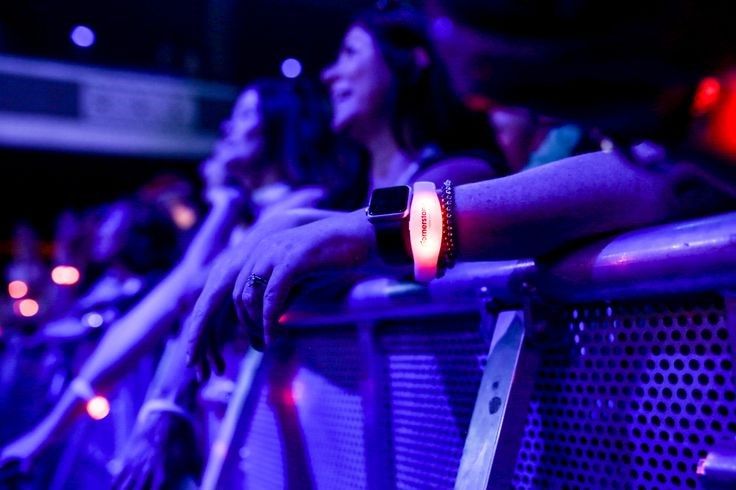
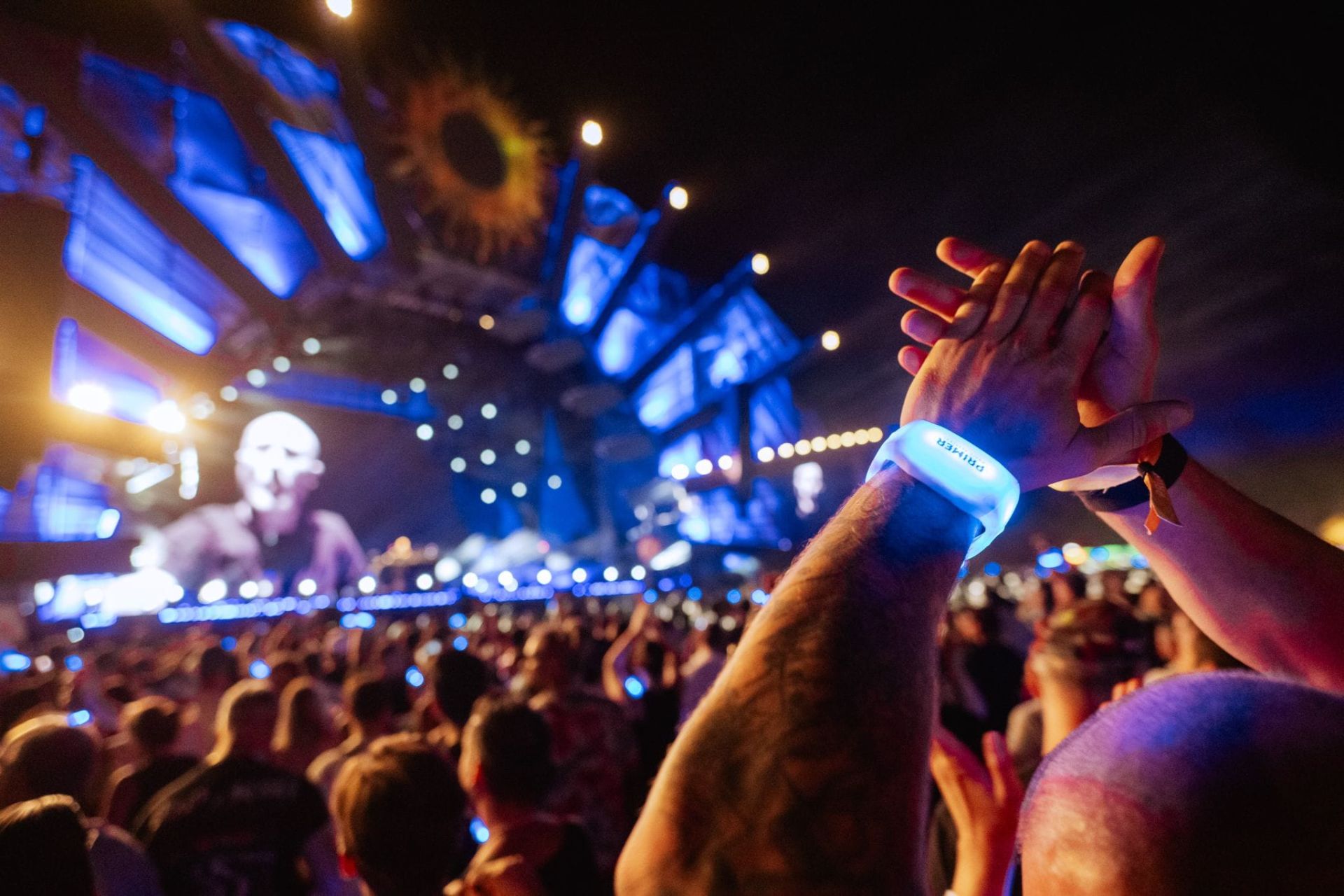
This is where immersive event technology becomes critical. It acts as a bridge between the live and broadcast experiences. Technologies like radio-controlled LED wristbands turn the entire stadium into a canvas, creating large-scale visual moments that are equally stunning for a fan in the nosebleeds and a viewer watching in high definition at home. By synchronizing light across the crowd, productions can create waves of color, intricate patterns, and dramatic pulses that translate beautifully on camera, making the audience an integral part of the broadcast spectacle.
Choreographing the Crowd
The most forward-thinking productions no longer view the audience as passive spectators. They see them as a medium, a living, breathing part of the performance canvas. This is the essence of creating true LED Crowd Experiences.
"The goal is to dissolve the barrier between the stage and the seats," explains a Xylobands lighting technician. "When the entire stadium is lit up in perfect sync with a crescendo in the music, you create a moment of genuine unity. You’re not just watching the show; you are the show."
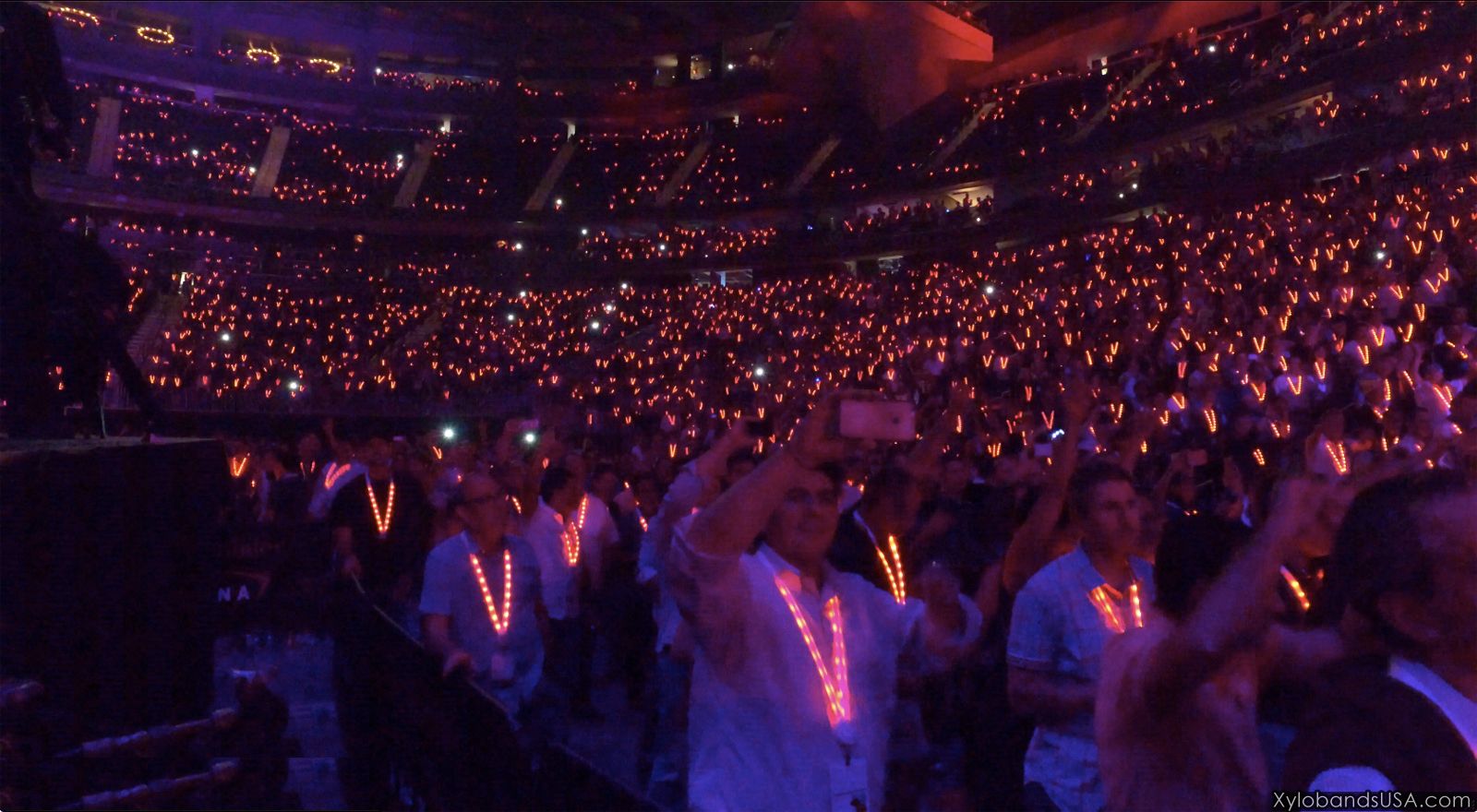
This approach requires a level of planning that borders on military precision. Every single wristband, lanyard, or LED credential becomes a pixel in a massive display. Our work with major events like Formula One’s 75th-anniversary celebration or concerts for global artists like Maluma and Wizkid involves mapping out arenas and stadiums seat by seat. The distribution and activation of tens of thousands of individual devices are choreographed to create specific, dynamic effects that are synchronized to the second.
For a halftime show, this might mean flooding the home team’s sections in their signature colors after a key moment, creating a strobing, high-energy pulse during a dance break, or designing a slow, emotional fade across the stadium during a ballad. This layer of wearable LED technology adds a powerful narrative dimension, allowing show designers to guide the crowd’s emotional journey and amplify the storytelling on stage.
The Logistics of Light
Executing a flawless halftime show is a masterclass in logistics. A stage is typically assembled and disassembled on the field in under eight minutes. The technical teams for audio, video, and lighting have zero margin for error. The RF (Radio Frequency) environment is notoriously crowded, with hundreds of signals competing for bandwidth from broadcast crews, security, and team communications.
This is why robust, reliable technology is non-negotiable. Xylobands are powered by proprietary RF technology, controlled via a dedicated transmitter and software. This ensures our lighting cues are delivered instantly and flawlessly, unaffected by the chaotic wireless spectrum of a modern stadium. Whether deploying 500 wristbands for a TV studio audience like for ITV’s Beat The Chasers or 50,000 for a stadium concert, the system is built for resilience and precision.
The process begins months before the event. Our creative and technical teams work alongside the show’s producers and lighting designers to integrate the crowd-lighting element into their overall vision. We analyze the musical programming, identifying key moments where light can amplify the performance. We create custom LED wristbands or other LED wearables that align with the branding of the league, the sponsors, or the artist. The result is a seamless integration that feels like a core part of the creative DNA of the show, not an afterthought.
The Future of the Fan Experience
As sports and entertainment continue to converge, the halftime show will only become more ambitious and more technologically integrated. The focus will shift further from passive viewing to active participation. The fan in the stadium will expect an experience that is immersive, interactive, and shareable—a spectacle they can’t get from watching at home.
For brands, leagues, and artists, this presents an unparalleled opportunity. By transforming the crowd into a canvas, they can create deeper engagement, more memorable brand activations, and a more powerful emotional connection with their audience. The lights in the stadium are no longer just for illumination; they are a tool for storytelling, a medium for unity, and a critical part of the choreography of awe. The game is just the beginning.