The Broadcast Lens: Crafting Light for an Audience of Millions
The Dual Imperative of Modern Event Lighting
In the world of major live events, the audience is no longer just the sea of faces in the arena. It’s the millions watching from their homes, across continents and time zones. This creates a dual imperative for event producers and lighting designers: create a spectacular, immersive atmosphere for the attendees in the room, while also delivering a flawless, visually stunning experience for the broadcast camera. These two audiences have fundamentally different needs, and balancing them is a high-stakes art form.
Lighting for a live audience is about feeling and scale. It’s about grand gestures, sweeping beams, and saturated colours that evoke emotion and fill a vast physical space. Lighting for the camera, however, is a game of precision, nuance, and technical fidelity. The camera lens is an unforgiving eye, sensitive to flicker, colour temperature inconsistencies, and dynamic range limitations that the human eye might never notice. A light that looks breathtaking in person can appear blown-out, flat, or noisy on screen, instantly diminishing the perceived quality of a global broadcast.
The Technical Challenge: Bridging the Gap Between Eye and Lens
The core challenge lies in the physics of light and optics. Broadcast cameras have a more limited dynamic range than the human eye, meaning they struggle to capture detail in both the brightest highlights and the darkest shadows simultaneously. A laser effect that adds a dramatic flair in the venue can create a blinding flare on camera, while subtle uplighting on a stage might be lost entirely to digital noise.
Key Considerations for Broadcast-Ready Lighting:
- Flicker-Free Operation: Many LED sources have a refresh rate that, while invisible to the naked eye, can create distracting banding or flickering when filmed, especially in slow motion. Professional-grade LED event technology must be engineered with high-frequency drivers to ensure a clean, stable image for any camera and frame rate.
- Colour Temperature and CRI: Consistency is paramount. The colour temperature of every light source, from spotlights to the glow of wearable LED technology, must be carefully managed to ensure that colours—especially skin tones—are rendered accurately and consistently across different camera angles. A high Colour Rendering Index (CRI) is non-negotiable for achieving true-to-life visuals.
- Beam Control and Intensity: What feels energetic in an arena can be chaos for a camera. The intensity and spread of light must be meticulously controlled. This is where turning the audience into a distributed, dynamic lighting element offers a powerful solution. Instead of relying solely on a few high-output fixtures, an array of thousands of lower-intensity light sources, like Xylobands, can create a visually rich texture for the camera without overwhelming its sensors.
The Crowd as a Camera-Ready Canvas
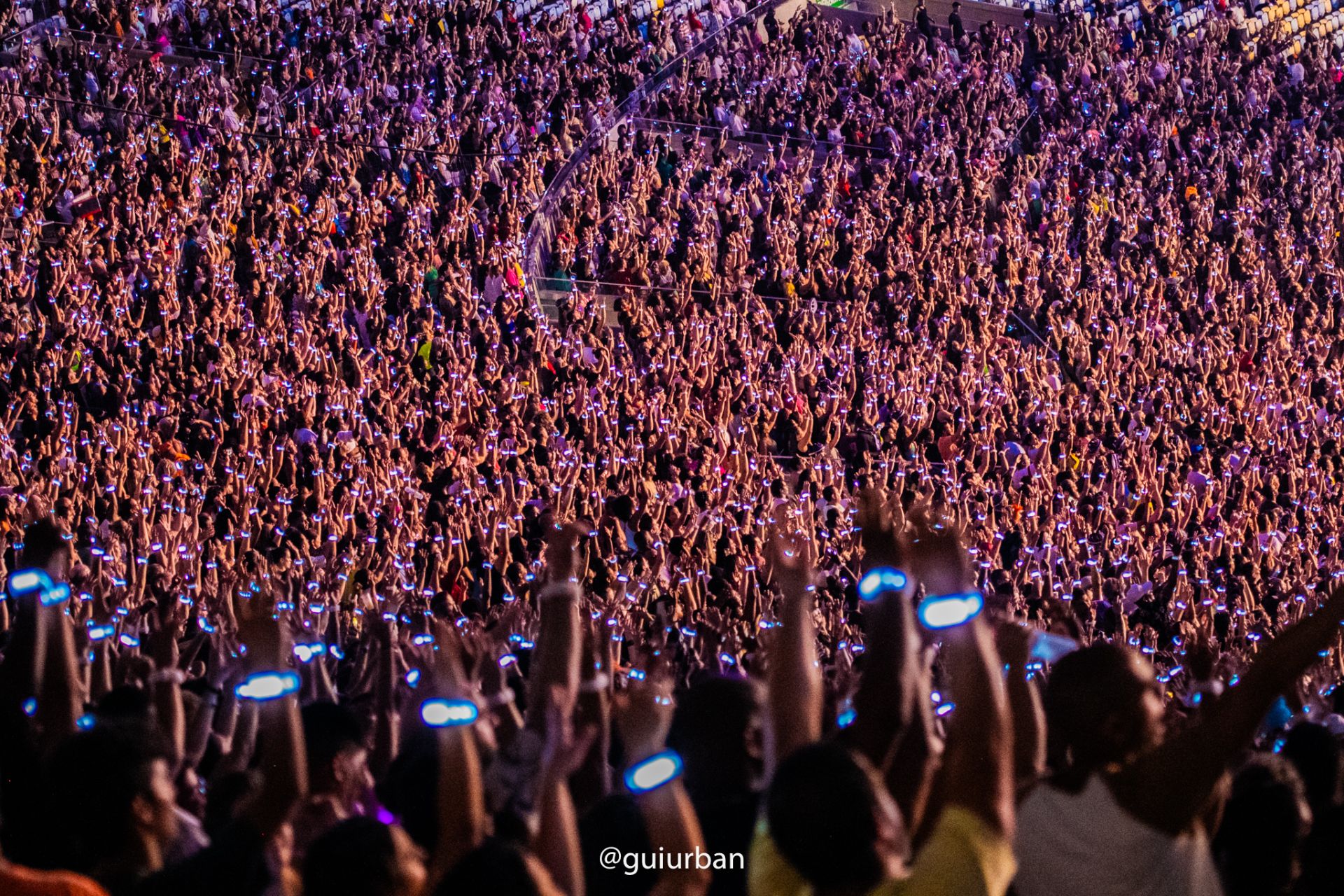
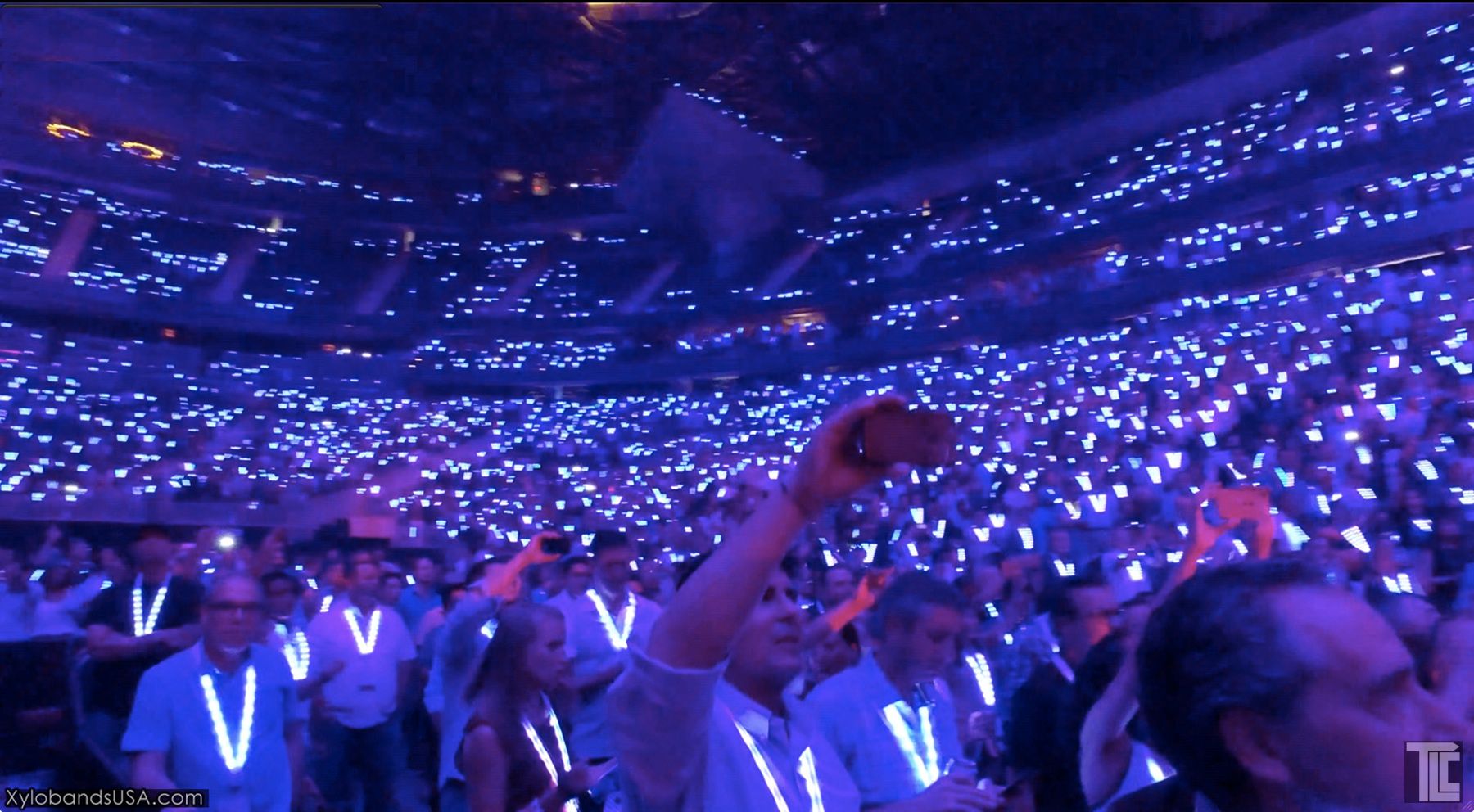
This is where the concept of the audience as a living, breathing part of the show design becomes a game-changer for broadcast events. When every attendee is wearing a radio-controlled LED wristband, the crowd transforms from a passive observer into an active, programmable canvas of light. This approach solves several key broadcast challenges in one elegant stroke.
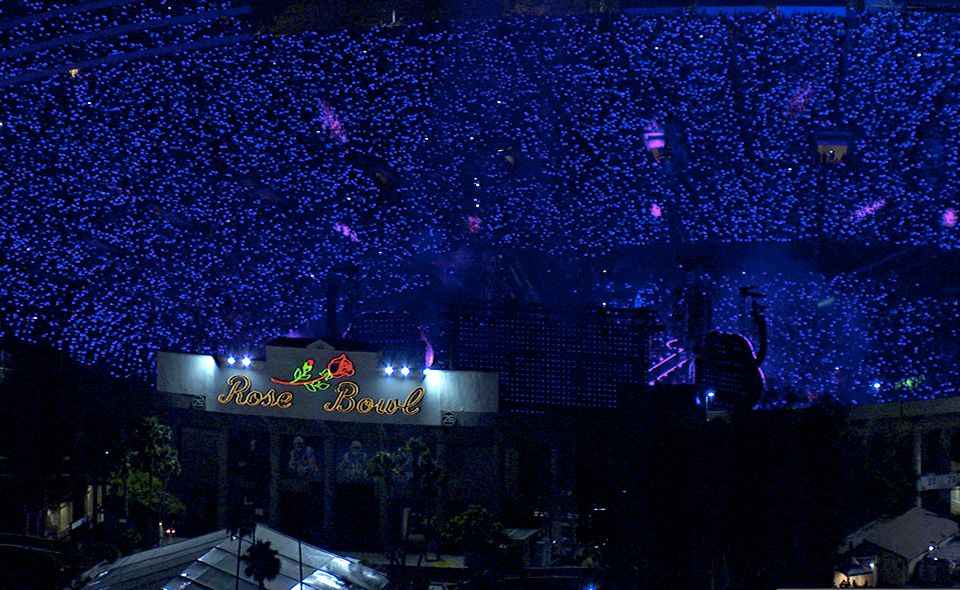
For global events like the Davis Cup or landmark concerts like Maluma’s historic Medellín performance—streamed live to over 240 countries—the crowd becomes a vital visual element. Instead of a dark, anonymous mass, the audience becomes a vibrant, textured backdrop that enhances the sense of scale and energy for the home viewer. The light emanates *from* the crowd, creating depth and dimension that traditional stage lighting struggles to replicate.
By transforming thousands of attendees into individual pixels, we give broadcast directors a dynamic, controllable light source that is inherently camera-friendly. The distributed glow of LED wristbands fills the frame with rich, manageable light, eliminating the dark, empty spaces that can plague wide shots of an arena.
Case Study in Action: ITV and Studio Audiences
The principles of broadcast-ready lighting are just as critical in the controlled environment of a television studio as they are in a sprawling stadium. For broadcasters like ITV, creating an engaging studio atmosphere is essential. Shows like 'Beat The Chasers UK' leverage Xylo Bands to make the studio audience an integral part of the show’s visual identity.
Here, the wristbands serve multiple functions. They heighten the sense of drama and excitement for the people in the studio, but more importantly, they provide the cameras with a dynamic and colourful background. The light from the wristbands is soft, diffuse, and flicker-free, ensuring it adds visual interest without interfering with the primary stage and contestant lighting. It allows producers to craft immersive events even within the confines of a studio, ensuring the energy translates perfectly to the screen.
From large-scale corporate event activations to global music festivals, the goal remains the same: craft a visual narrative that captivates both the live attendee and the broadcast viewer. As technology evolves, the integration of audience-based lighting systems, such as custom LED wristbands and lanyards, is no longer a novelty but a fundamental tool for creating compelling, camera-ready spectacles. It’s about designing light not just for the room, but for the millions who are right there with you, through the unblinking eye of the camera.