From Blueprint to Spectacle: Core Principles of Arena and Stadium Lighting Design
Painting on a Canvas of Air: Mastering Scale and Sightlines
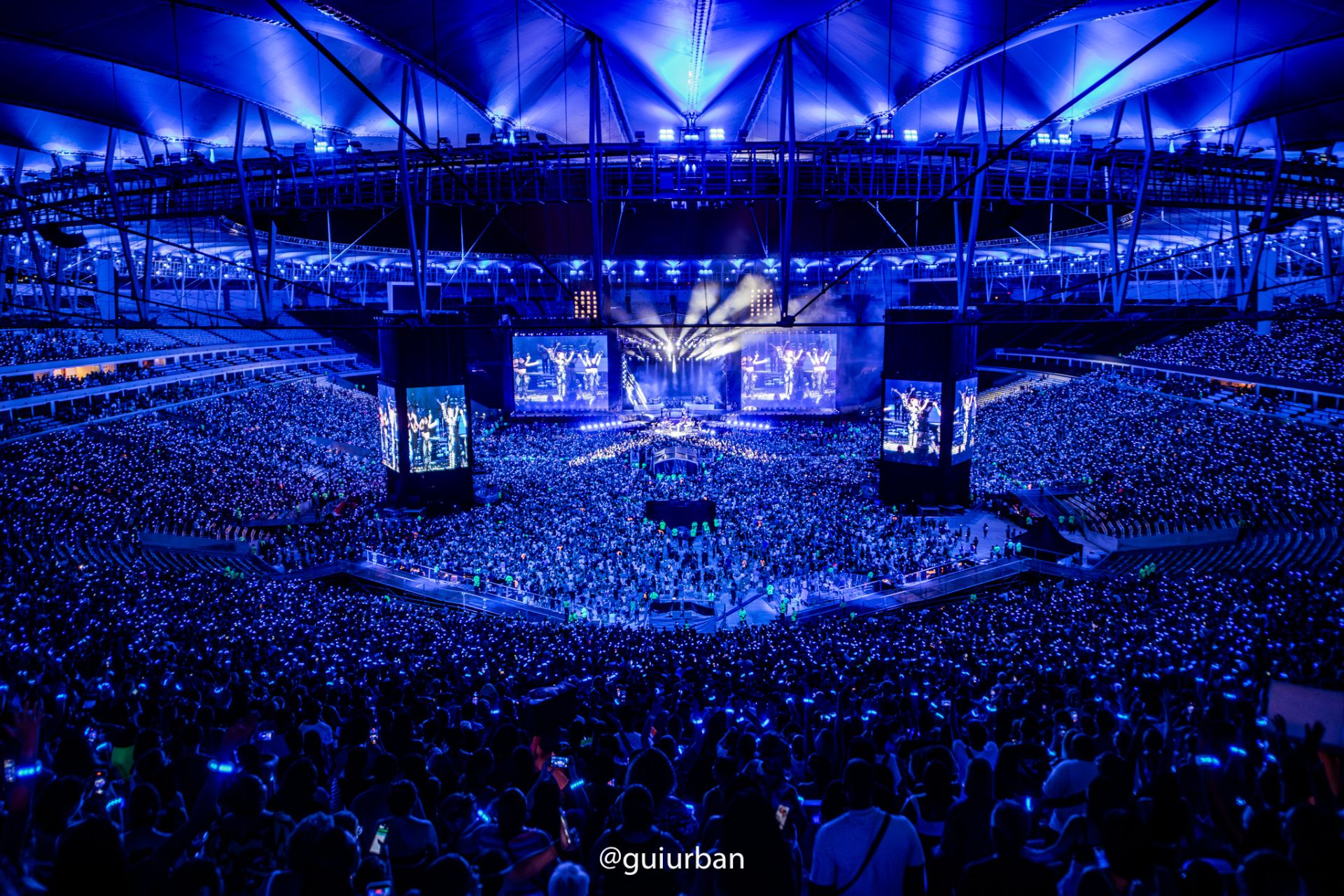
The first challenge in any arena or stadium production is the sheer scale of the environment. When your canvas is measured in hundreds of meters and your audience count exceeds 50,000, traditional stage lighting is only the beginning of the conversation. It forms the focal point, the anchor of the visual experience, but it cannot be the entire story. To truly conquer the space, a designer must think beyond the proscenium and consider every seat, from the front row to the highest tier of the grandstand.
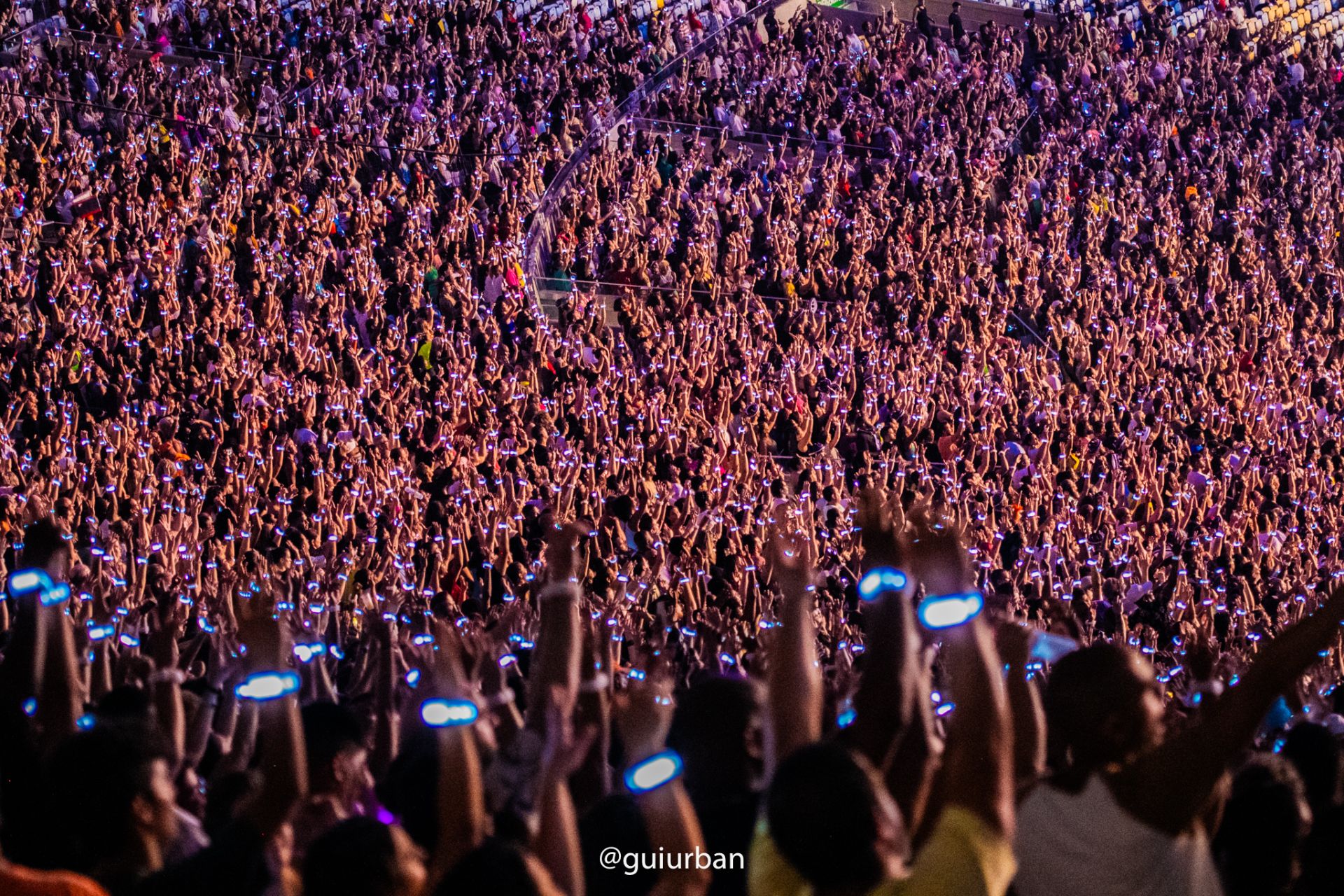
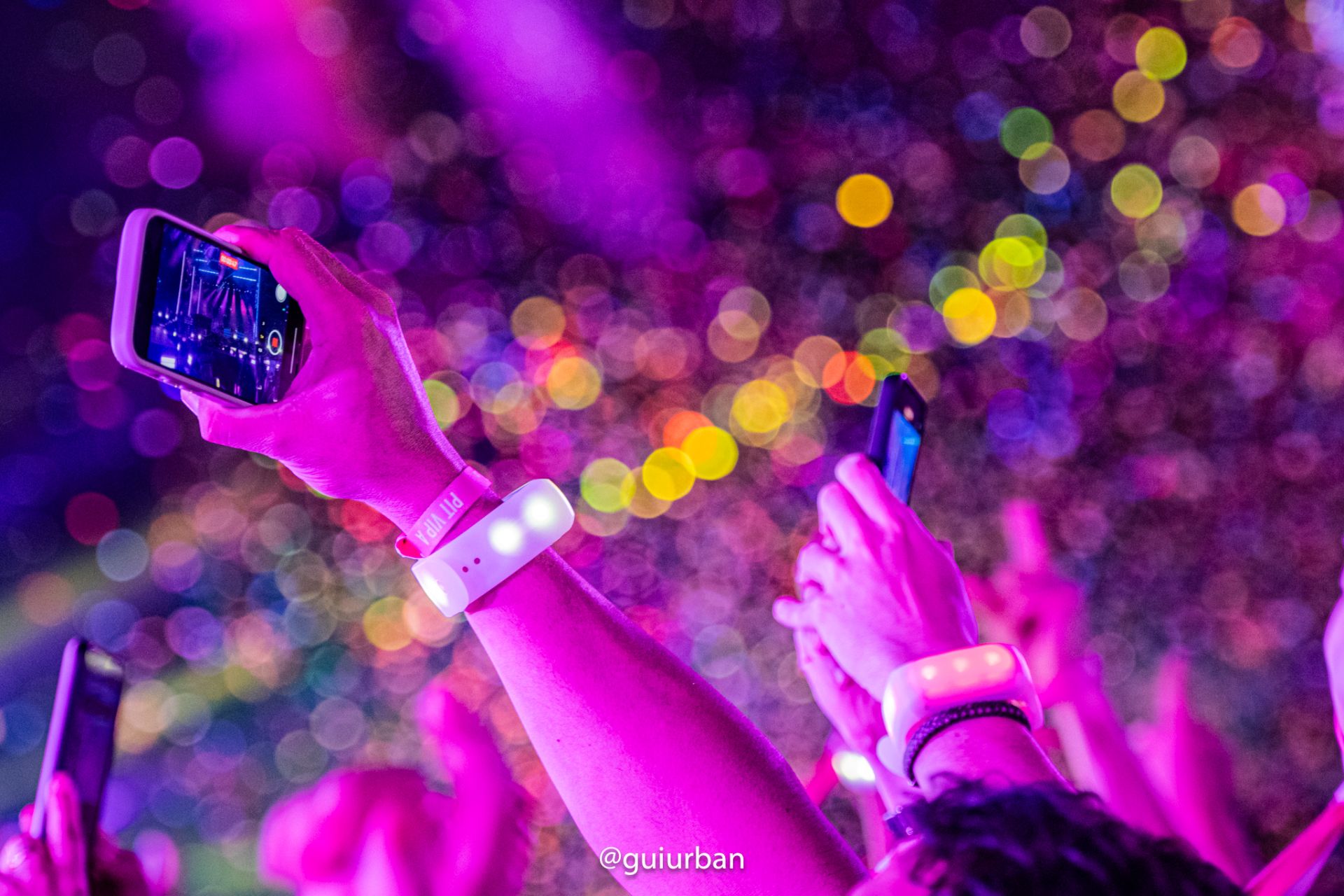
This is where the principle of audience lighting becomes fundamental. The most forward-thinking productions no longer see the crowd as passive observers but as an integral part of the visual architecture. By extending the design into the house, the physical boundaries of the stage dissolve. Technology like radio controlled LED wristbands allows a lighting director to paint with light across a vast human tapestry, ensuring the fans in the back row have a perspective that is just as dynamic and engaging as those at the barrier. Suddenly, the entire volume of the arena becomes a single, cohesive canvas. Every attendee is given a front-row seat to an experience that surrounds them, creating sweeping, panoramic moments that a traditional stage rig alone could never achieve. This is the foundation of truly immersive events.
The Two-Audience Mandate: Designing for the Eye and the Lens
Modern tentpole tours and events are rarely just for the people in the room. They are global broadcasts, live-streamed to millions. This creates a two-audience problem that every lighting designer must solve. The human eye and the camera lens are fundamentally different instruments, perceiving light, color, and intensity in unique ways.
An effect that feels visceral and powerful to the live audience might appear as a blown-out, flickering mess on screen. Conversely, a subtle, cinematic effect optimized for broadcast may be lost entirely in the cavernous space of an arena. The solution lies in a dual design philosophy. For instance, when Maluma’s historic Medellín concert was streamed live to over 240 countries, the lighting had to serve both the 54,000 fans in the stadium and the millions watching at home. This requires meticulous attention to technical details like color temperature, refresh rates, and dynamic range.
LED crowd experiences are a powerful tool in bridging this gap. For the camera, synchronized wristbands provide stunning, wide-angle shots that instantly communicate the energy and scale of the event. For the live attendee, they create a tangible connection to the show and the people around them. It’s a strategy that delivers on both fronts: telegenic grandeur for the broadcast and a deeply personal, immersive experience for the in-person fan.
The Visual Narrative: Choreographing the Emotional Journey
The most effective lighting design tells a story. It’s not a random sequence of dazzling effects but a carefully choreographed narrative that supports the artist’s performance, guiding the audience through an emotional arc. A 90-minute show has peaks and valleys, and the lighting must follow suit. This requires building a consistent visual language.
High-energy anthems might call for rapid-fire strobing, intense color saturation, and full-crowd pulses that turn the stadium into a single, unified heartbeat. For a quiet, acoustic moment, the design might contract, using a single spotlight on the artist while thousands of LED bands emit a slow, gentle glow. This dynamic range is critical for maintaining audience engagement.
The idea for Xylobands itself was born from such a moment, inspired by Coldplay’s performance of “Fix You.” The lyric “Lights will guide you home” sparked the concept of an entire crowd lighting up in unison, a perfect fusion of sonic and visual storytelling. These Coldplay Xylobands demonstrated how wearable LED technology could translate a song’s emotional core into a massive, shared experience.
The Expanded Toolkit: RF, Pixels, and the Sentient Crowd
The execution of these grand designs relies on a sophisticated technological toolkit. While DMX remains the industry standard for controlling stage fixtures, the true revolution in arena lighting has come from decoupling light from the physical rig. Radio Frequency (RF) technology is the engine behind modern LED wearables, giving designers the power to treat every single audience member as an individually controlled pixel.
With radio controlled LED wristbands, a lighting operator can send commands to tens of thousands of devices simultaneously, creating intricate patterns, waves of color, and synchronized flashes that flow across the crowd. This transforms the audience from a passive canvas into a living, sentient video display. The creative possibilities are limitless, extending to other form factors like the custom LED Lanyards used at a recent Formula One anniversary event or the LED Orbs that can turn a space into a three-dimensional light field.
This level of control allows for unparalleled creative expression. A designer can isolate sections of the crowd, create rivalries between seating blocks at a sporting match, or spell out messages across an entire stadium, making the LED event technology an instrument in its own right.
From Spectator to Participant: The Psychology of Shared Light
Ultimately, the most profound principle of modern arena lighting is its focus on the human element. The goal is not just to illuminate a performer, but to unify a crowd. When tens of thousands of individuals are connected by a single, shared visual experience—their concert wristbands all flashing the same color at the same time—it fosters a powerful sense of community.
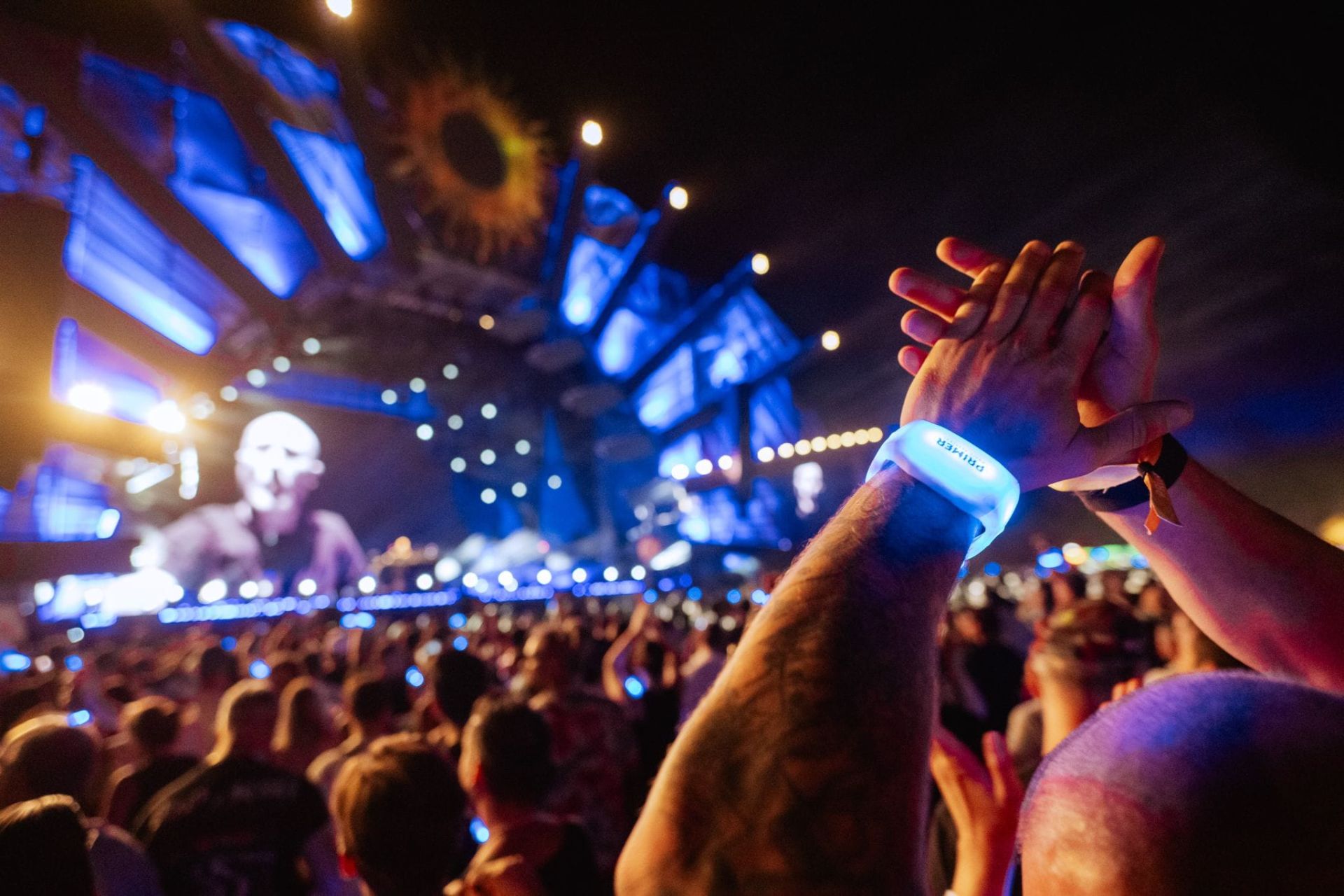
This phenomenon, known as collective effervescence, breaks down the psychological distance between strangers and unites them in a single moment of shared awe. It shifts the attendee’s role from that of a passive spectator to an active participant in the spectacle. We’ve seen this transform the energy at events ranging from Wizkid’s sold-out O2 Arena shows to the massive crowds at Greece’s Primer Music Festival. The light is no longer something you just *see*; it’s something you are *part of*.
By designing for scale, broadcast, narrative, and participation, today’s leading creatives are doing more than just lighting shows. They are building temporary, luminous communities, night after night, in arenas and stadiums around the world.