Decoding the Light Show: The Technology Behind Live LED Experiences
The Unseen Signal: Engineering the Collective Experience
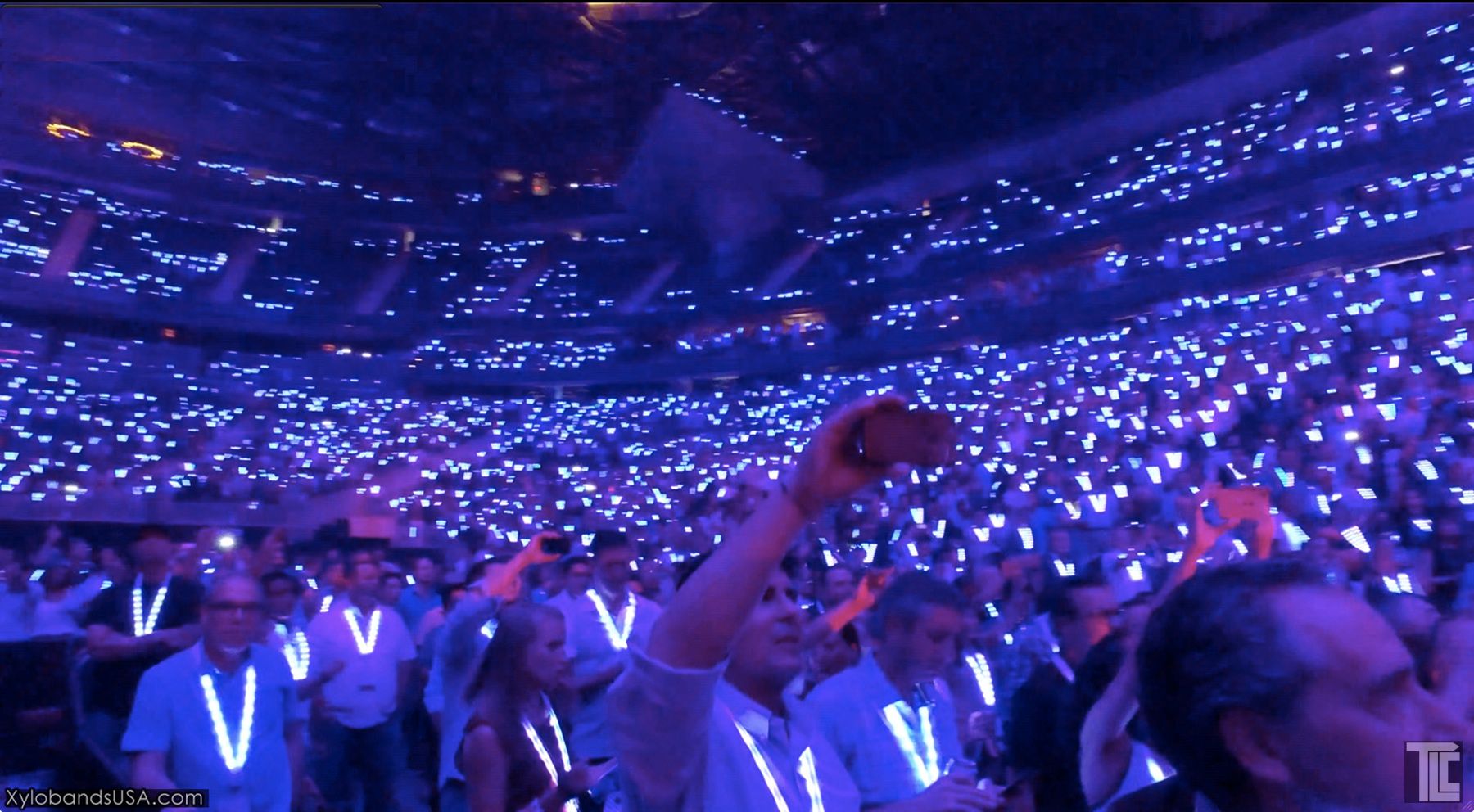
At the heart of every spectacular, crowd-illuminating moment—from a stadium concert to a corporate brand reveal—is a sophisticated technological framework. The sight of tens of thousands of individuals lit in perfect synchrony, their lights dancing to the beat of a song or shifting to create massive, moving images across an arena, is a hallmark of modern Immersive Events. But how is this mass choreography of light achieved? It’s not magic; it’s a masterful application of wireless communication technologies.
The ability to turn a passive audience into an active, integral part of the show is what we specialize in at Xylobands. These LED crowd experiences rely on a robust technical backbone designed for precision, scalability, and reliability in the most demanding live environments. Understanding the technology that powers these LED wristbands reveals a fascinating intersection of broadcast engineering, lighting design, and software programming. Let’s explore the primary methods of control: Radio Frequency (RF), DMX, and Infrared (IR).
The Workhorse of the Arena: Radio Frequency (RF) Control
Radio Frequency is the most common and versatile technology for controlling wearable LED technology on a massive scale. It’s the engine behind the sweeping, arena-wide effects that have become synonymous with artists like Coldplay and global events such as the Formula One 75th Anniversary show.
How It Works
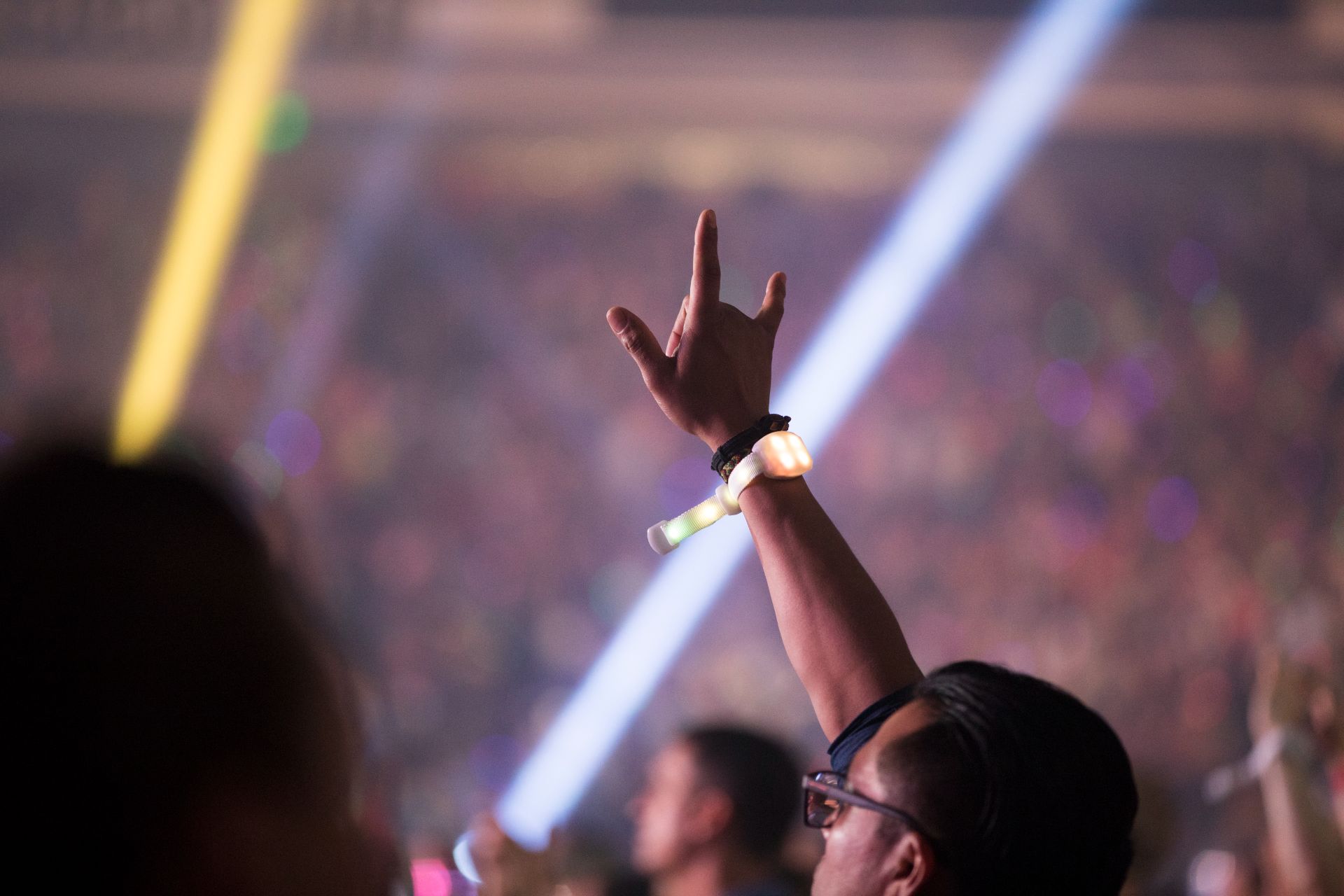
An RF system consists of two main components: a central transmitter and the receivers located within each individual LED band or lanyard. Our proprietary software allows a lighting designer or show operator to program complex sequences of commands. These commands are then broadcast from the transmitter over a specific radio frequency. Each wristband’s receiver is tuned to this frequency, listening for instructions. When a command is received—say, “turn red” or “strobe for two seconds”—the microcontroller in the wristband executes it instantly.
Key advantages of RF for concert wristbands include:
- Range and Scalability: A single RF transmitter can cover a vast area, from an intimate club to a 100,000-seat stadium. The signal permeates the environment, reaching every device regardless of its position or orientation. This makes it ideal for the huge crowds at major music festivals like PRIMER in Greece or for lighting up 54,000 fans at Maluma’s hometown stadium show in Medellín.
- Speed and Synchronicity: RF communication is virtually instantaneous. This allows for the perfect synchronisation needed to make thousands of lights pulse in unison with a musical beat or execute rapid-fire colour changes.
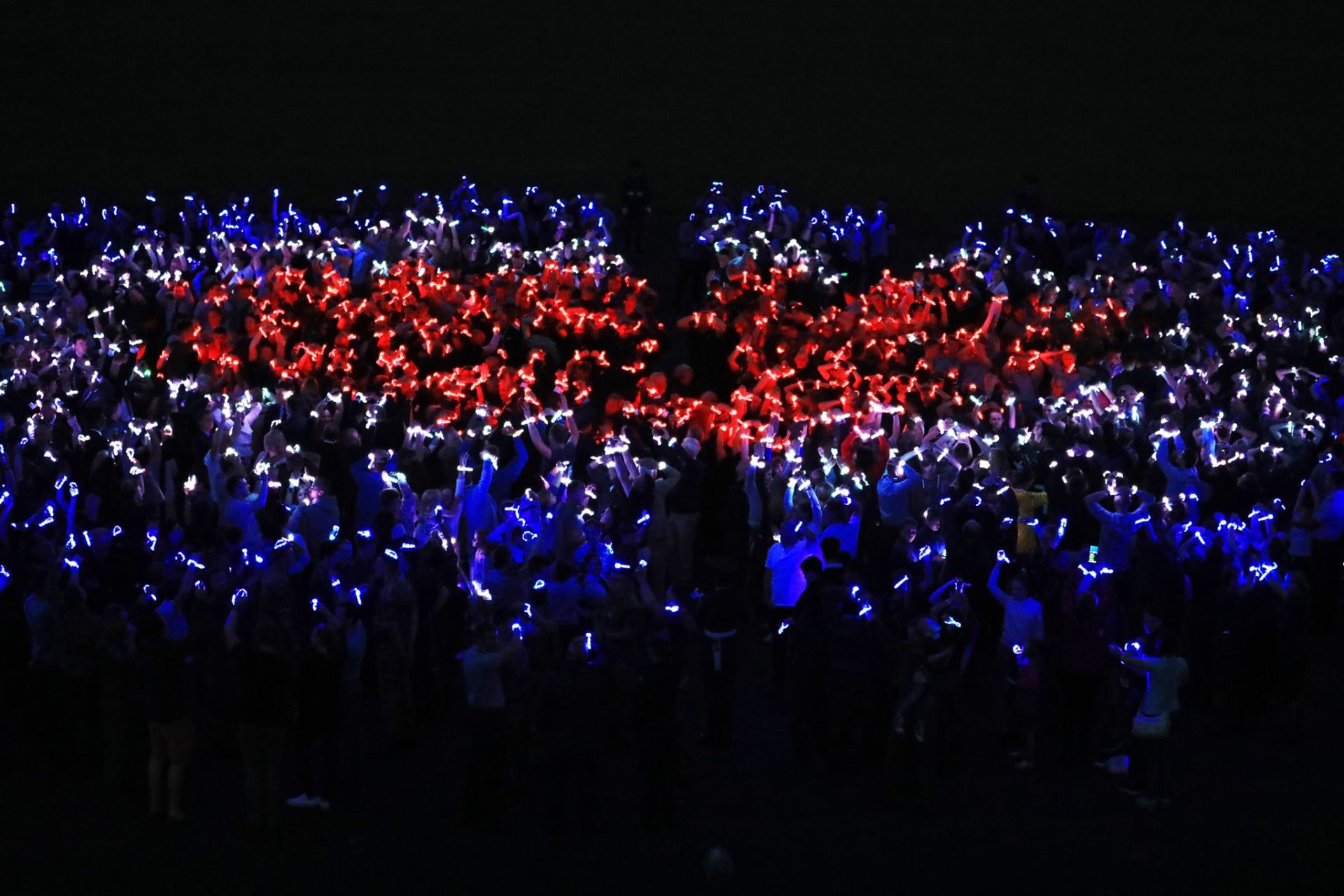
- Zoning and Grouping: Advanced RF systems allow for the segmentation of the audience into zones. By assigning different groups of wristbands to different channels or addresses, a designer can create complex visual patterns. Imagine the home and away sections of a stadium lit in competing team colours at a Davis Cup match, or creating a giant, flowing flag across a festival field. This zoning was critical at the F1 75 show, where we used custom pendants to differentiate between teams and hospitality tiers, enabling dynamic, targeted effects across The O2 Arena.
The Language of Light: DMX Integration
While RF is the vehicle for communication, DMX is the language of professional lighting design. DMX512 (Digital Multiplex) is the industry-standard protocol for controlling stage lighting, from moving heads to fog machines. Integrating our RF system with DMX is what elevates LED wristbands from a standalone effect to a fully assimilated element of the overall production design.
Bridging the Gap
Our system acts as a bridge between the lighting designer’s console and the thousands of Xylobands in the audience. The lighting operator can program the wristbands just like any other fixture in their lighting rig. They can create cues, build effects, and control colours and brightness directly from their grandMA, Hog, or Avolites console. Our transmitter takes these standard DMX commands and translates them into our proprietary RF signal, broadcasting them to the crowd.
This integration is crucial. It means the LED experiences are not an afterthought but a core part of the creative vision, perfectly in sync with the stage lighting, video content, and laser effects. The entire venue, from the stage to the back row, becomes a single, unified canvas.
Up Close and Personal: Infrared (IR) Triggers
While RF excels at covering vast areas, Infrared (IR) technology offers a solution for precise, location-specific activation. It operates on a line-of-sight basis, similar to a television remote control. This characteristic makes it ideal for creating interactive zones and surprise moments within an event space.
How It Works
Small, discreet IR transmitters are placed strategically throughout a venue—at entrances, within brand activation zones, or along a specific path. When a wristband comes within the defined range and line of sight of a transmitter, it receives a specific command. This could trigger a unique colour change, a special flashing pattern, or a welcome message.
This technology is incredibly effective for corporate event activations. Imagine a trade show where attendees’ custom LED wristbands light up with a specific brand’s colour as they approach a booth, or a gala where lanyards illuminate as guests enter the main ballroom. It creates a personalized, responsive experience that adds a layer of digital magic to the physical environment.
The Power of Combination
The true potential of immersive event technology is unlocked when these systems are used in combination. A typical large-scale event might use RF for the main show’s sweeping, all-audience moments, controlled via a DMX console. Simultaneously, IR transmitters could be deployed at concession stands or partner activations to create localized engagement. This multi-layered approach allows for a dynamic and varied experience, keeping the audience engaged from the moment they walk in to the final encore.
From the massive, broadcast-ready spectacles for clients like ITV to the high-energy concerts of global artists like Wizkid, the underlying technology is what makes these moments of collective joy possible. It is a silent, invisible force that transforms thousands of individuals into a single, sentient light show, forever changing the relationship between the performer and the crowd.