The Invisible Signal: Decoding the Tech Behind LED Wristbands
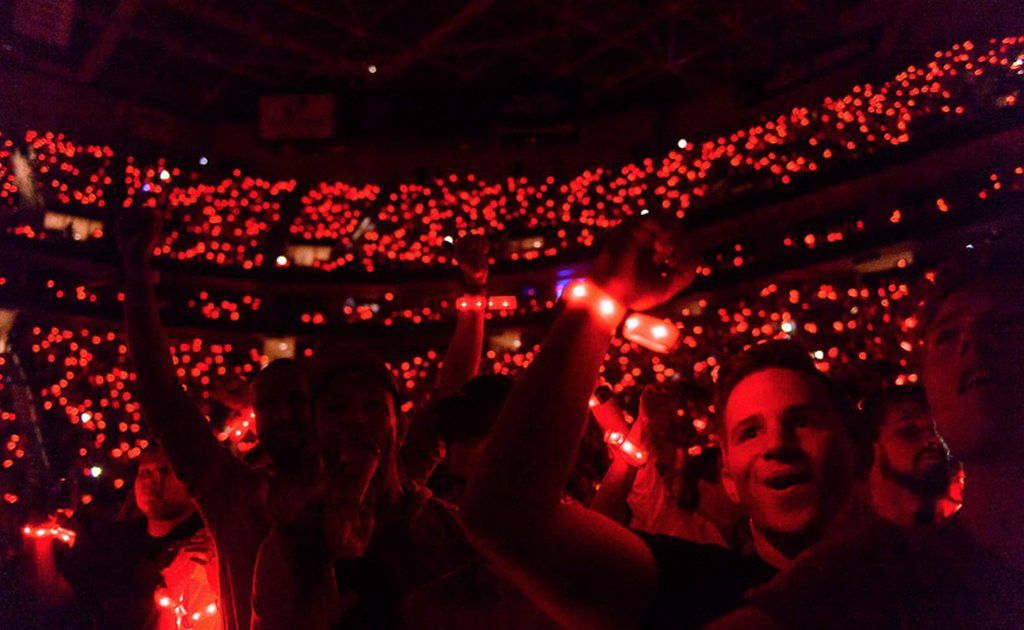
At the heart of every spectacular, large-scale light show is a technology designed to be invisible. It’s the silent conductor behind the roar of the crowd, the unseen force that unifies thousands of individuals into a single, pulsating entity. For event producers, tour managers, and brand marketers, understanding this technology is key to unlocking its immense potential for creating immersive events. This is the world of wearable LED technology, a realm where radio frequencies, light-based triggers, and complex control systems converge to create unforgettable LED crowd experiences.
The Core Principle: Remote Control on a Massive Scale
At its most fundamental, a network of LED wristbands or LED lanyards is a system of remote-controlled lights. Each wristband contains a receiver and one or more LEDs. A central transmitter, controlled by a lighting designer or technician, sends signals that tell the wristbands when to light up, what color to display, and how to pulse or flash. The genius lies in the method of that transmission. The three primary technologies that make this possible are Radio Frequency (RF), DMX, and Infrared (IR).
1. Radio Frequency (RF): The Workhorse of Arenas
RF is the most common and robust technology for controlling Xylobands in large-scale environments like stadiums, arenas, and festivals. It operates on the same principles as a car radio, but with far more precision.
- How it Works: A powerful, proprietary transmitter sends out encoded radio signals across a specific frequency. This transmitter is often managed via a laptop running specialised software, allowing a designer to pre-program complex sequences or operate the system live. Each wristband is programmed to listen for signals on that specific frequency. The signal can carry instructions for tens of thousands of wristbands simultaneously, telling them to change color, strobe, or fade in perfect sync with a musical cue or a dramatic moment.
- Zoning for Complex Effects: The real power of RF technology lies in zoning. Before an event, wristbands can be programmed into different groups or zones. This allows a designer to create sophisticated visual effects, such as sending waves of color across a stadium, isolating specific sections of the crowd, or creating intricate patterns. For a major event like the Formula One 75th-anniversary show, our team strategically positioned custom LED pendants around The O2 Arena, pre-assigned to zones to create dynamic, targeted effects that were integral to the broadcast.
- Advantages: RF is powerful, capable of covering vast areas (up to 800-1000 meters from a single transmitter), and can pass through obstacles like people and staging. This makes it ideal for the unpredictable and sprawling environment of a modern festival or a packed stadium, as seen at events like Greece's PRIMER Music Festival.
2. DMX: The Language of Professional Lighting
While RF provides the broad communication, DMX (Digital Multiplex) integration offers granular, pixel-level control. DMX is the industry-standard protocol used to control stage lighting, fog machines, and other professional effects. By integrating radio controlled LED wristbands into a DMX workflow, the crowd itself becomes another fixture in the lighting designer’s toolkit.
- How it Works: A DMX-to-RF converter acts as a bridge. The lighting designer’s main console sends standard DMX commands, which the converter translates into the RF signals the wristbands understand. This means the LED bands can be programmed and controlled with the exact same software and hardware used for the main stage lights.
- The Creative Advantage: This integration is a game-changer for creative directors. It allows for seamless visual harmony between the stage and the audience. A color wash that starts on the stage can flow directly into the crowd, or the wristbands can flash in perfect time with complex strobe sequences. It transforms the audience from passive observers into an active part of the lighting design—a living, breathing extension of the stage production.
3. Infrared (IR): For Precision and Proximity
Infrared offers a more localized and targeted method of control. Unlike the wide broadcast of RF, IR uses beams of light to transmit data, similar to a television remote control. This has unique applications for corporate event activations and interactive installations.
- How it Works: Small IR transmitters can be placed in specific locations—a doorway, a particular zone in an exhibition hall, or near a product display. When an attendee wearing a wristband passes through the IR beam, it triggers a specific, pre-programmed action in their wristband.
- Use Cases for Interactivity: Imagine an attendee entering a specific product zone at a trade show, and their wristband immediately glows with the brand’s color. Or consider a charity gala where wristbands light up as guests enter the main ballroom, creating a magical welcome moment. This proximity-based activation allows for a more personal and interactive layer, turning the immersive event technology into a tool for guiding attendees and creating bespoke experiences.
Bringing It All Together: The Art and Science
The true magic happens when these technologies are combined. An event might use a primary RF system for the main show’s large-scale effects, integrated via DMX for perfect synchronisation with the stage lighting. At the same time, IR triggers could be placed at entry and exit points to create welcome and farewell sequences. It’s this multi-layered approach that allows for the creation of deeply engaging and dynamic environments.
From the first Coldplay Xylo Band on the Mylo Xyloto tour to the millions of concert wristbands now lighting up shows for artists like Wizkid and Maluma, the technology has continuously evolved. Yet the goal remains the same: to dissolve the barrier between the artist and the audience, the brand and the attendee. By understanding the invisible signals that connect the crowd, we can design more powerful, more unified, and more human experiences.