The Misfit Advantage: How Neurodiverse Thinking Revolutionised Live Events
The Pattern in the Noise
In the world of business, particularly in sectors built on spectacle and innovation, there’s a common narrative that celebrates the linear thinker, the data-driven strategist, the meticulous planner. But what if the most disruptive ideas don’t come from following the script, but from being unable to read it in the first place? What if the blueprint for the future is being drafted by minds that operate outside the conventional lines?
Dyslexia is often misunderstood as a simple reading disorder. In reality, it’s a different way of processing information. Dyslexic minds often excel at big-picture thinking, spatial reasoning, and identifying complex patterns that others miss. They are hardwired to see the connections, not just the components. In the high-stakes, multi-sensory world of large-scale event production, this isn’t a disadvantage; it’s a superpower.
A Different Kind of Blueprint
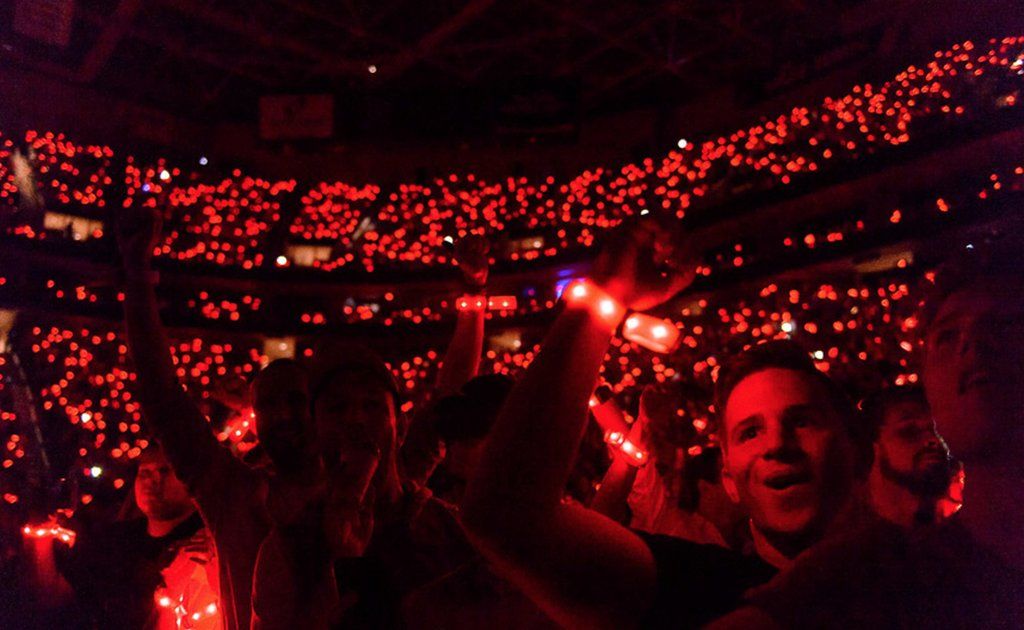
The story of Xylobands is a powerful testament to this principle. Our founder, Jason Regler, had a vision while watching Coldplay at Glastonbury. As the band played "Fix You," he didn’t just hear the music; he saw it. He envisioned a future where the audience wasn’t just a passive observer but an integral, illuminated part of the show itself. This wasn’t a linear, step-by-step deduction. It was a holistic, intuitive leap—a hallmark of dyslexic thinking.
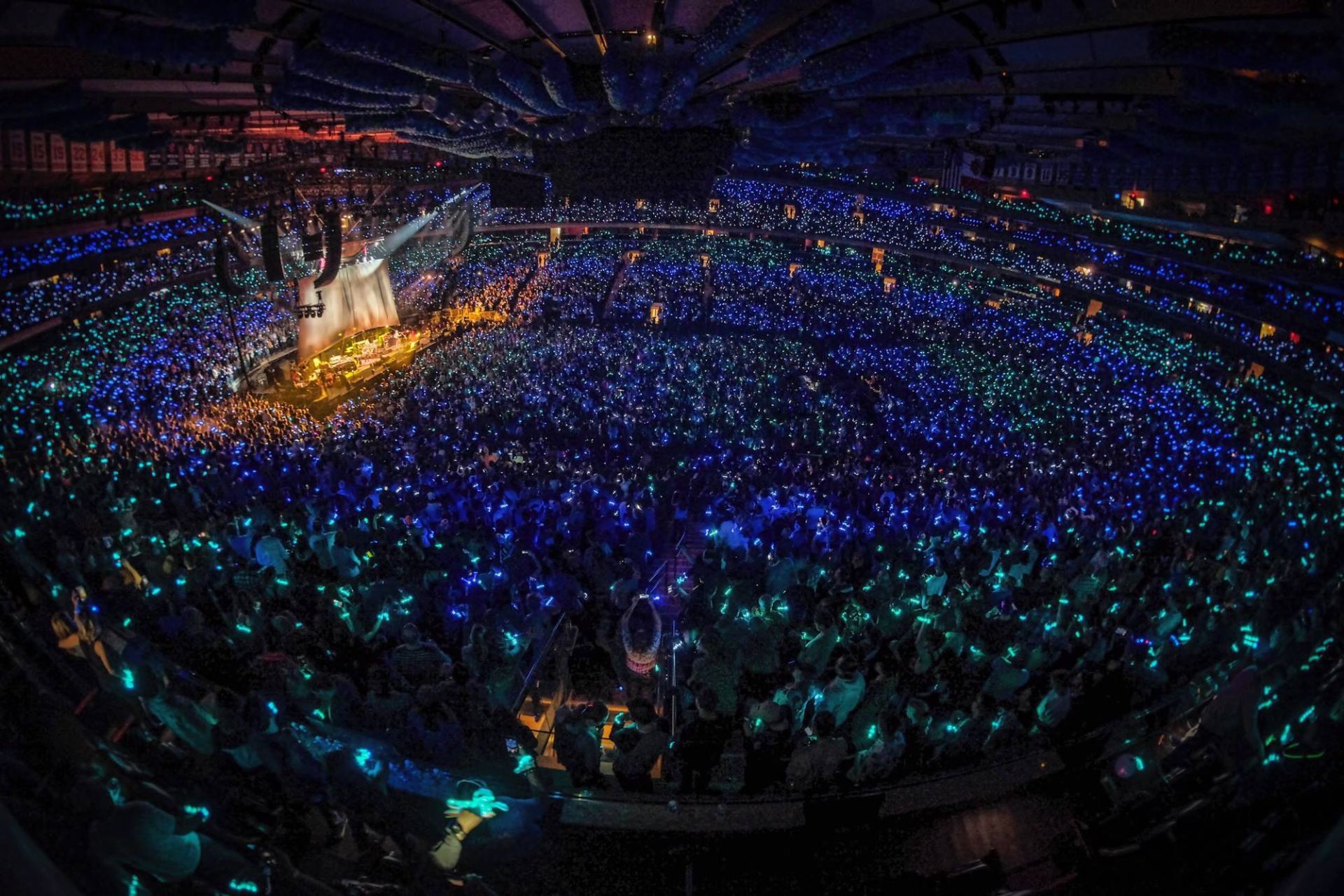
He imagined a sea of individuals, each a single point of light, unified into a single, breathtaking canvas. This ability to mentally zoom out and see the entire system—the stage, the artist, the crowd, the energy—as one interconnected entity is a distinct cognitive advantage. It’s what allows for the creation of genuinely immersive events, where technology and human experience merge seamlessly.
“The challenge was never just about technology. It was about connection. It was about taking the energy of 50,000 individuals and weaving it into a single, shared moment. That kind of problem-solving requires you to see the world differently.”
Building the Vision, One Light at a Time
Bringing this vision to life required translating a creative impulse into a robust technological reality. The development of radio controlled LED wristbands was a journey of relentless problem-solving. How do you ensure tens of thousands of devices respond instantly and reliably in a stadium environment saturated with radio frequencies? How do you manage logistics, deployment, and collection on a global scale, from a Formula One celebration in London to a Maluma concert in Medellín?
This is where the dyslexic knack for 3D thinking and practical, hands-on problem-solving comes to the forefront. When you can’t rely on dense manuals, you learn to build, to test, to iterate. You develop an intuitive feel for how systems work, not just in theory, but in practice. This mindset has been central to the evolution of our wearable LED technology, from the first prototypes used by Coldplay to the sophisticated LED lanyards and custom shapes seen at major corporate and sporting events today.
The Neurodiverse Advantage in Modern Production
The live events industry is in a constant state of flux. The demand for more engaging, more memorable, and more shareable moments has never been higher. Corporate event activations and festival wristbands are no longer just about access; they are about experience. They are tools for turning a passive crowd into an active participant.
Meeting this demand requires a team that thinks differently. It requires the pattern-seekers who can anticipate trends, the visual thinkers who can imagine new canvases for light, and the holistic problem-solvers who can orchestrate the complex dance of technology, logistics, and creative vision. Neurodiversity isn’t a box to be ticked for corporate social responsibility; it’s a strategic imperative for any organisation that wants to innovate.
Key Advantages of a Neurodiverse Approach:
- Big-Picture Thinking: The ability to see the entire ecosystem of an event, from fan psychology to technical execution, and identify opportunities for innovation that others miss.
- Complex Problem-Solving: A natural aptitude for untangling complex, multi-faceted challenges by approaching them from unconventional angles.
- Creativity and Innovation: A tendency to connect seemingly disparate ideas, leading to groundbreaking concepts for LED crowd experiences and immersive design.
- Resilience: A lifetime of navigating a world not built for your brain fosters a unique brand of resilience and a powerful drive to prove naysayers wrong.
From Glastonbury to the Davis Cup, from international music festivals like Primer to broadcast spectacles with ITV, the goal remains the same: to create moments of collective wonder. These moments are not born from spreadsheets alone. They are born from a spark of unconventional thinking, fanned into flame by a team that embraces diverse perspectives. As the industry continues to evolve, the companies that will lead the way are not those who think alike, but those who have learned to harness the creative power of thinking differently. The future of immersive event technology will be built by the misfits, the dreamers, and the dyslexic visionaries who were always seeing the world in a different light.