The New Super Bowl: Deconstructing the Modern Halftime Spectacle
The Fifteen-Minute Mandate
The clock starts, and the world holds its breath. For the next fifteen minutes, the manic energy of a championship game gives way to a spectacle of a different sort. A modular stage glides into position, an army of technicians swarms the field, and a global superstar prepares to command the attention of over 100 million people. This is the modern halftime show—a show within a show, and arguably, the most technically demanding and logistically complex fifteen minutes in live entertainment.
It’s a far cry from the marching bands and local drill teams of a bygone era. Today’s halftime production is a full-scale arena tour, compressed and deployed with military precision. The stakes are immense, not just for the artist, but for the brands, broadcasters, and leagues involved. In this high-pressure environment, every single element must be flawlessly executed. There are no second takes. For the event producers and tour managers orchestrating these moments, it represents a unique challenge: how do you create a stadium-sized spectacle that feels intimate, engages a live audience of 80,000, and translates powerfully to a broadcast audience of millions—all within a time frame that leaves zero room for error?
The Multi-Layered Performance
The answer lies in a new form of choreography, one that extends far beyond the dancers on stage. The true performance is a complex layering of light, sound, video, and human logistics. Every roadie, every cable, every pixel on the screen is part of a meticulously planned sequence. But a new layer has been added in recent years, one that transforms the very architecture of the event: the crowd itself.
For decades, the audience was a passive observer. Today, thanks to the advent of wearable LED technology, the crowd has become the final, crucial layer of the production canvas. They are no longer just spectators; they are an integral, dynamic part of the lighting design. This shift in thinking, pioneered by Xylobands on Coldplay’s Mylo Xyloto tour, has fundamentally altered the playbook for large-scale sports entertainment, from the Davis Cup to Formula One.
From Passive Audience to Active Canvas
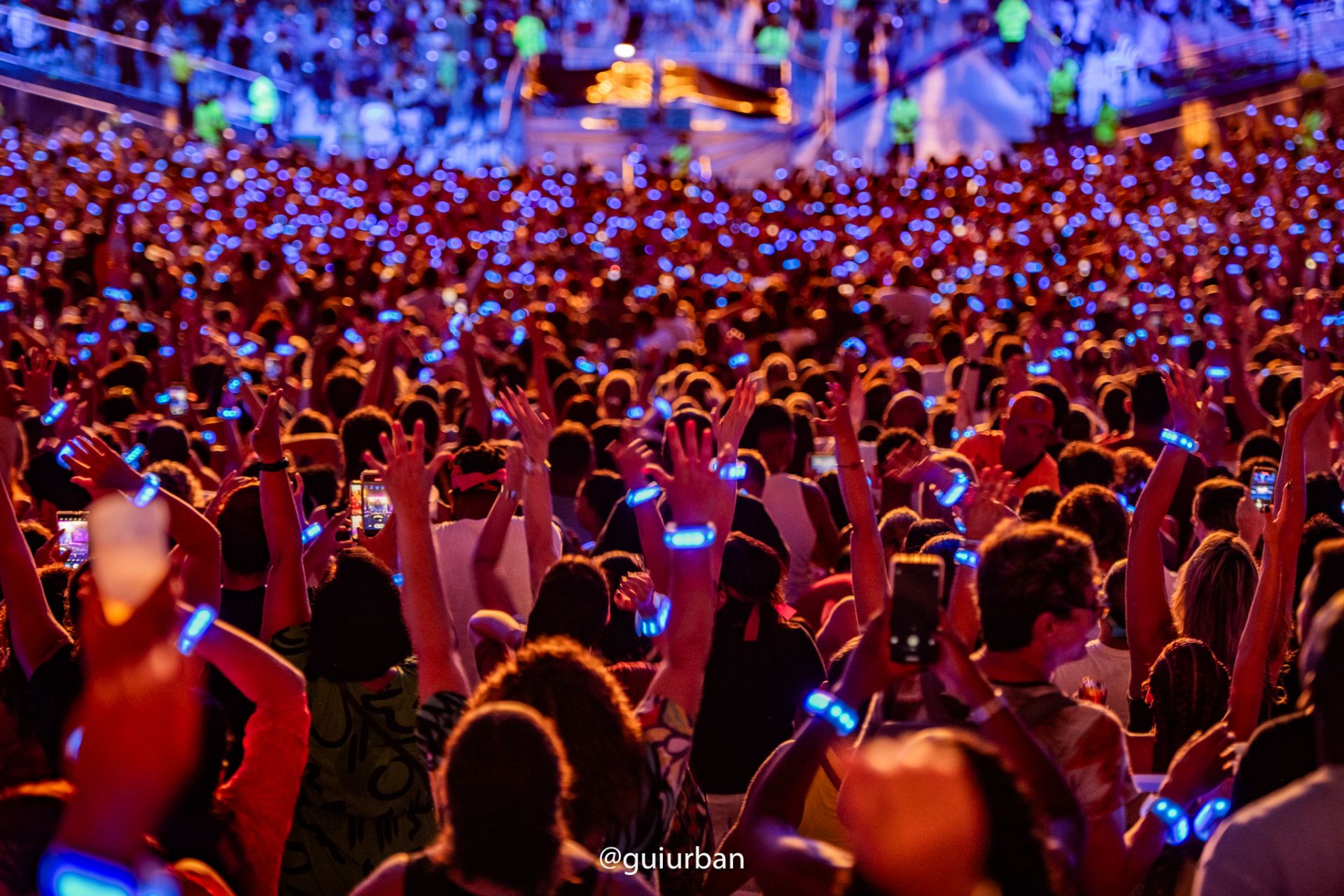
The concept is rooted in a simple but powerful idea: what if every person in the stadium could become a pixel in a grand, unified image? By equipping attendees with radio-controlled LED wristbands, lighting designers can effectively paint with the audience. This is the core of creating modern LED crowd experiences.
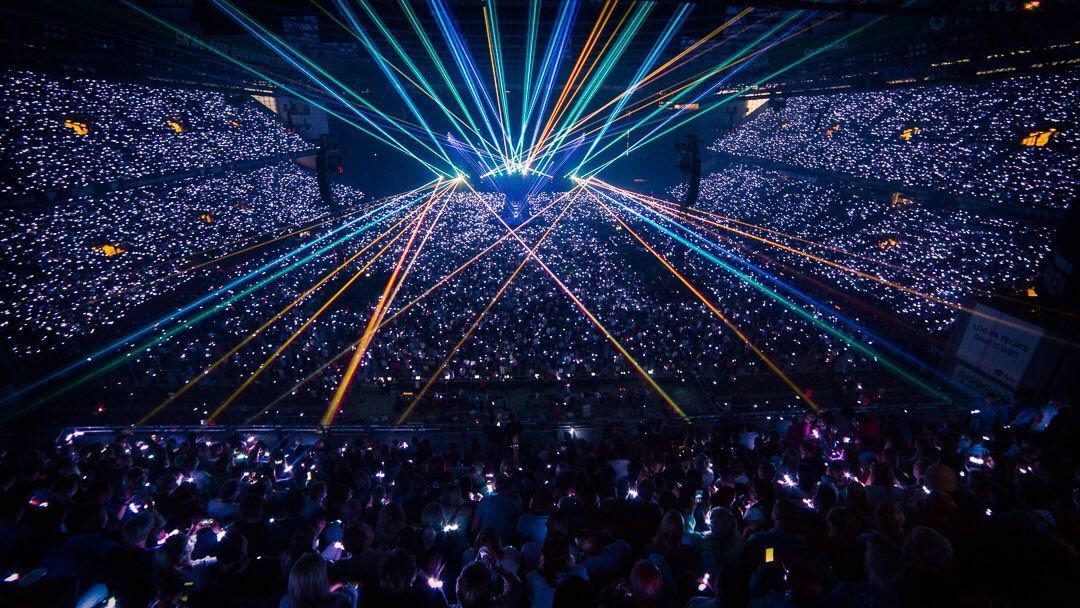
The process turns an entire stadium bowl into a 360-degree video screen. Suddenly, the lighting design is not just hitting the stage from above; it’s radiating from the very heart of the crowd. Complex chases, color blocks, and synchronized pulses can flow through the stands, perfectly timed to the music and on-field action. It creates a breathtaking sense of scale for the broadcast audience while fostering an unparalleled feeling of unity and participation for those in their seats. They aren’t just watching the show—they are the show.
The Technical Choreography of Light
Making this happen requires a staggering level of technical precision. It begins long before the doors open, with our teams mapping the venue and zoning the stadium’s seating chart into hundreds of programmable groups. This allows for incredibly granular control. An operator can isolate the upper deck, create a pattern that swirls around the bowl, or flash the colors of the home team on one side of the stadium and the away team on the other.
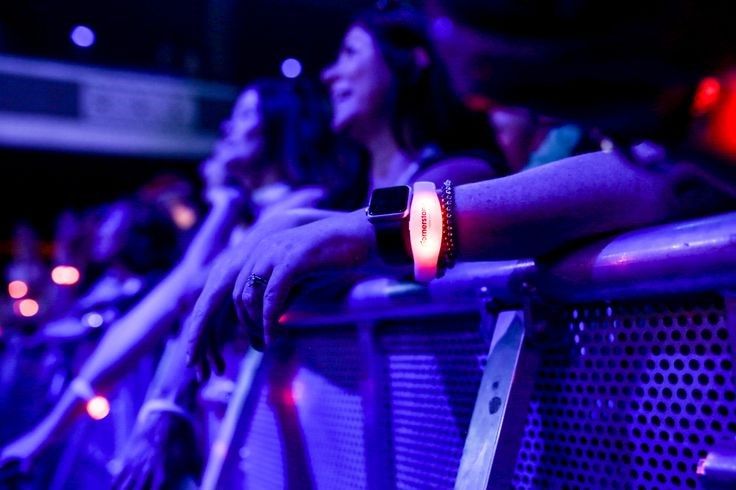
During the show, a dedicated operator cues these effects live from a control station, using a powerful RF transmitter to send signals to tens of thousands of LED bands or, in some cases, custom LED lanyards like those we developed for a recent Formula One anniversary event. The technology allows for spontaneity and precision, integrating the crowd’s energy directly into the narrative of the performance.
- Synchronization: The wristbands are synchronized to the microsecond with the show’s master timecode, ensuring they align perfectly with music, pyrotechnics, and video content.
- Zoning: The stadium is divided into programmable zones, allowing designers to create intricate, moving patterns across the audience.
- Narrative Arc: The lighting effects are used to underscore the emotional journey of the performance—a slow, warm glow for a ballad, or a frantic, high-energy strobe for a finale.
Beyond the Halftime: A New Era of Immersive Events
This approach to audience choreography is redefining not just the halftime show, but the entire landscape of live sports presentation. Pre-game ceremonies, player introductions, and championship celebrations are now opportunities for immersive event technology to amplify the emotional stakes. We’ve seen its power in unifying crowds at global events like the FIFA World Cup and the electrifying walk-outs at UFC fights.
As streaming continues to bring these events to a global audience, as seen with Maluma’s landmark concert in Medellín streamed to over 240 countries, the need to translate in-venue energy to the screen becomes even more critical. A stadium illuminated from within, pulsing with the collective energy of its fans, provides a visual spectacle that no traditional lighting rig can replicate. It’s a testament to a new reality in live production: the most powerful element of any event is the shared human connection. The future of the spectacle isn’t just about what happens on the stage; it’s about the unified, illuminated energy of the crowd.