The Unseen Signal: A Technical Deep Dive into LED Wristband Technology
The Unseen Signal: A Technical Deep Dive into LED Wristband Technology
At the heart of every jaw-dropping light show is a technology designed to be invisible. When tens of thousands of individual lights across a stadium ignite in perfect unison, it feels like magic. But it’s not magic—it’s a finely-tuned symphony of engineering, programming, and radio physics. At Xylobands, we turn crowds into canvases, creating immersive event technology that connects artists, brands, and fans on a massive scale.
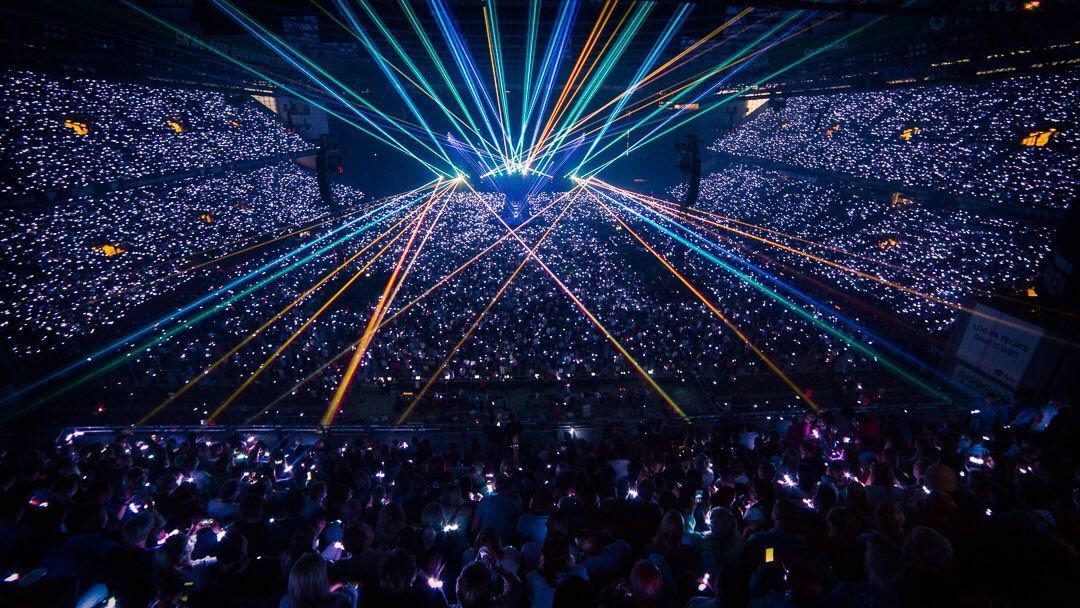
From the roaring stadiums of the Davis Cup to the electric energy of music festivals like Primer, our wearable LED technology transforms passive audiences into active participants. But how does it actually work? How can a single command instruct thousands of LED bracelets to flash, fade, and change colour in flawless synchronicity? This technical deep dive explores the core technologies that power Xylobands: Radio Frequency (RF), DMX, and Infrared.
Radio Frequency (RF): The Workhorse of Arena-Scale Spectacles
Radio Frequency is the backbone of most large-scale LED crowd experiences. It’s the same fundamental technology that delivers radio broadcasts to your car, but harnessed to transmit data commands to our wristbands. Our proprietary system operates from a central transmitter, sending signals across a designated area—from an intimate theatre to a sprawling stadium.
Here’s a simplified breakdown of the process:
- The Command Hub: Our show programmers operate from a laptop running specialised software. This is where the light show is designed, cue by cue. They can create complex sequences, colour changes, and strobing effects, assigning them to different groups of wristbands.
- The Transmitter: The laptop is connected to a powerful RF transmitter. This device converts the digital commands from the software into radio signals. These signals are broadcast across the venue on a specific, licensed frequency to avoid interference with other wireless systems.
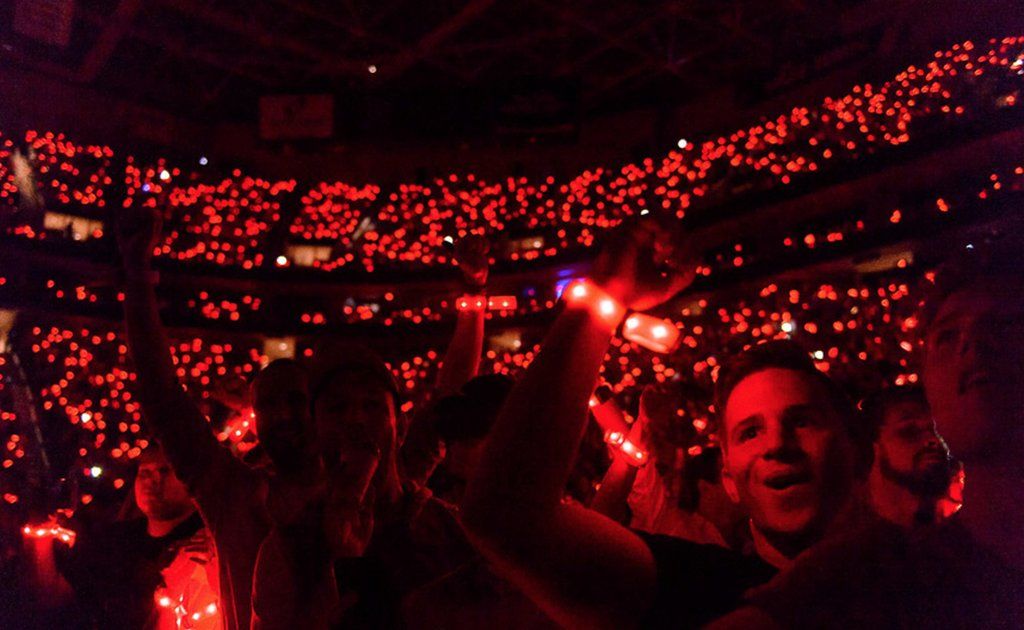
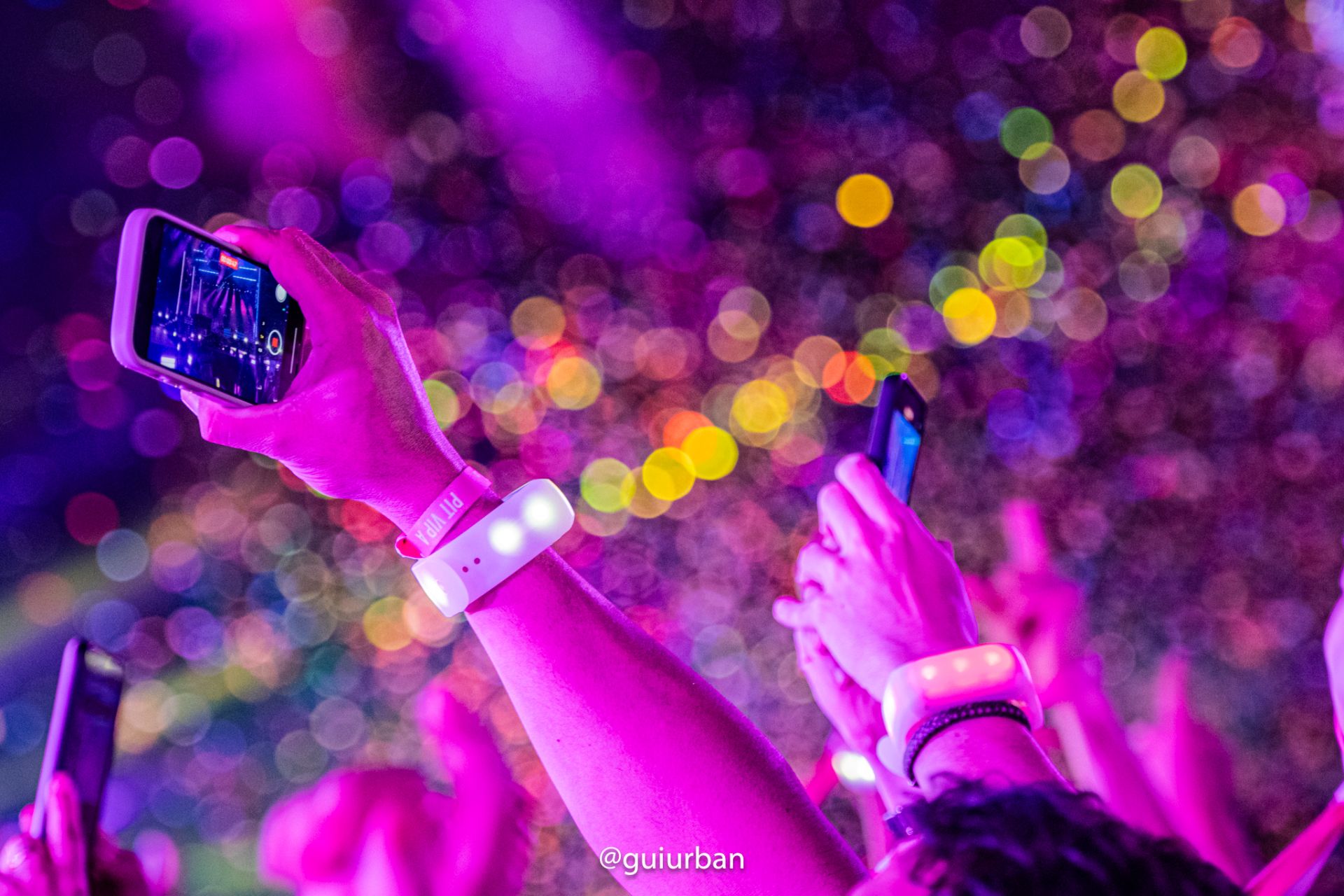
- The Receiver: Every single Xyloband contains a tiny, low-power RF receiver. Each wristband is pre-programmed into zones or groups before the event. This allows our technicians to control different sections of the audience independently. We can make the entire North stand blue while the South stand turns red, or create rippling patterns that flow across the crowd.
- Execution: When the receiver in a wristband detects a signal addressed to its group, it triggers the corresponding command—light up, change colour, flash. The response is instantaneous, allowing for the real-time synchronisation that makes Coldplay Xylobands shows so iconic.
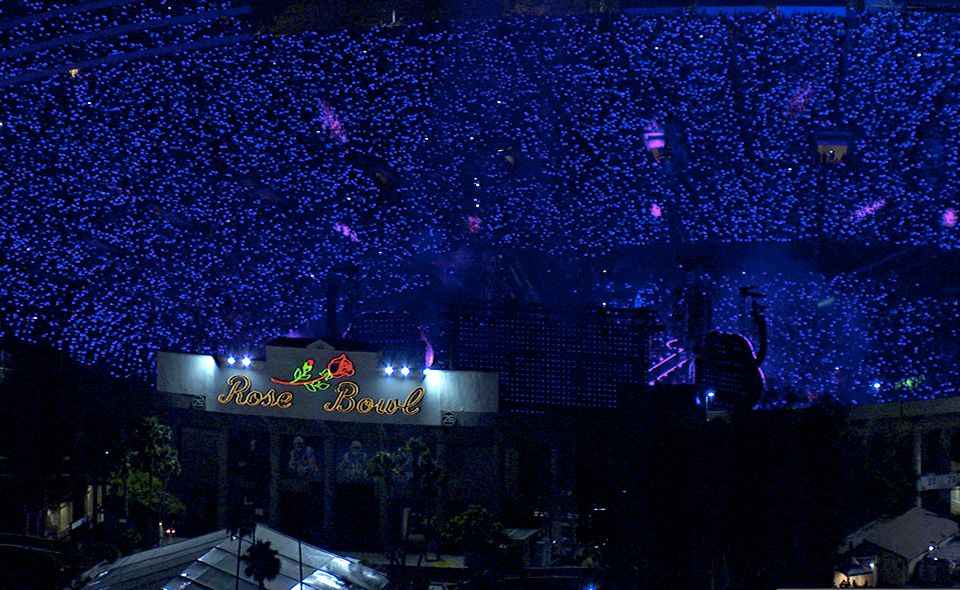
The beauty of RF technology is its scalability and range. For global tours and massive one-off events like Maluma’s historic Medellín concert, our RF system can reliably cover over 800 metres, ensuring every single one of the 54,000 fans becomes part of the show. This is the technology that allows an entire stadium to pulse with the same heartbeat.
DMX Control: The Language of Professional Lighting
While RF is perfect for broad, sweeping commands, sometimes a production demands more granular control, perfectly integrated with a venue’s existing lighting rig. This is where DMX comes in.
DMX (Digital Multiplex) is the industry-standard protocol for controlling professional stage lighting, from moving heads and spotlights to fog machines. By integrating our system with DMX, we allow a show’s lead lighting designer to control the concert wristbands as if they were another fixture in their rig. They can program the wristbands on the same lighting desk they use for the rest of the show, ensuring the crowd lighting is perfectly woven into the wider visual narrative.
This was critical for the F1 75th Anniversary event at The O2 Arena. The show’s creative team needed to integrate dynamic effects across custom-branded LED lanyards worn by 13,000 attendees. Using a DMX bridge, the lighting director could trigger precise effects on the pendants that synchronised flawlessly with the main stage lighting and broadcast cues. This turns the audience from a simple backdrop into a dynamic, living extension of the stage design itself—a crucial element for creating camera-ready moments for a global broadcast.
Infrared (IR): Precision for Intimate and Interactive Moments
Sometimes, the goal isn’t to light up a whole stadium, but to trigger a specific, localised experience. This is where Infrared (IR) technology offers a powerful solution. Unlike the wide broadcast of RF, IR uses focused beams of light (invisible to the human eye) to transmit signals over shorter distances.
Think of it like your television remote. It only works when you point it at the TV. We use this same principle to create interactive zones at corporate event activations or within specific areas of a festival.
By placing small, discreet IR transmitters at entrances, over interactive displays, or along a specific path, we can trigger wristbands to light up as a guest walks past. This creates a personal sense of discovery and magic.
This technology is ideal for:
- Interactive Installations: Imagine an attendee’s wristband changing colour as they approach a sponsor’s booth, drawing their attention and creating a moment of engagement.
- Gamification: At a family event or festival, IR triggers can be part of a scavenger hunt, with wristbands lighting up to confirm a checkpoint has been reached.
- Broadcast Studios: For television shows like ITV's Beat The Chasers, IR offers pinpoint accuracy within the controlled environment of a studio, ensuring audience lighting cues are hit perfectly for the cameras.
The Convergence of Technologies
The true power of modern LED event technology lies in the ability to combine these systems. At a large-scale festival, we might use our powerful RF system for the main stage performances, blanketing the entire audience in light. Simultaneously, we could deploy IR triggers at sponsor tents for interactive brand moments, and use a DMX bridge for a specific DJ set where the artist wants to control the crowd’s wristbands themselves.
From festival wristbands that unite 80,000 fans to custom LED wristbands that create personal moments at a product launch, the underlying technology is a versatile toolkit. It’s a silent, robust, and powerful medium for turning a simple gathering into one of the truly immersive events that people remember for a lifetime. The light show isn’t just something they watch; it’s something they become part of.