Beneath the Light: Deconstructing the Technology of Immersive Crowd Experiences
The Unseen Frequency: Translating Emotion into Light
At the heart of every large-scale light show, from a stadium concert to a corporate event activation, is a fundamental question: how do you command tens of thousands of individual lights to act as one? The answer lies in the invisible world of radio frequency (RF) technology. Xylobands and other wearable LED technology rely on a central transmitter, operated by a lighting designer, to send signals to every wristband in the venue.
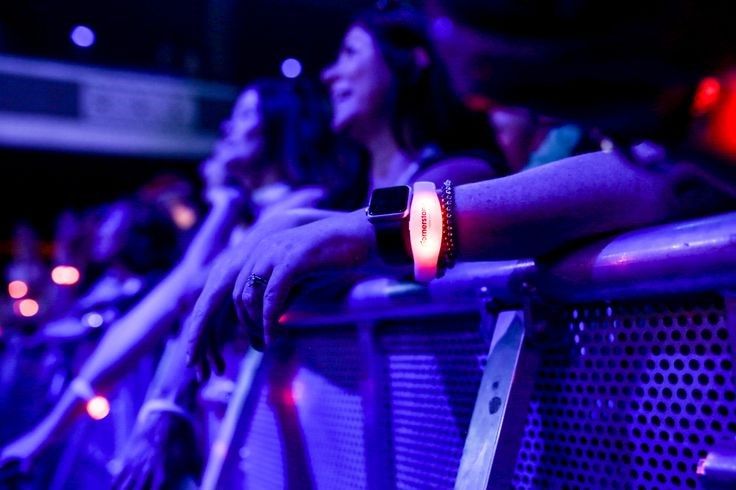
Think of it as a silent, high-speed conversation. A powerful base station, strategically placed, broadcasts commands across a specific radio frequency. Each LED wristband is equipped with a tiny receiver, pre-programmed to listen only on that channel. When the show designer wants to trigger a colour change, a strobe, or a slow fade, they send a coded signal from their lighting console. Within milliseconds, that signal reaches every individual in the audience, and the wristbands respond in perfect unison. This is the core of how radio controlled LED wristbands create those breathtaking moments of unity—a single artistic impulse, multiplied by thousands.
The DMX Bridge: Choreography for the Digital Age
While RF provides the communication pathway, the language itself often comes from DMX (Digital Multiplex), the long-standing industry standard for controlling stage lighting, fog machines, and other theatrical hardware. For event producers and tour managers, this is a critical point. The beauty of the Xylobands system is that it doesn’t require them to learn a new language. It speaks the one they already know.
Our control systems are designed to integrate seamlessly into a professional DMX workflow. A lighting director can patch our base station into their console just like any other lighting fixture. They can then program the LED wristbands as a single zone, multiple zones, or even create complex, flowing patterns across the audience. This allows for an incredible level of creative granularity. Instead of just turning the whole crowd blue, a designer can send a ripple of white light from the stage to the back of the arena, have different seating sections pulse in competing colours, or create intricate, pixel-mapped effects that make the audience part of the video content. It’s this DMX compatibility that elevates custom LED wristbands from a novelty to a powerful, expressive tool for immersive event technology.
The Infrared Trigger: Precision in Close Quarters
While RF is perfect for broadcasting a single command to an entire stadium, what about creating more granular, localised experiences? This is where infrared (IR) technology comes into play. Unlike the wide-cast net of radio waves, infrared operates on a line-of-sight basis, much like a television remote control. This property makes it ideal for creating specific zones of light within a larger event.
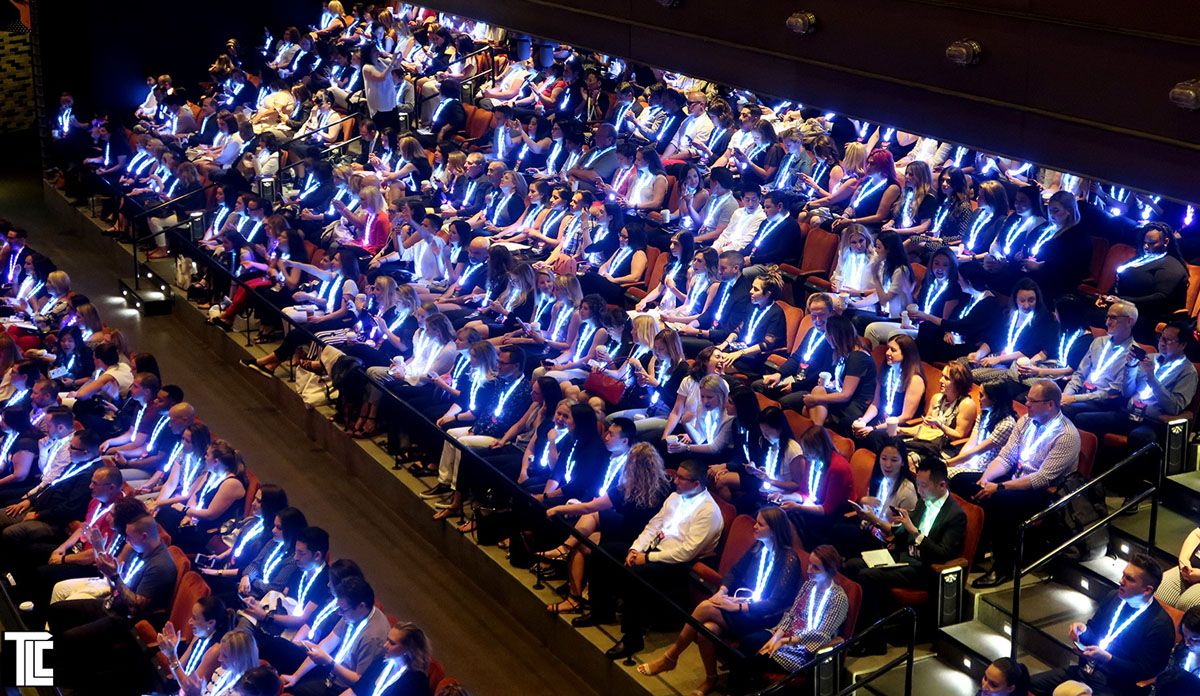
Imagine a corporate brand activation or a festival with multiple stages. Small, discreet IR transmitters can be placed at gateways, within specific activation zones, or around a particular stage. As an attendee walks through a doorway, their LED lanyard or wristband can be triggered to change colour, welcoming them into a new space. At a music festival like Primer in Athens, this allows for different visual experiences at each stage, ensuring the lighting on the wristbands always matches the specific artist and mood. For events like the Formula One 75th anniversary, where different groups of attendees (like hospitality and general admission) need to be distinguished, IR and clever distribution allow for targeted effects, turning the crowd itself into a dynamic, segmented map of light.
The Synthesis: Creating a Living Canvas
The true magic of LED crowd experiences isn’t found in any single one of these technologies, but in their artful combination. A world tour for an artist like Coldplay or Maluma might use a powerful RF system as the primary driver for the entire stadium, creating those massive, unified moments that make headlines. Simultaneously, their lighting designers will use DMX control to weave intricate, complex patterns through the crowd, turning the audience into a living extension of the stage design.
For more complex events, IR triggers can add another layer of interactivity and personalisation. It’s this technological trinity—the broad reach of RF, the creative control of DMX, and the zonal precision of IR—that allows for the creation of truly immersive events. It transforms a crowd from a collection of passive spectators into a vibrant, unified, and responsive canvas. This is the unseen architecture behind the spectacle, the silent language of light that connects every single person in the room and turns a simple concert into a lifelong memory.