From Lighters to LEDs: The Technological Evolution of the Live Audience
The Spark: From Bic Lighters to Phone Screens
For decades, the most a crowd could do to signal its collective approval was to applaud, to cheer, or, in the darkness of a stadium, to raise a flame. The iconic image of a sea of lighters held aloft during a ballad is etched into the collective memory of music history. It was the first time an audience could physically manifest its emotional response as a shared visual, a scattered constellation of tiny, flickering lights symbolizing unity.
Simple, effective, and deeply human, this act was the dawn of audience participation technology. It was analog, spontaneous, and required only a piece of pocket technology available to the masses: the disposable lighter. Then came the flip phone, and with it, the digital screen. The flame was replaced by a dim, blue-ish glow, a technological step up that traded the analog warmth of fire for the convenience of a device already in hand. The smartphone era amplified this a thousandfold, with dedicated apps allowing artists to prompt fans to light up their screens in specific colors. Yet, the core experience remained fundamentally the same: a one-way, uncoordinated gesture. The audience was a collection of individuals acting in parallel, not a cohesive, interactive canvas.
The Quantum Leap: Centralized Control and the Birth of the Human Canvas
The true paradigm shift in audience participation didn't come from upgrading the device in the spectator's hand, but from rethinking the system entirely. The breakthrough was the realization that the audience itself could become the medium. This required a move from decentralized, individual actions to a centralized, controlled, and synchronized system. The vision was to transform tens of thousands of individual points of light into a single, cohesive, and dynamic light show.
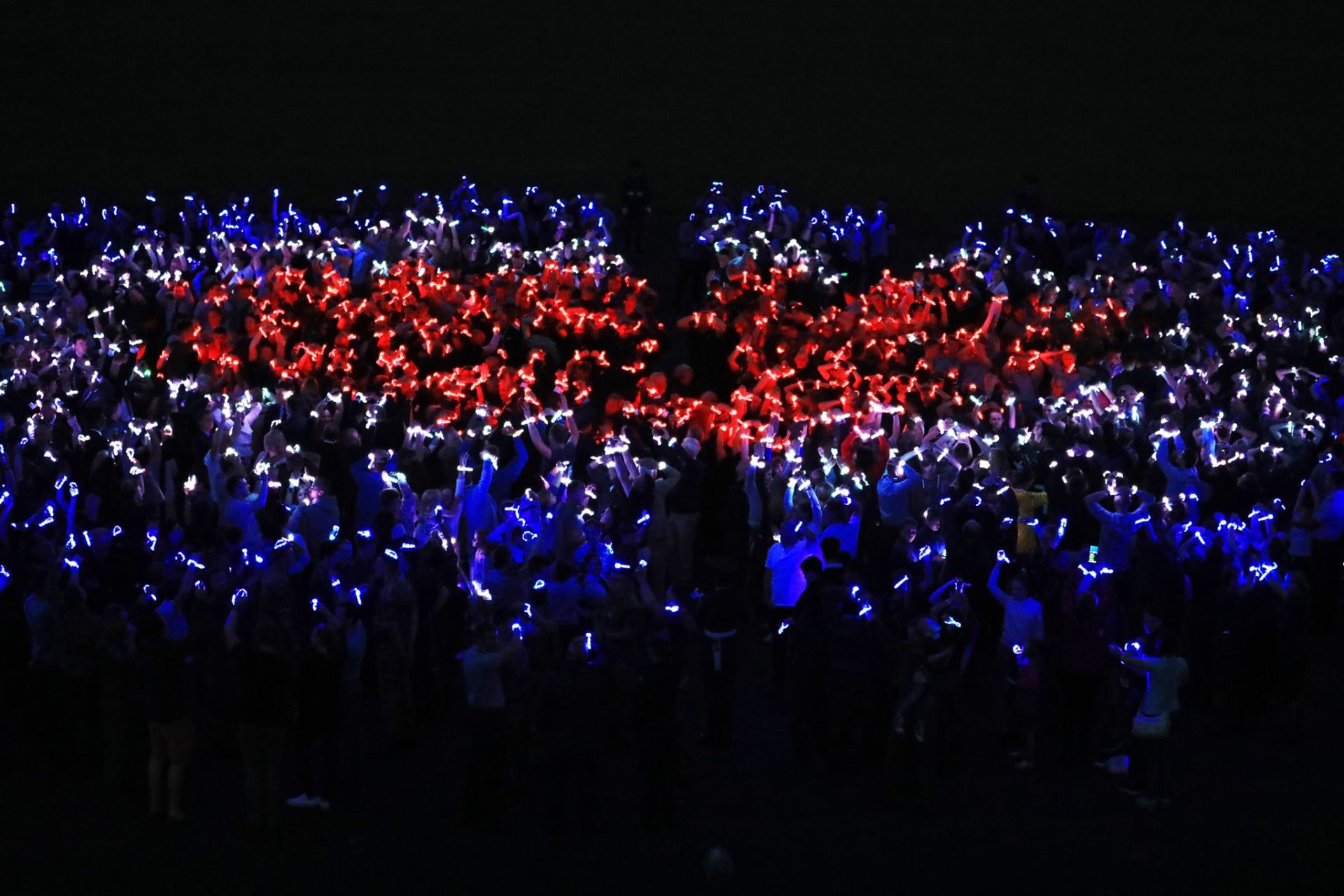
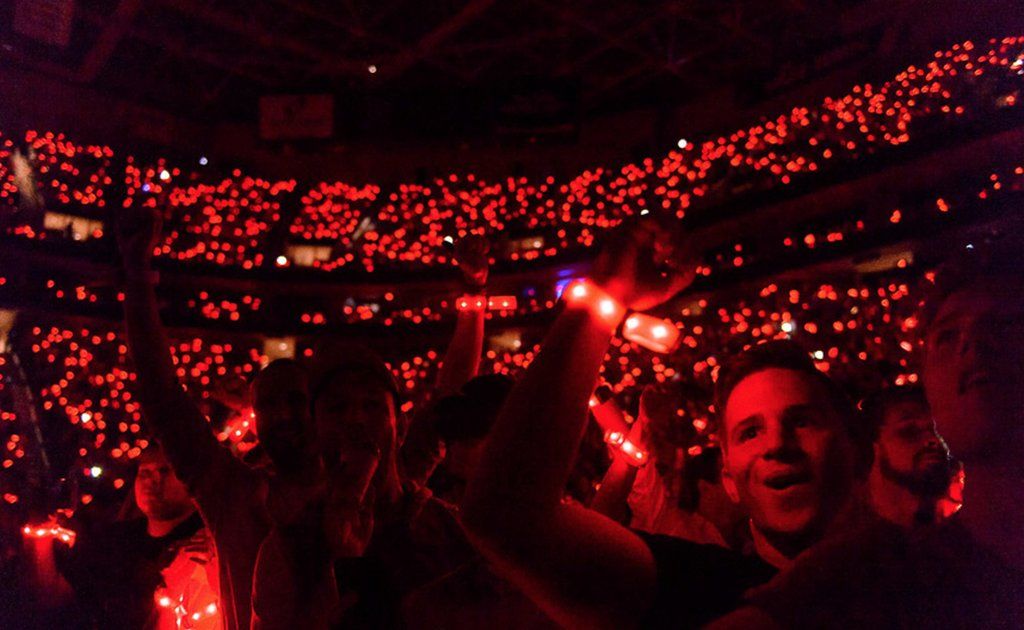
This is where Xylobands entered the story. Inspired by the line “Lights will guide you home” during a Coldplay performance at Glastonbury, our founder Jason Regler envisioned a way to make the audience an integral part of the show's lighting design. The concept of radio-controlled LED wristbands was born: a piece of wearable technology that could be centrally operated to pulse, fade, and change color in perfect time with the music. When Coldplay took this technology on their Mylo Xyloto World Tour, it marked a definitive turning point. The audience was no longer just watching the show; they *were* the show. This innovation transformed the industry, creating a new category of immersive event technology.
The Architecture of Immersion: RF, DMX, and Infrared
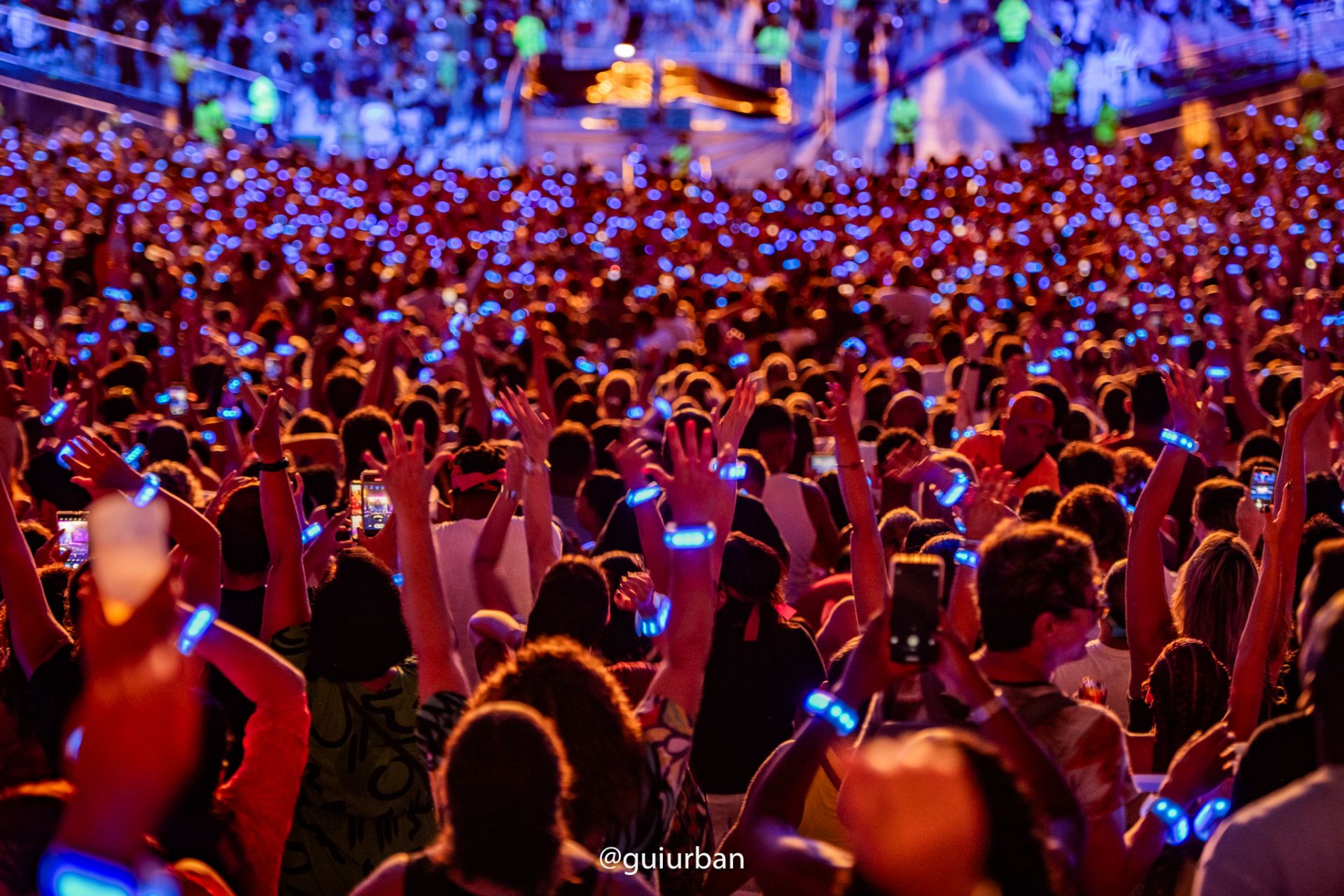
Powering these mass spectacles requires a sophisticated and robust technical backbone. The ability to control up to 100,000 individual LED Bands or other LED Wearables in a stadium environment, with zero margin for error, is a monumental technical challenge. The core of this capability lies in the mastery of radio frequency (RF) technology. Our proprietary system uses a network of transmitters to send signals across vast spaces, ensuring every single wristband responds instantly and in unison.
Unlike Wi-Fi or Bluetooth, which are designed for two-way data communication and can be notoriously unreliable in high-density environments, our RF protocol is a one-way broadcast. It's a fire-and-forget system engineered for massive scale and perfect synchronization—impervious to the signal saturation that cripples other wireless technologies in a packed arena.
This RF backbone is often integrated with DMX, the standard lighting control protocol used in professional stage and show production. This allows a show's lighting designer to control the audience's wristbands from the same console used for the stage lights, video screens, and pyrotechnics. Suddenly, the LED Crowd Experiences become another instrument in the orchestra, a dynamic, human texture woven into the fabric of the production. From global sporting events like the Davis Cup to major music festivals like Greece's PRIMER, this technology allows for a seamless fusion of light across the stage and stands, erasing the boundary between performer and spectator.
The Evolution of Form: From Wristbands to a Full Spectrum of Wearables
While the wristband remains the iconic form factor, the underlying technology has evolved to inhabit a diverse ecosystem of wearable LED technology. The same powerful RF system that animates a stadium of Coldplay Xylobands can be embedded in a variety of objects, expanding the creative canvas for event producers and brand marketers.
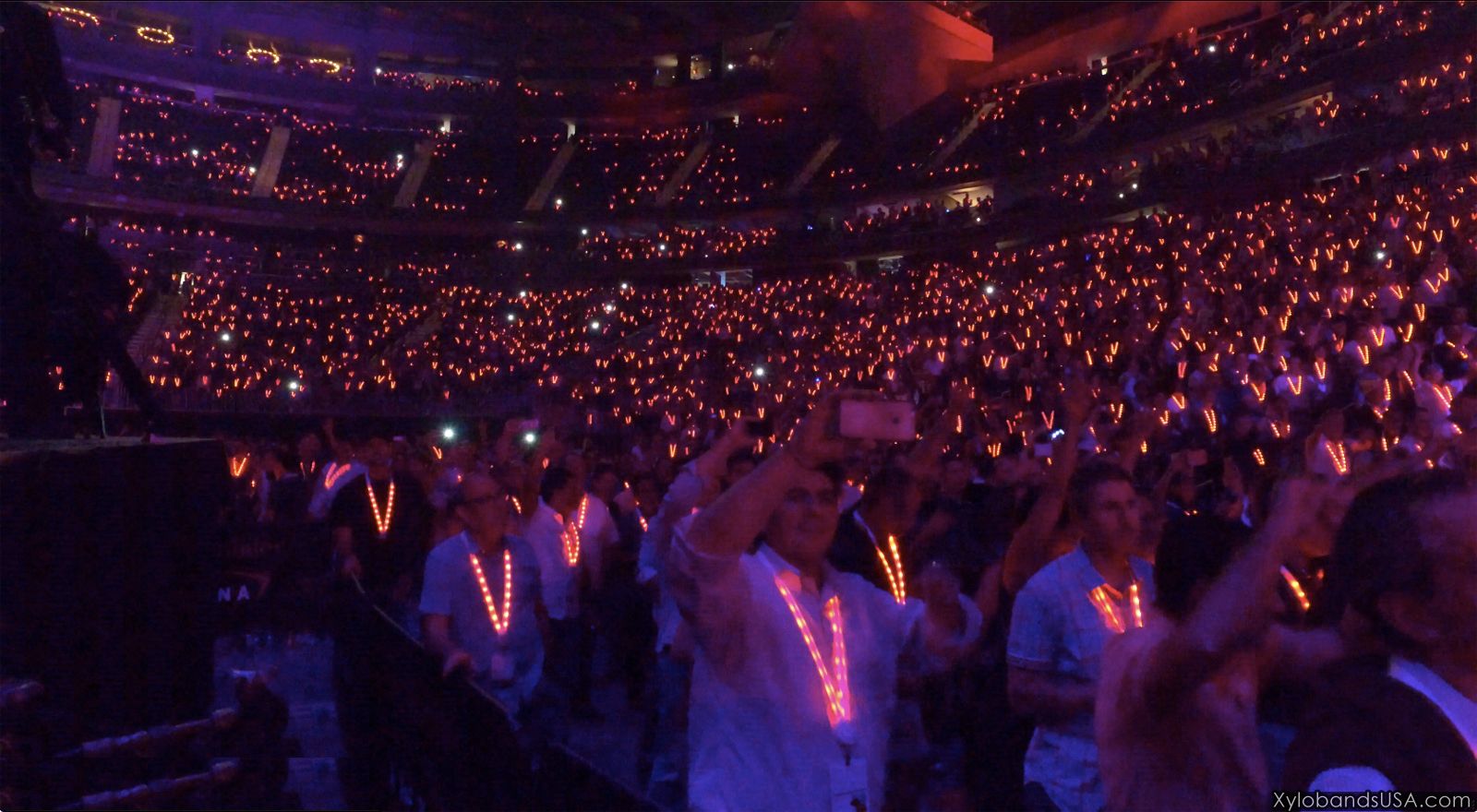
LED Lanyards have become a staple of corporate event activations, turning a functional item into a tool for engagement and networking. At the 75th-anniversary celebration for Formula One, custom-branded Xylo Pendants were distributed, creating dynamic light effects programmed to specific seating areas and hospitality levels. For TV productions like ITV's Beat The Chasers, our LED technology is used to heighten studio audience reactions and create a more vibrant broadcast experience. From glowing LED Orbs that can be tossed through the crowd to other bespoke shapes, the form is now endlessly adaptable to the creative vision of the event.
The Future: Data, Sustainability, and Deeper Integration
The evolution of audience participation is far from over. The next frontier lies in leveraging this technology for more than just visual spectacle. As these devices become more sophisticated, they can become a source of valuable, anonymized data on crowd movement, density, and engagement, offering new tools for enhancing safety and improving event flow.
Sustainability is also a critical driver of innovation. At Xylobands, we have pioneered reuse and responsible recycling programs, as demonstrated across multiple nights with artists like Wizkid at London's O2 Arena. The future is moving toward a circular model of deployment, collection, and refurbishment, reducing the environmental footprint of large-scale events without compromising the immersive experience.
From a simple flame to a centrally-controlled, infinitely programmable pixel, the audience member has been transformed from a passive observer into an active participant. The technology has evolved, but the fundamental human desire it serves remains the same: the desire to connect, to belong, and to be part of something larger than oneself. The lights have changed, but the shared beat goes on.