The Art of Atmosphere: Advanced Lighting Design for Modern Arena and Stadium Tours
The First Four Minutes: Engineering the Atmosphere
The show doesn't start with the first note; it begins the moment a fan enters the arena. The initial state of the house lights, the subtle pre-show cues, the ambient soundscape—these are the foundational layers of the live experience. For a tour lighting designer, this pre-show period is a critical opportunity to establish mood and build anticipation. It's not just about illumination; it's about crafting an environment that pulls tens of thousands of people from their individual worlds into a single, shared space. The goal is to create a distinct atmosphere that signals the beginning of a unique journey, setting the stage for the spectacle to follow.
The Architecture of Light: Scaling from Arena to Stadium
Designing for a 20,000-seat arena versus an 80,000-seat stadium presents vastly different architectural and atmospheric challenges. An arena offers a more contained environment. The vertical space is significant, the seating is steeper, and the audience feels closer to the stage. Here, lighting design can be intricate, textured, and intimate, leveraging the venue's structure to create focused, high-impact looks.
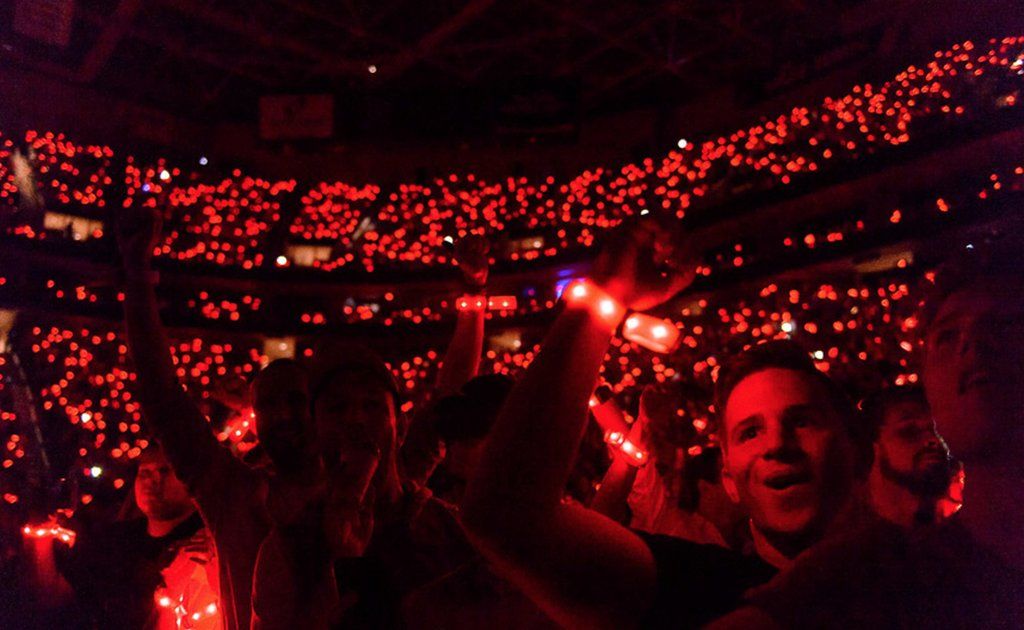
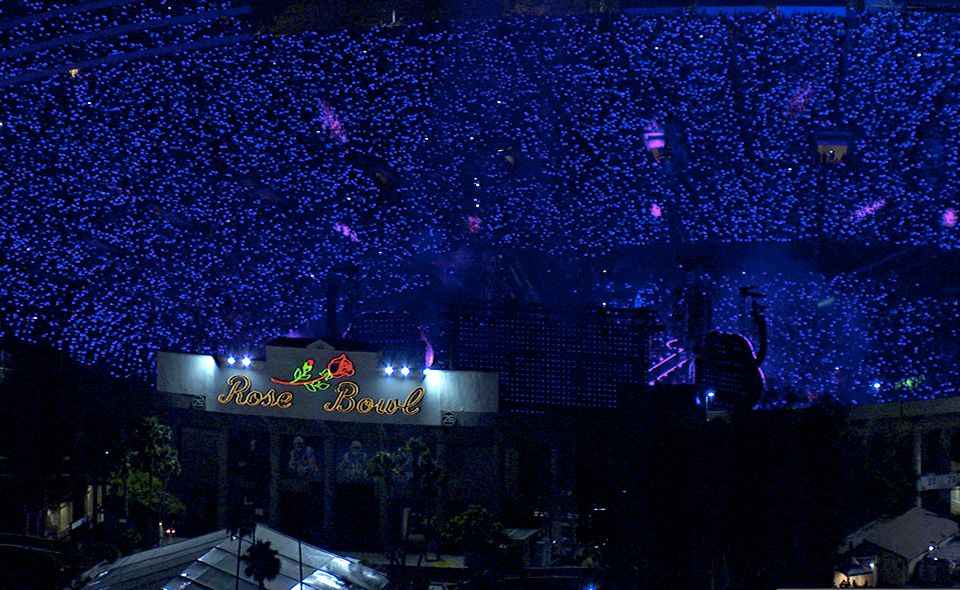
In contrast, a stadium is a game of scale and distance. The sheer expanse requires a broader, more powerful approach. What reads as a dynamic effect in an arena can be lost in the vastness of a stadium. The design must be bold, relying on mass-scale gestures, powerful beam structures, and large-format video surfaces. The curvature of the stands, the open sky, and the sheer number of bodies all become part of the canvas. This is where technologies designed for mass participation, like LED crowd experiences, become essential tools for bridging the distance between the artist and the furthest seat, ensuring every single attendee is part of the visual tapestry.
Painting with People: The Crowd as a Canvas
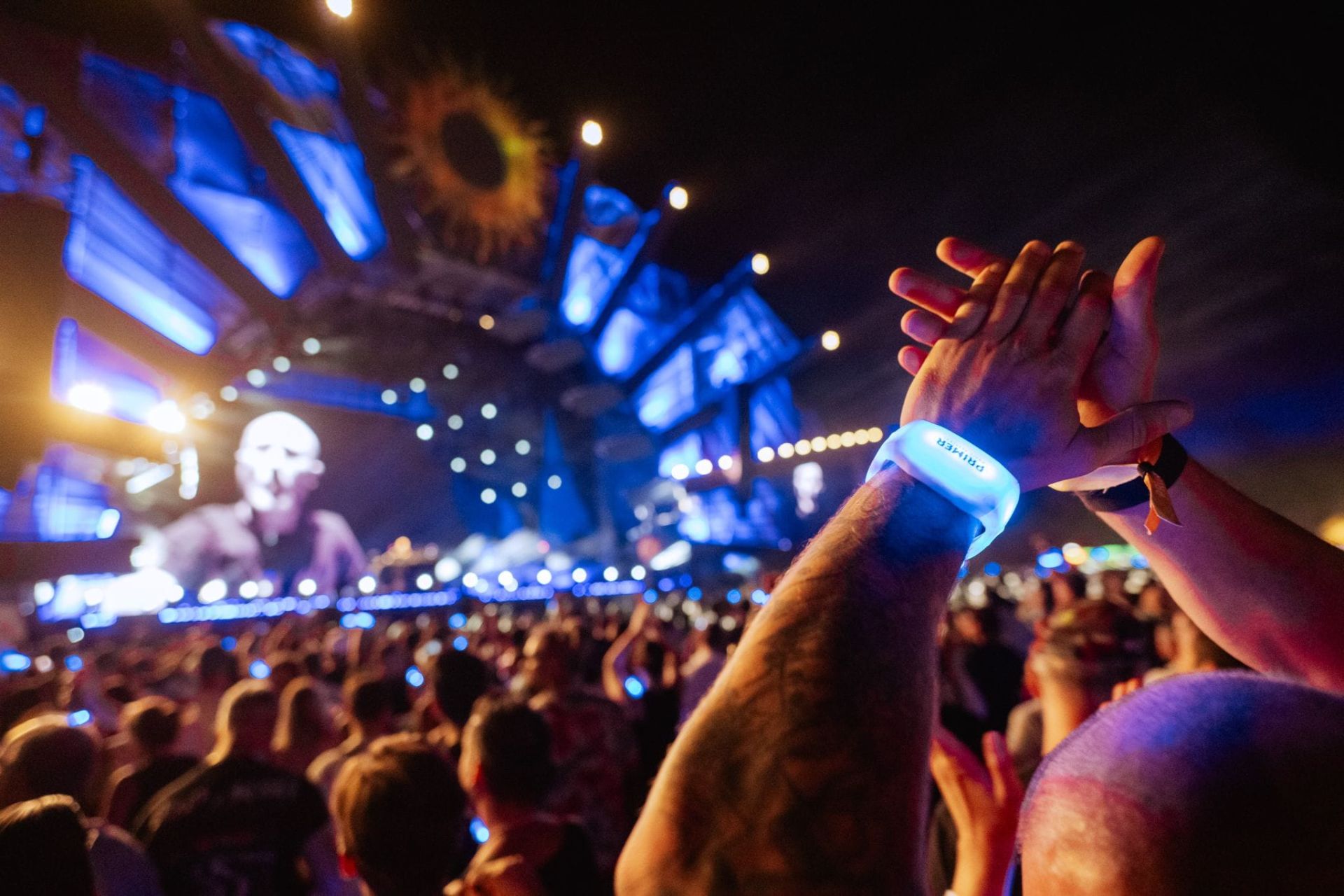
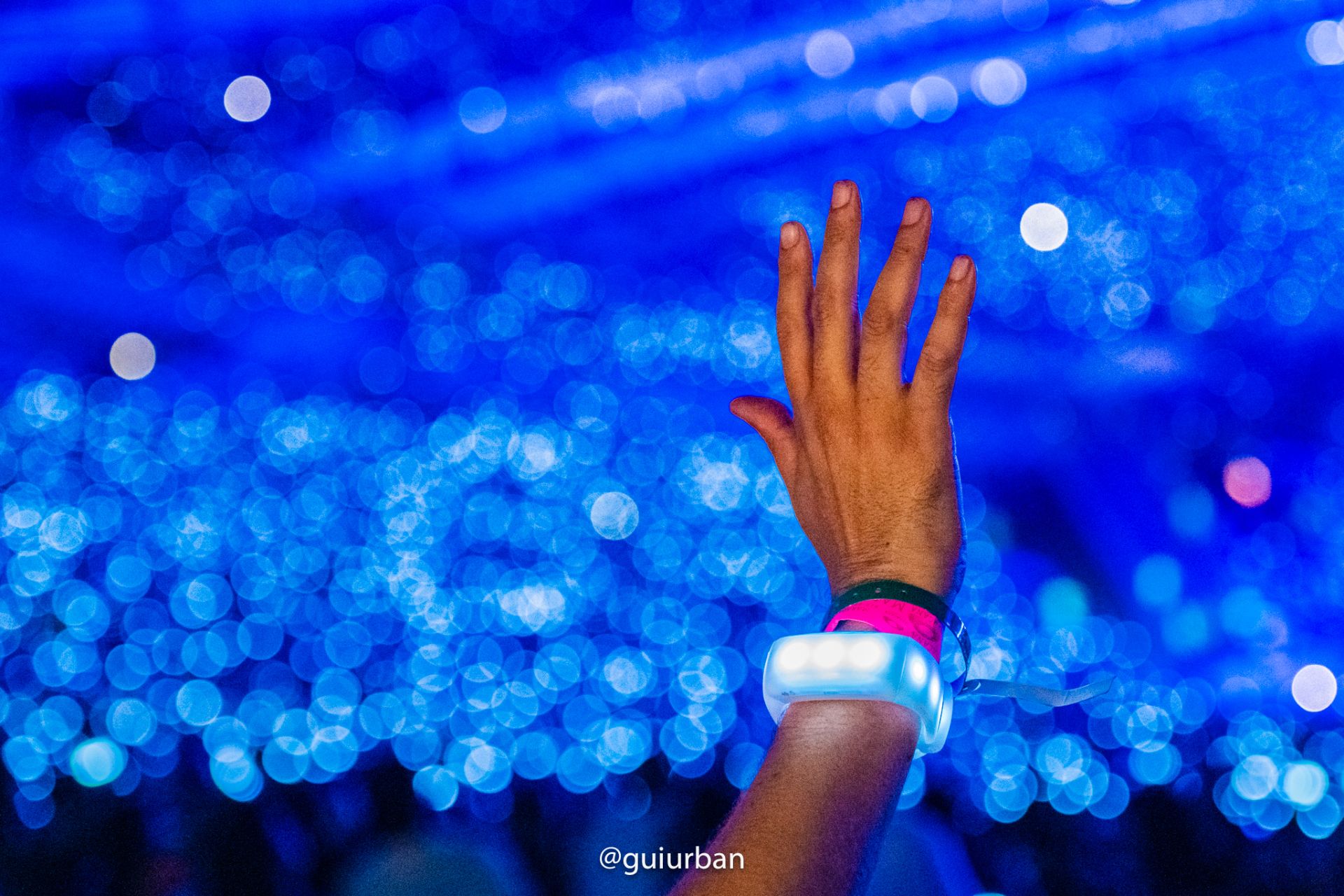
Modern tour production no longer sees the audience as passive observers. Today, the crowd is an integral, dynamic element of the show itself. This shift in philosophy has been powered by advancements in wearable LED technology, turning every audience member into a pixel in a venue-wide display. This is a principle we at Xylobands have championed since our inception on Coldplay’s Mylo Xyloto tour.
Using radio controlled LED wristbands, a lighting director can choreograph the entire audience, creating waves of colour, strobing pulses, and complex patterns that flow from the stage to the back row. This doesn’t just augment the stage lighting; it creates a profoundly immersive environment. It dissolves the barrier between performer and fan, making 50,000 people feel like a single, unified entity. When Maluma played to a hometown crowd of 54,000 in Medellín, or when Wizkid sold out three nights at The O2, the synchronised glow of thousands of wrists amplified the energy, creating a powerful visual metaphor for the collective experience.
Designing for Two Audiences: The Lens and the Live Eye
Nearly every major tour is now a broadcast event, whether through a planned livestream, a documentary capture, or the millions of phone screens held aloft. This creates a dual challenge for the lighting designer: crafting an experience that feels electric and visceral for the people in the room, while also translating into a compelling, coherent picture for those watching through a lens.
These two audiences perceive light differently.
- For the Live Eye: The human eye is incredibly adaptive, processing immense dynamic range and peripheral information. The live experience is about physical immersion—the heat from pyrotechnics, the sweep of a searchlight, the communal energy.
- For the Lens: A camera sensor has a more limited dynamic range. It is sensitive to flicker, colour temperature inconsistencies, and extreme contrast. Lighting for broadcast requires careful attention to key lighting on performers, managing background levels, and ensuring that colours are rendered accurately without blowing out highlights or crushing blacks.
A successful design serves both masters. It uses key light to carve artists out from the background for the camera, while deploying large-scale effects and audience lighting, like Xylobands, to deliver the raw spectacle the live crowd craves. The result is a show that feels immense in person and looks stunning on screen, a principle essential for global events from the Formula One 75th Anniversary to the Eurovision Song Contest.
The Narrative Arc: Light, Pacing, and Emotion
Beyond the hardware and the technology, the most fundamental principle of tour lighting design is storytelling. A two-hour set is a narrative, with its own acts, climaxes, and moments of quiet reflection. The lighting must follow this arc, not just accompany it.
A high-energy opening number might demand fast-moving fixtures, intense strobes, and vibrant, saturated colours. A mid-set acoustic ballad, however, calls for a different approach. Here, a single spotlight, a gentle wash of a single colour, or the soft, unified pulse of thousands of LED bracelets can create a moment of profound intimacy, even in a stadium of 80,000 people. It’s about contrast, pacing, and emotional resonance. The quiet moments are just as important as the explosive ones. They provide the dynamics that keep an audience engaged, drawing them through the emotional journey the artist has crafted and leaving them with a lasting memory long after the final light fades to black.