The Macroscope: A Manifesto for Arena and Stadium Lighting
From Black Box to Big Sky: The Mental Shift
In the intimate confines of a theatre or the controlled environment of a broadcast studio, the lighting designer is a miniaturist, obsessed with the fine detail of a single key light, the subtle gradation of a cyclorama. Every photon is accounted for, every shadow meticulously carved. But when the venue expands to an arena, and then to the colossal scale of a stadium, that entire philosophy must be inverted. You are no longer painting with a fine brush; you are sculpting with mountains.
This is the first and most crucial principle of stadium and arena lighting design: you are not just making things bigger. You are designing for a different form of human perception. An audience member in the back row of a stadium is experiencing the show from half a mile away. The details are lost. What remains are broad, powerful strokes: color, mass movement, and stark contrast. The challenge is not to light a performer, but to paint an entire ecosystem, to transform tens of thousands of individuals into a single, cohesive entity.
Principle 1: Designing for Distance and Diffusion
The inverse square law is a cruel and unforgiving master in a stadium. Light intensity diminishes exponentially over distance. A beam that is dazzling at 20 feet is a faint whisper at 200. This reality dictates a move away from intricate, multi-layered beam work and toward bold, elemental gestures.
The core tenets are:
- Mass & Saturation: Use color in monolithic blocks. A single, stage-wide wash of saturated blue has more impact from the back of the arena than a dozen complex gobo patterns. Think in terms of emotional temperature—the icy chill of a solo moment, the fiery heat of a crescendo.
- The Power of the Negative: Blackout. It is the most powerful tool in the stadium designer’s arsenal. In a space so vast, plunging the entire environment into absolute darkness creates a moment of primal suspense, resetting the audience’s sensory palate. When the light returns, its impact is multiplied tenfold.
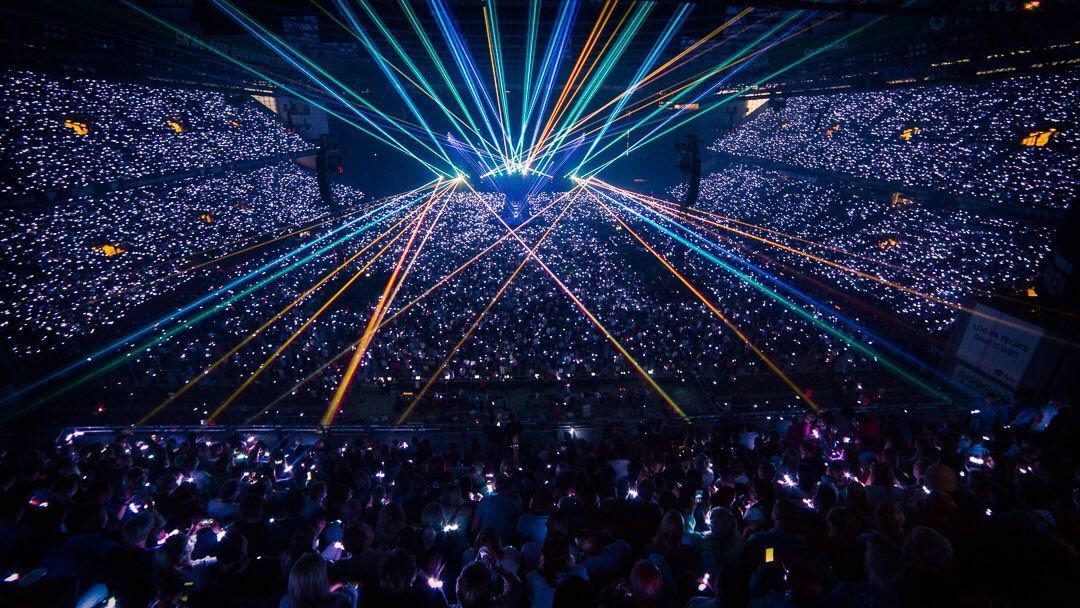
- Vector and Geometry: At this scale, the audience perceives light as geometry. The sharp, converging lines of beams cutting through haze become architectural elements. The movement is no longer about a single spot following a performer, but about vast structures of light pivoting and sweeping across the entire volume of the space.
Principle 2: The Audience as the Medium
In a stadium, the audience is no longer a passive observer. They are the set. They are the largest, most dynamic, and most interesting surface in the entire building. To ignore them is to waste the single greatest asset at your disposal.
This is where the paradigm of immersive event technology shifts from a novelty to a fundamental design element. It’s no longer about putting on a show for the people; it’s about creating the show *with* the people.
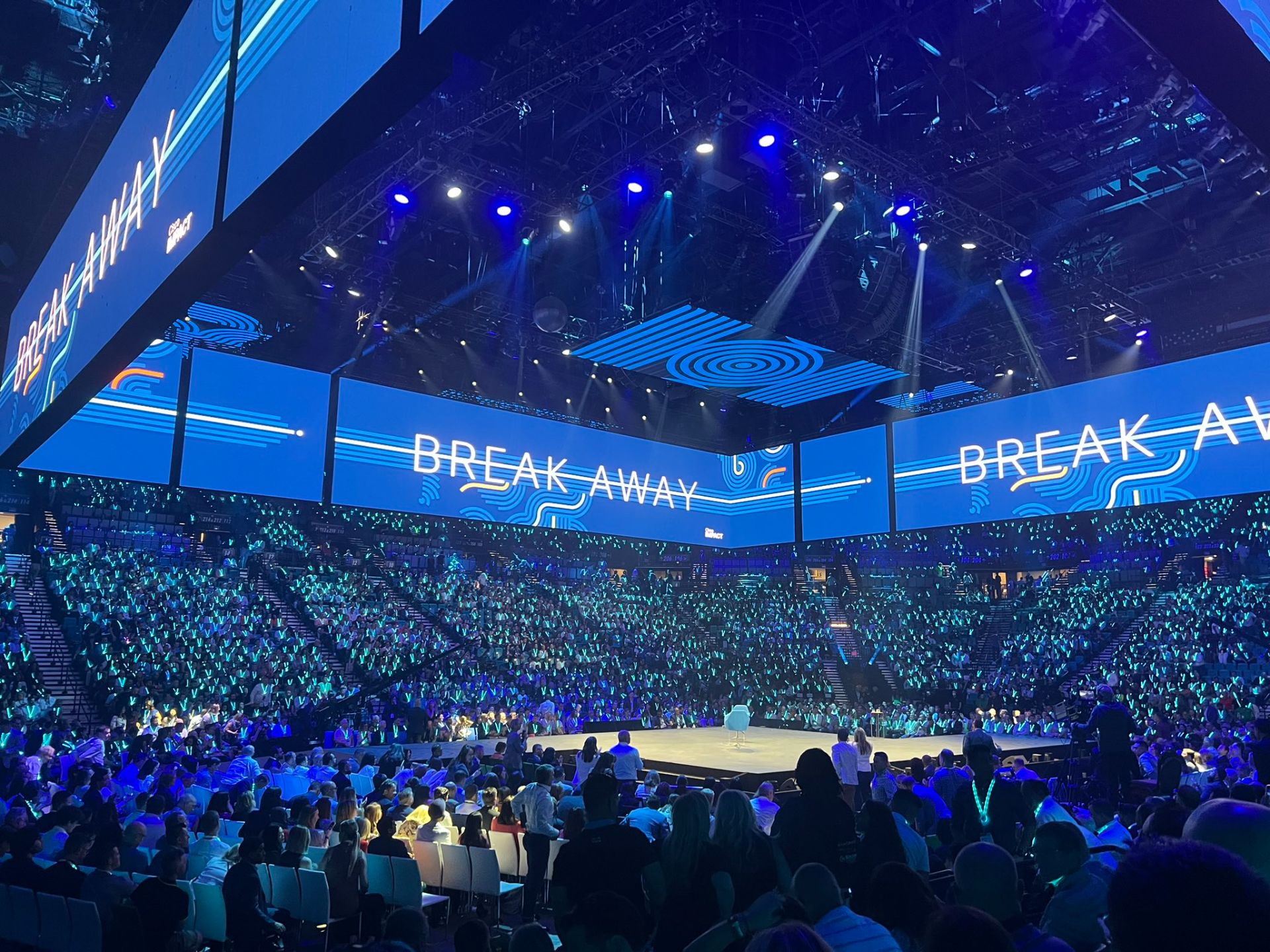
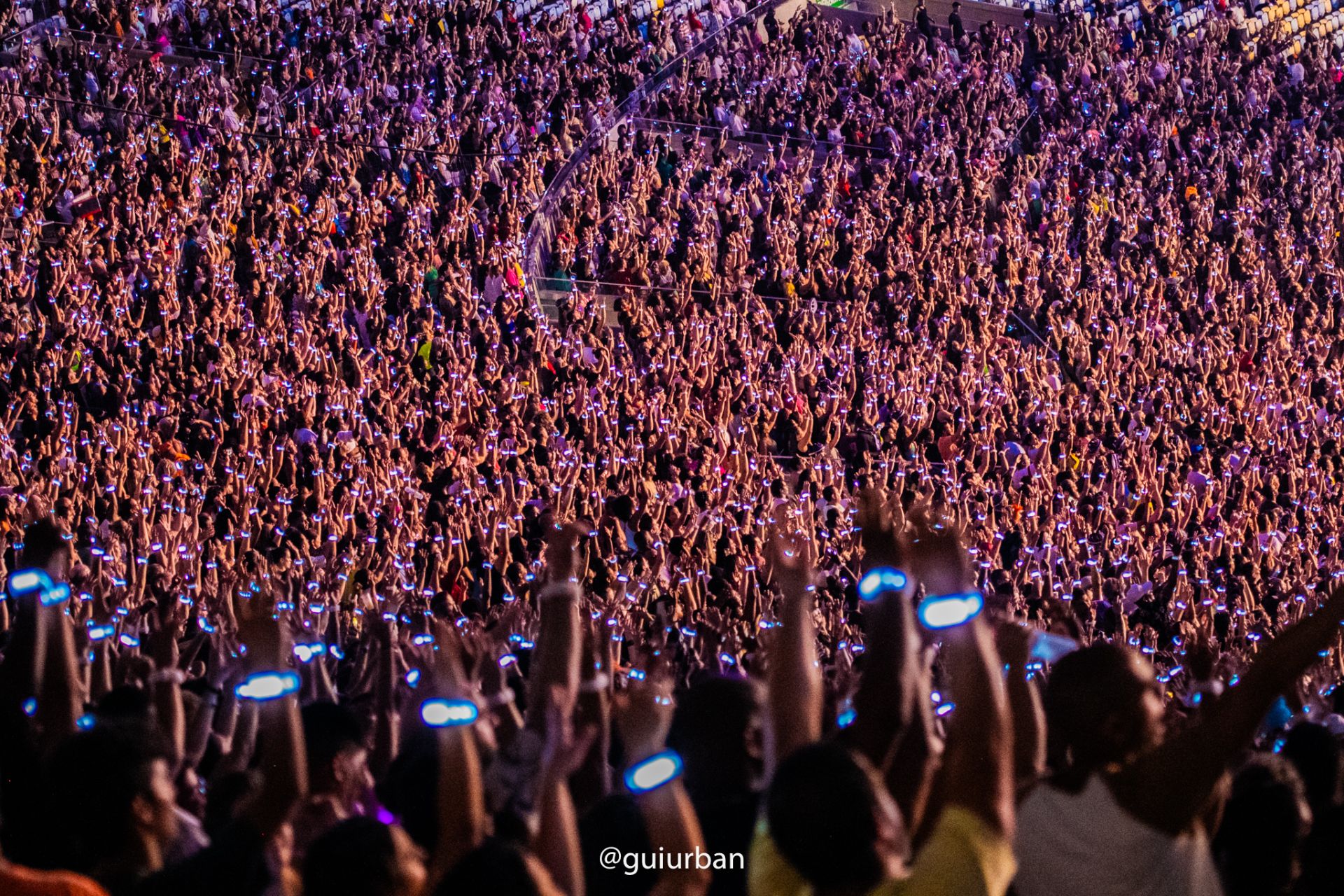
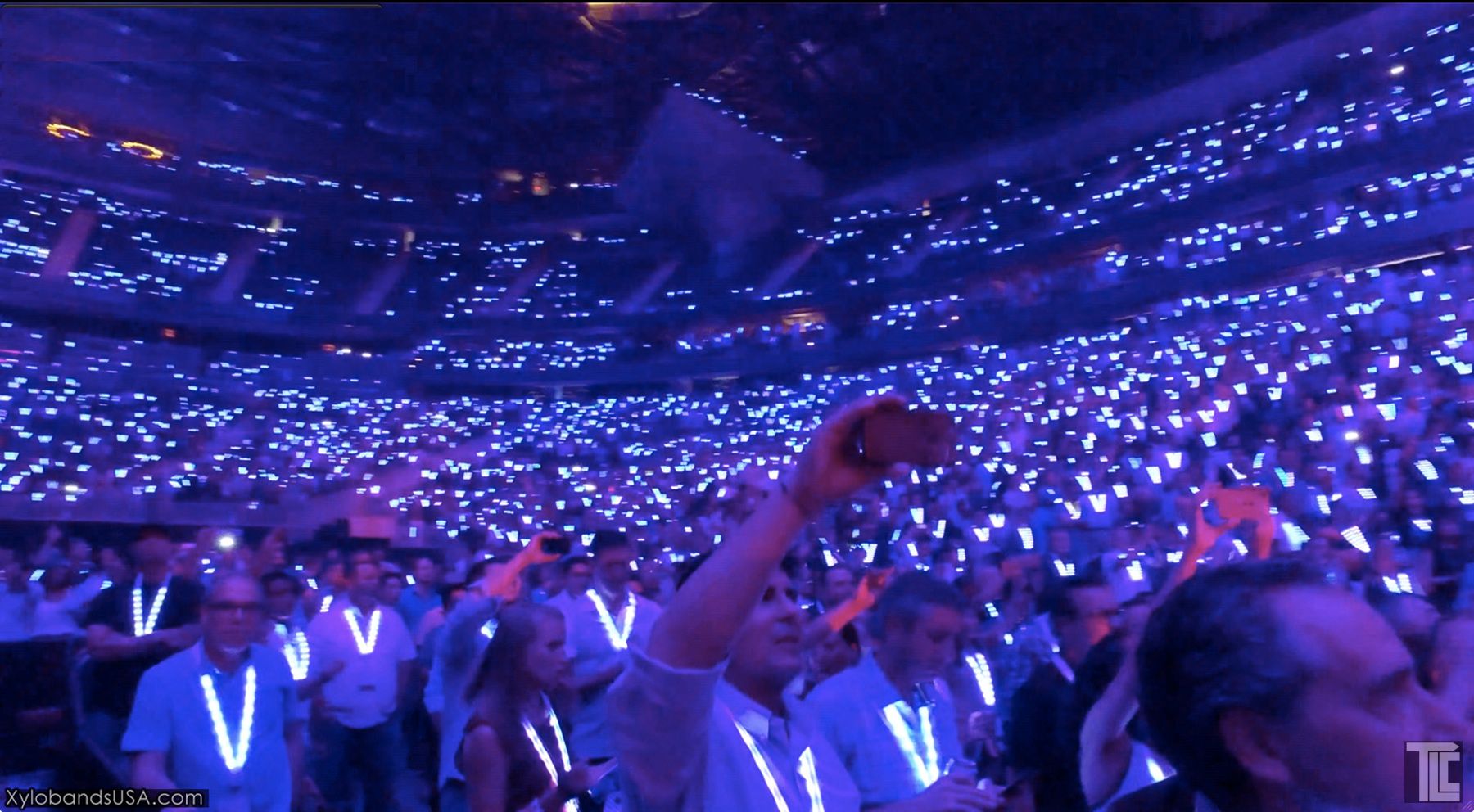
By making the crowd a canvas, you achieve multiple objectives simultaneously. You create a spectacle of unimaginable scale, extending the visual world of the performance to every seat in the house. More profoundly, you foster a deep psychological connection. Through technologies like Xylobands—radio-controlled LED wristbands that sync the entire audience into a single, pulsating display of light—you dissolve the distance between strangers. An individual is no longer just a spectator; they are a pixel in a monumental work of art. This transformation was pioneered on Coldplay’s Mylo Xyloto tour and has since become a staple of large-scale LED crowd experiences, turning tens of thousands of people into a sentient sea of light, perfectly synchronized to the artist’s vision.
This approach has been used to breathtaking effect not just in music—as seen with artists like Wizkid selling out London’s O2 Arena—but in global sporting spectacles like the Davis Cup and Formula One, where unifying a diverse crowd is paramount. The technology, whether in the form of LED bracelets or custom pendants, becomes a tool for unity.
Principle 3: The Camera is the Second Audience
Today, every stadium show is a broadcast. Whether it’s an official live stream, like Maluma’s historic Medellín concert broadcast to 240 countries, or simply the ten thousand smartphone screens pointed at the stage, the camera is an ever-present observer. This introduces a second, parallel set of design rules.
Key considerations for the lens:
- Flicker & Frequency: LED sources must be camera-safe. A stunning effect in person can become a strobing, unwatchable mess on screen if the refresh rates are not properly managed. This applies to everything from the video walls to the wearable LED technology on the audience’s wrists.
- Dynamic Range: The human eye can handle a vast range of brightness, but a camera sensor cannot. A design must manage its peaks and troughs carefully, avoiding blowing out highlights or crushing blacks. The lighting for the performer must be balanced against the brightness of the video content behind them and the audience light around them.
- Color Science: What the eye sees as a deep crimson, a camera sensor might register as a muddy, noisy red. A sophisticated understanding of color science and camera calibration is no longer optional; it’s a prerequisite for a successful modern tour that aims to have a life beyond the venue walls.
The Unifying Theory: From Light to Emotion
Ultimately, lighting design at the stadium scale is an act of mass communication. It’s about translating the intricate emotions of a song or the high drama of a sporting moment into a language that can be understood from half a mile away, by 50,000 people at once. It requires a bold, reductionist approach, a deep understanding of human psychology, and the technical mastery to command a small city’s worth of power and data.
By embracing the principles of distance, making the audience the medium, and designing for the second audience of the camera, we move beyond mere illumination. We craft moments of collective effervescence, transforming vast, impersonal spaces into temporary cathedrals of shared experience. We build a macroscope, allowing tens of thousands to feel, as one, the heartbeat of the show.