Scale, Light, and Legacy: A Blueprint for Modern Tour Lighting
The Architecture of Atmosphere
A stadium tour is more than a concert; it’s a temporary city. For a few hours, a space designed for sport becomes a cathedral of sound and light. As a lighting designer, your medium isn’t just watts and lumens—it’s emotion, perception, and the collective energy of 50,000 people. Designing for this scale is a unique discipline, blending architectural thinking with the transient, high-stakes nature of live performance.
Unlike a permanent installation, a touring rig must be built to travel. Every truss, fixture, and cable is part of a complex logistical puzzle, engineered for rapid deployment and nightly teardown. But beyond the logistics, the core challenge is human. How do you make a person in the 300th row feel as connected as someone in the front? The answer lies in mastering the principles of scale, contrast, and immersion.
Principle 1: Designing for the Camera and the Crowd
In the age of global streaming and social media, every show has two audiences: the people in the room and the millions watching at home. This creates what we call the “two-screen problem.” A lighting cue that looks spectacular in the arena can appear blown-out or chaotic on camera. Conversely, a subtle effect perfect for broadcast might be lost entirely in the vastness of a stadium.
The solution is a layered approach. You need broad, powerful strokes to define the architecture of the space and give the show its epic scale. Simultaneously, you need meticulous key lighting on the performers, ensuring they are perfectly rendered for both the live broadcast and the IMAG screens. This dual-focus was critical for a massive production like Maluma’s “Medellín En El Mapa” concert, which was streamed live to over 240 countries. The lighting had to serve the 54,000 fans in the stadium while delivering a flawless broadcast experience for Amazon’s global audience.
Principle 2: The Audience as a Canvas
For decades, the audience was a passive observer, shrouded in darkness. Today, they are an active and integral part of the visual design. This shift from passive consumption to active participation is one of the most significant trends in live event production. By extending the lighting design off the stage and into the crowd, you dissolve the fourth wall and create a truly unified environment.
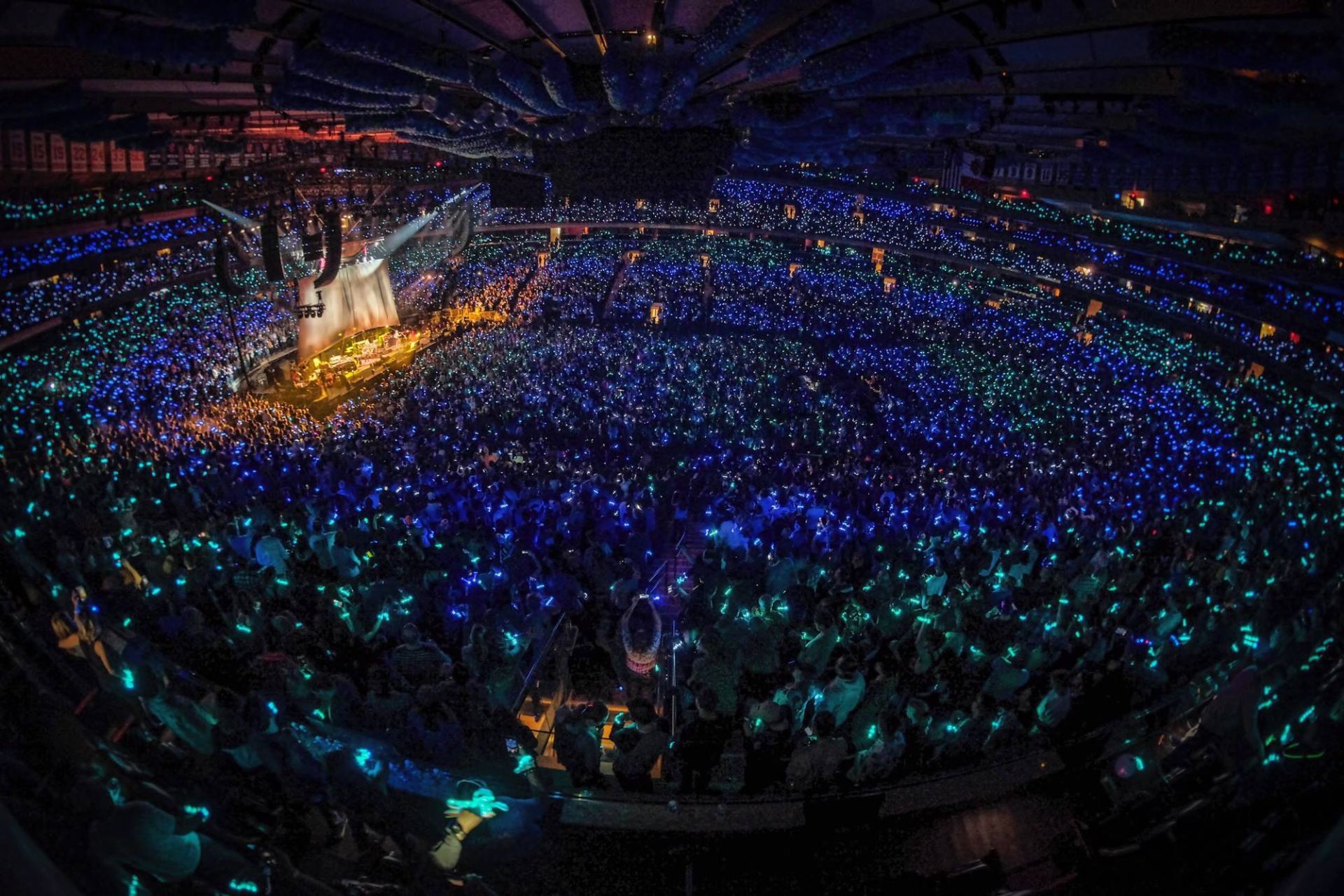
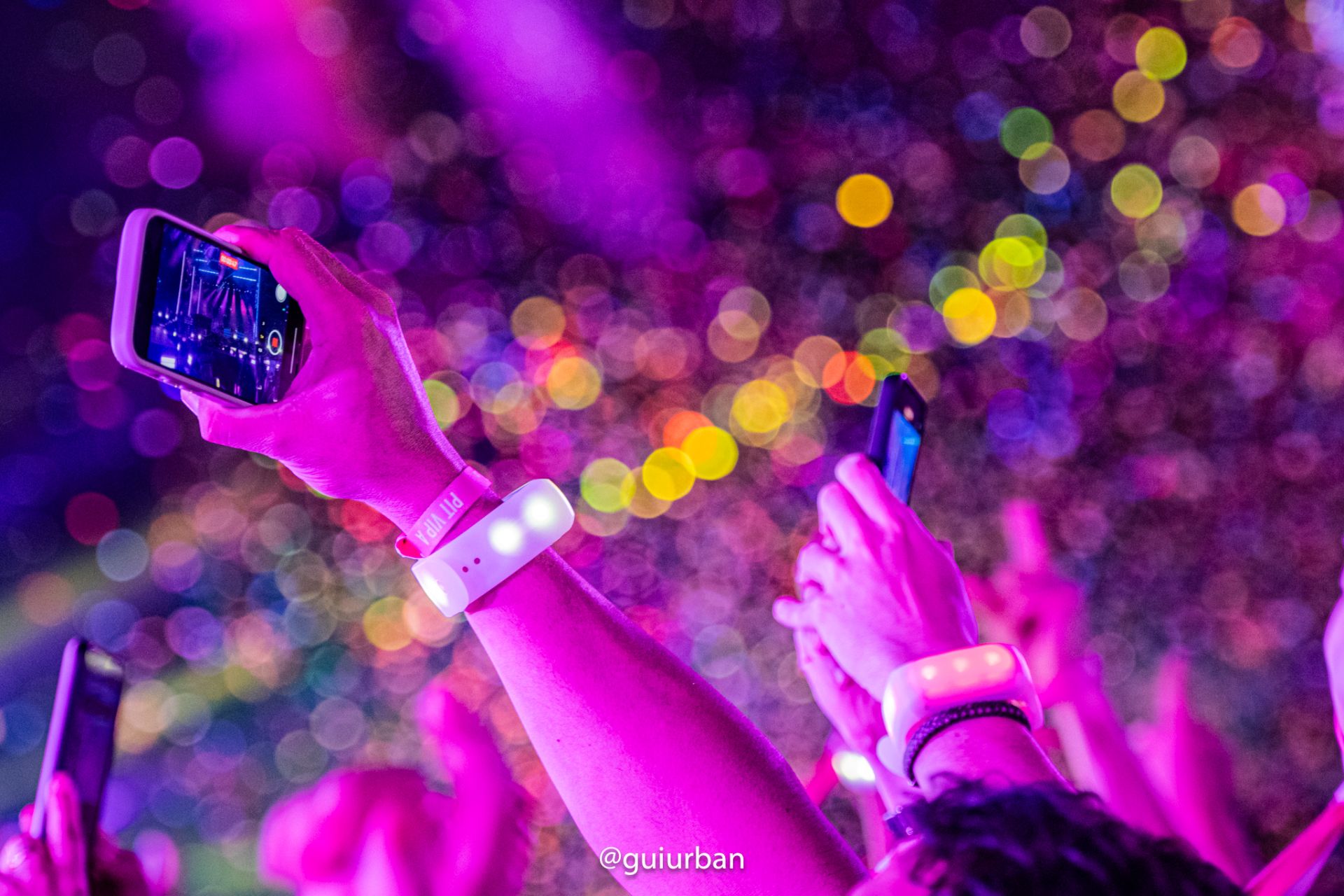
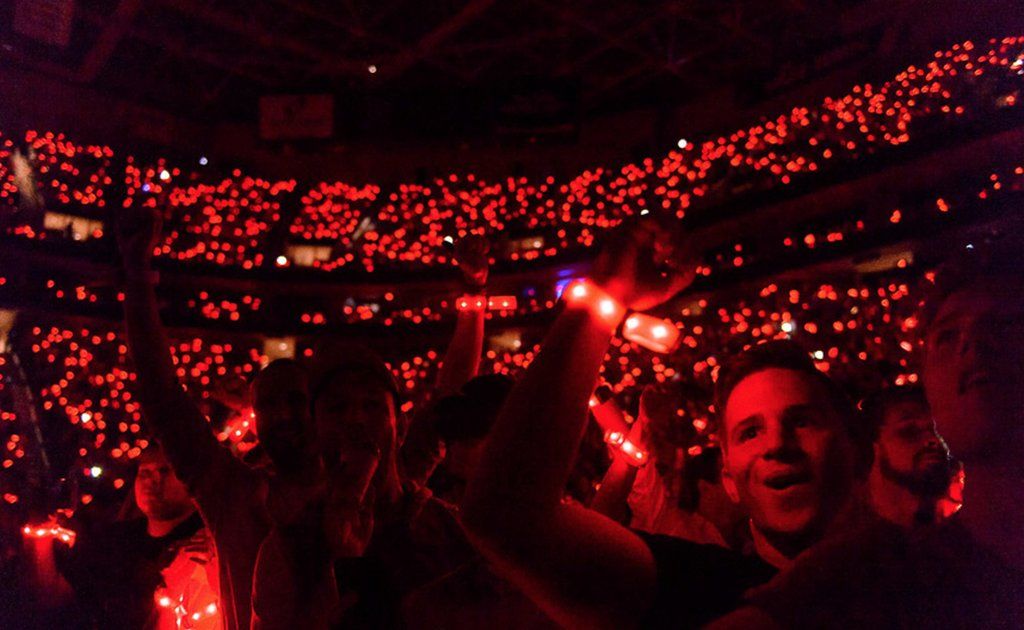
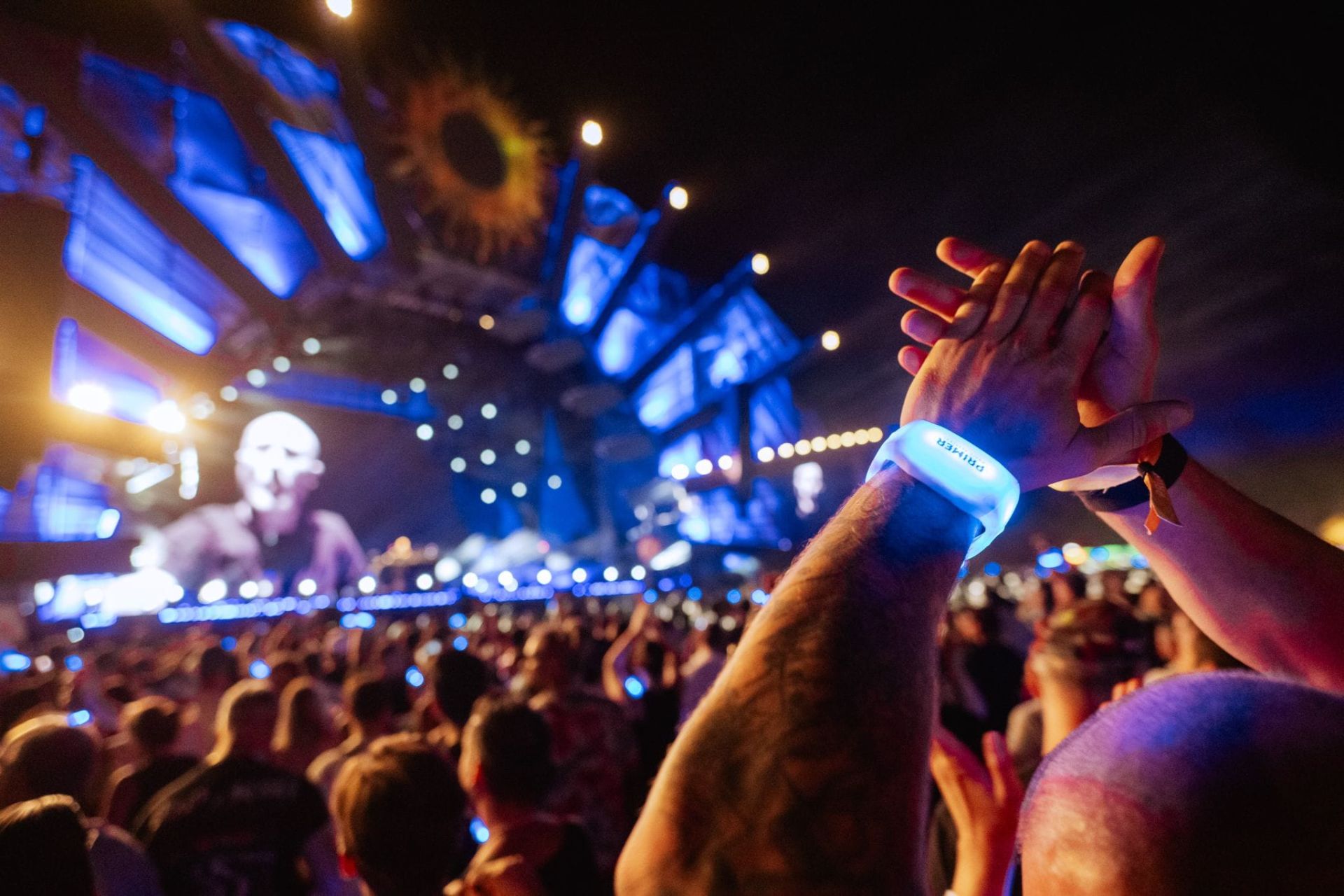
This is where wearable LED technology becomes a game-changer. Technologies like radio-controlled LED wristbands turn every audience member into a pixel in a venue-sized canvas. We’ve seen this transform shows for artists like Wizkid at London’s O2 Arena and at massive electronic gatherings like PRIMER Music Festival. Suddenly, a lighting designer’s palette extends to every seat in the house. You can flood the entire stadium with a single colour, create pulsing waves that ripple from front to back, or segment the arena into dynamic, competing blocks of light. This creates powerful moments of unity and surprise, turning the crowd itself into one of the most dynamic elements of the show.
Key Applications of Crowd Lighting:
- Synchronized Pulses: Matching the beat of a song with synchronized flashes across tens of thousands of Xylobands, creating a visceral connection to the music.
- Colour Worlds: Drenching the entire stadium in a single hue to evoke a specific emotion—a passionate red, a serene blue, a celebratory gold.
- Audience Segmentation: Dividing the venue into sections and creating visual dialogues between them, fostering a sense of shared experience and playful rivalry.
Principle 3: The Psychology of Light and Shadow
Great lighting design is fundamentally about contrast—not just between light and dark, but between intimacy and spectacle. A stadium show can’t operate at maximum intensity for two hours. It requires dynamics. You must earn your epic moments by creating quiet, intimate ones.
Consider the classic encore. After the final, explosive song, the stage goes dark. The energy in the room is at its peak, yet the visual field is minimal. Then, a single spotlight hits the artist at a piano. The sudden contraction of the visual space creates a powerful sense of intimacy. In that moment, a stadium of 50,000 feels like a small club. It’s a trick of perception, a manipulation of scale that creates deep emotional resonance.
Immersive event technology allows designers to play with this dynamic on a grand scale. Imagine plunging the entire stage into darkness while the audience’s LED bracelets begin to glow softly, emulating a field of stars. The focus shifts from the performer to the collective, creating a shared moment of breathtaking beauty before the final crescendo. This control over light and shadow is what separates a good show from an unforgettable one.
The Future is Unified
The future of tour lighting lies in the complete integration of stage, screen, and spectator. As technology evolves, the line between these elements will continue to blur. From corporate event activations to global music tours, the goal is no longer just to present a show to an audience, but to create a world that the audience inhabits.
By mastering the interplay between the macro and the micro, the broadcast and the live view, the stage and the stands, designers can create truly monumental LED crowd experiences. It’s an art form built on a foundation of robust technology and a deep understanding of human psychology, turning vast spaces into moments of profound, shared connection.