The Unfolding Horizon: A New Era of Stadium & Arena Tour Lighting
The Unfolding Horizon: A New Era of Stadium & Arena Tour Lighting
A stadium tour is more than a concert; it’s a temporary city built on a shared pulse. For a few hours, tens of thousands of individuals converge, becoming a single entity united by sound and light. Designing for this scale is an exercise in managing both physics and psychology. It requires a vision that can command a space the size of an aircraft hangar while creating moments of genuine intimacy. In this new era of live production, the lighting designer is not just an electrician but an architect of emotion, using technology to tell a story written in light.
The core challenge is immense: how do you make 50,000 people feel like they are part of the same moment? The answer lies in a set of principles that blend technical mastery with a deep understanding of the human experience.
Principle 1: Master the Vertical Space
In an arena or stadium, the sheer verticality of the space is the first and most defining characteristic. Your canvas isn’t just the stage; it’s the entire volume of air, from the front row to the highest seat in the back. Traditional stage lighting—trusses, pars, and spots—forms the foundation, but modern design pushes far beyond it. This is where the concept of a multi-layered visual field comes into play.
Effective design uses light to create depth and dimension:
- The Stage Layer: The primary performance area, where light is used to sculpt the artists, define the set, and drive the core narrative.
- The Aerial Layer: Beams, lasers, and atmospheric effects that slice through the air, creating a vast ceiling of light above the audience. This layer turns negative space into an active part of the show.
- The Audience Layer: This is the most profound shift in recent tour design. The crowd is no longer a passive observer but an integral part of the visual landscape.
Principle 2: The Audience as Canvas
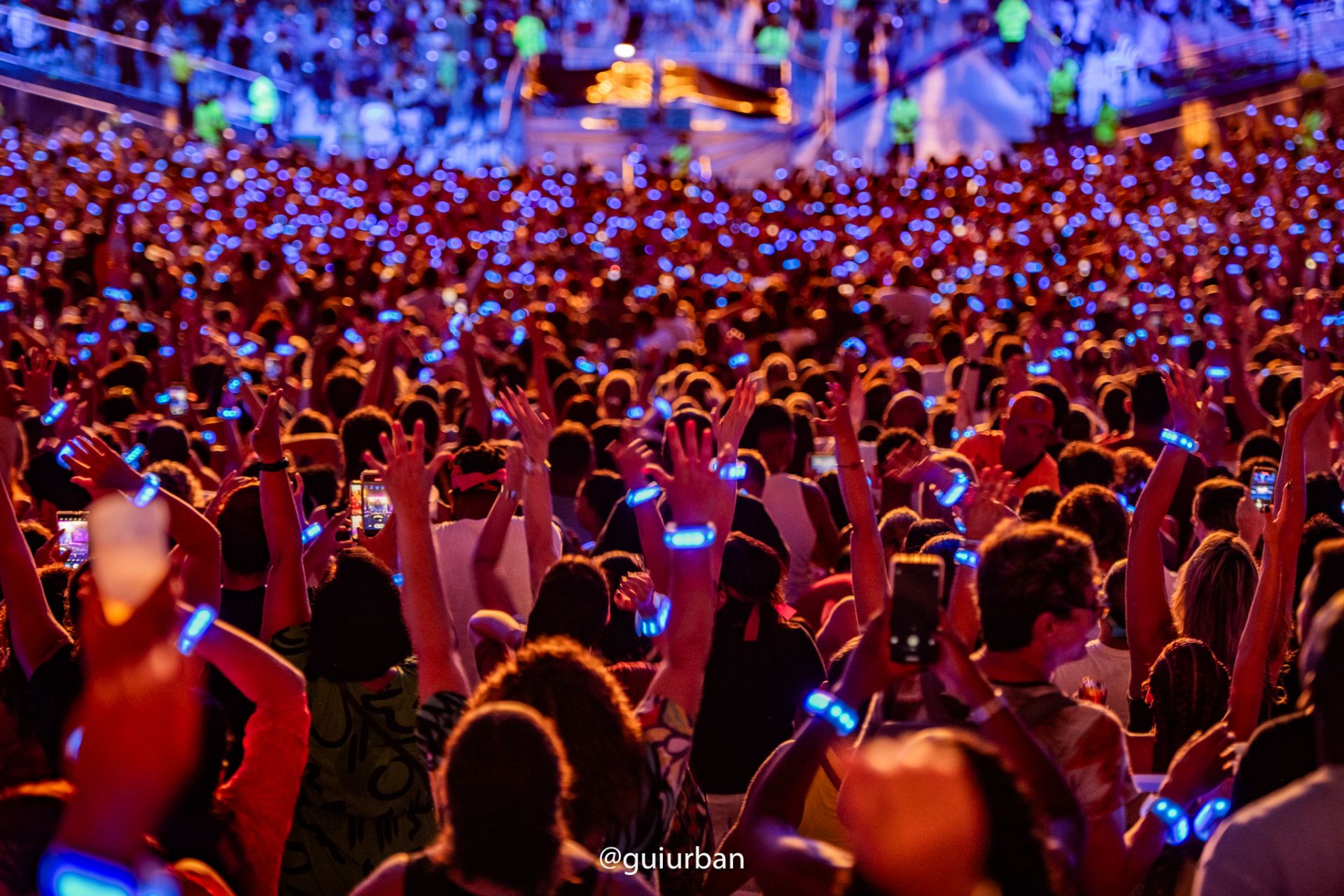
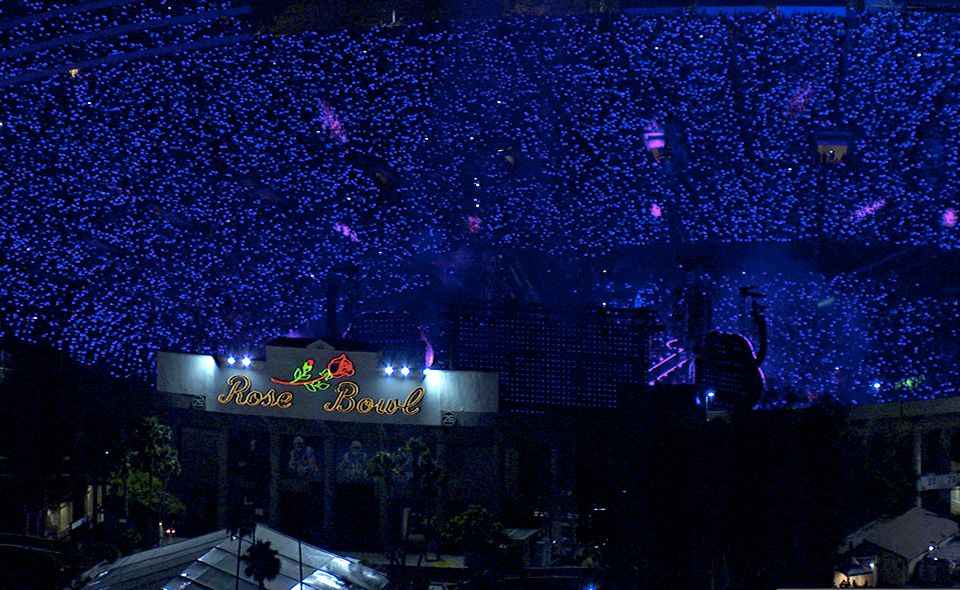
The single greatest evolution in large-scale tour lighting is the ability to paint with the audience itself. This is where Immersive Event Technology transforms a crowd from spectators into a living, breathing component of the spectacle. When Coldplay embarked on their Mylo Xyloto tour, their adoption of our Xylobands pioneered this very concept. The idea was to turn every individual into a pixel in a colossal, organic display.
This approach achieves several critical goals simultaneously:
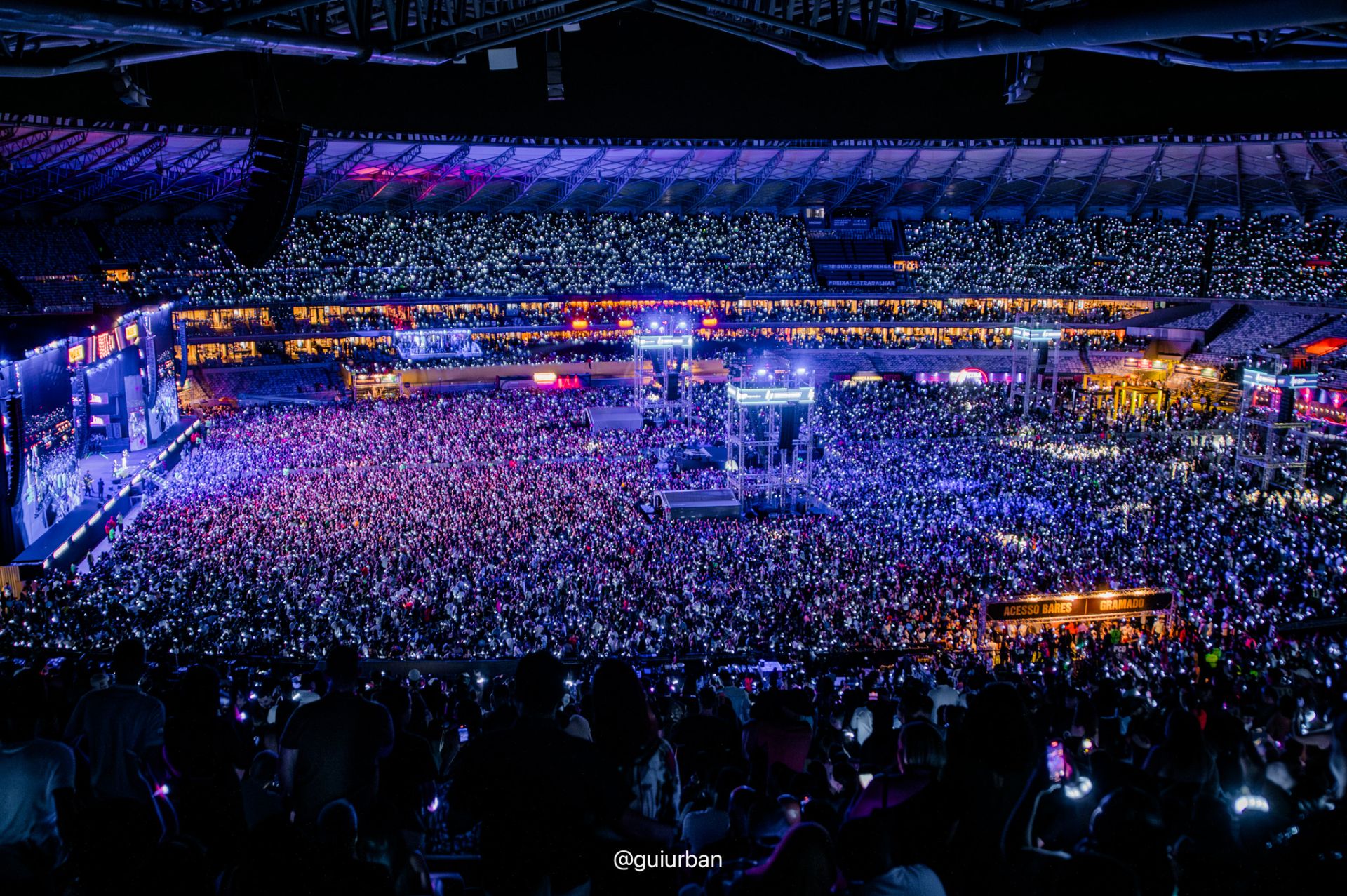
- It eliminates distance: Suddenly, the person in the last row is just as illuminated and involved as the person in the front. The light connects them directly to the performance, creating a unified visual field.
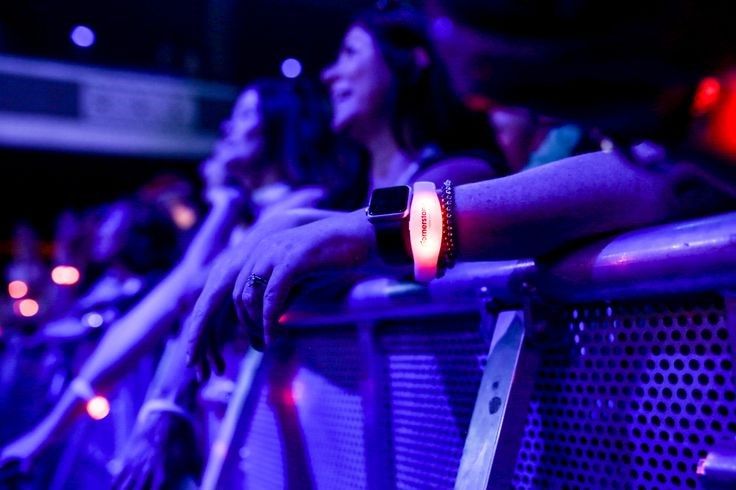
- It builds collective energy: Synchronised pulses of light, sweeping colour changes, and intricate patterns that flow across thousands of Concert Wristbands create a powerful sense of unity. It’s a visual representation of a shared emotional experience.
- It expands the creative palette: For artists and designers, the crowd becomes a new instrument. As seen with global acts like Wizkid during his historic sell-out run at The O2, our LED Bands allowed his team to extend the show’s vibrant energy directly into the hands of 32,000 fans each night. The same principle has been applied in diverse environments, from the high-energy beats of PRIMER Music Festival to the prestigious courts of the Davis Cup.
When you give light to the audience, you are democratizing the experience. You are saying, ‘You are not just watching the show; you are the show.’
Principle 3: Design for Two Audiences
Modern tours are rarely just for the people in the room. Major concerts, like Maluma’s landmark ‘Medellín En El Mapa’ show for 54,000 fans, are often broadcast live to millions more around the globe. This creates a dual imperative: you must design for the human eye and the camera lens simultaneously. What looks spectacular in person can appear blown-out or chaotic on screen. Conversely, subtle, camera-friendly lighting can feel flat and underwhelming to the live crowd.
Mastering this "two-show" imperative involves a delicate balance:
- Color Temperature and CRI: Cameras are far less forgiving than the human eye. Lighting must be calibrated for accurate color rendering (high CRI) to ensure artists look natural and brand colors appear correct on screen.
- Managing Dynamic Range: The contrast between the brightest spotlight and the darkest corner of the stage needs to be managed carefully. This often means using fill light to lift shadows for the camera without washing out the drama for the live audience.
- Audience Lighting as a Broadcast Tool: Here, LED Crowd Experiences serve a dual purpose. For the camera, a crowd illuminated with Radio Controlled LED Wristbands provides a stunning, dynamic backdrop that communicates the scale and energy of the event. It transforms seas of darkness into vibrant, active landscapes, a technique honed in broadcast environments from Beat The Chasers UK to major sporting events like Formula One.
Principle 4: Storytelling Through Synchronisation
Ultimately, every lighting cue serves the story. Light has a rhythm, a pace, and a grammar. A slow, warm fade evokes intimacy. A sharp, cold strobe creates tension. A wave of color washing over the crowd can signify a moment of collective release. The technology—whether RF, DMX, or infrared—is the syntax, but the story is the soul.
The most powerful moments occur when light, sound, and performance are in perfect sync. This is the invisible conducting that defines modern production. It’s the climactic chorus of a song triggering 50,000 LED Bracelets to pulse in unison. It’s a sudden blackout, punctuated by a single spot on the artist. It’s the gentle glow that guides fans home after the encore, just as our founder envisioned at Glastonbury all those years ago.
From the grandest gesture to the smallest detail, the principles of modern tour lighting design all point to a single goal: to close the distance between the artist and the audience, transforming vast, impersonal spaces into sites of unforgettable, shared experience.