The Sentient Stadium: A New Era of Crowd Intelligence and Safety
The Unseen Pulse of the Crowd
The roar of a crowd is a primal force. For generations, event producers and safety officers have relied on experience, intuition, and analog observation to interpret this raw signal of collective emotion. It’s a blend of art and science, reading the subtle shifts in density, volume, and movement to anticipate problems and guide the flow of thousands of human beings. But in the modern era of mass gatherings, where stadiums become small cities and festival grounds swell with populations surpassing townships, is intuition enough?
What if we could see more? What if, embedded within the spectacle itself, there was a new layer of real-time data—an unseen pulse that could reveal the intricate dynamics of the audience? This is the new frontier of crowd analytics, a domain where immersive event technology is no longer just for the show but is becoming a critical tool for safety, security, and operational intelligence.
From Spectacle to Sensor: The Dual Role of Wearable Tech
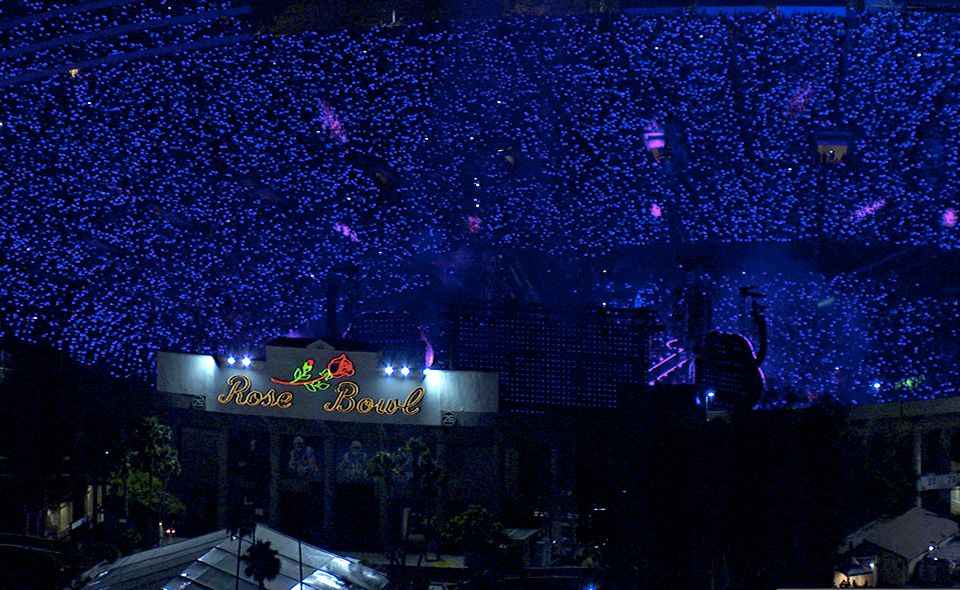
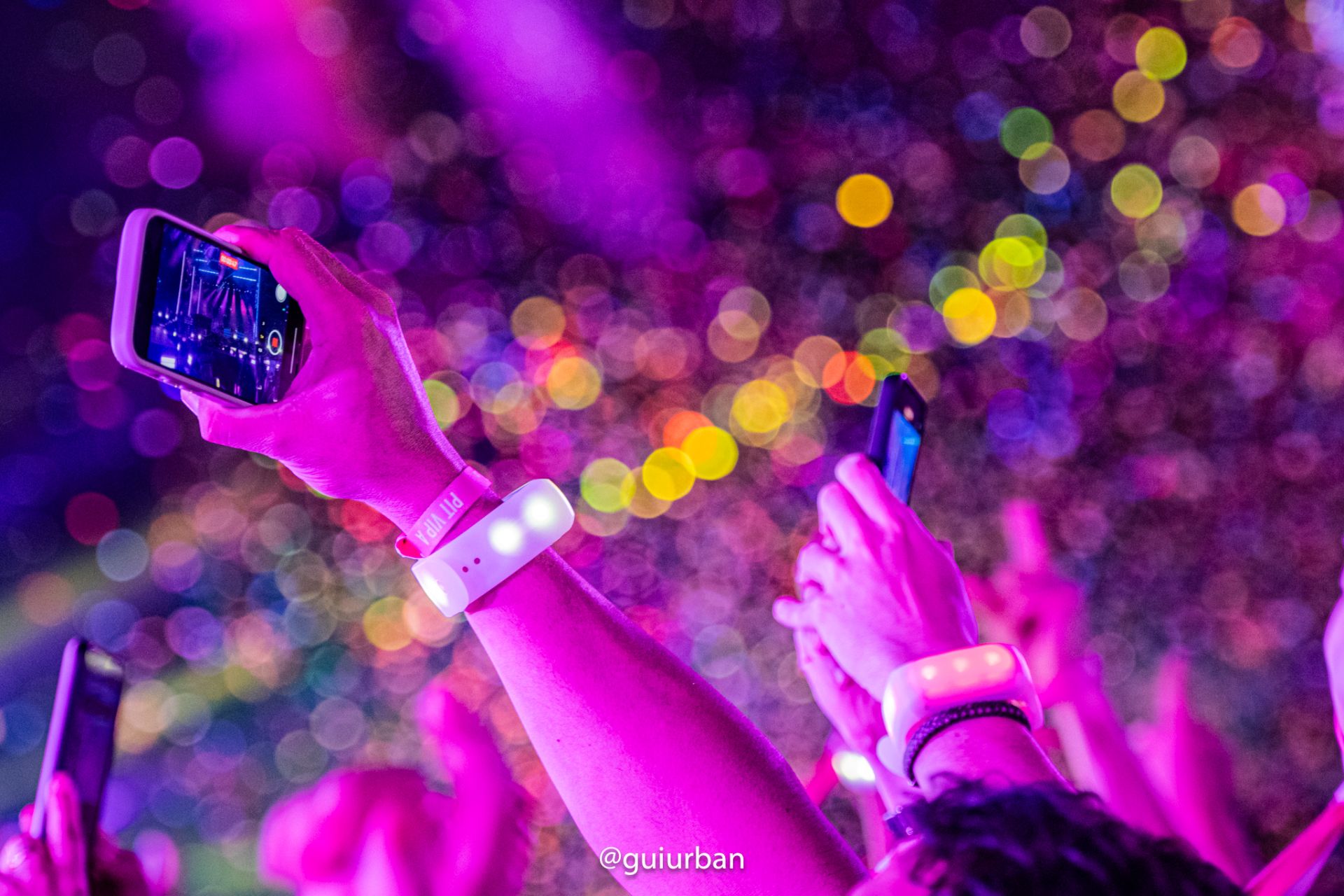
For years, our focus at Xylobands has been on transforming the audience into a canvas of light, creating breathtaking moments of unity for artists like Coldplay and Wizkid. Our radio controlled LED wristbands have turned seas of people into living, breathing extensions of the performance. However, the same underlying technology that paints a stadium with synchronized light also creates a powerful, albeit anonymized, data network.
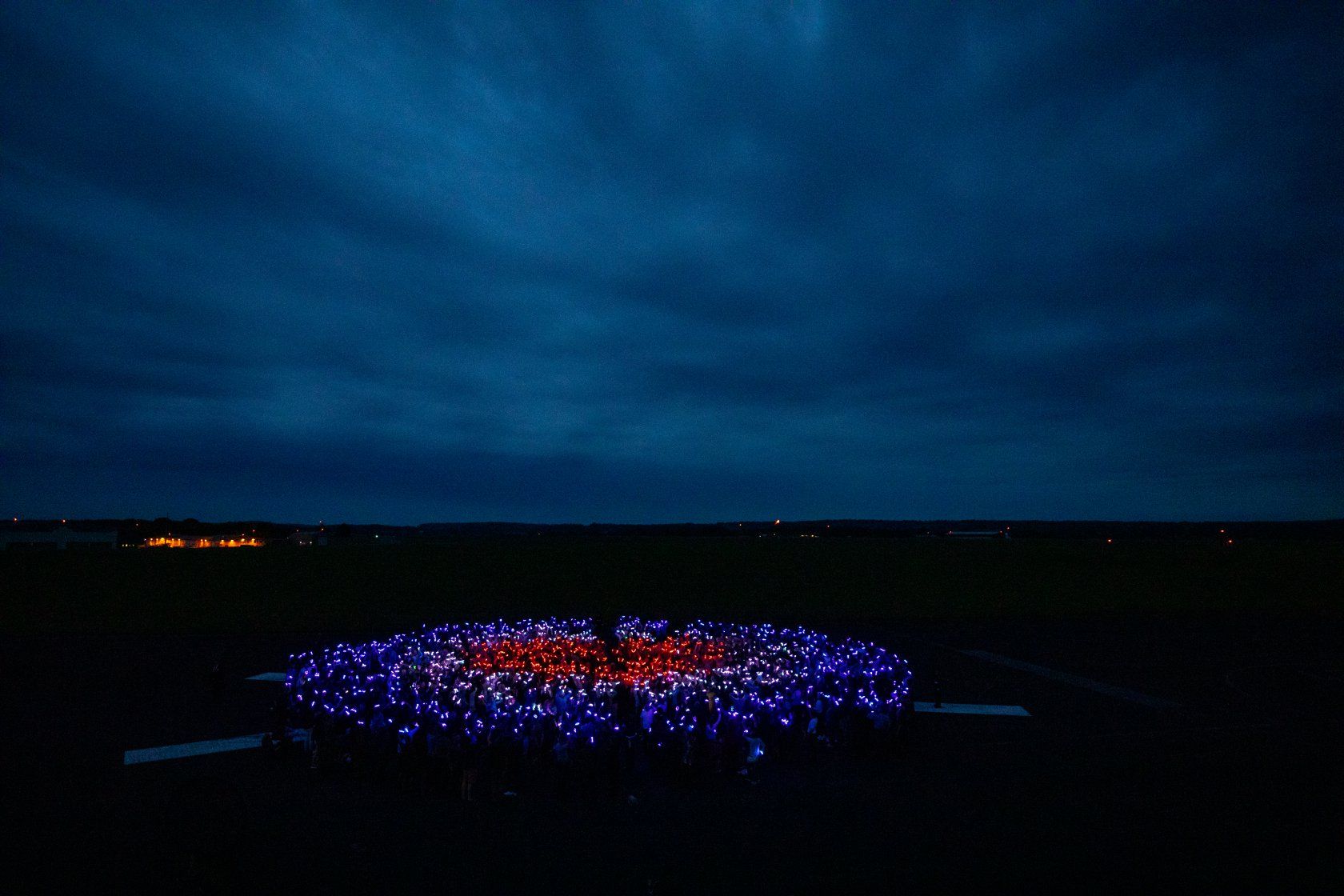
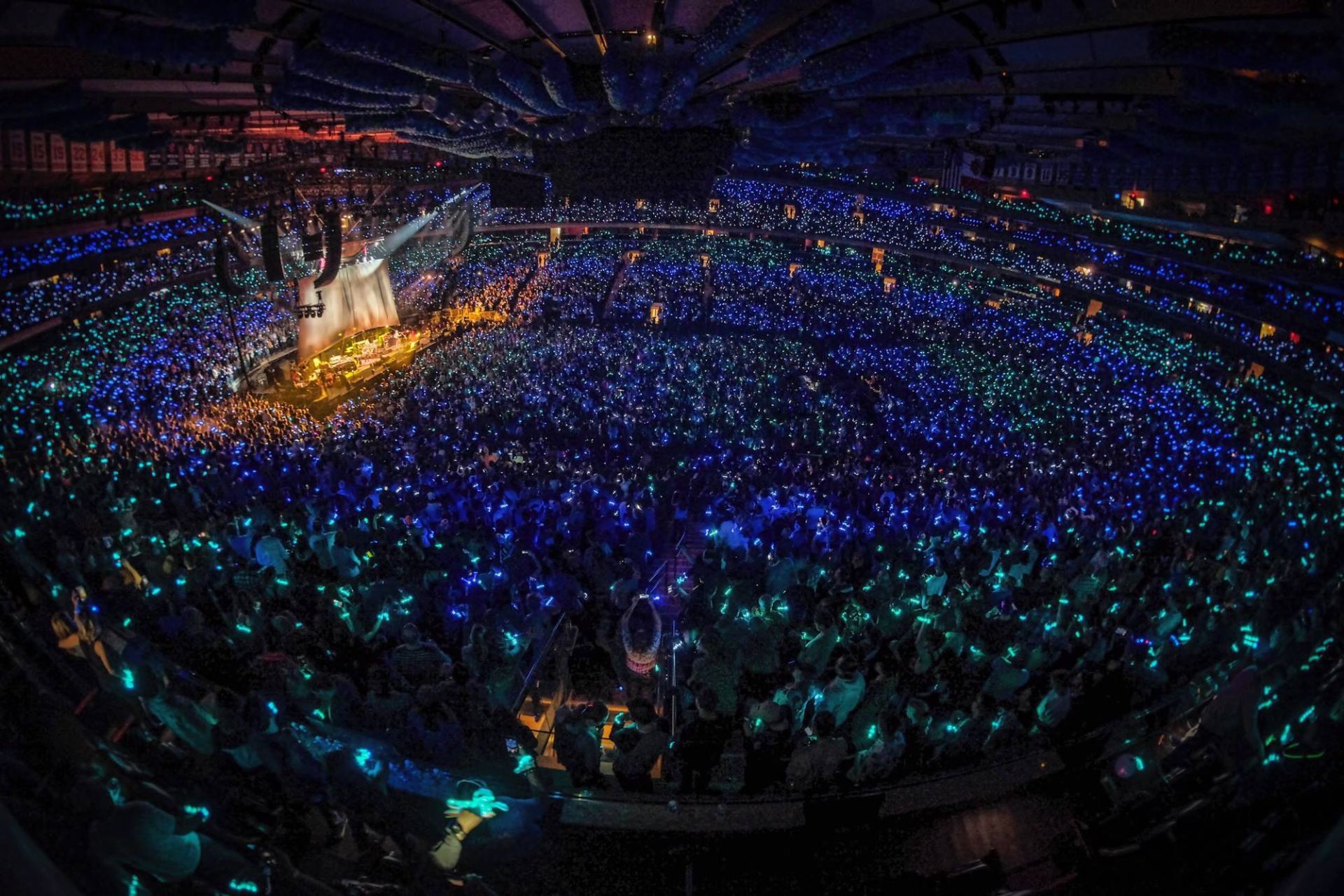
Every Xyloband, whether it’s one of our classic LED bracelets or a custom LED lanyard, acts as a receiver. Our proprietary system maps venues into zones, allowing our operators to control tens of thousands of individual points of light with precision. This segmentation, initially designed for creative effect—like turning one section of an arena red and another blue—has profound implications for crowd management. At a glance, operators can visualize the distribution and density of the audience across the entire venue. This isn’t a projection or an estimate based on ticket scans; it’s a live, dynamic map of where people actually are.
“The ability to visualize audience distribution in real time is a paradigm shift. We move from historical data to immediate, actionable intelligence.”
Reading the Blank Spaces: A New Model for Safety
At any large-scale event, from a music festival like Primer in Greece to a global broadcast like the Formula One 75th-anniversary show, the primary concern is always the safety of every person present. Traditional security relies on fixed camera positions and roaming personnel, who do an incredible job under immense pressure. Yet, their view can be obstructed, and spotting a localized issue in a sprawling crowd is like finding a needle in a haystack.
Wearable LED technology offers a different perspective. By viewing the crowd as a grid of data points, security teams can monitor for anomalies. Imagine a section of the audience where the density suddenly and rapidly increases. This could be the beginning of a dangerous surge. Conversely, a section that unexpectedly goes dark—where signals from wristbands are lost—could indicate a void, a potential sign of a collective fall or a medical emergency that requires immediate attention. It’s about reading the blank spaces in the data as much as the clusters.
This isn’t about tracking individuals. The system is anonymized by design; its power lies in aggregating patterns of movement and density. It’s a tool for understanding the macro-dynamics of the entire organism of the crowd, not the behavior of any single person. This makes it an invaluable addition to the security toolkit, augmenting human expertise with a layer of incorruptible data.
Key Applications in Crowd Analytics:
- Ingress and Egress Monitoring: By lighting up wristbands as guests enter, event managers can track the flow of arrivals, identify bottlenecks at gates, and dynamically allocate resources to ease congestion. The same principle applies to egress, ensuring a smoother, safer exit for thousands of people.
- Zone-Based Density Analysis: During an event, understanding which areas are overcrowded versus those with space to spare is critical. This allows for targeted messaging on screens, or even via the wristbands themselves, guiding people to less congested areas like concessions or restrooms.
- Emergency Response: In a critical situation, the ability to instantly identify the precise location of an incident is paramount. A lighting system that can flash in a specific zone provides an unmistakable visual marker for first responders, cutting through the noise and chaos to direct help where it’s needed most.
The Sentient Stadium of the Future
The convergence of data and spectacle is pushing the industry toward what we might call the "sentient stadium." This is a venue that doesn't just host an event but actively participates in its safe and successful execution. The light show becomes the data stream. The concert wristbands become the sensors. The audience, while immersed in the show, contributes to a safer environment simply by being part of the illuminated network.
As we continue to innovate, the potential for integrating more sophisticated analytics grows. Future iterations of LED event technology could provide even more granular insights, from the ambient temperature in different parts of a venue to the flow rate of people moving through corridors. These are not just features for a sales brochure; they are meaningful advancements that empower event producers to create experiences that are not only more dazzling and immersive but also fundamentally safer.
The next time you find yourself in a sea of light at a concert, a festival, or a major sporting event, remember that the technology creating that shared moment of wonder is also working silently in the background. It is the unseen guardian, a network of light that is helping to make mass gatherings smarter, safer, and more responsive to the human beings at their heart. The future of LED crowd experiences is not just about the spectacle; it's about intelligence.