The Craft of the Encore: Designing Unforgettable Show Moments
The High-Stakes Geometry of the Encore
In modern live entertainment, the encore is no longer an accidental curtain call. It is no longer a polite response to rhythmic hand-clapping while stage technicians casually pack away flight cases in the wings. In arena- and stadium-scale production, the encore is a meticulously calculated narrative release—the psychological apex of the entire experience.
For lighting designers, show directors, and technical teams, the finale poses a structural challenge. By the end of a two-hour set, audiences have grown accustomed to the rig. They have watched front-of-house push the moving heads to full tilt, witnessed every cryogenic burst, and tracked the video walls across every macro-narrative shift. The sensory threshold is exceptionally high. Delivering a genuine escalation requires more than turning up the lumen count on stage. It demands flipping the spatial orientation of the arena entirely.
To produce an indelible final impression, the show must cease being an object viewed from a distance. The room itself must become the performance.
The Structural Arc: Darkness, Tension, and Catharsis
Crafting an unforgettable final chapter depends on controlling the liminal space between the main set and the return. This interlude is an active canvas:
- The Reset of Visual Baseline: Saturating an audience with sustained high-intensity output creates optical fatigue. A masterfully directed transition drops the space into controlled, intentional blackout. Lowering the ambient room lighting allows the audience's optical baseline to reset, making whatever comes next radically more potent.
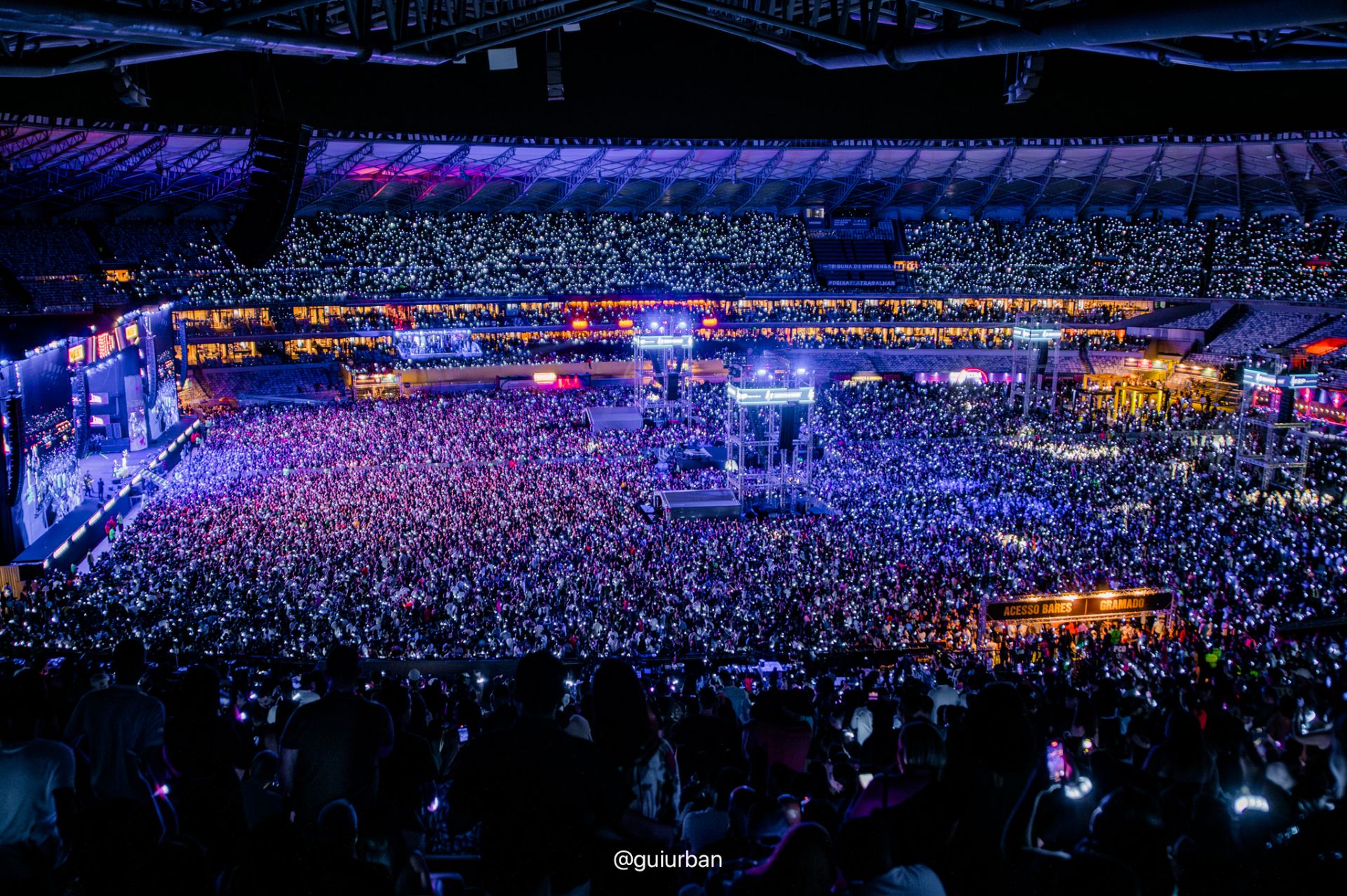
- Subverting the Gaze: Standard stage lighting reinforces a one-way vector: performer radiates, spectator observes. An encore should shatter that hierarchy. By redistributing photons directly onto the audience, the human collective transforms into the primary scenic element.
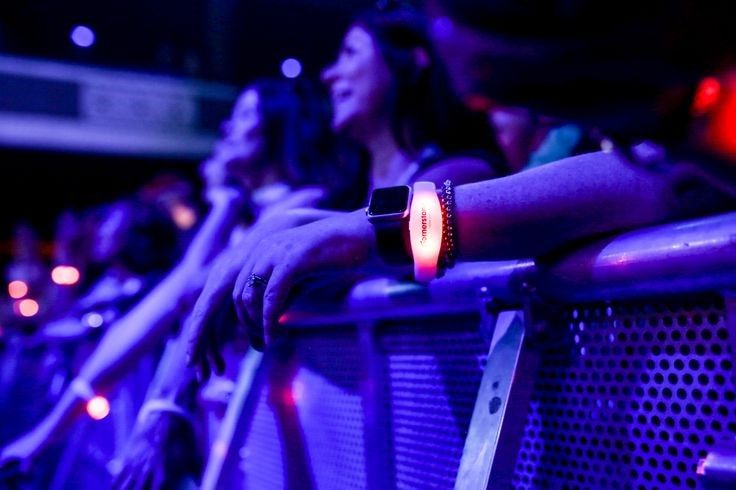
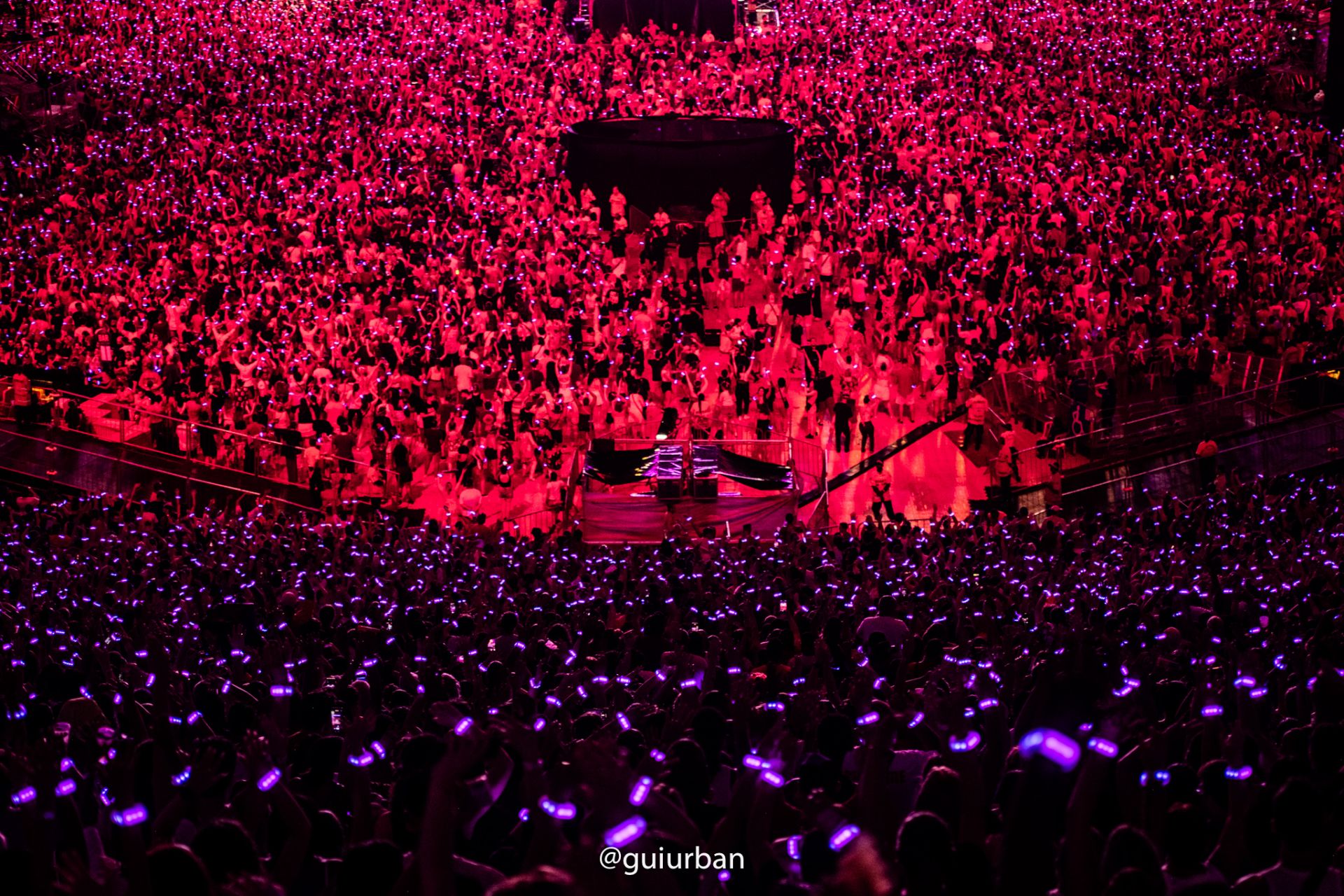
- Unified Spatial Waves: When tens of thousands of individuals are transformed into discrete pixels via wearable LED technology, lighting directors unlock a 360-degree volumetric canvas that conventional truss-mounted fixtures cannot match.
Flipping the Canvas: Audiences as Volumetric Scenography
The transition from passive viewer to active participant is where immersive event technology demonstrates its true mechanical advantage. When Jason Regler originally conceived Xylobands while listening to Coldplay perform "Fix You" at Glastonbury Festival, the realization was simple: light shouldn't just illuminate the band; it should connect everyone in the venue.
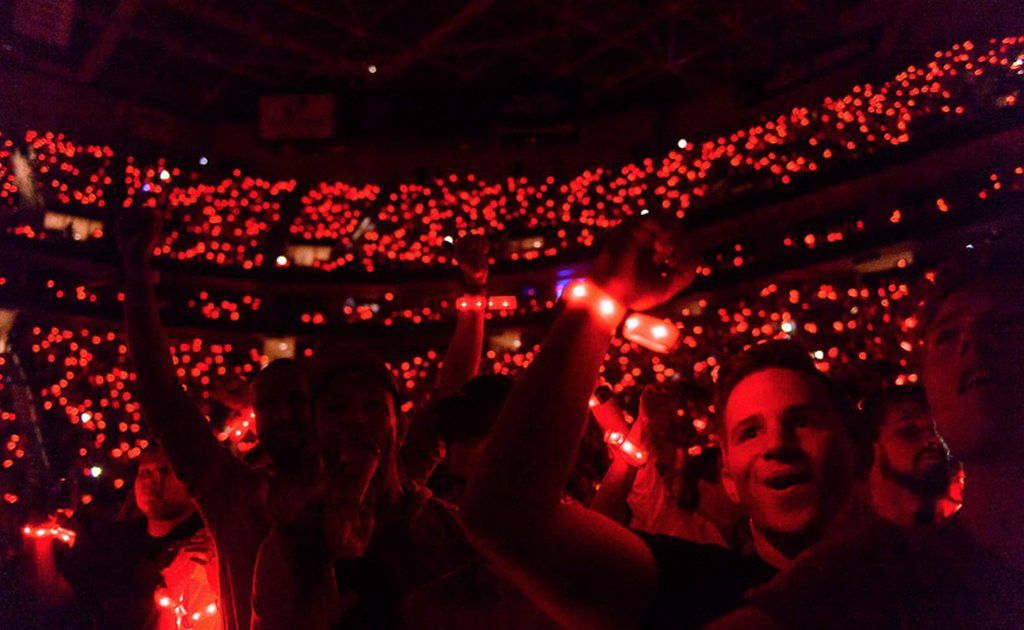
That concept revolutionized arena storytelling during Coldplay's historic Mylo Xyloto World Tour in 2012, where Coldplay Xylobands established a new paradigm for live music. By deploying radio controlled LED wristbands, the stadium ceiling and perimeter disappeared. Suddenly, the entire bowl operated as an interconnected light engine.
In high-concept touring, this spatial dynamic transforms the encore. Consider Wizkid’s historic three-night stand at London’s 20,000-capacity O2 Arena during his Made in Lagos tour. For that landmark engagement, over 32,000 Xylo Lux and Xyloband Lite units were deployed across the run. When guest artists joined the stage and the set reached its final fever pitch, the arena didn't just feel packed—it felt illuminated from within. The wristbands gave the entire O2 bowl a unified pulse, turning an already electric set into a shared communion that resonated long after the house lights came up.
The Technical Anatomy of the Final Hit
Engineering these defining show moments requires seamless real-time control. For show callers and lighting operators, introducing LED crowd experiences into the finale cannot involve latency or unpredictable RF interference. It requires precise synchronization with timecode and lighting consoles.
Direct integration into the lighting desk via DMX or Art-Net allows designers to orchestrate complex spatial movements:
- Zone-Mapped Cascades: Dividing an arena into distinct radio-frequency zones allows chase sequences to physically race through the venue, sweeping from floor level up to the upper tiers in fractions of a second.
- Color-Field Transitions: Shifting an entire venue from cold, clinical monochromes to a warm, full-spectrum amber during a signature vocal refrain triggers visceral, physiological responses in attendees.
- Micro-to-Macro Rhythms: Flashing LED bracelets in time with syncopated percussion before pulling back into a sustained, breathing wave creates dynamic contrast that traditional moving heads simply cannot project into the grandstands.
Whether deploying festival wristbands across expansive open-air venues like the PRIMER Music Festival in Athens, or rigging suspended LED orbs alongside custom LED lanyards for indoor arena spectacles, the objective remains identical: engineering synchronicity.
"The true power of modern crowd lighting isn't spectacle for the sake of scale; it's the sudden, profound erasure of the distance between the artist and the very last row."
Designing for the Long Tail: Memory and Retention
The encore is the final cognitive impression an event leaves. In cognitive psychology, the peak-end rule dictates that people judge an experience largely based on how they felt at its most intense moment and its end. What happens during the closing ten minutes dictates how the entire show is catalogued in memory.
When an audience leaves an arena wearing custom concert wristbands that illuminated the final chorus, the experience doesn't end at the exit doors. The physical device serves as a tactile totem of a collective moment. Long after the stadium clears, the lingering afterglow of that shared wave of light remains the defining memory of the night.
For show producers, festival organizers, and creative directors aiming to craft moments that dominate social feeds and live forever in fan memory, mastering the encore is essential. When you treat the crowd not as a room full of observers, but as the final, crowning instrument of your show, the result is nothing short of extraordinary.