The Synchronized Sea: How Wearable Tech Forged a New Festival Audience
From Embers to Pixels: The Unfolding of Collective Experience
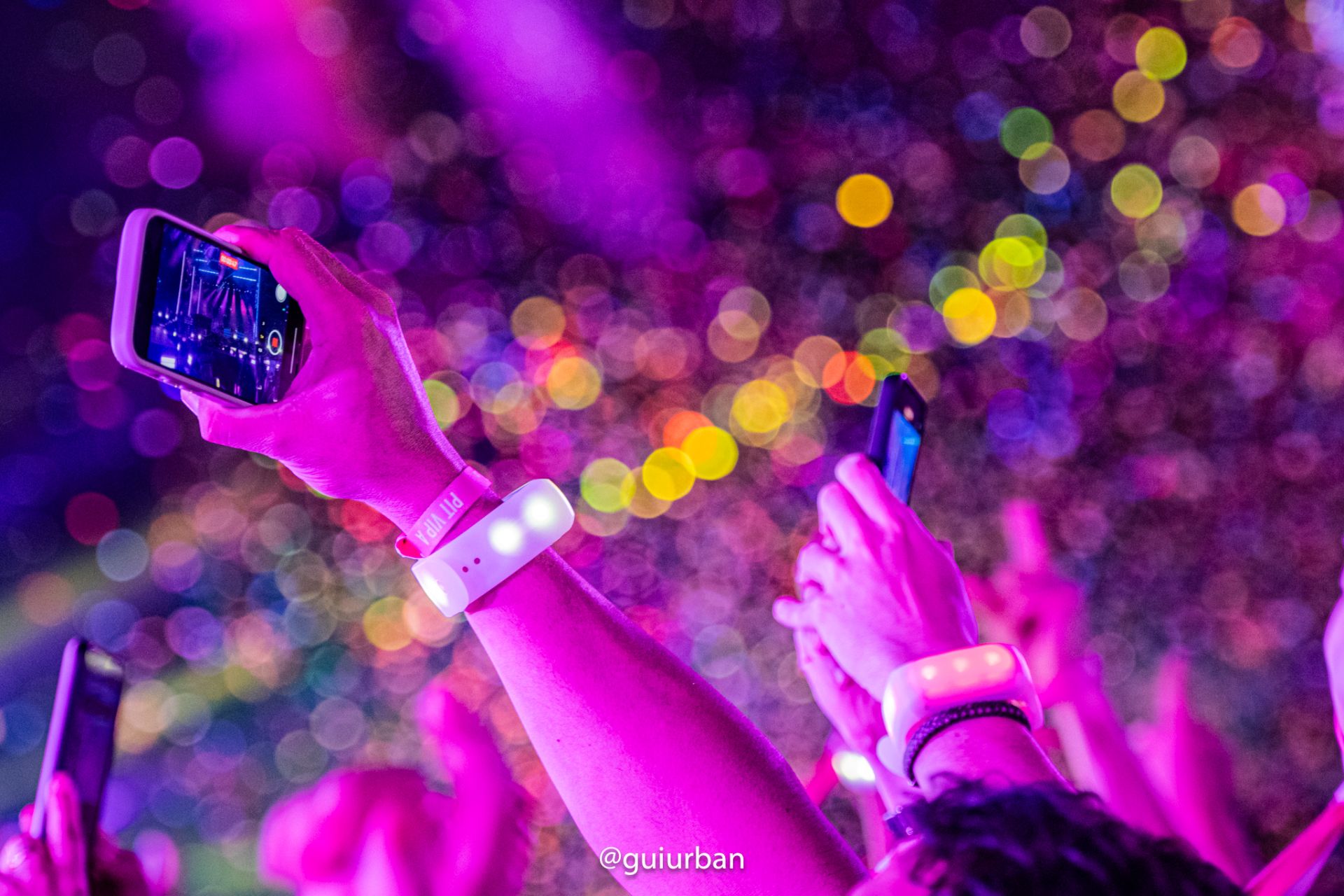
Picture the archetypal festival image of the 20th century: a vast, dark field, pinpricked by the tiny, flickering flames of a thousand lighters held aloft. It was a simple, analog signal of unity—a spontaneous, shared gesture that connected a crowd to a moment. It was a beautiful, chaotic, and deeply human expression of shared experience. Now, picture the modern festival: that same field is transformed into a single, synchronized super-organism of light and color. Every individual a pixel, every beat a pulse of collective energy, all orchestrated with absolute precision. The crowd is no longer just watching the show; they are the show.
This leap from scattered embers to a synchronized sea of light represents one of the most significant shifts in modern festival production. It’s a journey from passive observation to active, kinetic participation. For event producers, tour managers, and brand marketers, understanding this evolution is not just about keeping up with trends; it’s about grasping a fundamental change in the contract between the artist, the production, and the audience.
The Analog Heartbeat
The desire for collective experience is primal. For decades, festival production focused on the stage: Bigger sound systems, more elaborate lighting rigs, larger video screens. The audience’s role was to receive this spectacle. Their participation was largely unguided—applause, singalongs, the aforementioned lighters. It was powerful, but it was also undirected. The energy flowed in one direction: from the stage, outwards.
Then came a moment of profound inspiration. At Glastonbury Festival, during a Coldplay performance of "Fix You," our director Jason Regler stood in that legendary field and heard the line, "Lights will guide you home." Watching the sporadic lights from phones and lighters sprinkle the darkness, he envisioned something more. What if every single person could be a light? What if that light could be connected to every other light, guided by the music itself? It was a vision to harness that raw audience energy and give it a unified, technological voice.
The idea was to create a moment of pure unity, where the crowd and the artist become one; to switch off the outside world and immerse everyone together in a live music performance.
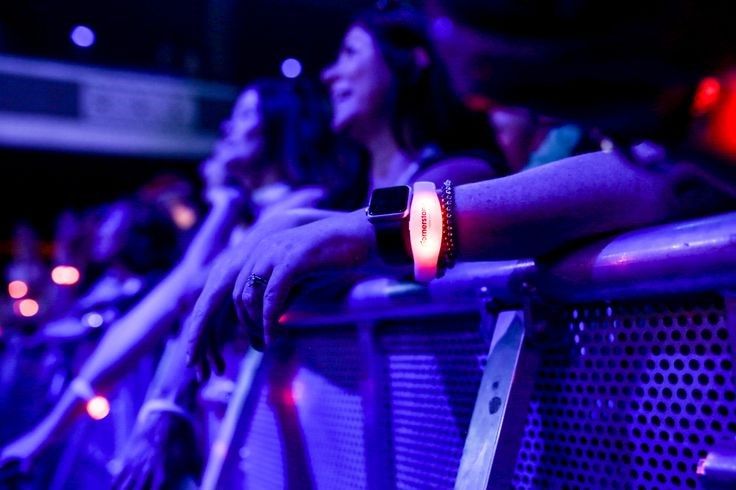
That spark of an idea, born in a field in Somerset, led to the creation of Xylobands. When they debuted on Coldplay’s 2012 Mylo Xyloto Tour, the effect was immediate and seismic. The silent, invisible barrier between the crowd and the stage dissolved. The audience was given a new sense of agency, transformed into a living, breathing extension of the performance itself. The era of the Coldplay Xylo Band experience had begun, setting a new benchmark for Immersive Events.
The New Production Logic: The Crowd as Canvas
What began as a concert novelty has matured into an essential tool of modern event production. The adoption of Wearable LED Technology like Festival Wristbands is no longer just a "wow moment"—it’s a core component of the show’s design language. For producers, this means the crowd itself has become a new canvas, a dynamic lighting fixture tens of thousands of pixels wide.
This shift demands a new production logic. Lighting designers are no longer just lighting a stage; they are lighting an entire stadium, a whole festival field. The DMX-controlled commands that once triggered a moving head or a strobe now trigger a pulse of light that ripples through 50,000 people. This is the new reality of LED Crowd Experiences.
Modern electronic music events, like Greece’s PRIMER Music Festival, exemplify this. There, Xylo Bands are deployed to create a powerful symbiotic relationship between the DJ’s set and the audience’s sensory experience. The drops, builds, and breaks are not just heard and felt; they are seen, pulsing in perfect time across the entire crowd. It’s a level of sensory immersion that was unimaginable two decades ago.
Key Production Considerations in the Age of Immersive Light:
- Choreography at Scale: The crowd is now part of the choreography. Production teams must pre-visualize and program effects that utilize the audience space, turning sections of a stadium or field into graphic equalizers, sweeping color fields, or brand logos.
- Technological Integration: The deployment of Radio Controlled LED Wristbands is a significant logistical and technical undertaking. It requires seamless integration with the existing lighting and show-control systems, robust RF infrastructure, and a deep understanding of signal management in crowded, high-interference environments.
- The Human Element: While the technology is advanced, the execution is deeply human. From the global logistics of shipping thousands of units to the on-site distribution and collection, a successful immersive light show depends on a flawless ground game. As seen with Maluma’s historic 54,000-person show in Medellín, the scale can be immense, but the goal remains the same: a personal and collective experience for every single attendee.
Beyond the Wristband: An Ecosystem of Engagement
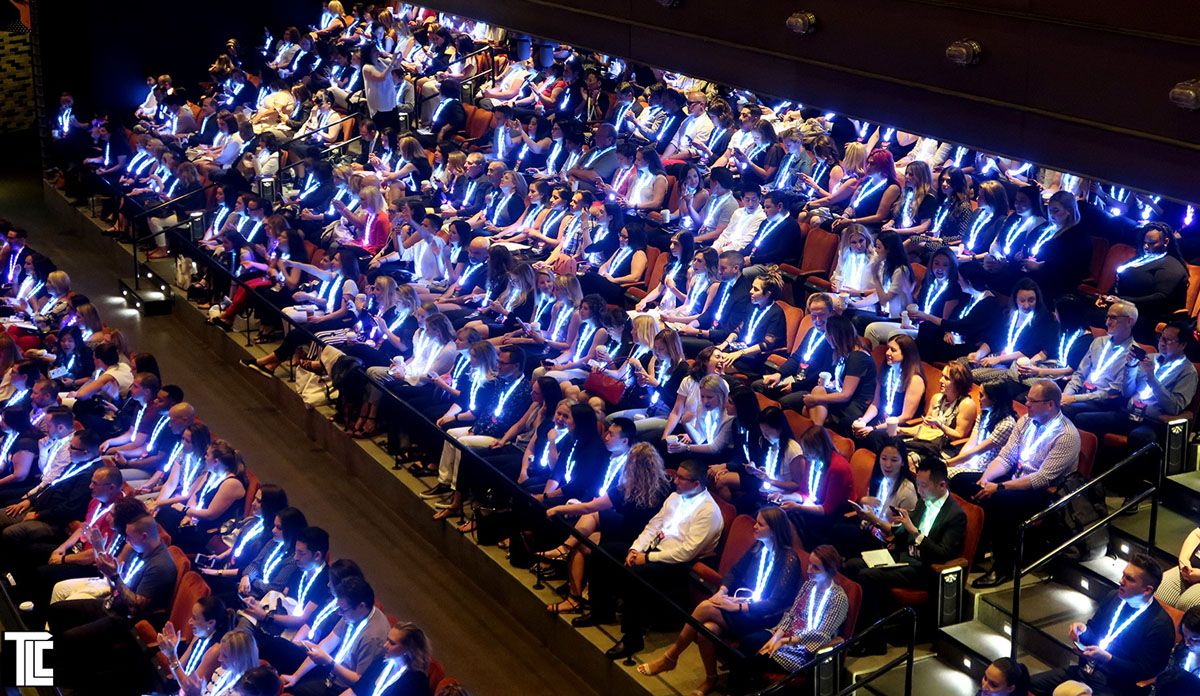
While the LED Bands that started it all remain a powerful tool, the concept has expanded into a full ecosystem of LED Event Technology. Custom-shaped LED Lanyards for Corporate Event Activations at a Formula One 75th anniversary celebration, or glowing LED Orbs that can be thrown among the crowd, all stem from the same core principle: turn spectators into active participants.
This evolution redefines what an audience is. They are no longer a passive sea of faces, but an active, integral, and illuminated part of the spectacle. They are the final, and perhaps most important, layer of the production design. The lighters of yesterday were a question asked by the audience; the synchronized light of today is a conversation, a call and response between the stage and the stands.
For those of us dedicated to designing and executing the world’s most ambitious live experiences, this is the new frontier. It’s not about replacing the human element with technology, but about using technology to amplify our innate desire for connection, turning a hundred thousand individuals into one synchronized, unforgettable moment.