The Unfolding Audience: A Brief History of Participation Tech
The Echo in the Amphitheater: Ancient Roots of Audience Participation
The desire to be part of the show is not a modern phenomenon. It’s a primal human impulse, as old as storytelling itself. Long before the advent of digital technology, the line between performer and spectator was fluid. In the grand amphitheaters of ancient Greece, the chorus was not merely a group of background singers; they were the voice of the community, reacting, responding, and shaping the narrative. They were, in essence, the first form of immersive audience participation—a collective body that gave the drama its emotional weight.
This tradition of collective response echoed through the ages. From the call-and-response chants of medieval folk gatherings to the roaring crowds of Shakespeare’s Globe Theatre, audiences have always asserted their presence. They were not passive consumers of entertainment but active co-creators of the experience. The energy of a performance was a two-way street, a feedback loop between the stage and the seats. This fundamental truth remains the bedrock of live events today: an audience wants to feel seen, heard, and valued.
From Flickering Flames to Phone Screens: A Century of Analogue Interaction
The 20th century saw the industrialization of live entertainment, with larger venues and more powerful amplification. Yet, the audience’s desire for participation remained. The first iconic symbol of modern audience interaction arrived not with a technological breakthrough, but with a simple, open flame. The sight of thousands of lighters held aloft during a power ballad became a defining image of the rock-and-roll era—a quiet, collective salute that transformed a stadium into a galaxy of tiny, flickering stars.
This analogue gesture of solidarity was powerful, but it was individualistic. It was a mass of single actions, not a unified canvas. As lighters gave way to mobile phones in the early 2000s, the visual effect became brighter, but the principle remained the same. Waving a phone screen created a sea of disconnected lights, each in its own world. While visually compelling, it lacked cohesion. The technology in everyone’s pocket was a powerful tool, but it was not yet networked for a collective purpose. The crowd was a collection of points of light, not a singular, dynamic picture.
The Spark of an Idea: The Birth of Controlled LED Experiences
The transition from analogue lights to synchronized, intelligent light shows marked a paradigm shift. The story of Xylobands is a perfect illustration of this leap. The idea was sparked at Glastonbury Festival during a Coldplay performance of “Fix You.” As the lyrics “Lights will guide you home” rang out, our founder, Jason Regler, envisioned a future where the audience itself became the light show—not as a random assortment of individual lights, but as a single, cohesive, living entity.
This vision led to the invention of the radio-controlled LED wristband. The concept was simple but revolutionary: what if every member of the audience could be connected, their wristbands centrally controlled to pulse, fade, and change color in perfect sync with the music, the lighting cues, and the artist’s performance? It was the moment the audience transformed from a collection of spectators into a unified medium. The debut of Coldplay Xylobands on their 2012 Mylo Xyloto tour was the proof of concept that would change live events forever. Suddenly, the crowd was a canvas, painted with light in real-time.
The Networked Audience: RF, DMX, and the New Creative Palette
The invention of the LED wristband was just the beginning. The evolution of underlying control technologies like Radio Frequency (RF), DMX, and Infrared has unlocked a new dimension of creative possibilities for Immersive Event Technology. Today’s systems allow for a level of granular control that was unimaginable just a decade ago. It’s no longer just about turning tens of thousands of wristbands one color. It’s about creating complex, dynamic, and breathtaking visual experiences.
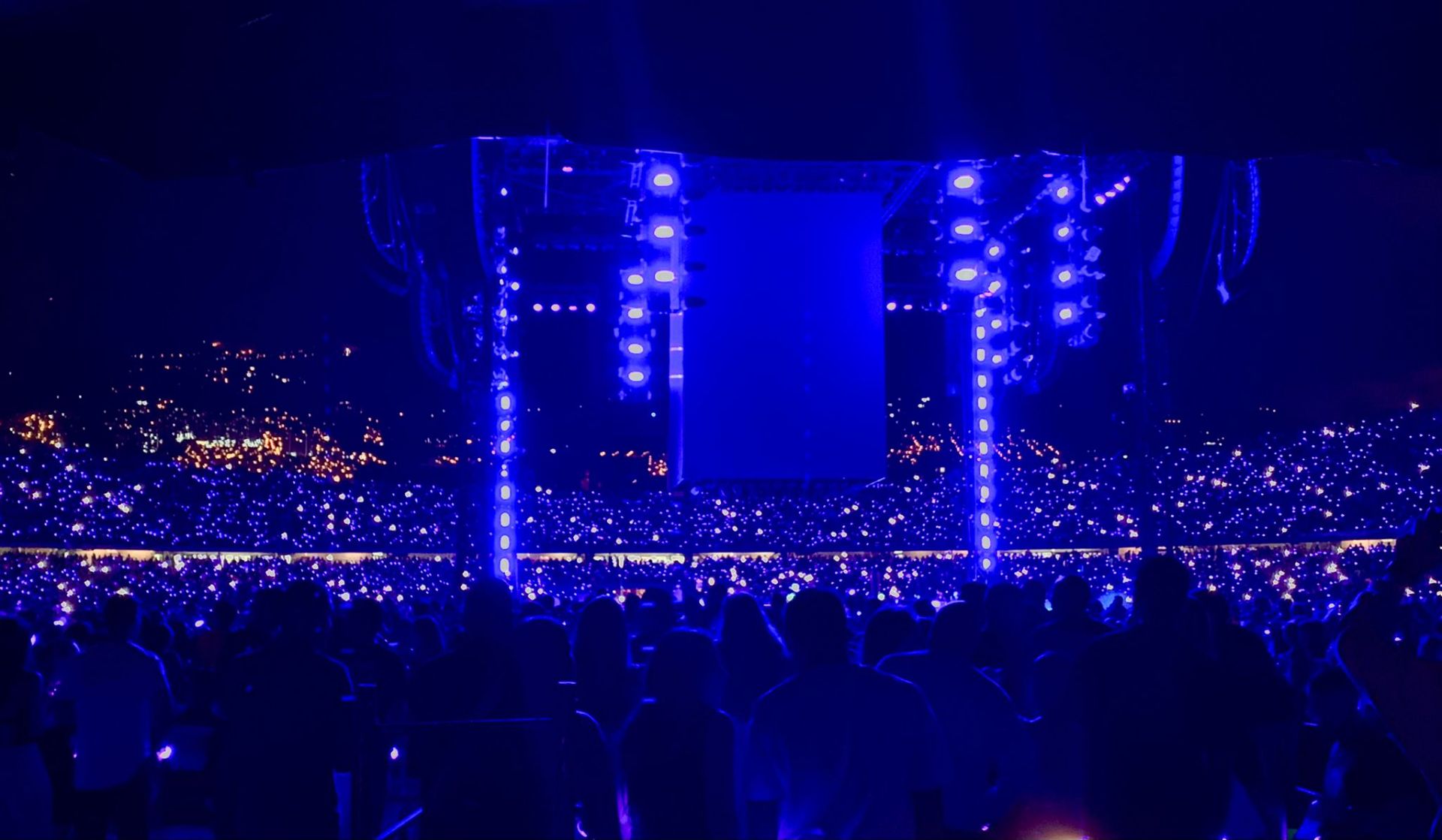
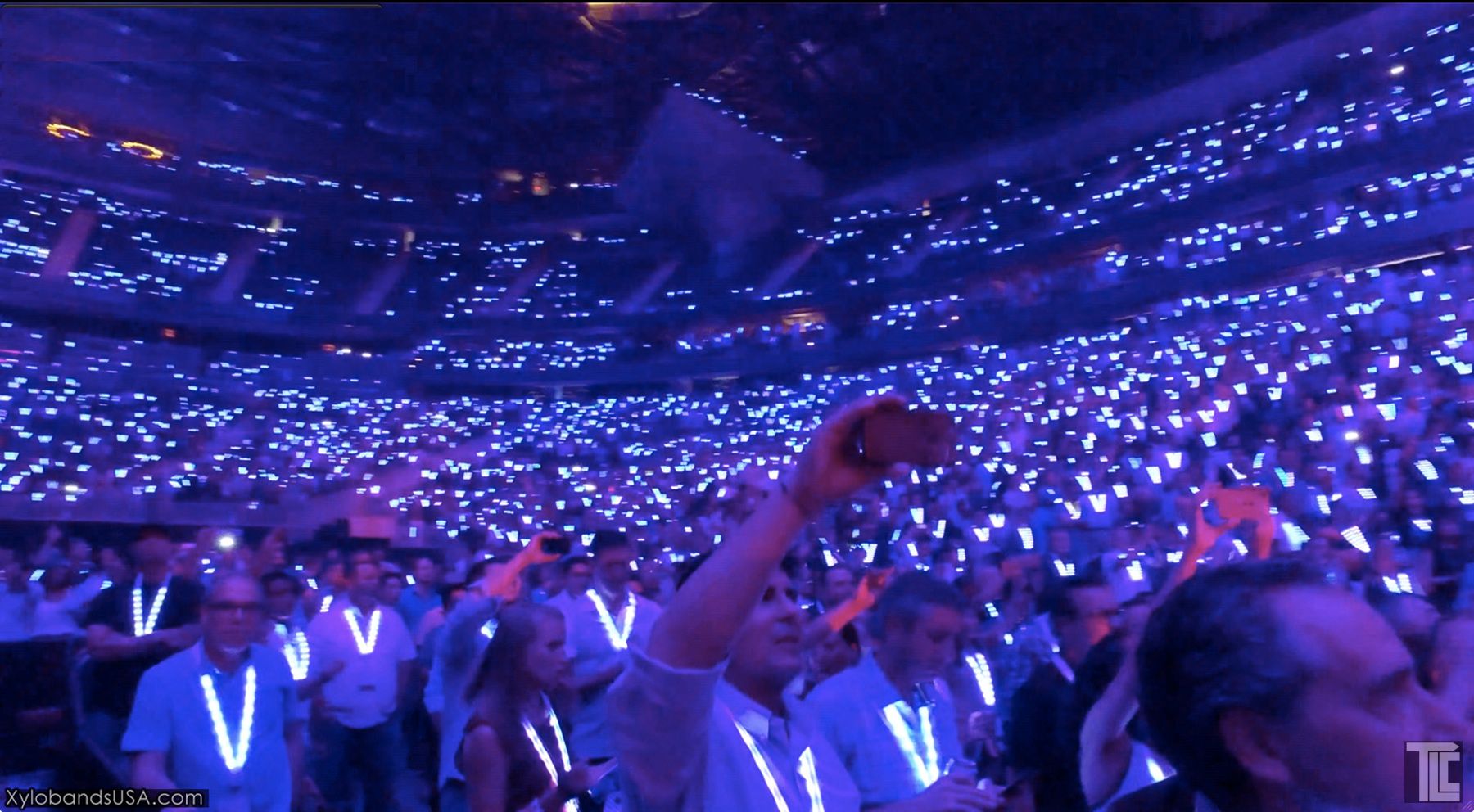
Show designers can now segment an arena into countless zones, creating waves of light that ripple across a stadium, or isolate specific sections to highlight a dramatic moment. This technology has powered spectaculars for global artists like Wizkid and Maluma, and transformed major broadcast events for brands like ITV and Formula One. At F1’s 75th-anniversary event, custom LED Lanyards were distributed, allowing our team to create dynamic effects mapped specifically to different seating sections, turning the entire arena into a vibrant, branded spectacle. This is the power of the networked audience—transforming a crowd into an intelligent, responsive extension of the main stage production.
“The crowd itself becomes the spectacle. We’re not just lighting the stage anymore; we’re lighting the entire human landscape of the venue.”
Beyond the Wristband: The Future of Wearable LED Technology
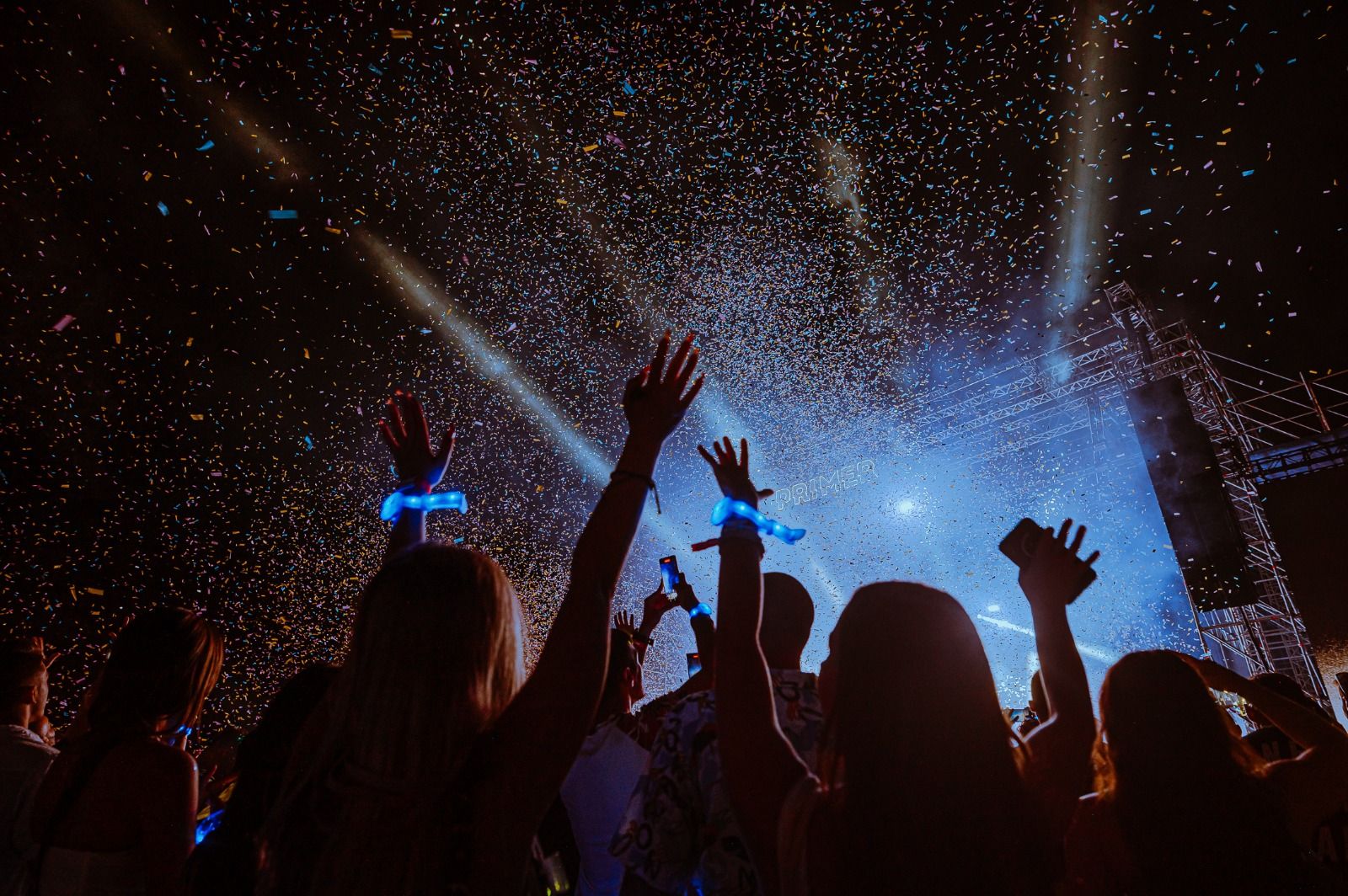
The evolution continues. The core concept of synchronized light has expanded beyond concert wristbands into a diverse ecosystem of LED Wearables. Custom pendants, lanyards, and even illuminated LED Orbs are now part of the toolkit for creating immersive LED Crowd Experiences. These innovations open up new avenues for everything from Corporate Event Activations to music festivals like Primer in Greece, where Festival Wristbands amplify the collective energy of the dance floor.
Looking ahead, the future of audience participation lies in deeper integration. As wearable technology becomes more sophisticated, we can foresee a future where light shows are just one component of a multi-sensory experience. Imagine experiences that incorporate haptics, augmented reality overlays, and personalized content, all delivered through a single, elegant wearable device. The journey from the Greek chorus to the radio-controlled LED wristband is a long one, but it’s driven by the same timeless human desire: to not just watch the story, but to be a part of it. The technology will continue to evolve, but the goal will remain the same—to unite a crowd in a single, unforgettable moment of shared experience.