The Unfolding Canvas: How Technology Redefined the Festival Experience
From Lighters to LEDs: Charting the Evolution of the Festival Crowd
The modern music festival is a sensory marvel—a meticulously engineered landscape of light, sound, and collective energy. For decades, producers and artists have sought to break the fourth wall, to dissolve the boundary between the stage and the crowd, and to transform a passive audience into an active, integral part of the show. This pursuit has driven a fascinating evolution in how we think about crowd participation, moving from spontaneous gestures to technologically-powered, choreographed moments of unity.
Think back to the iconic imagery of early festivals. The sea of lighters held aloft during a ballad at Woodstock or a legendary rock concert was the first form of mass audience participation. It was a simple, analogue signal—a collective beacon of appreciation and connection. This was the audience finding its own way to become part of the visual narrative, to respond to the music with a unified gesture. It was organic, unplanned, and deeply human.
The advent of the mobile phone supplanted the flame with the screen, creating a galaxy of digital lights. While visually similar, this shift marked a subtle change in the dynamic. It was still a spontaneous act, but now filtered through a personal device, often with the secondary purpose of capturing content. The focus began to shift from purely experiencing the moment to documenting it. Yet, the core impulse remained the same: the desire to contribute, to be seen, and to be part of something larger than oneself.
The Birth of the Active Canvas
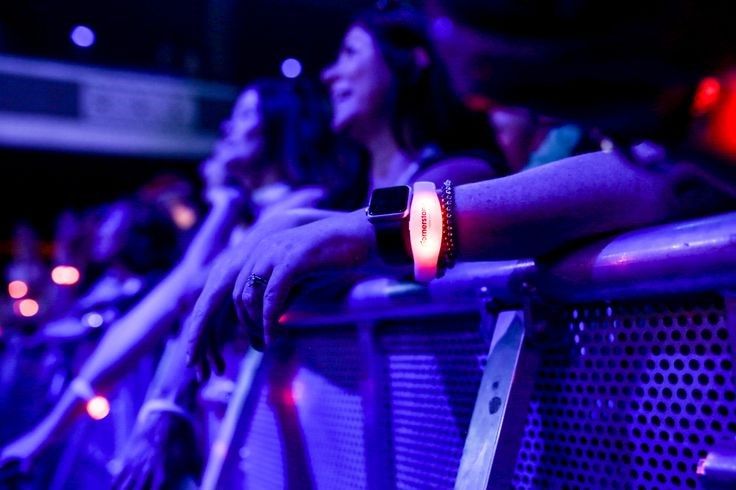
The true paradigm shift arrived with the introduction of centrally controlled, wearable technology. The idea that every single audience member could become a pixel in a vast, moving canvas was revolutionary. This is where the story of Xylobands begins. Inspired by a Coldplay performance at Glastonbury, our founder Jason Regler envisioned an entire crowd illuminated by synchronized, radio controlled LED wristbands. The Mylo Xyloto tour in 2012 turned this vision into a global phenomenon, and in doing so, it redefined the relationship between the artist, the audience, and the production itself.
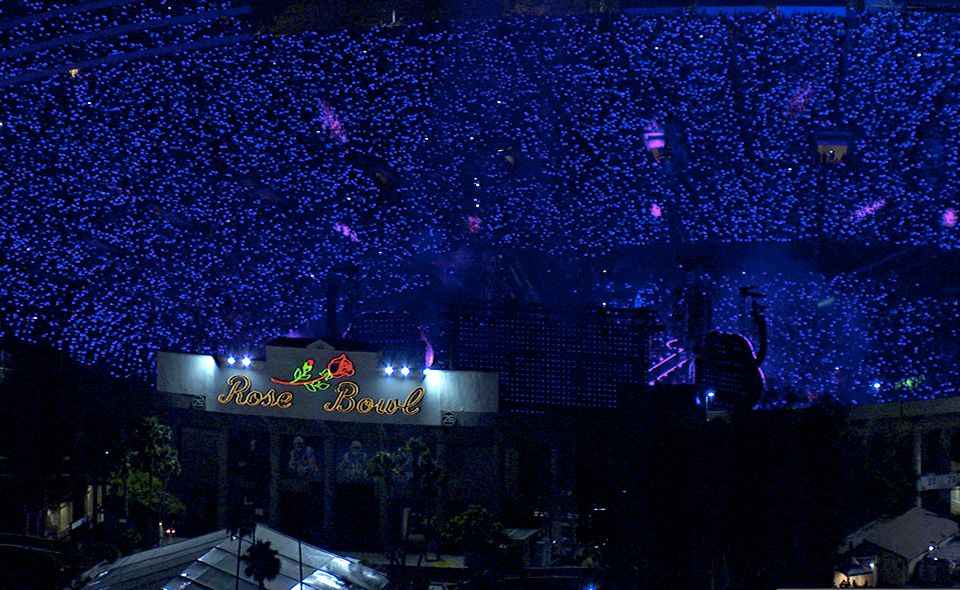
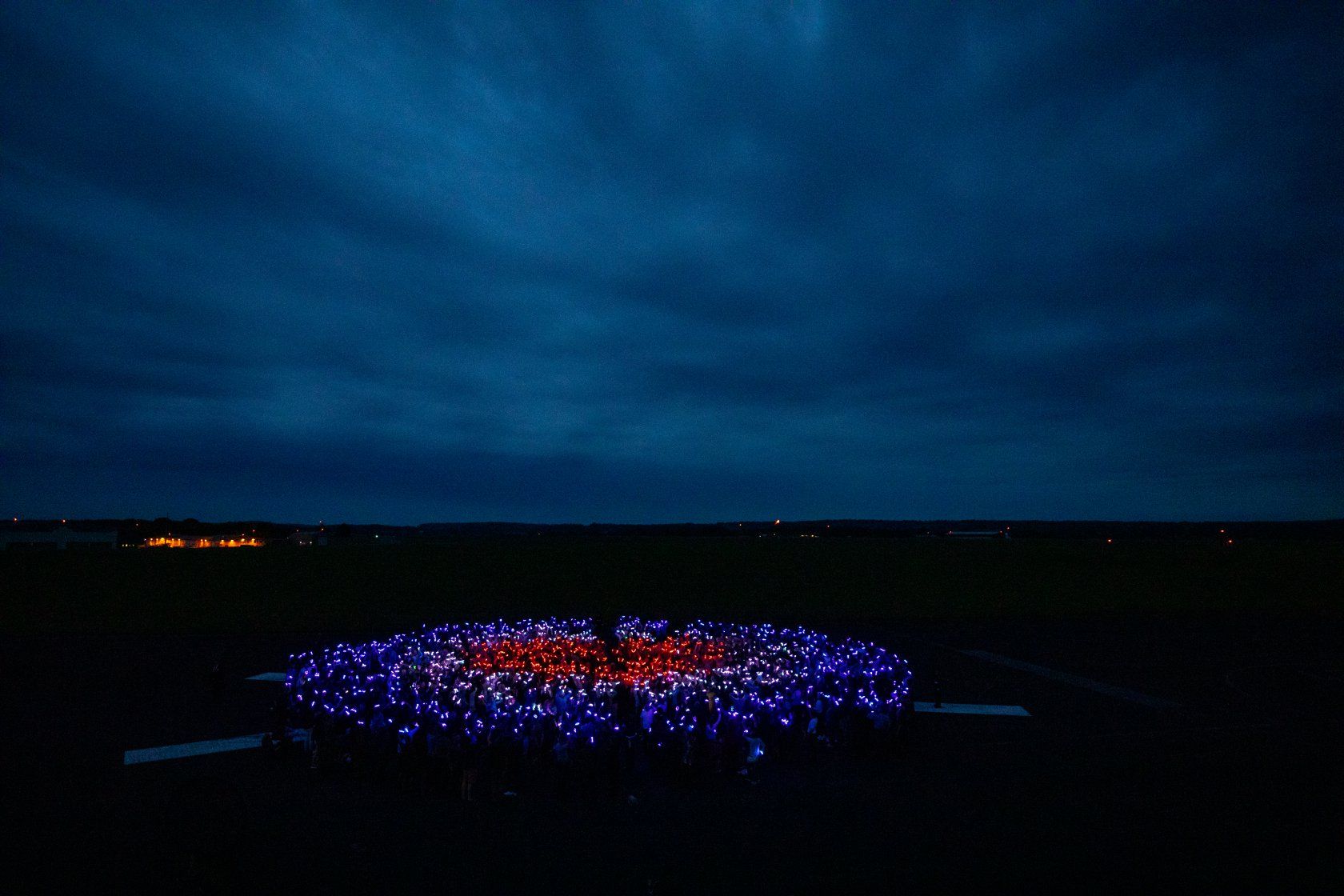
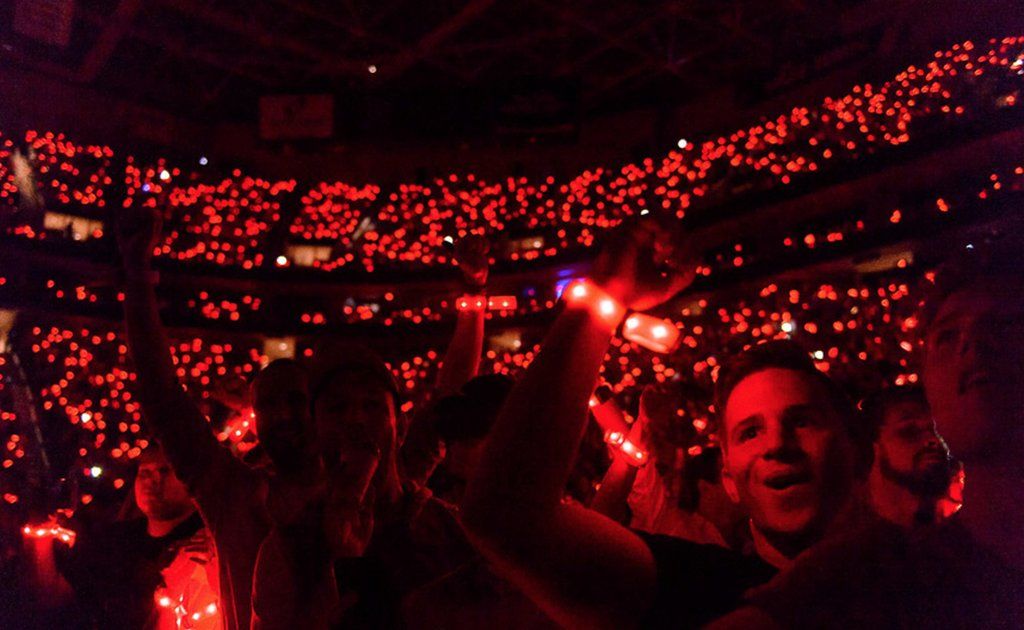
Suddenly, the crowd was no longer just a recipient of the light show; it was the light show. This technology handed a new instrument to the lighting designer—the audience itself. Now, waves of colour could sweep across a stadium, pulses of light could sync with the beat, and specific sections of the crowd could be illuminated to create complex patterns and shapes. The creative possibilities exploded. What was once a collection of individuals became a unified, living organism of light.
This leap forward transformed festival production. It introduced a new layer of engagement, creating powerful moments of shared experience. When 50,000 people light up in the same colour at the exact same moment, the feeling of unity is profound. It’s a powerful tool for storytelling, allowing artists to magnify the emotional arc of their performance on a truly epic scale.
Trends in Modern Festival Production
Today, this foundation has given rise to a host of new trends in immersive event technology, pushing the boundaries of what a festival can be.
1. The Data-Driven Experience
Modern LED crowd experiences are no longer just about pre-programmed sequences. We are moving into an era of real-time, responsive environments. RFID and NFC technologies embedded within festival wristbands can gather anonymized data on crowd movement and density. This information isn’t just for safety and logistics; it’s a creative tool. Imagine a light show that responds to the collective energy of the crowd—growing brighter and more dynamic as the audience’s excitement swells. This creates a bio-feedback loop where the audience’s energy directly influences the visual landscape around them.
2. Personalization at Scale
While mass synchronization creates unity, the next frontier is personalization within the collective. With advanced programming, it’s possible to create moments where individual wristbands or small groups display unique patterns or colours. This allows for gamification, "Easter egg" visuals for dedicated fans, or even targeted brand activations within a larger show. For corporate clients, this opens up incredible possibilities for corporate event activations, turning a shared experience into a moment of personal connection. For example, at the F1 75th anniversary event, we created custom LED Lanyards (the Xylo Pendant) that were zoned to create different effects based on team affiliation and hospitality level, adding a layer of bespoke identity to the shared spectacle.
3. Expanding the Wearable Ecosystem
The wristband was just the beginning. The palette for wearable light is expanding to include other form factors like LED Orbs, lanyards, and even illuminated clothing. This allows for a more layered and textured visual experience. A crowd might feature wristbands pulsing with the rhythm, while handheld orbs create slow, ethereal fades, adding depth and complexity to the overall visual composition. This multi-layered approach was on full display at events like PRIMER Music Festival in Greece, where our LED bands helped amplify the high-energy performances of international DJs, painting the crowd in light that matched the relentless beat.
4. Sustainability and Reusability
As the scale of festivals grows, so does the environmental footprint. A critical trend in modern production is the move towards sustainability. This means designing LED bracelets and other wearables not just for a single use, but for collection, refurbishment, and reuse. As seen during Wizkid’s historic, sold-out run at The O2 in London, wristbands were collected, topped up, and redeployed across all three nights. This circular model is becoming a core tenet of responsible event design, proving that breathtaking spectacle and environmental consciousness can coexist.
The Future is a Shared Canvas
From the first flicker of a lighter in a dark field to the synchronized pulse of 100,000 LED wristbands, the evolution of crowd participation is a story of technology serving a fundamental human need: the desire to connect. The role of the audience has been irrevocably transformed. They are no longer passive observers but active collaborators, the living, breathing canvas upon which the most memorable moments of a show are painted.
For producers, designers, and artists, the challenge and opportunity lie in mastering this new canvas. It requires a holistic view of the event space, where the line between stage and spectator is blurred into a single, immersive environment. The future of festival production isn’t just about building bigger stages or louder sound systems; it’s about designing deeper, more meaningful moments of collective participation. The light is no longer just on the stage; it’s in our hands, on our wrists, and shared among us all.